


A family get together should feel like time with people you love, not an afternoon spent directing traffic. One funny trivia round or a grandparent’s story may become the highlight. These 22 ideas suit children, teenagers and adults without expecting everyone to enjoy the same thing.
Quick answer: For an enjoyable family get together, plan one easy icebreaker, two games, a shared meal and a memory-making activity. Choose low-cost supplies, offer seated options and let guests skip competitions. You only need a handful of the 22 ideas below.
How to Plan a Family Get Together Without Stress
Before choosing games, check guest numbers, ages, mobility needs and food allergies. Agree on a budget and divide up hosting tasks. For outdoor events, plan an indoor alternative. Choose one arrival activity, one active or tabletop game and one group keepsake. Keep tape, markers, large game pieces, water and a first-aid kit handy. For a larger gathering, adapt these family reunion planning ideas; a smaller family weekend may need just one outing.
The American Academy of Pediatrics highlights games and family traditions as opportunities for connection. Similarly, the CDC identifies positive family activities and supportive relationships as protective factors. A party cannot guarantee developmental benefits; regular kindness matters more.
5 Easy Family Gathering Games
These inexpensive games work well early in a party. Adapt the rules for different abilities.
1. Egg-and-Spoon Relay
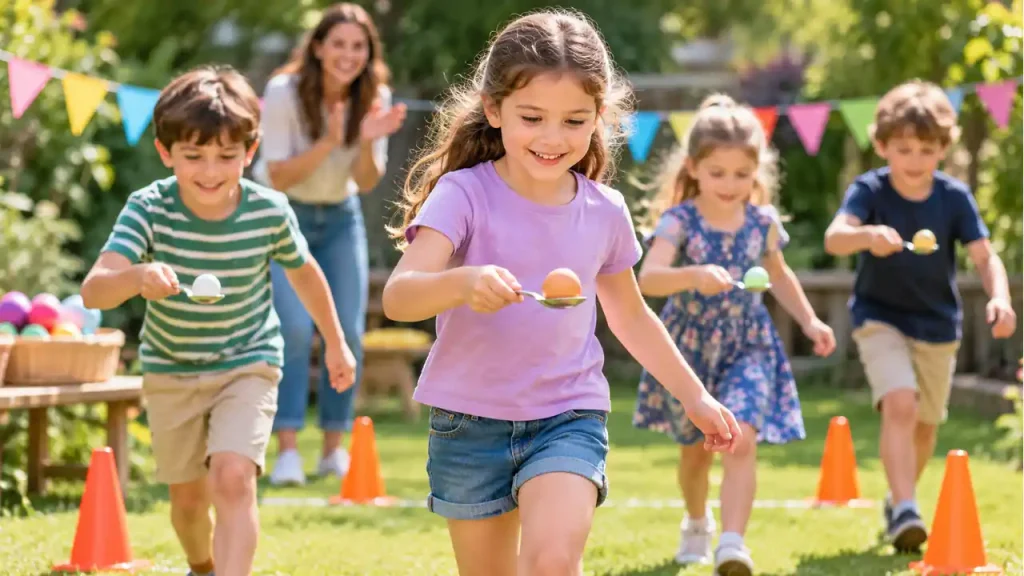
Give each player a spoon holding a hard-boiled egg, then mark a short start and finish line. Players walk without dropping the egg; teammates can take turns. Use a larger lightweight prop for younger children and avoid slippery ground. Seated players can transfer objects between containers.
2. Ribbon Hunt Instead of Balloon Stomp

Hide brightly colored fabric ribbons around the room or garden and let teams find them. Everyone can search at their own pace, including from seated positions with a partner. Unlike balloon stomping, there is no chasing or pushing. The CPSC warns that uninflated or broken balloons pose choking hazards for children.
3. Backyard Carnival Stations
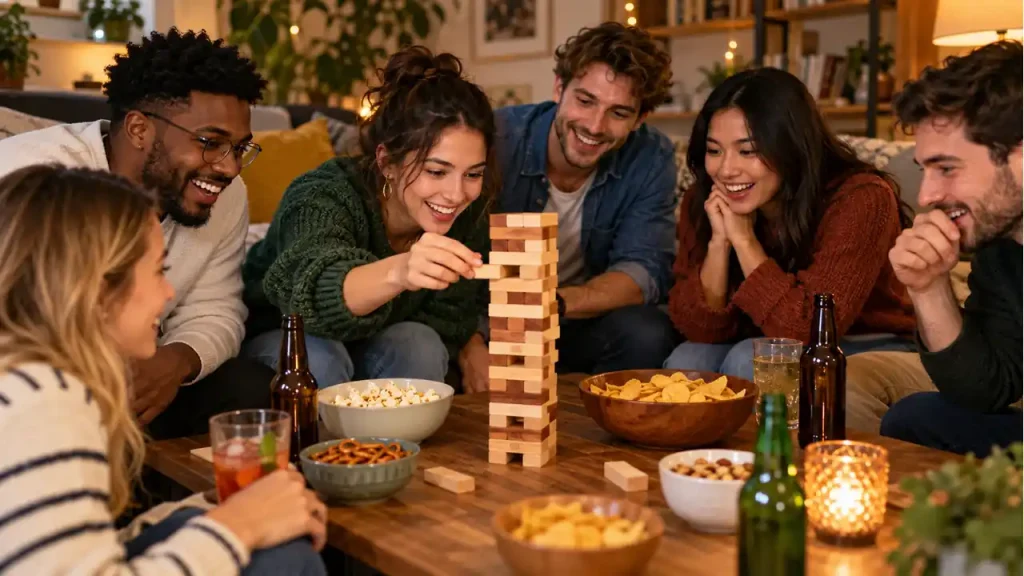
Set out three simple stations: beanbag toss, cup stacking and ring toss using appropriately sized, age-safe equipment. Players collect stamps for trying each activity instead of competing only for first place. Adjust target distances for different abilities.
4. Sack Walk Challenge
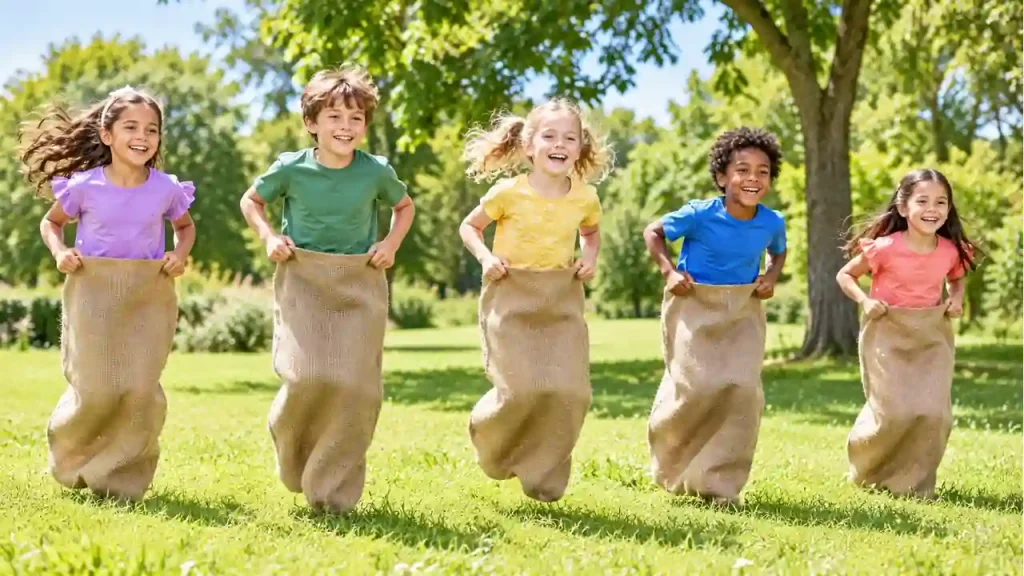
For a gentler version of the sack race, mark a short, flat route and let volunteers walk rather than jump. Anyone uncomfortable in a sack can carry a beanbag along a parallel path. Clear obstacles and skip racing if the ground is slippery.
5. Cook a Dish Together
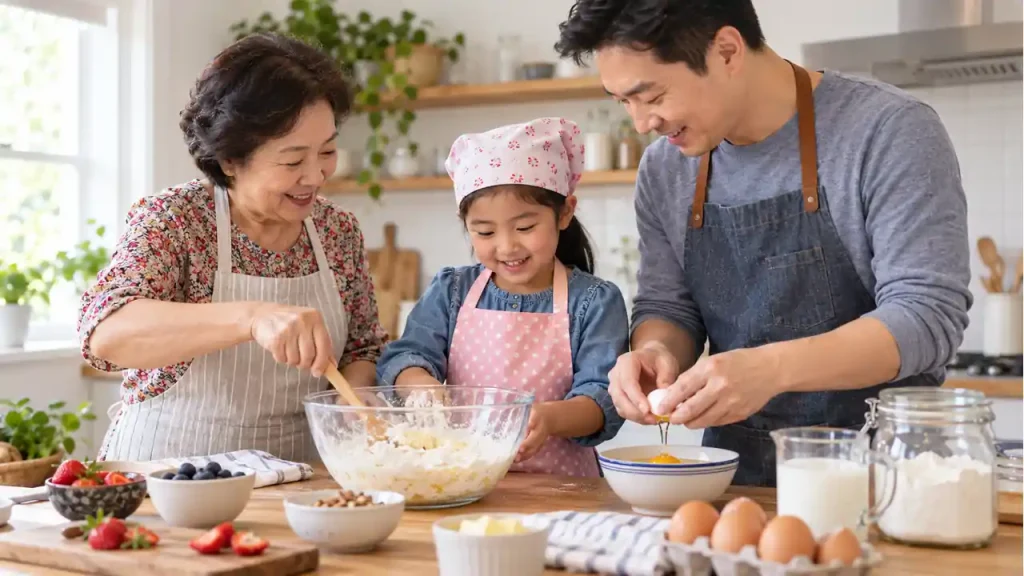
Invite relatives to assemble sandwiches, prepare a salad or share a favorite recipe. Children can wash vegetables or set the table while adults handle heat and knives. Cooking together also gives everyone an easy way to exchange stories.
7 Creative Activities and Friendly Competitions
These indoor-friendly activities emphasize creativity and teamwork rather than winning.
1. Mini Baking Challenge

Divide guests into small teams and let them decorate prepared cupcakes or assemble simple no-bake desserts. Provide ingredients in advance and label allergens. Reward creativity rather than speed.
2. Mystery Ice Cream Taste Test

Swap speed-eating for tiny samples of different flavors. Let volunteers guess ingredients, display allergy information and offer dairy-free options. Nobody has to taste anything, and there is no need for blindfolds.
3. Create One Family Artwork
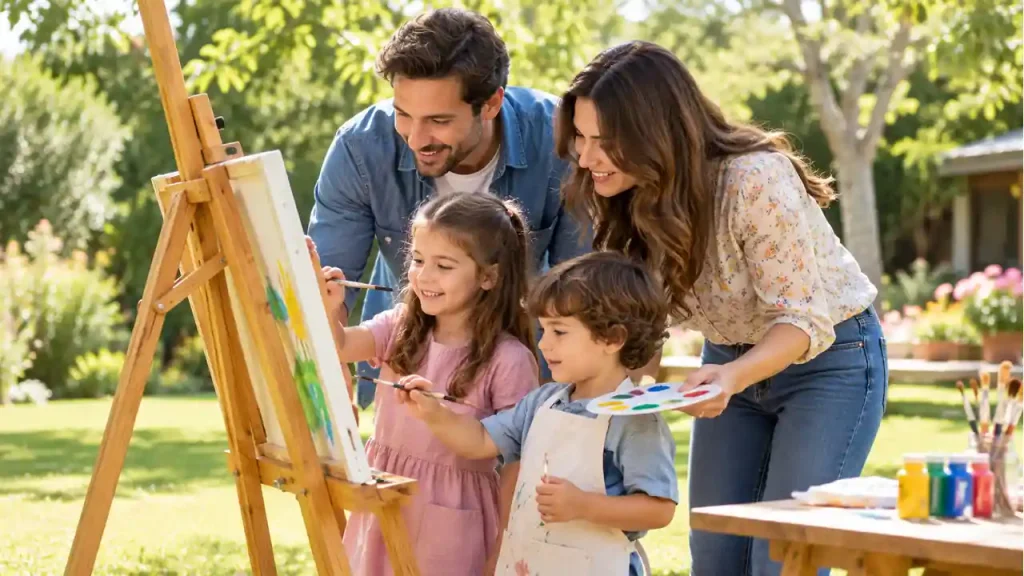
Put a large sheet of paper or canvas on a protected table. Each person adds a drawing, handprint-style design, word or color. Instead of ranking everyone’s artistic ability, display the finished piece as a collaborative keepsake. Use washable supplies for children.
4. Donut Decorating Challenge
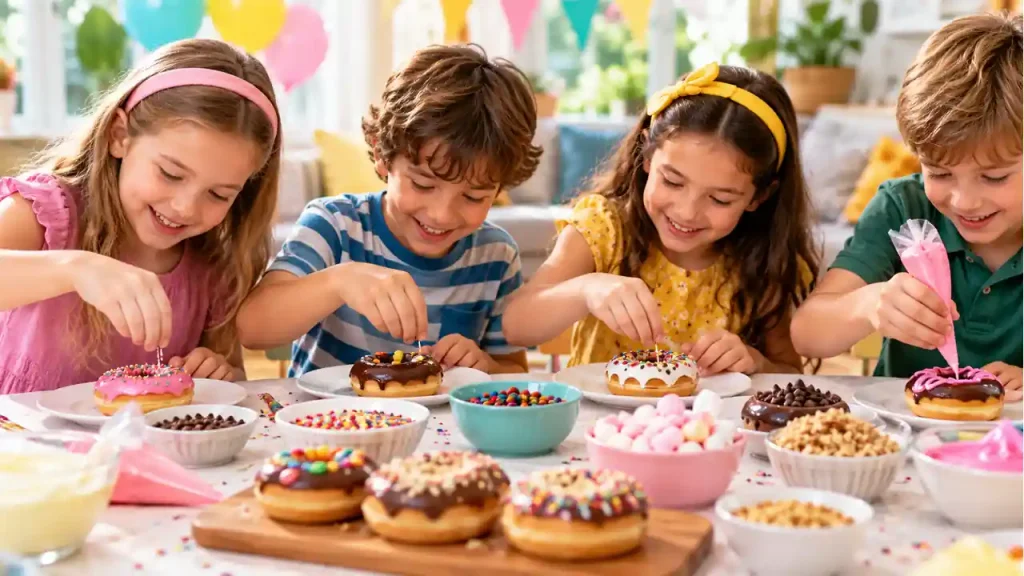
Forget hanging donuts on strings or tying anyone’s hands. Provide plain donuts or biscuits, safe toppings and individual plates. Let teams invent a funny design or decorate treats for someone else. This avoids risky restraint games.
5. Make a Decorative Piñata
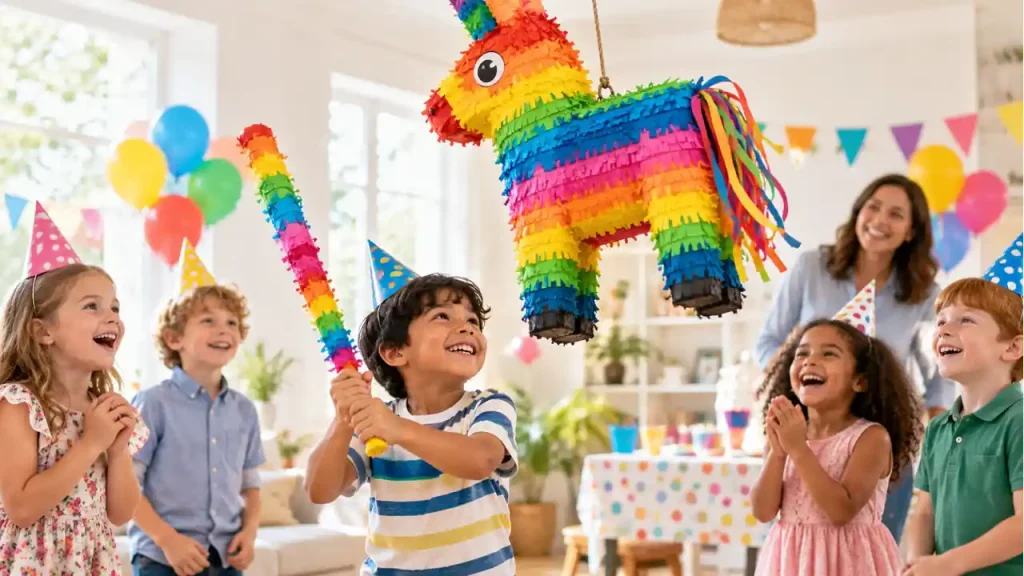
Decorate a cardboard piñata with colorful paper, then display it as a group creation. A pull-string version can release treats under adult supervision without swinging sticks near people. Choose age-appropriate contents, not small choking hazards.
6. Family Karaoke

Let guests nominate favorite songs and perform alone, in pairs or as a group. Nobody should have to sing publicly to belong. A shared chorus is often more enjoyable than judging performances. A family karaoke night needs only basic equipment.
7. Hula-Hoop or Movement Challenge
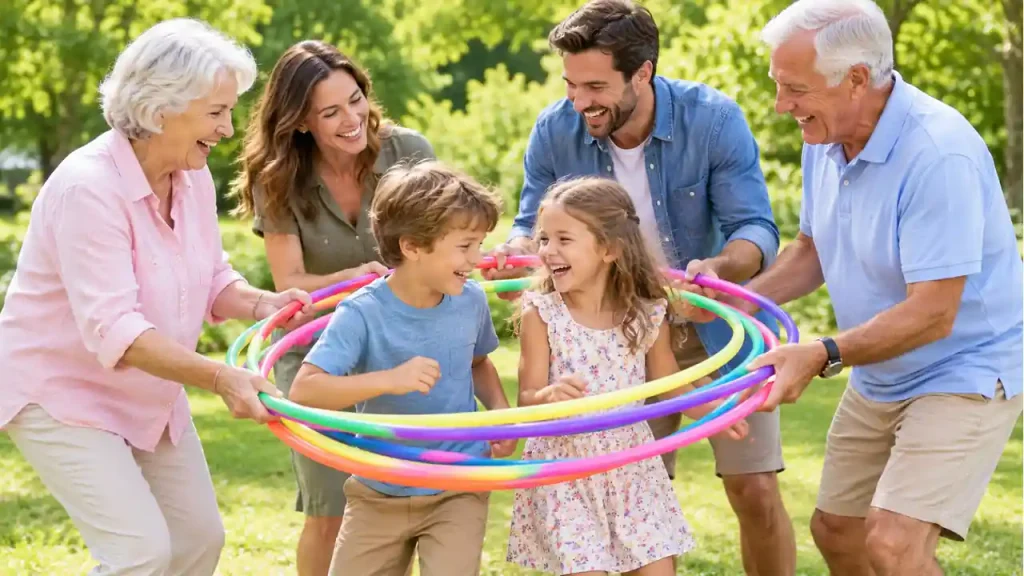
Offer short hula-hoop turns, a gentle dance round or a seated arm-movement version. Keep the focus on laughter rather than endurance. Others can select music or keep time.
5 Ways to Make Family Memories
These inexpensive keepsakes capture shared moments while respecting privacy.
1. Take a Group Photograph

Take a relaxed group portrait, then capture candid moments with permission. Coordinating colors is easier than demanding identical clothing; family photo outfit ideas can provide inspiration. Ask before uploading anyone’s image, especially a child’s.
2. Make a Children’s Memory Book
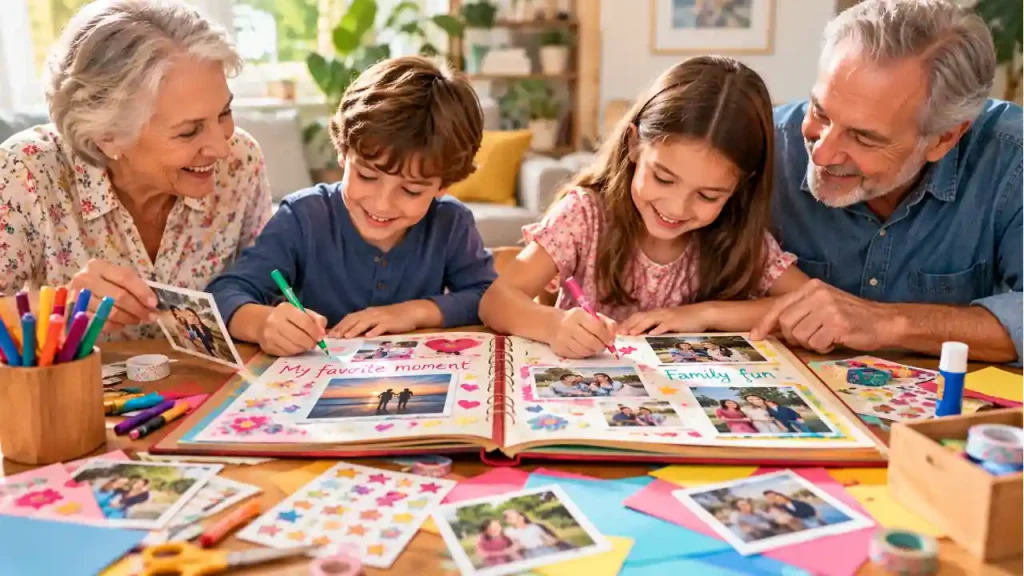
Leave notebooks, crayons and stickers on a table. Children can draw their favorite moment, write a funny quote or ask an older relative about childhood games. Combine the pages into a scrapbook.
3. Decorate the Dinner Table

Cover the table with paper and invite guests to add place cards, drawings or messages of appreciation. Use washable pens and avoid sharp decorations near food. It makes an easy conversation starter.
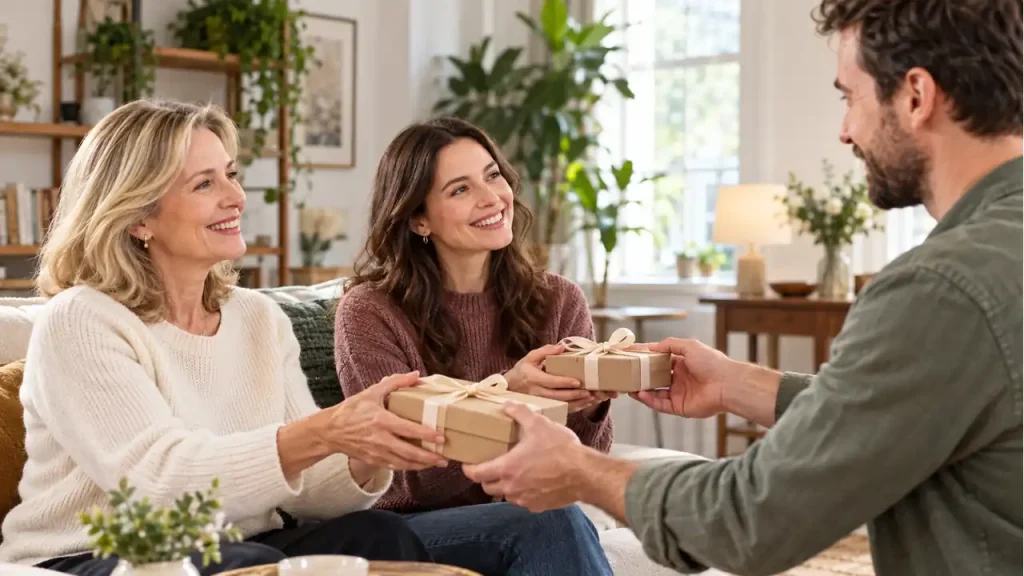
4. Exchange Thoughtful Mystery Gifts

Set a modest spending limit or exchange handmade gifts, then invite guests to draw names beforehand. Make participation optional so nobody feels financially pressured. A handwritten memory can be meaningful.
5. Give Playful Appreciation Awards
Create titles such as “Best Storyteller”, “Kindest Helper,” or “Most Creative Cook”. Avoid jokes about bodies, income or sensitive personality traits. Recognize contributions, not popularity.
5 Activities to Get to Know Your Relatives
A family get together may bring together people who barely know each other. Keep questions kind and allow anyone to pass.
1. Guess the Childhood Photograph
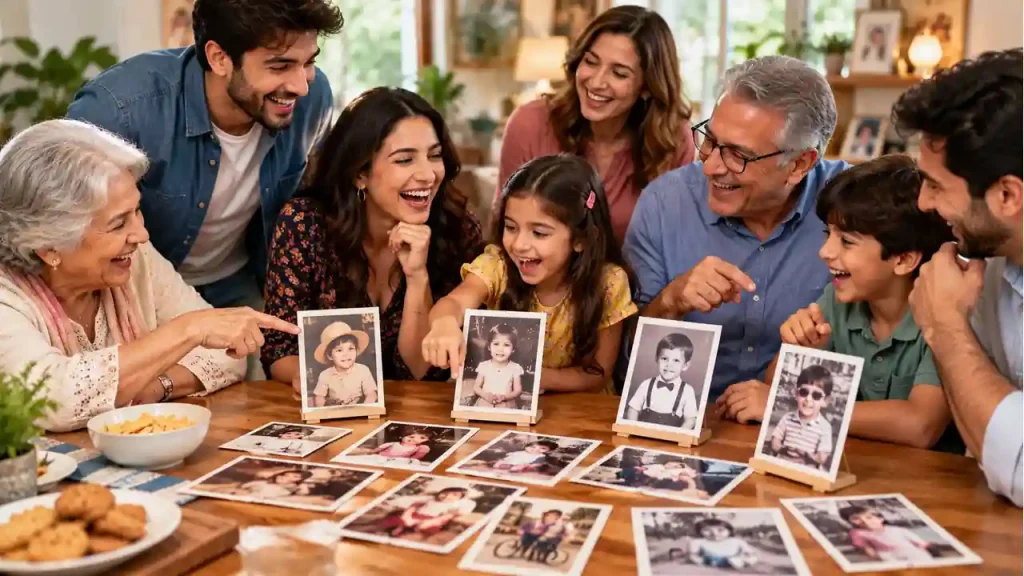
Ask volunteers to bring a childhood picture, then display copies without names. Everyone guesses the person and hears the story behind the photo. Offer another image option if childhood photos are unavailable.
2. Play Family Trivia
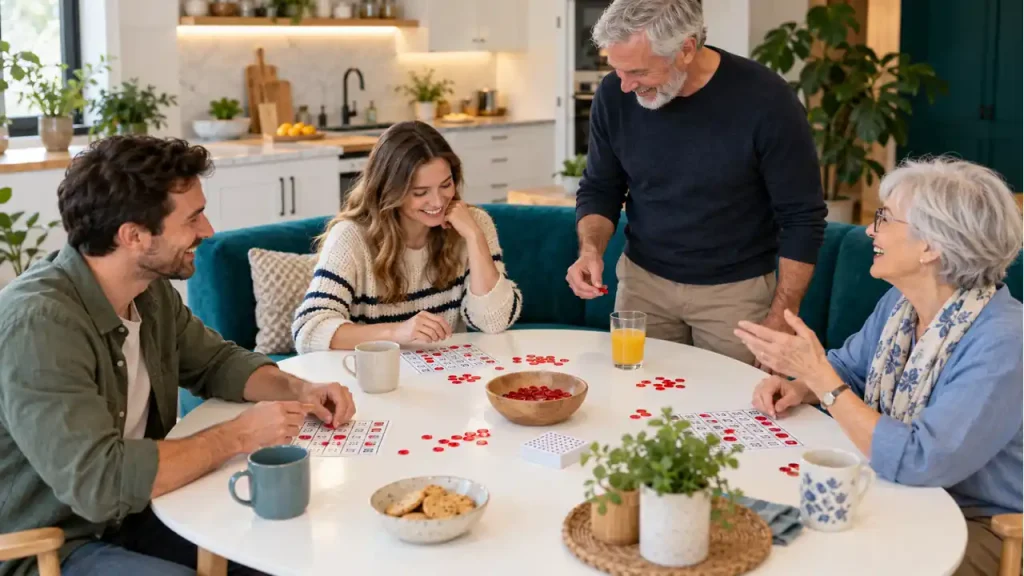
Ask about favorite recipes, hometowns and family traditions. Mix ages on teams so newcomers can contribute without already knowing the answers. Shared stories often reveal the true meaning of family better than a competitive score.
3. Try a Gentle Icebreaker

Invite everyone to finish a light prompt: “A hobby I would love to try is…” or “My favorite celebration food is…” Pair newcomers with willing hosts. Avoid intrusive questions.
4. Pass the Question Ball
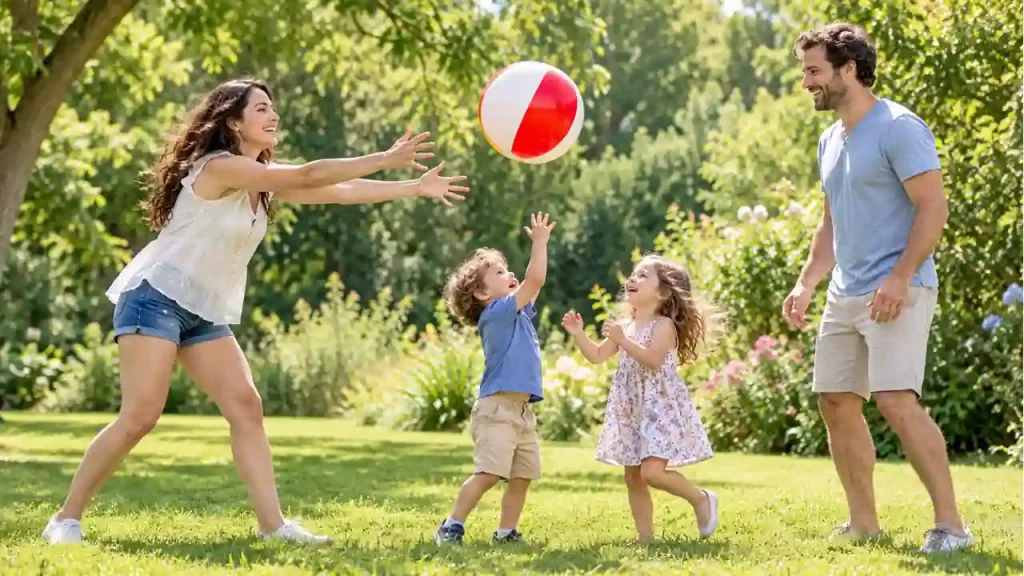
Write easy questions on large cards rather than directly on a ball. Pass a soft ball around; whoever receives it may choose a card or pass their turn. Seated guests can participate without throwing. Ask about music, dreams or childhood games.
5. Create a Family Story Circle
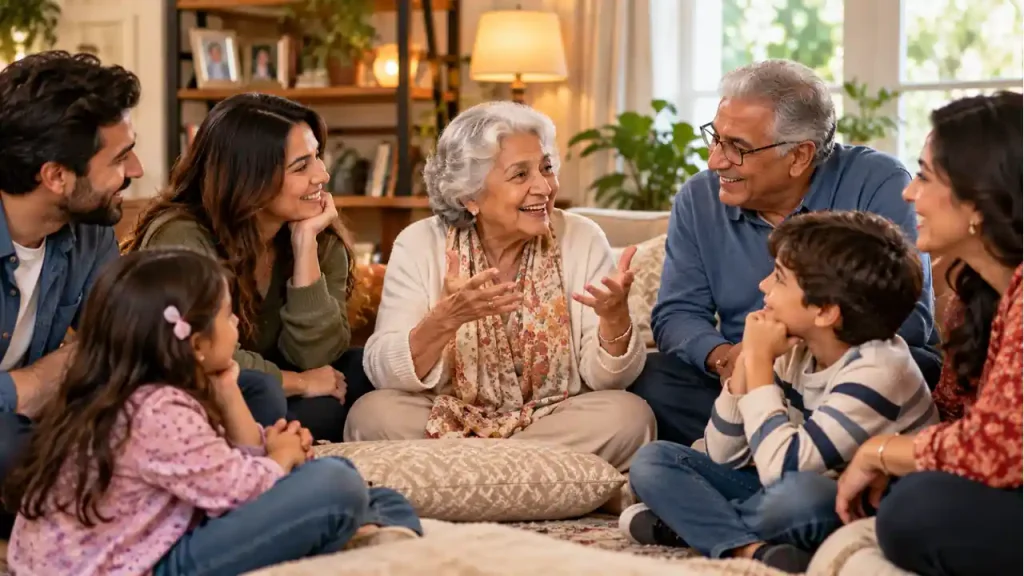
Invite relatives to recall a childhood game, a favorite meal or a tradition worth preserving. The role grandparents play may emerge naturally, but every generation deserves to speak. Only record stories when the person agrees.
Which Activities Work Best for Different Groups?
For younger children, choose crafts and short games. Teenagers may prefer karaoke, photography or dessert decorating. Mixed-age groups often enjoy trivia, cooking and stories. When relatives use mobility aids or tire easily, favor seated options, shaded areas and accessible restrooms. A successful family get together and leaves space for conversation and rest. The strongest family love is expressed through inclusion, kindness and respect, not a packed schedule or constant group participation.
A Simple Two-Hour Family Party Schedule
If you’re hosting for the first time, a loose timetable prevents too many activities from competing for attention. Try this plan, and extend the meal or conversation if everyone is enjoying themselves:
- First 20 minutes: Welcome guests, offer refreshments and start a photo-guessing table that people can join whenever they arrive.
- Next 25 minutes: Run one outdoor or tabletop game, followed by a second activity chosen by the group.
- Next 45 minutes: Enjoy the meal, allowing children and older guests to settle without rushing.
- Final 30 minutes: Invite guests into a story circle, take a group photo with consent and share leftovers or keepsakes.
For larger groups, assign separate hosts for food, games and photographs. Keep a quiet space available, and treat the schedule as a suggestion rather than a deadline.
Frequently Asked Questions
1. What Are the Best Games for a Small Family Gathering?
Try family trivia, a photo guessing game, cooperative artwork or a question circle. These need little equipment and work around a dining table.
2. How Much Should You Budget for a Family Party?
Set a total before shopping, then prioritize food, seating and essential supplies. Choose potluck contributions or reusable household games where practical; no fixed spending amount fits every family.
3. How Do You Keep Everyone Involved?
Offer active and seated options, make participation voluntary and mix generations on teams. Quiet participation counts, too.
Final Thoughts
A family get together does not need lavish decorations or nonstop competitions. Pick the few activities your relatives would actually enjoy, share the hosting responsibilities and leave time for stories. People are more likely to remember feeling welcome than whether you managed to fit in all 22 games.



Leave a Reply