


Family karaoke is an easy way to turn an ordinary evening or family get-together into something everyone can participate in. From grandparents singing old favorites to children choosing the latest songs, karaoke gives different generations a reason to laugh, perform, and spend time together.
You don’t need professional equipment or a perfect singing voice to host a memorable family karaoke night at home. With a simple setup, a varied playlist, a couple of microphones, and a few games, you can create an evening that works for different ages and personalities. If you are planning a larger get-together or a full family reunion, send out the details early and ask guests to suggest one or two tracks in advance.
This guide covers the benefits of singing together, practical tips for including every age, what you need to set up family karaoke at home, and family-friendly songs to get everyone involved.
Benefits of Family Karaoke
A family karaoke night is primarily about having fun, but singing together can also encourage participation, shared attention, and positive interaction across generations. A 2026 systematic review of group singing among children, adolescents, and university students found evidence suggesting that group singing may contribute to social connectedness, positive emotions, self-concept, and overall well-being. However, the researchers also noted that the available evidence was not strong enough to draw definitive conclusions about its specific effects.
1. Brings Different Generations Together

One advantage of family karaoke is that everyone can contribute something different. Grandparents may introduce older classics, parents can revisit songs they grew up with, and younger family members can add current favorites. A mixed playlist gives different generations a chance to share music and stories, creating the kind of shared experiences that can strengthen a sense of family connection.
Research on community group singing has also explored its relationship with social bonding, suggesting that the sense of belonging to a group may be an important part of the shared singing experience.
2. Encourages Teamwork

Duets, group performances, and team challenges encourage family members to coordinate, take turns, and support one another. Even reluctant singers can participate by choosing songs, keeping score, managing the playlist, or cheering from the audience.
3. Creates a Fun Break From Routine

A relaxed family karaoke night gives everyone a chance to step away from work, school, chores, and screens for a while. Singing familiar songs, laughing over missed notes, and watching relatives perform can make the evening feel refreshingly different from the usual weekend pattern.
4. Gives Everyone a Low-Pressure Chance to Participate
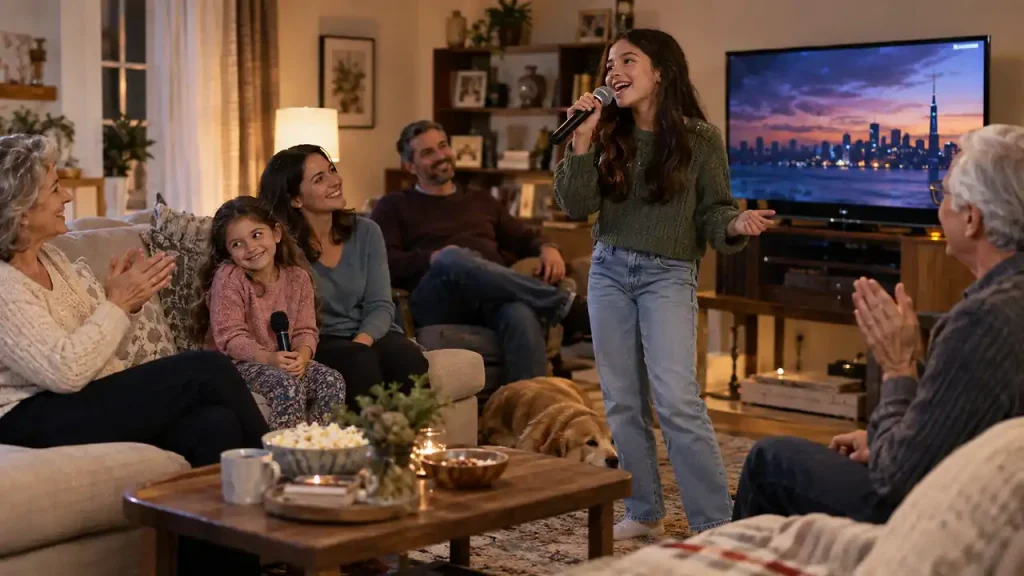
Performing in front of family can give children and adults an informal opportunity to sing, speak into a microphone, or simply become more comfortable participating in a group. Keep it optional, especially for shy family members. Keep it optional, especially for shy family members
How to Make Family Karaoke Fun for Every Age

The best family karaoke nights give everyone a way to join in, regardless of age or singing ability. Younger children may enjoy familiar movie songs and simple choruses, while teens might prefer current hits and adults or grandparents may want classics from their own generations. Mix these choices throughout the playlist so one age group does not dominate the evening.
Keep performances optional, too. Shy family members can join a group song, choose the next track, dance, keep score, or cheer from the audience. The goal of family karaoke is participation and connection, not finding the best singer in the room.
How to Host a Family Karaoke Night at Home
You don’t need an expensive karaoke setup or professional singing skills to host an unforgettable musical evening. Planning a family karaoke night right in your living room is all about creating a relaxed, welcoming environment where kids, parents, and grandparents can laugh and sing along together. With just a little bit of prep—from sorting out your basic sound setup to lining up songs for every generation—you can easily turn an ordinary weekend into a lively family concert. Here is how to put it all together:
Quick Family Karaoke Checklist
Before everyone arrives, make sure you have:
- A screen for lyrics (smart TV, laptop, or tablet)
- A speaker with clear sound output
- At least two microphones for duets
- A balanced, mixed-age playlist
- Reliable internet if you are streaming tracks
- Comfortable seating with a clear view of the screen
- Easy finger snacks and plenty of water
- Enough open floor space for anyone who wants to dance or perform
1. No Karaoke Machine? Start With What You Have
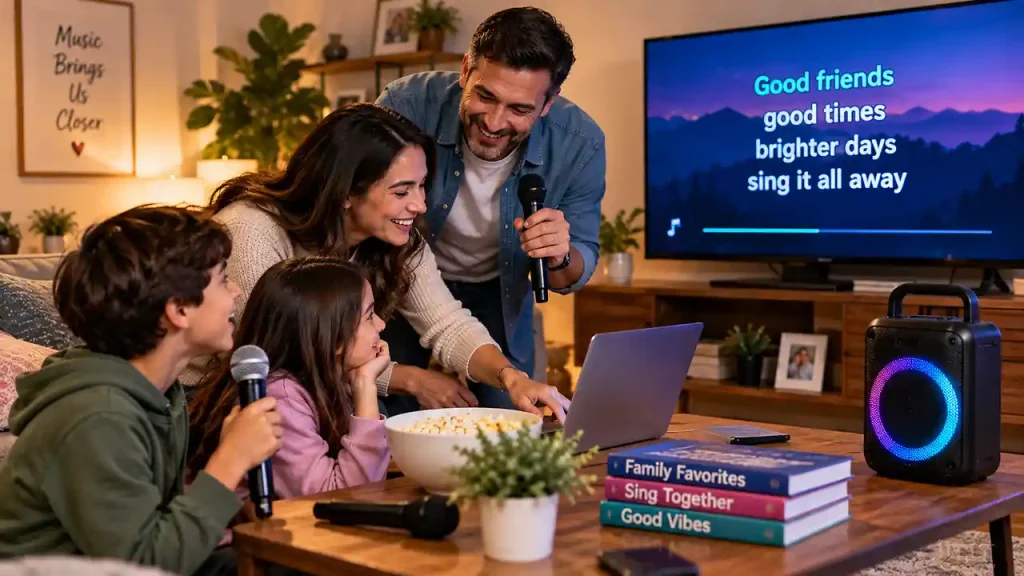
You can organize a simple family karaoke night without buying a dedicated machine. A TV or laptop for displaying lyrics, a speaker for the backing track, and one or two microphones can be enough for a casual setup. You can use a karaoke app or stream suitable backing tracks with on-screen lyrics. If your family enjoys karaoke regularly, consider a dedicated system with built-in speakers, microphone inputs, Bluetooth connectivity, or an integrated lyric display.
2. Test Microphones and Sound Levels

Two microphones make duets and group performances easier. Wireless microphones reduce cable clutter and tripping hazards, although wired microphones can be perfectly adequate for a simple setup. Test microphone volume against the backing track before guests arrive so singers can hear themselves without the audio becoming uncomfortably loud.
3. Build a Playlist for Different Ages

Build the playlist across generations rather than letting one person’s music taste dominate the night. Mix older classics, current pop hits, movie songs, easy sing-alongs, and duets. Testing a few tracks beforehand can help prevent awkward pauses or technical problems during the party.
4. Set Up the Room for Singing

Clear a dedicated stage area so performers have enough room to move without knocking into furniture. Position the screen at eye level so lyrics remain clearly visible from the singing spot, and arrange main seating facing the performance area. If you live close to neighbors, keep the volume reasonable and choose a sensible ending time in advance.
5. Add Karaoke Games

Keep energy high between rounds with quick singing challenges:
- Finish the Lyric: Pause the track mid-chorus and have the singer complete the line unaided.
- Guess the Intro: Play the first five seconds of an instrumental track to see who names it first.
- Decade Challenge: Divide into teams and draw random musical eras from a bowl.
- Mystery Duet Draw: Pick two random names from a hat and have them sing a duet together.
6. Plan Snacks, Drinks, and Short Breaks

Keep the food setup simple so you can actually enjoy the evening instead of being stuck in the kitchen. Bite-sized finger foods, popcorn, sliders, and fruit skewers are ideal because they don’t require cutlery or formal seating. Singing continuously can quickly strain vocal cords, so keep plenty of room-temperature water, lemonade, or warm tea handy to keep everyone hydrated. If you have younger kids or elderly family members participating, schedule 10- to 15-minute intermissions between singing rounds. These quick pauses let everyone refill their plates, chat about their favorite performances, and recharge before the next set.
7. Make Participation Optional
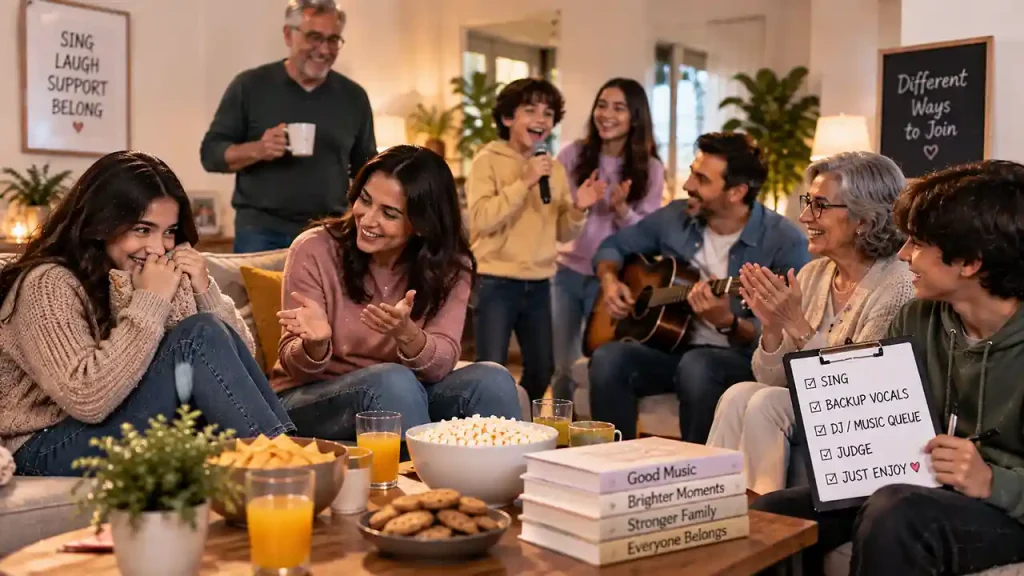
Family karaoke should feel playful and welcoming rather than performative or stressful. Avoid putting shy children or introverted adults on the spot by forcing them to take solo turns. Instead, let everyone decide how much—or how little—they want to be involved. Encourage hesitant family members to join in as background vocalists during big group choruses, handle the music queue, or play judge during fun singing games. When there is zero pressure to perform, even reluctant singers often feel relaxed enough to grab the mic on their own.
8. Capture the Candid Memories

Designate someone to capture spontaneous photos and short video clips during group performances. Candid reactions, unexpected duets, and group sing-alongs often make the most memorable keepsakes. Shared activities like singing, laughing, and cheering one another on can create opportunities for positive family dynamics, helping build trust and closeness among members of different ages.
15 Family Karaoke Songs for a Multigenerational Playlist

When choosing songs for family karaoke, consider the ages in the room as well as everyone’s musical tastes. Check lyrics beforehand when children are participating, and include songs with familiar choruses that several people can sing together. A good playlist can mix children’s favorites, current pop, movie songs, older classics, duets, and big group sing-alongs.
Here are 15 familiar songs that work well for a multigenerational playlist:
Classic Sing-Alongs
- “We Are Family” – Sister Sledge
- “Dancing Queen” – ABBA
- “Mamma Mia” – ABBA
- “Sweet Caroline” – Neil Diamond
- “The Longest Time” – Billy Joel
Upbeat Crowd Pleasers
- “Uptown Funk” – Mark Ronson ft. Bruno Mars
- “Can’t Stop the Feeling!” – Justin Timberlake
- “Happy” – Pharrell Williams
- “I Want You Back” – The Jackson 5
- “Wake Me Up Before You Go-Go” – Wham!
Group Anthems & Duets
- “Bohemian Rhapsody” – Queen
- “Girls Just Want to Have Fun” – Cyndi Lauper
- “I Love Rock ‘n’ Roll” – Joan Jett & the Blackhearts
- “Valerie” – Mark Ronson ft. Amy Winehouse
- “Best of My Love” – The Emotions
Final Thoughts
A memorable family karaoke night doesn’t depend on perfect vocals or expensive equipment. It is built on laughter, shared silliness, and genuine connection—reminding everyone that the heart of home is rooted in unconditional family love.
Use these family karaoke ideas to turn a quiet evening into a tradition your household looks forward to all year. Let go of performance pressure, hand over the microphone, and enjoy the show. Sometimes the songs nobody planned to sing become the moments everyone remembers.



Leave a Reply