

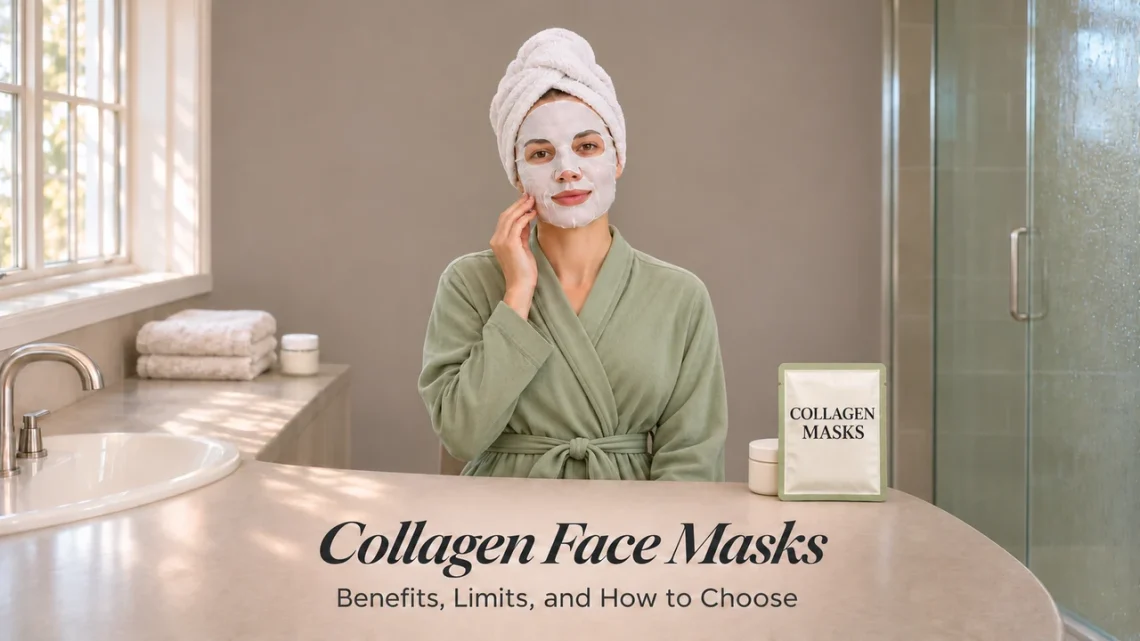
Collagen face masks are optional moisturizing treatments that may leave dry skin feeling softer and temporarily smoother. Their effects depend on the whole formula, including humectants and other ingredients. Start with a clear goal: relieving tightness, smoothing dry patches, or preparing your skin for makeup. Then weigh comfort, price, and realistic results before adding another product to your routine.
Do Collagen Face Masks Work?
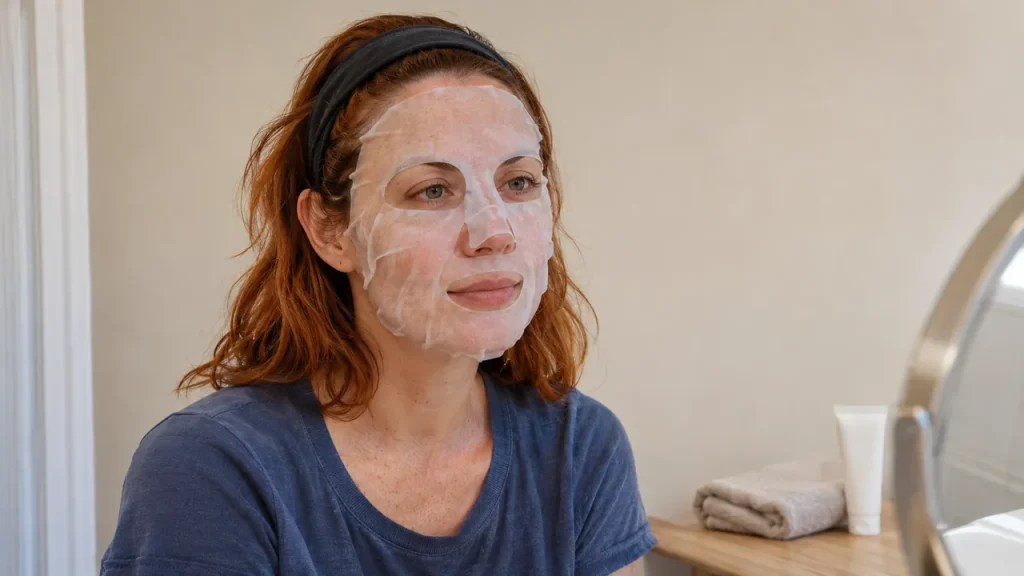
They can help with surface hydration and the appearance of dryness-related lines. That is different from replacing the collagen that gives deeper skin its structure. A comfortable, plumper appearance after a mask does not demonstrate that your skin has produced new collagen.
A mask does not replace sunscreen, a suitable daily moisturizer, or treatment for acne, eczema, or other skin conditions.
What the Collagen Label Really Means

Intact collagen is a large protein with poor penetration through the outer skin barrier. In cosmetics, it can help form a moisturizing film. Hydrolyzed collagen consists of smaller fragments, but their presence does not establish delivery into the dermis or rebuilding of its collagen network.
Evidence also belongs to a specific formulation. A clinical evaluation of a native collagen sheet mask reported improvements in hydration and wrinkle appearance. However, its component studies were small: one comparison involved 20 women, with measurements extending only two hours after a single treatment; a four-week wrinkle evaluation involved five. All authors worked for the manufacturer. The tested material and its moisturizing activator also differed from many ordinary serum-soaked sheets.
These results apply to the tested formulation and study conditions. They do not demonstrate that every commercial mask provides lasting structural improvement. When assessing collagen face masks, ask what was measured: immediate moisture, temporary wrinkle appearance, or a lasting structural change. These are different outcomes.
Three Benefits You Can Reasonably Expect
These effects depend on the formula and your skin’s response. Much of the visible improvement comes from hydration.
1. Extra Surface Hydration
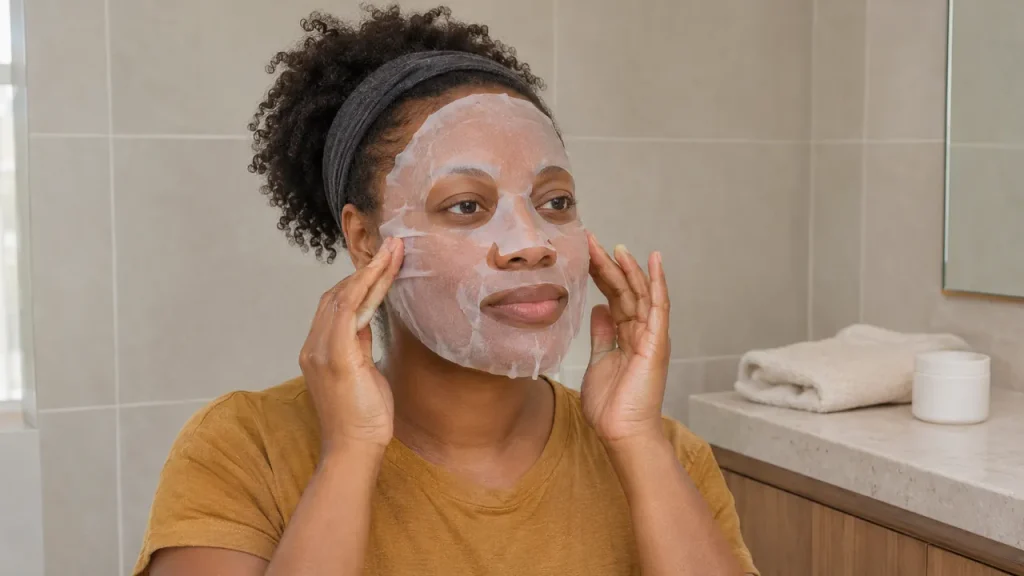
Humectants such as glycerin and hyaluronic acid help retain water in the outer skin. A well-formulated mask may therefore relieve a dry, tight feeling. Collagen can contribute to the moisturizing film, but other ingredients may do much of the work.
2. Temporary Smoothing of Dryness Lines

Hydrated skin can look fuller, making fine surface lines less noticeable. This effect should not be described as erasing wrinkles, preventing sagging, or replacing lost elastin. A result visible immediately after removal is not evidence of permanent remodeling.
3. A Softer Feel Before Makeup

When dryness makes foundation catch on flaky areas, a tolerated hydrating formula may leave the surface feeling smoother. Let residue settle before applying cream foundation or other makeup, and avoid trying a new product immediately before an important event. A familiar moisturizer may provide the same practical benefit with less expense.
Choose According to Skin Type

No single formula suits everyone. Choose collagen face masks by their complete ingredient list and texture, rather than assuming that a collagen label makes them gentle.
| Skin concern | What to look for | What deserves caution |
| Dry or tight skin | Humectants and a comfortable cream or serum texture | Strong acids or a drying finish |
| Oily or acne-prone skin | Lightweight hydration and noncomedogenic labeling | Heavy residue or ingredients that trigger your breakouts |
| Sensitive skin | A simple, fragrance-free formula with familiar ingredients | Perfume, essential oils, and multiple exfoliating actives |
| Combination skin | A texture comfortable on both cheeks and the T-zone | Treating every facial area identically |
| Active eczema, rosacea, or broken skin | Advice from your treating clinician | Experimenting during a flare or using ordinary cosmetic masks on wounds |
“Noncomedogenic” does not mean allergy-free. “Hypoallergenic” has no federal definition for U.S. cosmetics and cannot guarantee tolerance. Check for ingredients that have irritated your skin before.
Read the Packaging Before Paying

Use the label to answer a few practical questions. Guidance on choosing facial masks emphasizes matching ingredients to your needs and avoiding unnecessary duplication of irritating actives.
- What is the format? A sheet, hydrogel patch, wash-off clay mask, and overnight cream have different instructions. An eye patch isn’t automatically suitable for the whole face.
- What provides moisture? Look beyond the headline ingredient for glycerin, hyaluronic acid, or other moisturizing components.
- What might irritate you? Check for known allergens, fragrance, essential oils, or exfoliating acids already present in your routine. If collagen sourcing matters because of an allergy, ask the manufacturer rather than guessing from the product name.
- What does the price cover? Compare cost per application, pack size, and usable quantity. An expensive single treatment is not automatically more effective than an affordable moisturizer.
- What supports the claim? Ask whether testing involved this exact finished product, how many people participated, and how long any improvement lasted.
Before purchasing collagen face masks, read the current ingredient list on the product you will receive. Formulas, pack sizes, and directions can change. An old review or a photograph of different packaging may describe another version. Keep the outer packaging until you know you tolerate the product.
Gold-colored packaging, “detox” language, and dramatic before-and-after lighting do not establish collagen repair. Nor does a “clinically tested” label explain whether there was a useful comparison group or independent assessment.
How to Use a Mask Without Overdoing It
Simple preparation is enough. There is no need to scrub first, apply a balancing toner, or combine several strong treatments to make the mask work.
1. Try It on a Small Area First
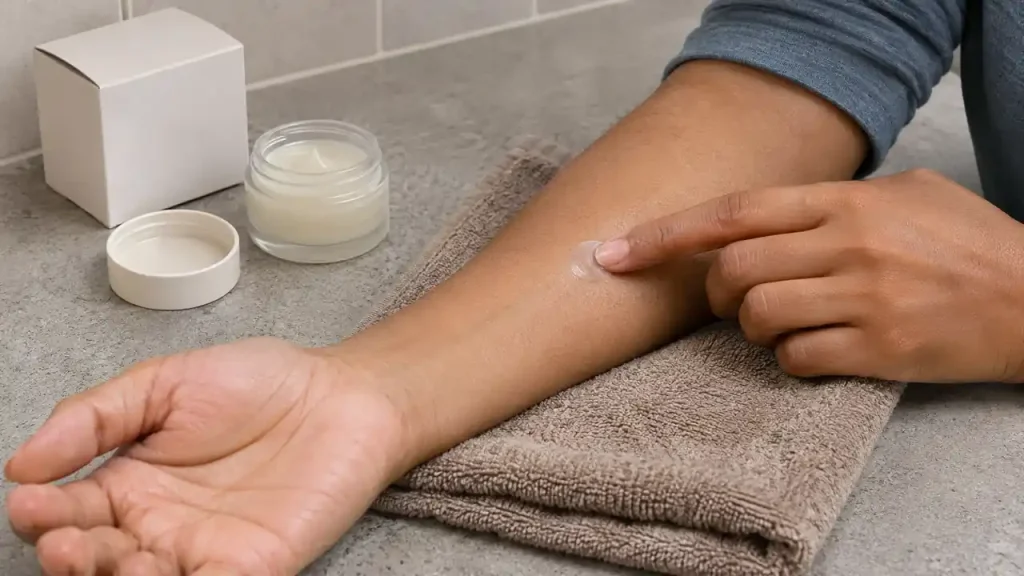
Follow instructions for testing a new skincare product before applying it widely. Keep contact time appropriate to the product; a wash-off formula should not be left on indefinitely. A home-use test cannot guarantee that a later reaction will not occur, and it is different from diagnostic allergy patch testing.
2. Cleanse Gently

Remove makeup and cleanse without rubbing aggressively. Pat dry or follow the package’s preparation directions. Skip extra exfoliation, especially if your usual routine already contains acids or retinoids.
3. Follow the Specific Wear Time

Use a timer and follow the actual label. Fifteen or twenty minutes is not a universal limit, and an overnight product has different directions from an ordinary sheet. Do not extend wear simply because a social-media routine does.
4. Finish With Your Usual Care
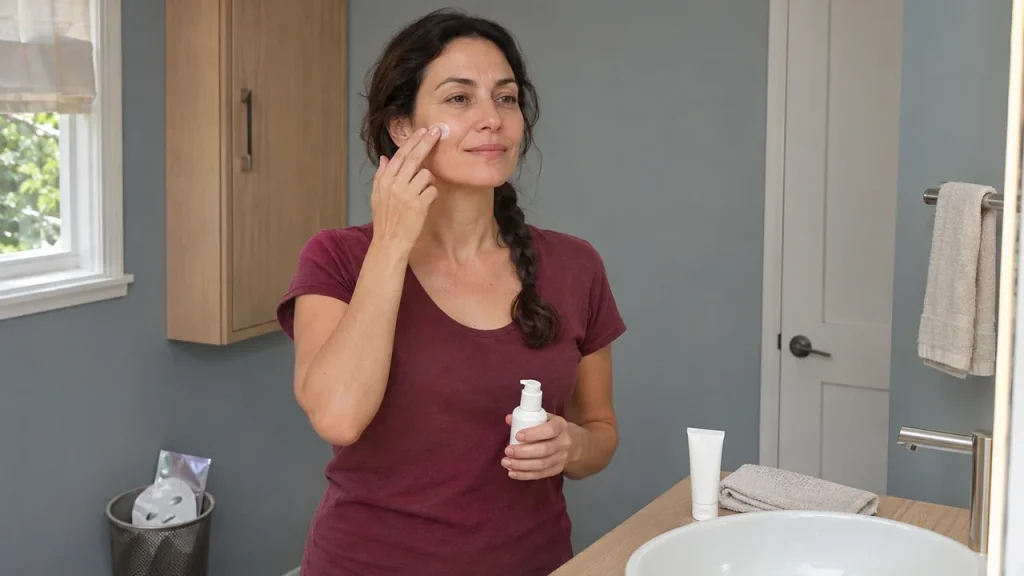
Remove or rinse as directed, then use a suitable moisturizer if needed. During the day, continue sun protection. Discard single-use sheets rather than reusing them or keeping an opened sachet for a later treatment. For a professional makeup look, allow your skincare to settle before applying optional makeup. If masking is enjoyable, it can be one optional part of a self-care routine while working from home.
How Often Should You Use One?
There is no mandatory weekly schedule for collagen face masks. Begin conservatively within the product’s directions and assess comfort, dryness, and any breakouts before repeating it. More frequent use does not establish better results.
Your other products matter too. Understanding how often to use different face masks helps distinguish a simple hydrating treatment from a potentially irritating exfoliating one. Stop adding sessions if your skin becomes uncomfortable.
Is a Mask Worth Buying?
If your usual moisturizer keeps your skin comfortable, a mask is an optional extra. If you try one, judge it by comfort, visible dryness, and value per use. Compare your skin in similar lighting after removal and later that day; immediate shine alone is not a lasting result.
Claims That Deserve Skepticism
A cosmetic mask should not be presented as a treatment that heals acne scars, repairs wounds, prevents all collagen loss, or permanently lifts sagging skin. Do not put an ordinary mask on broken or infected skin. Medical wound dressings containing collagen serve a different purpose. There is also no age at which every woman must start using one. Choosing a mask at 40 or 50 is a preference, not a requirement. Normal skin aging is not a failure to moisturize well enough.
The essentials remain gentle cleansing, suitable moisturization, and broad-spectrum SPF 30 or higher sunscreen. An adequate healthy eating plan supports general nutrition, but food and cosmetic treatments have different roles. The same distinction matters when considering vitamin D skin care: a nutrient’s biological importance does not establish every marketing claim made about a cream.
Frequently Asked Questions
These answers address common buying and safety questions. Individual tolerance still matters more than a trend or a claim that a product suits everyone.
1. Are Collagen Face Masks Better Than Moisturizer?
Not automatically. Compare the complete formula, comfort, and cost per use. A basic moisturizer may meet your hydration needs without an additional treatment. Use a mask if you enjoy it and notice a worthwhile benefit.
2. Can I Keep One On Overnight?
Only if the specific product is designed and labeled for overnight use. Do not apply another brand’s instructions to a standard sheet or eye patch.
3. What If My Face Burns or Itches?
Remove the product, gently rinse, and stop using it. Seek medical advice for persistent or substantial reactions. Facial swelling with breathing difficulty needs emergency care. Burning is not evidence that the product is working.
Final Thoughts
Collagen face masks are best approached as optional hydration products with formula-dependent results. Choose for your skin’s needs, test unfamiliar products, and follow the label. Judge success by comfort and realistic cosmetic improvement. If a plain moisturizer does the job, there is no need to buy a mask to keep your routine effective.
S



Leave a Reply