


The most useful health and fitness tips for women are not extreme diets, punishing workouts, or routines that demand perfection. Women often balance work, family, caregiving, relationships, and personal responsibilities, which can make their own health easy to postpone. A stronger approach is to build a few evidence-based habits around food, movement, strength, sleep, hydration, stress management, and preventive care—and then adapt them to your real life.
Quick Answer: Good health is built through consistency. Eat a varied, nutrient-dense diet, move regularly, include strength training, protect your sleep, stay hydrated according to your needs, avoid tobacco, reduce alcohol, manage stress realistically, and keep preventive healthcare up to date. The best routine is not the strictest one; it is the one you can sustain.
Why Women’s Health Deserves Its Own Priority
Women are often encouraged to look after their health because other people depend on them. That may be true for many mothers, partners, daughters, and caregivers, but a woman’s health matters even when nobody else is relying on her. Exercise, nourishing food, rest, medical care, and personal time are not rewards for finishing every other responsibility first. They are basic parts of well-being. Health also should not be reduced to body weight or appearance. Fitness can include cardiovascular endurance, muscle strength, mobility, balance, energy, sleep quality, and the ability to move comfortably through everyday life.
Women’s Health Needs Change Across Life Stages
One reason health and fitness tips for women should never be completely one-size-fits-all is that needs can change with menstruation, pregnancy, breastfeeding, perimenopause, menopause, aging, medications, health conditions, and activity level. A routine that feels appropriate in your 20s may need adjustment later. The foundations can stay similar, but the details—energy intake, recovery, exercise intensity, bone and muscle priorities, and medical care—may change.
1. Build a Balanced Breakfast—If You Eat One

Breakfast can be a useful opportunity to add protein, fiber, fruit, whole grains, and healthy fats to your day, but it is not a compulsory meal for every woman. If breakfast works for your routine, make it satisfying rather than simply sweet. Greek yogurt with fruit and nuts, eggs with vegetables and whole-grain toast, oatmeal with seeds and berries, or another culturally familiar meal can all work. The goal is not to eat a “perfect” breakfast. It is to choose food that supports your energy and leaves you reasonably satisfied until your next meal.
2. Focus on Overall Diet Quality
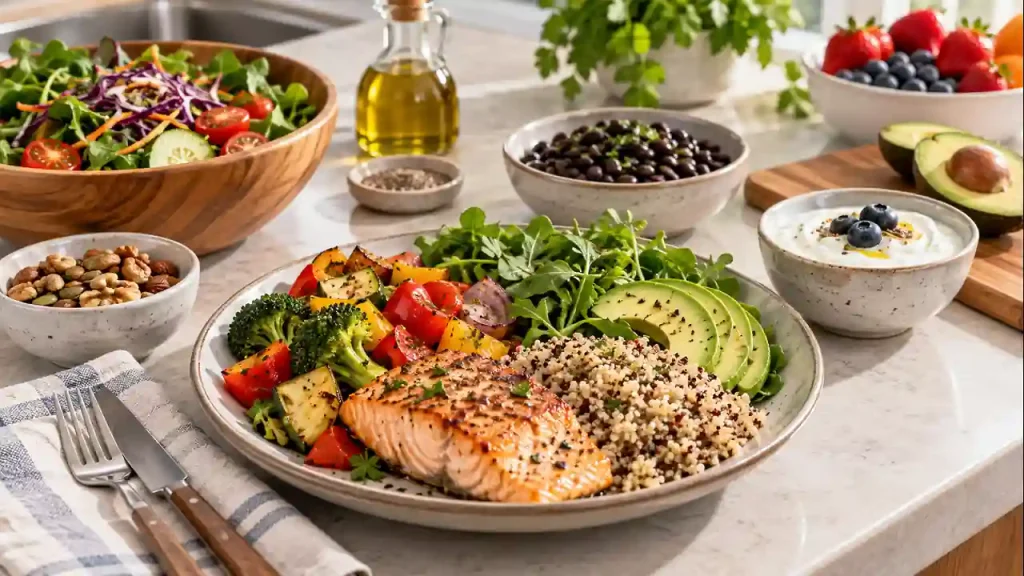
Healthy eating is not simply about eating less. Your body needs enough energy, protein, essential fats, fiber, vitamins, minerals, and carbohydrates to function well. Aggressive restriction can be difficult to sustain and may leave nutritional gaps. The current Dietary Guidelines for Americans, 2025–2030 emphasize whole, nutrient-dense foods, including protein foods, vegetables, fruits, whole grains, dairy where appropriate, and healthy fats, while reducing highly processed foods.
If you are comparing different eating approaches, our guide to diet plans for women explains how Mediterranean, DASH, plant-based, higher-protein, and other patterns differ. The best eating pattern is one that nourishes you and still fits your culture, schedule, budget, preferences, and health needs.
3. Limit Highly Processed Foods Without Making Food the Enemy

You do not need to declare a permanent “big no” to pizza, burgers, desserts, or packaged foods. What matters more is the overall pattern. Most meals can be built around vegetables, fruits, legumes, whole grains, quality protein sources, nuts, seeds, and other minimally processed foods while still leaving room for foods eaten simply because you enjoy them. “Organic”, “homemade”, and “healthy” are not synonyms either. A homemade dessert can still be high in sugar, while a packaged food can sometimes be a practical and nutritious choice. Aim for better dietary quality, not food guilt.
4. Choose Snacks That Actually Satisfy You

If you become hungry between meals, choose snacks that contribute something useful rather than chasing the lowest possible calorie count. Whole fruit, plain yogurt, nuts, seeds, vegetables with hummus, eggs, or combinations containing protein and fiber can help bridge a long gap between meals. Fruit juice can fit into a diet, but whole fruit usually provides more fiber and is often more filling. And if you are comfortably satisfied until your next meal, you do not need to snack just because a wellness plan says you should.
5. Avoid Tobacco and Be Thoughtful About Alcohol

Avoiding tobacco is one of the clearest health choices you can make. If you currently smoke or use tobacco, getting help to quit can meaningfully reduce long-term health risk. Alcohol deserves a separate message. Drinking water does not cancel its effects, and alcohol should not be promoted as necessary for health. If you do not drink, there is no health reason to start. If you do drink, less is generally safer than more. Women who are pregnant, trying to become pregnant, taking certain medications, or managing particular health conditions may need to avoid alcohol entirely.
6. Protect Your Sleep

Sleep should not be treated as whatever time is left after everything else is finished. Most adults need at least seven hours of sleep, and many function best with more. Regularly surviving on five or six hours should not be normalized simply because life is busy. A consistent sleep schedule, a dark and comfortable bedroom, less late-night stimulation, and enough time in bed can all help. Persistent insomnia, severe daytime sleepiness, loud snoring with breathing pauses, or other ongoing sleep problems are worth discussing with a healthcare professional.
Among all the health and fitness tips for women, protecting sleep is one of the easiest to underestimate because its benefits are less visible than a workout—but recovery affects almost everything else you are trying to do.
7. Manage Stress Realistically

Stress cannot be eliminated by deciding not to feel it. Work, money, caregiving, illness, relationships, and major life changes can all create real pressure. The more realistic goal is to build ways to recover. That might include walking, reading, spending time outdoors, seeing a friend, doing yoga, practicing breathing exercises, engaging in a hobby, or simply protecting a small part of the day from unnecessary demands. You do not need an hour-long wellness ritual for stress management to count. Short, repeatable pauses are often more realistic than waiting for a perfect free afternoon.
8. Keep Preventive Healthcare Up to Date

Preventive healthcare matters, but there is no universal rule that every healthy woman needs tests every six months. The American College of Obstetricians and Gynecologists recommends preventive care based on age, health history, symptoms, and individual risk factors, with different services following different schedules. Depending on your age and circumstances, preventive care may include blood-pressure checks, vaccinations, cervical cancer screening, breast-health discussions, sexual and reproductive healthcare, bone-health assessment, cholesterol or diabetes screening, and mental-health conversations. Rather than following an arbitrary calendar, ask which preventive services are appropriate for you. And if you develop a new or concerning symptom, do not wait for a routine visit to mention it.
9. Combine Cardio With Strength Training
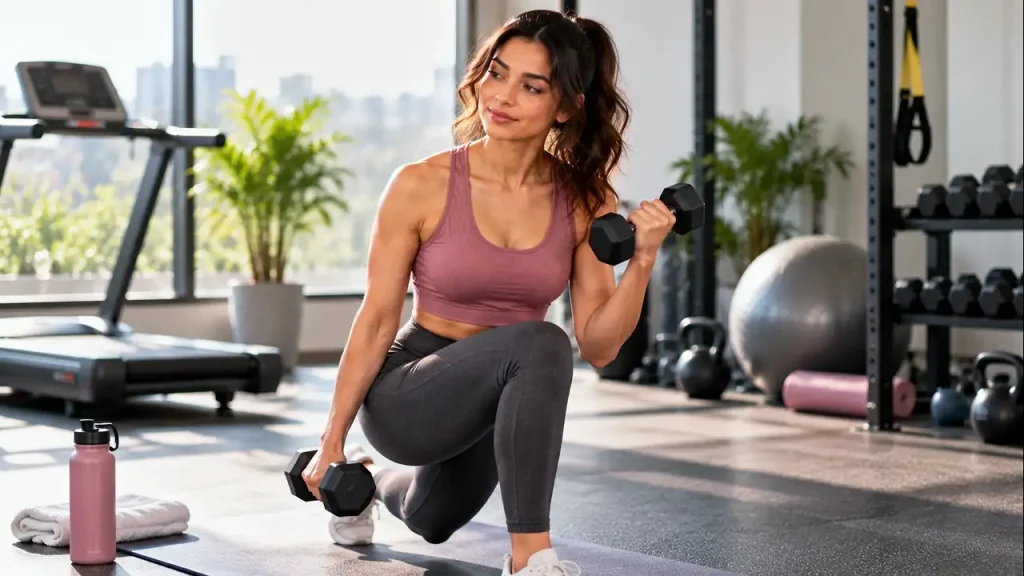
A strong fitness routine should not mean endless cardio or exercising only to burn calories. Current CDC physical-activity guidance recommends at least 150 minutes of moderate-intensity aerobic activity each week, or an equivalent amount of vigorous activity, plus muscle-strengthening activity on at least two days per week. Walking, cycling, swimming, dancing, jogging, and hiking can support cardiovascular fitness. Strength work can include weights, resistance bands, body-weight exercises, machines, and some forms of yoga.
You also do not need to complete all your activities in one session. Several shorter bouts across the week can still contribute. If you use protein supplements around training, remember that they are optional. Our guide to when to drink protein shakes for weight loss explains why overall protein intake matters more than chasing a narrow post-workout window. A modern list of health and fitness tips for women should include strength training explicitly, because preserving muscle, strength, and function matters across adulthood—not only for athletes.
10. Stay Hydrated According to Your Needs

Hydration matters, but there is no universal rule that every woman must drink exactly 10 or 12 glasses of water each day. Fluid needs vary with body size, diet, climate, physical activity, pregnancy, breastfeeding, illness, medications, and medical conditions. Water is usually the simplest everyday choice, but other drinks and water-rich foods also contribute to fluid intake. The useful habit is to drink regularly, pay attention to thirst and circumstances, and keep water accessible rather than forcing yourself to meet an arbitrary number.
11. Build a Routine You Can Actually Sustain
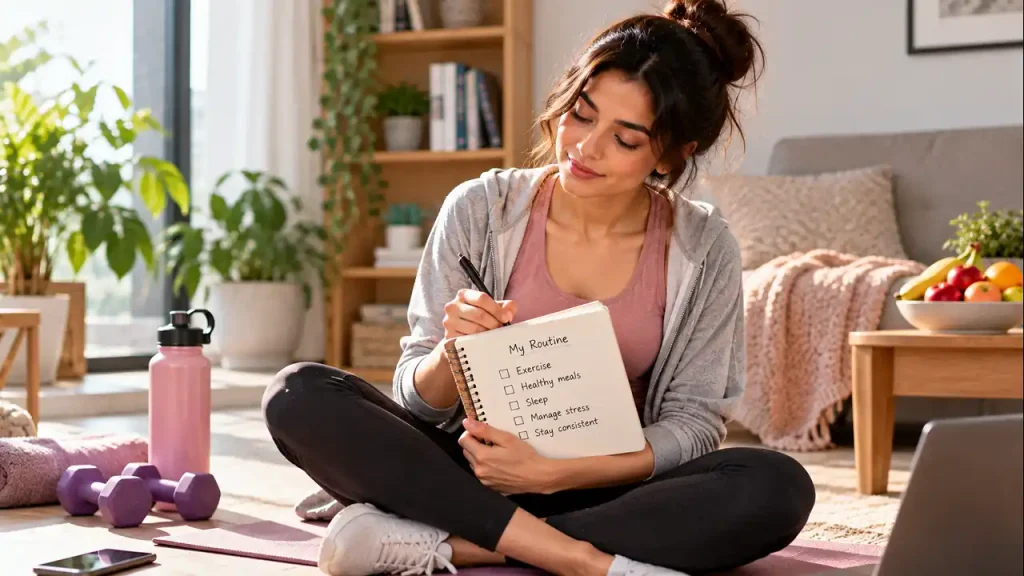
Morning is not automatically the best time to exercise. If morning workouts fit your life and you enjoy them, use them. If lunch breaks, evenings, weekends, or several shorter sessions work better, those are valid too. Consistency matters more than forcing yourself into somebody else’s ideal routine. The same principle applies to diet, sleep, stress management, and fitness goals. Start with changes you can repeat: two weekly strength sessions, a regular walk, an earlier bedtime, bringing lunch from home more often, or keeping nourishing snacks available.
Our guide to evidence-based ways to boost metabolism naturally explains why movement, muscle mass, sleep, and overall energy balance matter more than quick-fix metabolism claims. The best health and fitness tips for women are the ones that still make sense after the initial burst of motivation has faded.
Final Thoughts
Good health does not require perfect food, a flawless workout plan, or a life without stress. It comes from repeatedly returning to a few useful foundations: nourishing food, regular movement, strength, sleep, hydration, recovery, and appropriate preventive care. Different seasons of life will change what those habits look like. Pregnancy will not look like menopause. Recovery from illness will not look like training for a fitness goal. A demanding work season may require a simpler routine than a quiet one. Use these health and fitness tips for women as a flexible foundation rather than another set of rules to fail. Build around your body, circumstances, medical needs, and stage of life, and choose habits realistic enough to continue long after motivation wears off.



Leave a Reply