

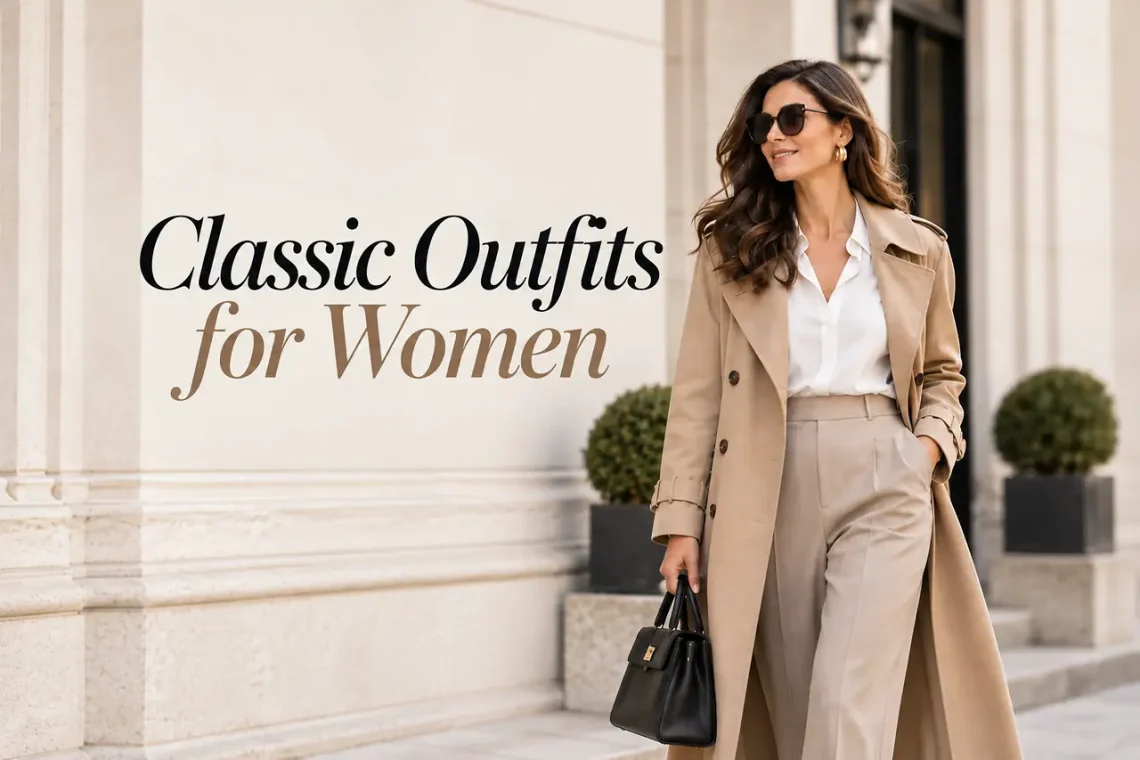
Tired of cycling through fast-fashion trends and still feeling like you have nothing to wear? Embracing classic outfits for women offers a practical, elegant way off that treadmill. Clothing naturally communicates who we are, serving as both personal expression and everyday utility. When you focus on timeless essentials rather than fleeting micro-trends, putting together a polished outfit becomes effortless.
Building a classic wardrobe is not about dressing rigidly or avoiding modern life—it is about investing in versatile, enduring pieces that adapt seamlessly to your body, lifestyle, and occasion. Here is what defines classic style and how you can assemble 10 go-to outfits that remain stylish year after year.
What is Classic Style?
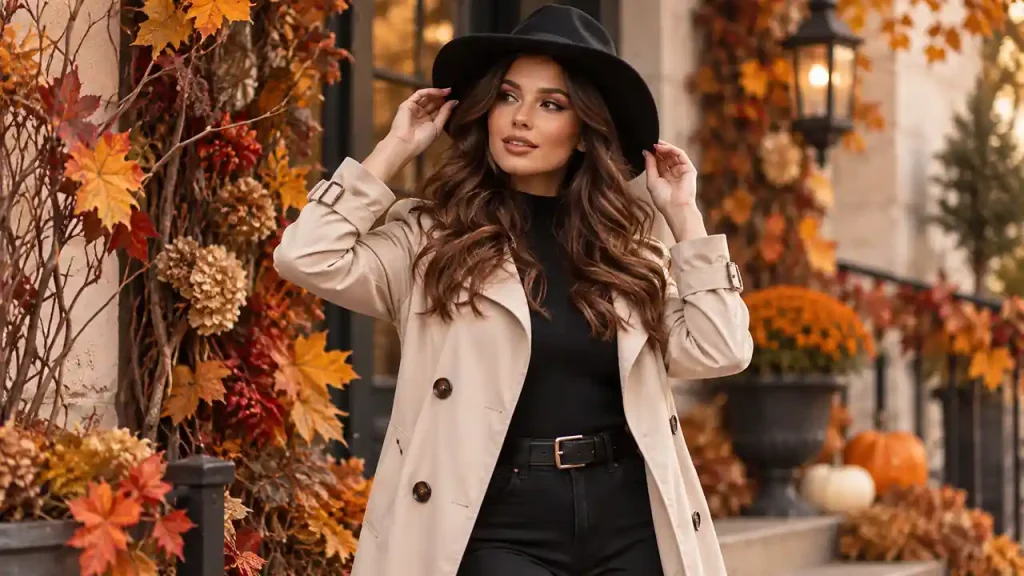
Classic style is a way of dressing built around timeless silhouettes, versatile colors, good fit, and pieces that can be worn repeatedly across seasons and occasions. Rather than following every trend, a classic wardrobe relies on adaptable staples such as tailored trousers, button-down shirts, blazers, simple dresses, knitwear, loafers, and trench coats.
Classic style centers on pieces and silhouettes that remain wearable across seasons and shifting trend cycles. In consumer research examining what the classic style of clothing means to shoppers published in the International Journal of Costume and Fashion, three core themes consistently define the aesthetic:
- Restrained Elegance: Silhouettes are balanced and intentional, avoiding exaggerated fads or extreme cuts.
- Style Pragmatism: Garments are chosen for their positive utility, comfort, and functional versatility.
- Timelessness: Pieces are designed with the expectation of repeat wear over several years rather than single-season disposal.
In practice, a classic wardrobe is modular. A well-tailored piece pairs easily with multiple items to create distinct looks for different settings, from casual weekend outings to professional meetings. Extending beyond garments, classic styling encompasses well-crafted outerwear, footwear, and understated accessories that hold their aesthetic value over time.
Tips to Build a Classic Wardrobe
Curating an enduring rotation does not mean overhauling your closet overnight. When building dependable classic outfits for women, following these foundational principles helps you avoid shopping impulsively based on momentary trend cycles.
Choose a Versatile Neutral Palette (With Intentional Accents)
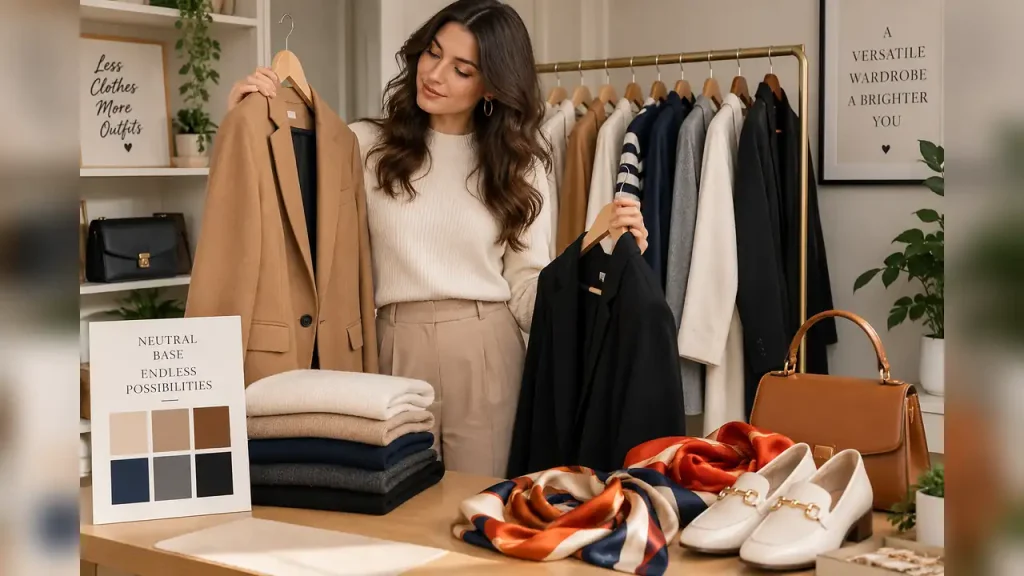
A dependable neutral foundation makes mixing and matching effortless across seasons. Core classic palettes rely on shades such as ivory, cream, camel, beige, navy, charcoal, mocha, and crisp black.
This does not mean your wardrobe must be entirely devoid of color. The practical guideline is simple: build your primary wardrobe base around reliable neutrals, then introduce color selectively through silk scarves, statement knitwear, tailored blouses, footwear, or bags. This approach prevents color fatigue and keeps every piece adaptable.
Prioritize Fit, Proportion, and Tailoring
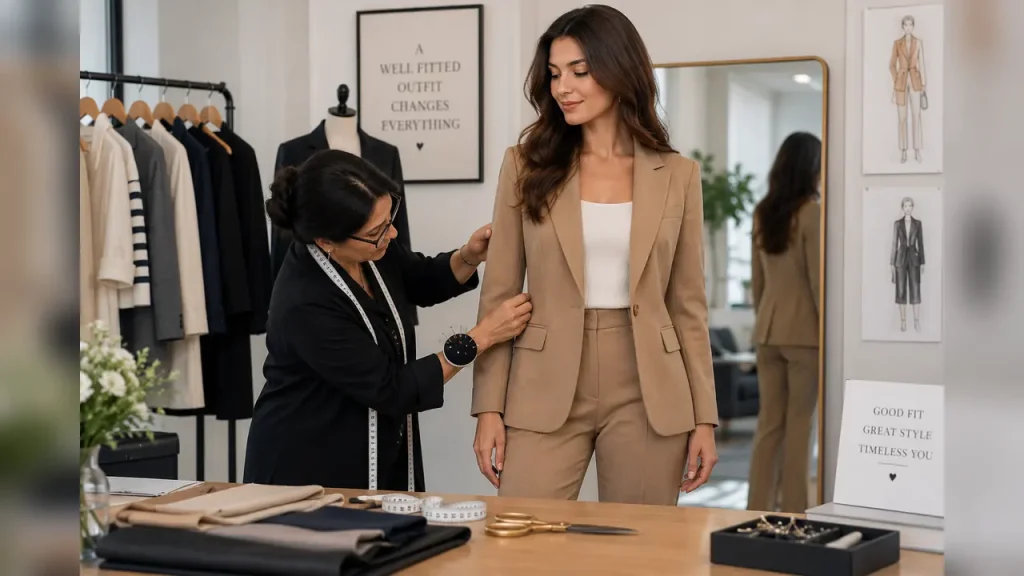
A classic outfit looks refined primarily because it fits the wearer properly. Rather than chasing generic size charts or trying to correct your body shape, focus on balance, proportion, and ease of movement:
- Know Your Measurements: Clothing that pulls across the shoulders, gapes at the waist, or bunches at the hem distracts from an otherwise clean look.
- Cultivate a Relationship With a Good Tailor: Off-the-rack garments rarely fit anyone perfectly. Minor alterations—such as hemming trousers to the right break, adjusting sleeve lengths, or nipping a blazer slightly at the waist—instantly elevate an inexpensive piece into a bespoke-looking staple.
Choose Intentional Silhouettes
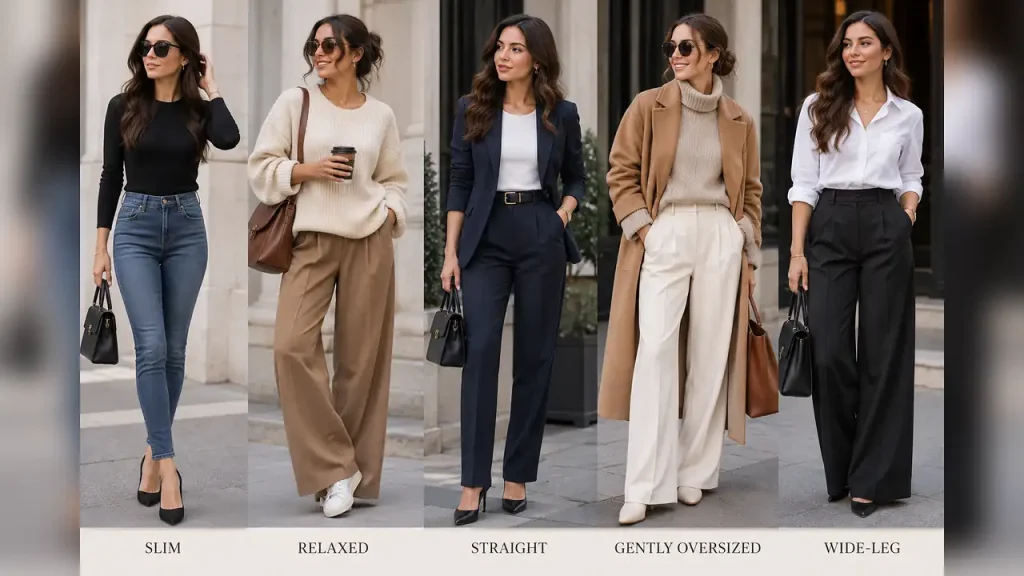
Classic style is not about rigid prohibitions against slim or relaxed cuts; it is about deliberate balance. A common fashion mistake to avoid is choosing trend-driven extremes that lack structural intention.
Garments that are excessively tight often restrict comfort and pull awkwardly, while completely shapeless, overly baggy pieces can obscure your outfit’s structure. Modern classic styling embraces slim, straight, relaxed, and gently oversized cuts alike—provided the overall proportions look purposeful and the pieces harmonize together. For example, pairing relaxed wide-leg trousers with a structured, fitted knit strikes a timeless, confident balance.
Prioritize Quality Construction and Garment Longevity
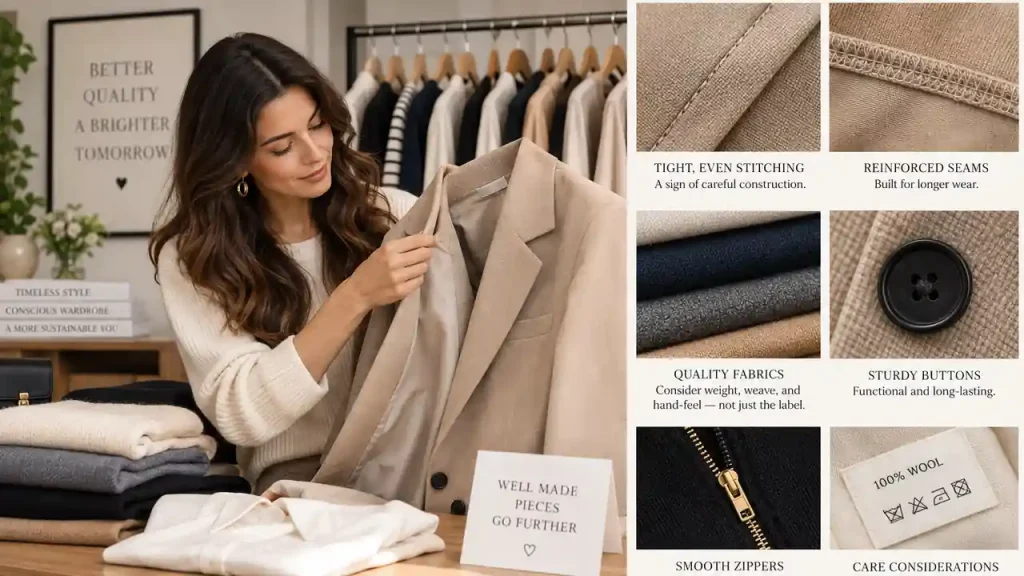
Fast-fashion business models emphasize rapid production and frequent trend turnover, but building a classic wardrobe shifts the focus toward repeat wear and longer-term usefulness. Investing in classic style does not require spending thousands on luxury designer labels. Price alone is not a guarantee of durability.
Instead of looking at the price tag, inspect the physical garment:
- Check for tight, even stitching and reinforced seams.
- Assess fabric weight, weave or knit density, hand-feel, and care requirements rather than judging quality by fiber name alone. Cotton, wool, linen, silk, and well-made blends can all work in a classic wardrobe when the fabric suits the garment’s purpose and expected wear.
- Look for functional closures, sturdy buttons, and smooth zippers.
Classic style naturally supports sustainable habits by prioritizing repeatable wear. Research on clothing longevity suggests that extending a garment’s active life and increasing the number of times it is worn can reduce its environmental impact. Choosing pieces that withstand repeated wear and laundering can therefore support both wardrobe longevity and better cost per wear. When you buy pieces built to withstand repeated laundering and wear, you reduce waste and maximize cost-per-wear value.
What Makes a Classic Piece Worth Buying?
Before adding a new piece to your collection of classic outfits for women, run it through this practical evaluation checklist:
| Evaluation Criteria | What to Look For |
| Fit & Comfort | Sits comfortably without pulling, bunching, or restricting normal movement; easily tailored if needed. |
| Versatility | Pairs seamlessly with at least three to four distinct items you currently own. |
| Fabric Quality | Substantial weight, comfortable hand-feel, and realistic laundering or care requirements for your daily life. |
| Construction | Straight, secure stitching, reinforced inner seams, finished hems, and durable hardware. |
| Color Adaptability | Complements your existing color palette without clashing or showing immediate trend fatigue. |
| Repeat-Wear Practicality | You can realistically see yourself styling and wearing it across multiple settings and seasons. |
10 Timeless Classic Outfits for Women
Here are 10 adaptable outfit formulas built from versatile wardrobe essentials that deliver an effortlessly polished look across diverse occasions.
1. Crisp Button-Down Shirt With Tailored Trousers or Denim
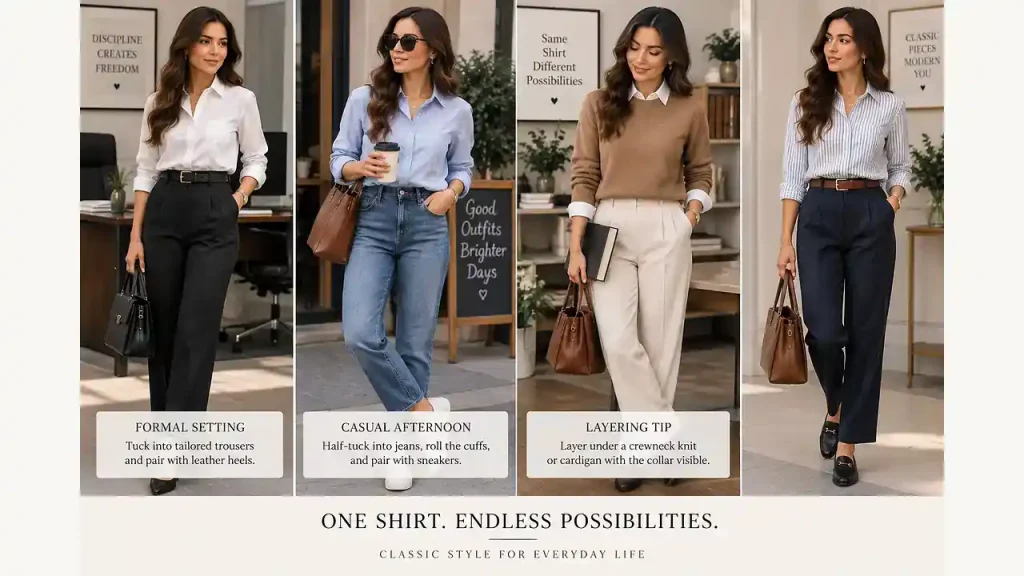
A well-tailored button-down shirt—whether in crisp white, soft blue, or subtle pinstripes—serves as the ultimate wardrobe workhorse.
- For a Formal Setting: Tuck it cleanly into high-waisted slacks or a pencil skirt, finishing with leather loafers or block heels.
- For a Casual Afternoon: Half-tuck it into straight-leg jeans, roll the cuffs neatly to the mid-forearm, and pair with clean low-profile sneakers or leather flats.
- Layering Tip: Layer it underneath a crewneck knit or a structured cardigan with the collar visible for a refined academic touch.
2. Tailored Coat With Straight-Leg Denim and a Fitted Knit
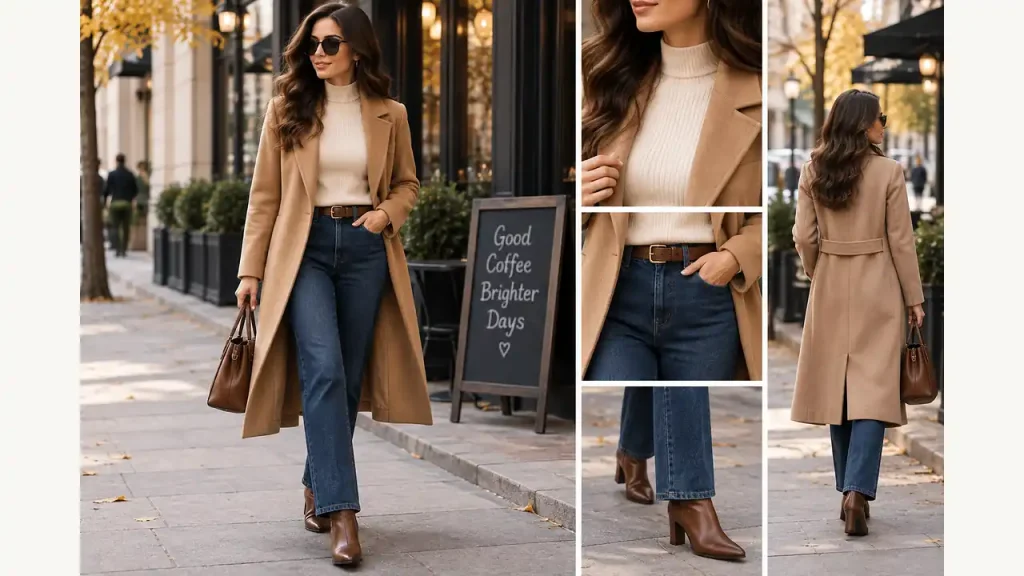
Denim fits seamlessly into a classic wardrobe when chosen with intention. Opt for clean, non-distressed denim in a straight-leg, boot-cut, or tailored slim cut rather than heavily frayed styles.
- Combine dark-wash or mid-blue denim with a finely ribbed crewneck or turtleneck top.
- Layer an unbuttoned camel, navy, or charcoal wool overcoat on top. The clean vertical lines of a structured long coat instantly elevate casual denim into an outfit suitable for smart-casual dining or office environments.
3. A Tailored Pantsuit for a Polished, Modern Look
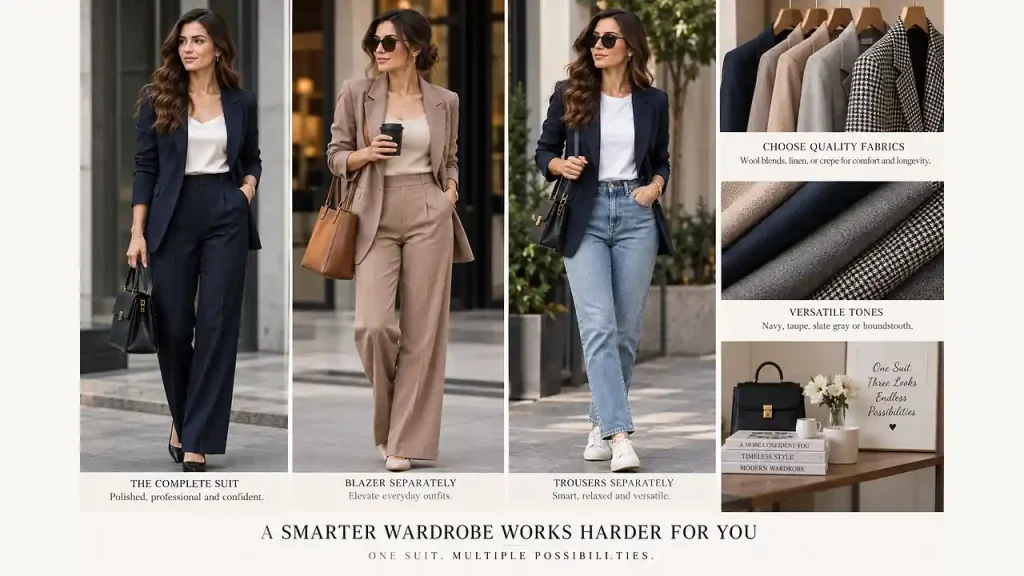
A matching two-piece suit offers unmatched versatility because it functions as three distinct outfits in one: a coordinated set, a standalone blazer, and separate tailored trousers.
- Instead of stiff, uncomfortable fabrications, select breathable wool blends, linen, or crepe in versatile tones like soft taupe, navy, houndstooth, or slate gray.
- Wear the complete suit with a silk camisole or fine knit for business environments, or pair the blazer and trousers separately with casual tees and denim on off-duty days.
4. The Classic Little Black Dress (LBD)
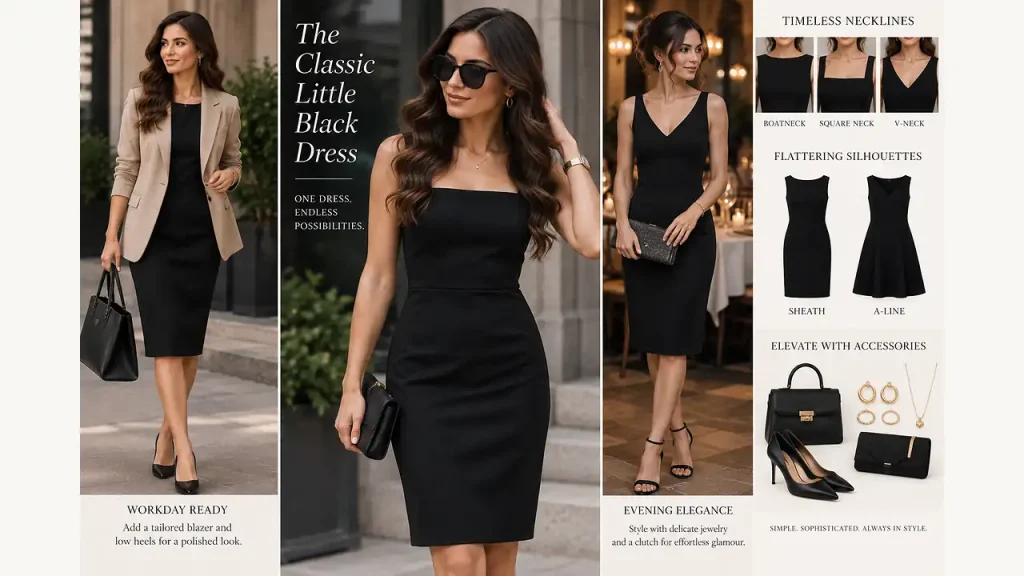
A simple black dress remains an indispensable classic because of its neutral elegance and adaptability.
- Focus on timeless necklines—such as a boatneck, square neck, or modest V-neck—and a clean sheath or A-line silhouette.
- The strength of an LBD lies in its responsiveness to styling: worn with a structured blazer and low heels, it functions as polished workday attire; styled with delicate gold jewelry and an evening clutch, it transitions seamlessly to evening dinners.
5. Structured A-Line or Pleated Skirt With a Soft Blouse
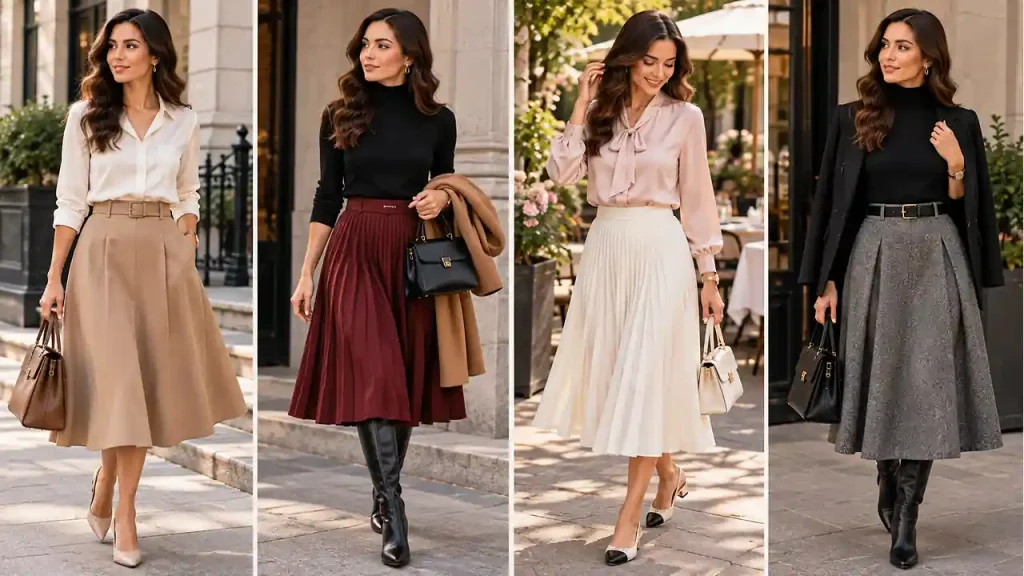
Skirts provide graceful movement and visual balance. Exploring different types of skirts for women helps you identify cuts that align best with your lifestyle.
- Mid-length and ankle-length A-line, pleated, or wrap skirts offer timeless appeal and comfortable mobility across all seasons.
- Pair a pleated midi skirt with a tucked-in silk blouse or a fitted fine-gauge turtleneck, grounding the silhouette with knee-high leather boots in cooler weather or slingback flats in warmer months.
6. The Tailored Blazer With Everyday Basics
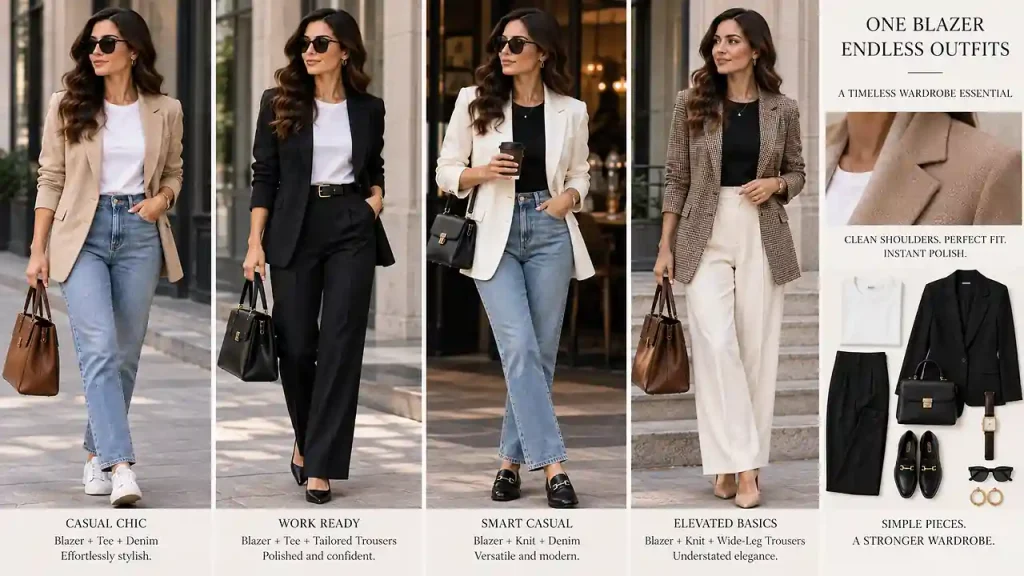
A well-constructed blazer immediately adds structure and polish to casual clothing. Learning how to style a blazer across multiple dress codes is one of the most effective ways to maximize your wardrobe’s cost per wear.
- Choose a single- or double-breasted blazer cut with clean shoulders that drape comfortably over light layers.
- Throwing a tailored blazer over an understated white tee and tailored trousers creates an instantly pulled-together look that feels intentional without appearing overly formal.
7. The Timeless Trench Coat Layered Over Tonal Separates
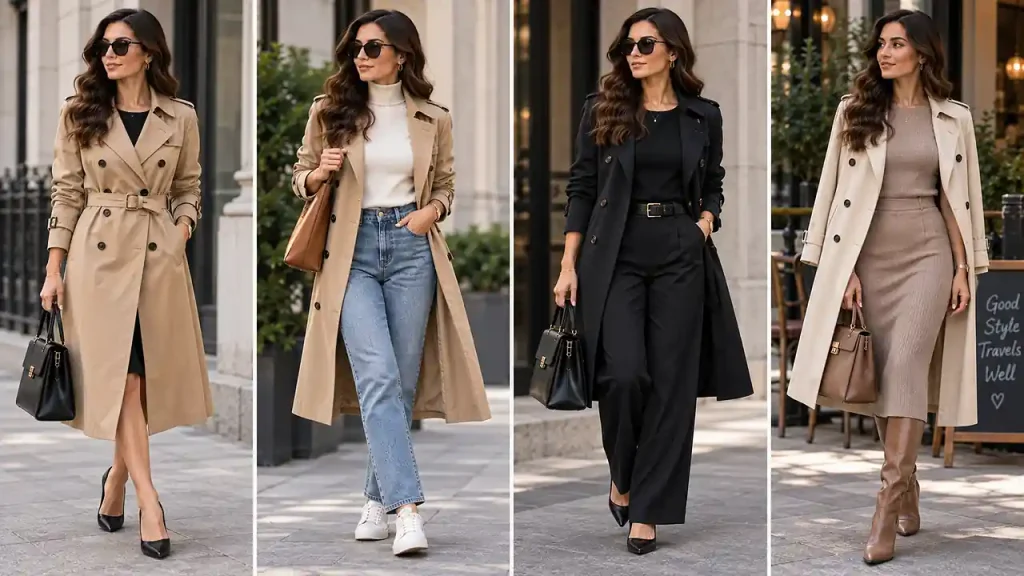
The trench coat is arguably the most recognizable piece of classic outerwear. Its military heritage gives it functional utility (weather resistance, practical pockets, protective storm flaps) while delivering enduring sophistication.
- Choose a double-breasted style in traditional khaki, honey, stone, or deep black with a length that falls just below the knee.
- Wear it belted over tailored dresses to define the waistline, or leave it loosely draped open over simple knitwear and denim for an effortless, on-the-move aesthetic.
8. Fine-knit or structured cardigan as a standalone top
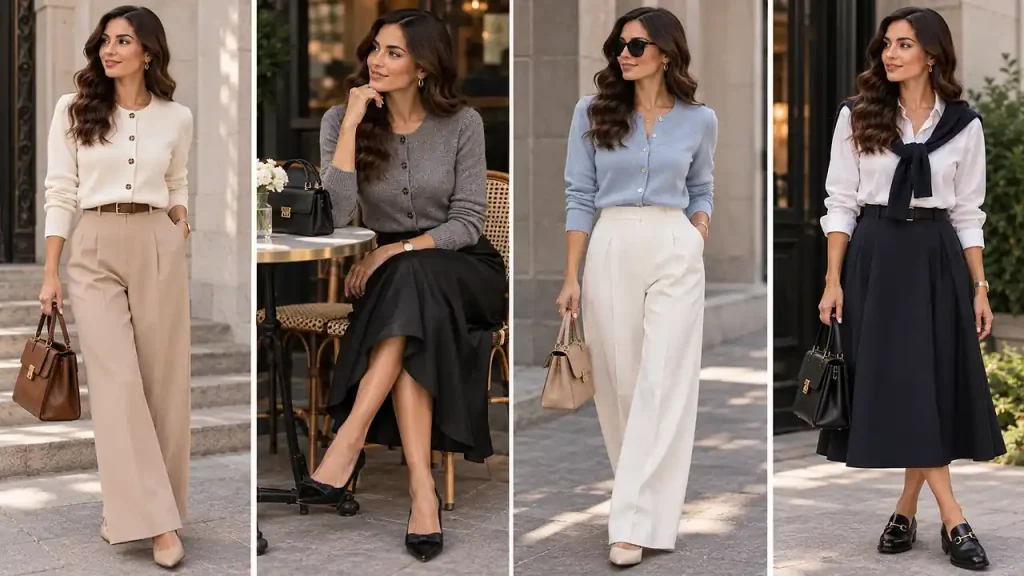
Modern classic styling has refreshed the cardigan from a simple layering afterthought into an elegant focal piece.
- A medium-weight knit with refined ribbed detailing and understated buttons (such as horn, tortoiseshell, or mother-of-pearl) works beautifully worn fully buttoned as a standalone top.
- Pair it with wide-leg trousers or an A-line skirt, or drape it effortlessly across your shoulders over a button-down shirt for an understated, preppy layer.
9. Foundational Footwear: Loafers, Pointed Flats, and Classic Boots
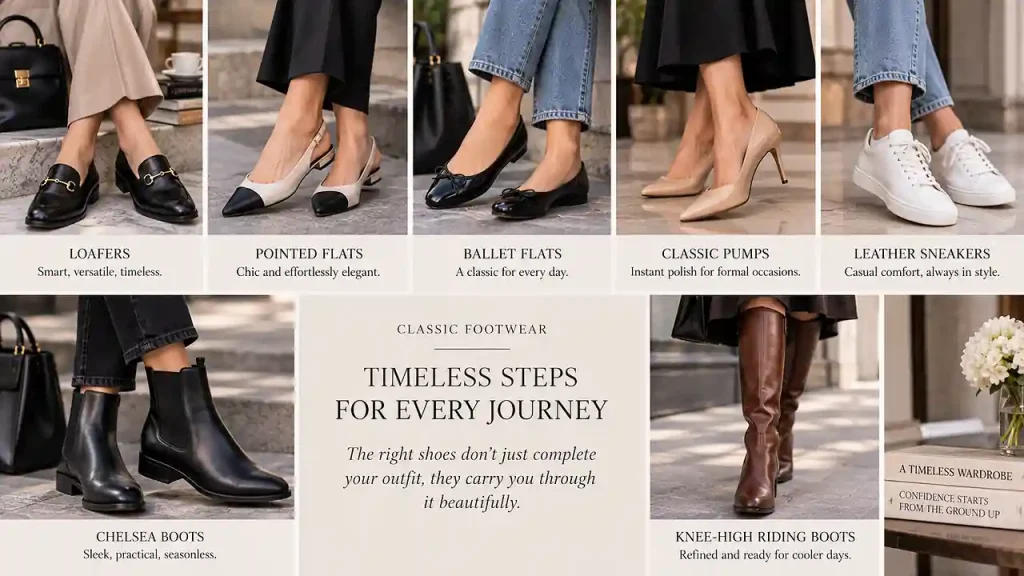
Footwear defines the final mood of an outfit. A classic wardrobe prioritizes sleek lines and enduring comfort over fleeting shoe trends.
- Smart Everyday Wear: Leather loafers with subtle hardware, pointed-toe slingbacks, and clean ballet flats anchor workday and weekend looks alike.
- Formal Occasions: A timeless pump or block heel adds immediate polish, particularly when you feel comfortable knowing how to walk in high heels with ease.
- Casual Settings: Minimalist leather sneakers in white, cream, or another versatile neutral provide casual comfort while keeping the outfit streamlined.
- Inclement or Cool Weather: Tailored ankle Chelsea boots or structured knee-high riding boots in black, cognac, or dark brown integrate smoothly beneath coats, skirts, and trousers.
10. Curated, Functional Accessories
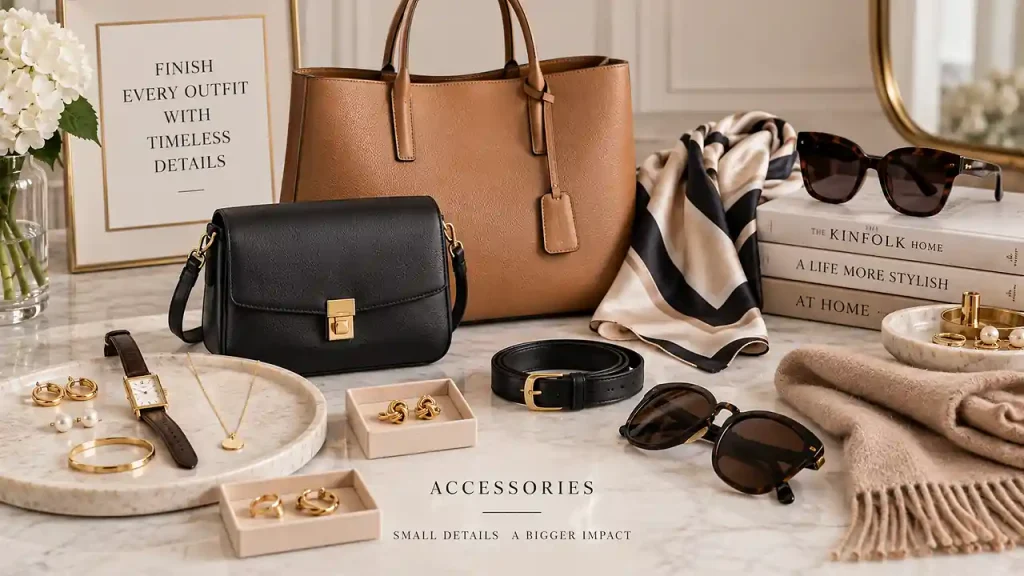
Classic accessories are designed to complement an outfit rather than overwhelm it.
- Jewelry: Build a capsule of understated everyday pieces—such as classic gold or silver hoops, delicate pendant necklaces, pearl studs, and an elegant leather-strap watch.
- Bags: Invest in a structured leather tote or crossbody bag with minimal branding, durable hardware, and a shape that holds up through everyday use.
- Finishing Touches: A pair of tortoiseshell or dark acetate sunglasses that flatter your face shape and a neutral cashmere or silk scarf complete an outfit with quiet refinement.
How to Make Classic Outfits Look Modern, Not Dated
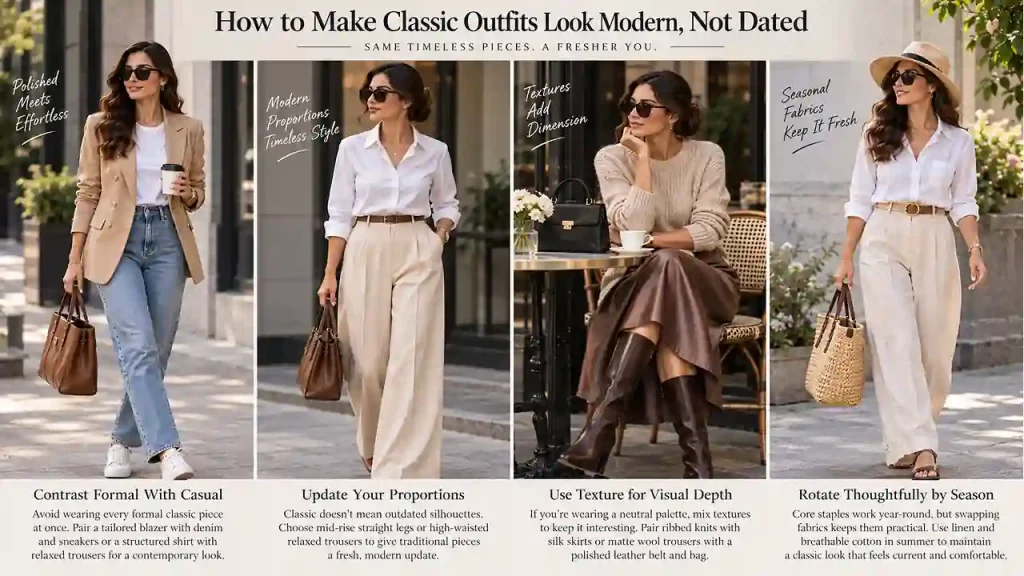
A frequent concern is that wearing traditional pieces might look overly conservative, rigid, or aged. The secret to keeping classic outfits for women feeling fresh lies in deliberate contrast, updated proportions, and thoughtful styling adjustments:
- Contrast Formal With Casual: Avoid wearing every formal classic piece at once unless dress codes require it. Pair an impeccably tailored double-breasted blazer with clean denim and minimalist leather sneakers, or pair a structured button-down shirt with fluid, relaxed trousers. Blending structure with ease creates a contemporary, effortless aesthetic.
- Update Your Proportions: Classic outfits for women don’t require clinging to decade-old silhouettes. Swapping ultra-narrow cuts for mid-rise straight legs or high-waisted relaxed trousers gives traditional pieces an immediate, modern update without chasing fleeting fads.
- Use Texture for Visual Depth: If your outfit relies entirely on a monochrome or neutral palette, introduce contrasting textures to keep it visually dynamic. Pair ribbed knits with smooth silk skirts, or style matte wool trousers alongside a polished leather belt and bag.
- Rotate Thoughtfully by Season: While core staples like blazers, denim, and button-downs work year-round, swapping complementary fabrics keeps the aesthetic practical. Incorporating crisp linen and breathable cotton through casual summer outfit ideas ensures your classic look remains comfortable and seasonally appropriate.
Final Thoughts
Adopting a classic style is not about following rigid fashion commandments, forcing your body into specific shapes, or adhering to restrictive color bans. At its core, curating classic outfits for women is an intentional mindset: choosing well-constructed garments, honoring your personal comfort, and relying on versatile outfit formulas that eliminate morning wardrobe fatigue.
By focusing on durable fabrics, proper tailoring, and balanced silhouettes, you build a functional wardrobe where every piece works harmoniously with the rest. When your clothes fit well and withstand the test of time, you spend less energy chasing temporary trends—and step out each day with quiet, enduring confidence.



Leave a Reply