

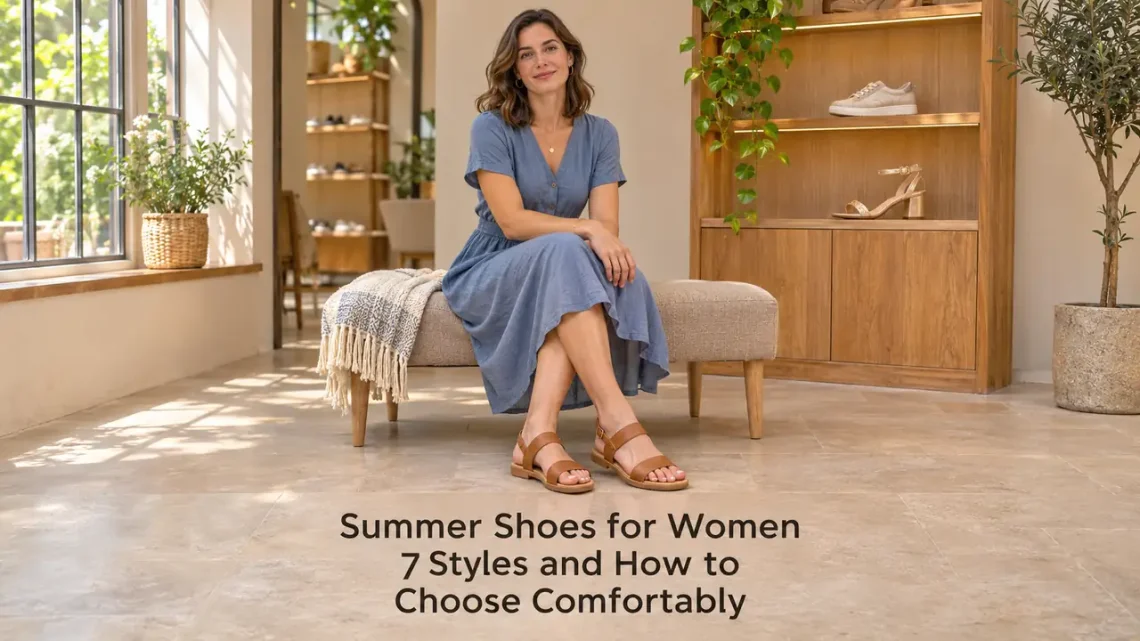
Summer shoes for women should work for the day ahead, whether that means a short walk to the café, a beach visit, or hours exploring a new city. Rather than buying every fashionable pair, look at fit, support, traction, and the places you actually go. These seven footwear styles offer different advantages, along with limitations worth knowing before you shop.
What Makes a Good Summer Shoe?
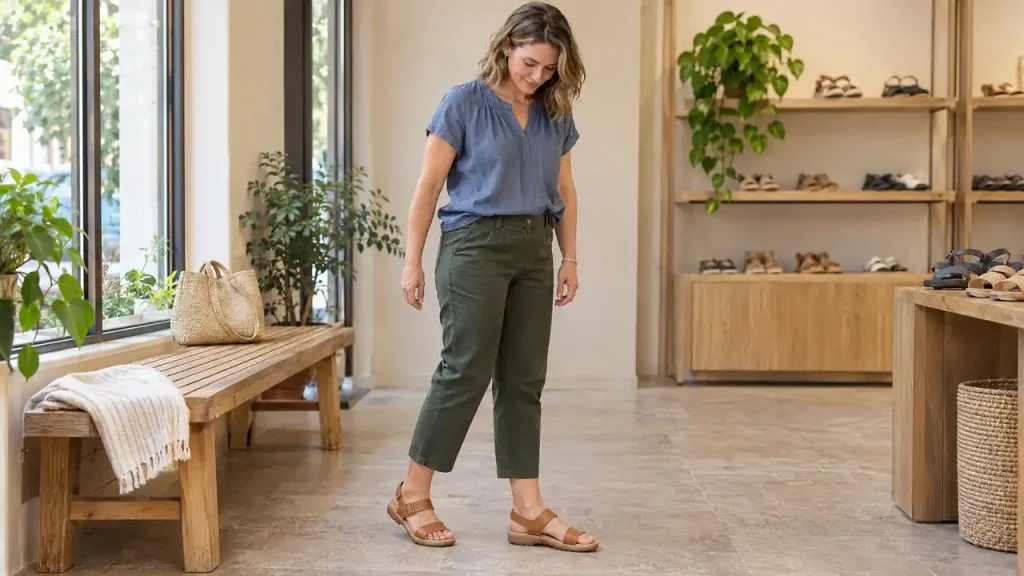
The best pair is one you barely need to think about once you leave home. An open design alone does not guarantee comfort. Choosing shoes for an occasion is much like avoiding common fashion mistakes: practicality and personal taste should work together.
Fit Comes Before Style
Try on both shoes while standing. Check for space in front of your longest toe, a heel that stays reasonably secure, and straps that do not dig into your skin. Walk across the shop, turn, and try a few steps at your usual pace. Footwear should feel comfortable from the start; don’t count on painful seams or tight toe boxes stretching into the perfect fit. Fit the larger foot first. If your feet tend to swell later in the day, avoid buying an unusually tight pair in the morning. Watch for pressure points that appear after several minutes, not just at first contact.
Match the Sole to the Surface
A flexible sole should bend where your toes naturally bend, rather than folding completely in the middle. Grip and stability matter on wet or uneven ground. Choose a secure fastening when you will move quickly or navigate uneven ground. Comfortable summer outfit ideas start with the day’s conditions, not the most photographed accessory.
Seven Summer Footwear Styles to Consider
Some people need supportive sneakers and one dressy sandal; others prefer flats for most outings. These summer shoes for women each have a place, but no single design is right for every activity.
1. Peep-Toe Heels for Dinners and Celebrations
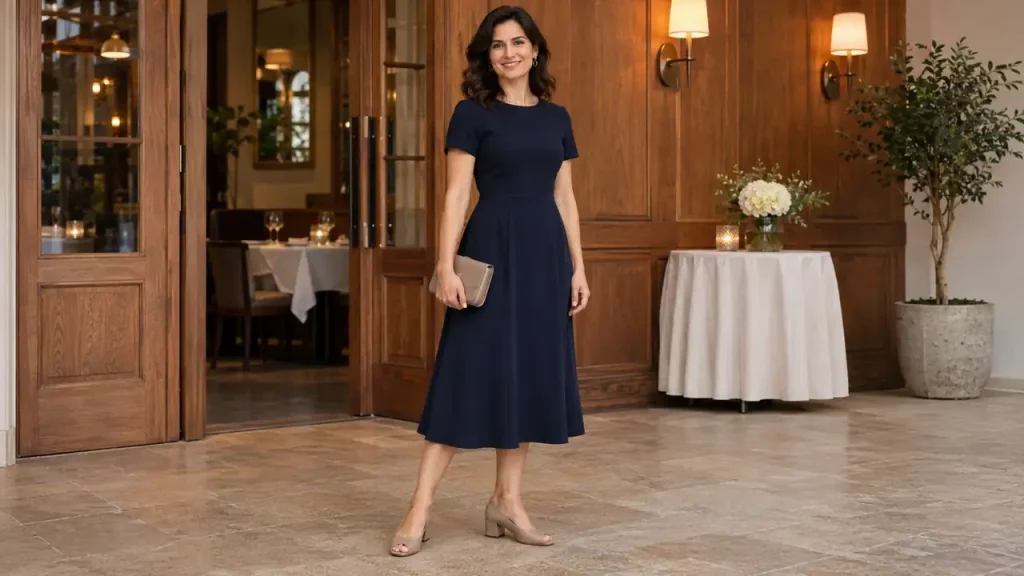
Peep-toe heels reveal a small section of the toes and can complement trousers, midi skirts, or formal dresses. The opening does not automatically relieve pressure at the front of the foot. A lower, wider heel may feel steadier. Try the exact pair indoors, checking whether your foot slides forward. If the toes feel squeezed, a larger size may not solve a badly shaped toe box. You can combine a simple pair with classic outfits rather than buying a matching shoe for every dress.
2. Flip-Flops for Short Trips Near Water
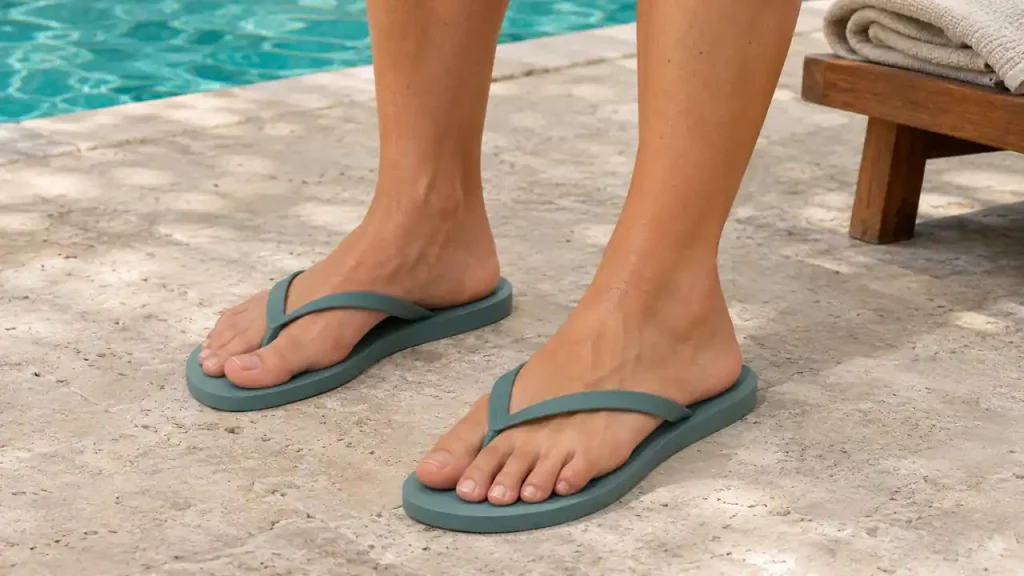
Flip-flops are convenient for a pool, beach changing area, or quick walk from your room. Their Y-shaped strap and open heel also make them less secure during prolonged walking. They offer limited shock absorption and support. Advice on when to wear flip-flops specifically discourages long-distance walking and sports in them.
Check that neither toes nor heels hang over the edges, and replace pairs with worn or slippery soles. For sightseeing after the beach, switch to footwear with a secure heel and suitable grip. They are not all-day footwear.
3. Summer Sneakers for Walking and Travel
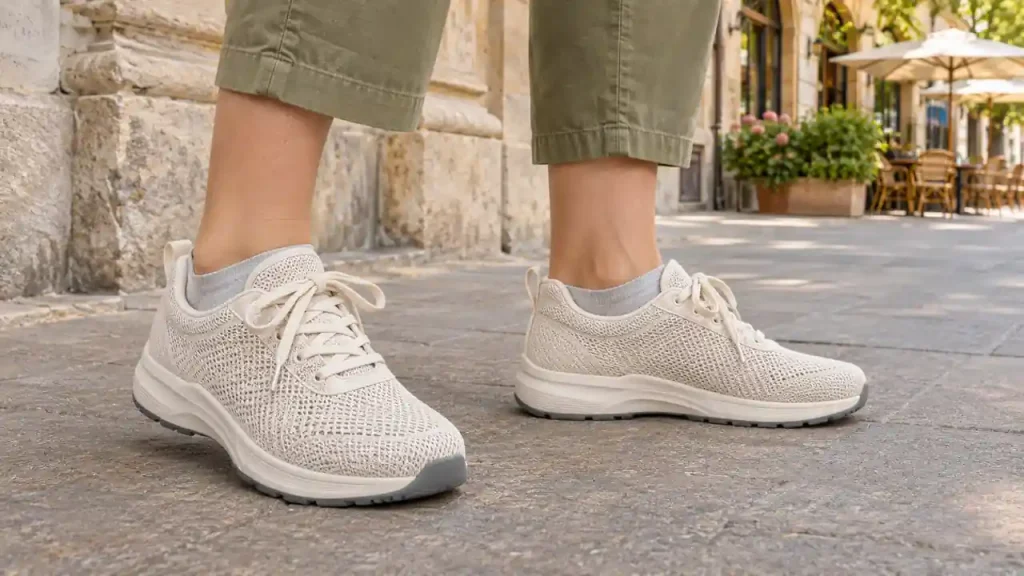
Closed shoes can be practical in hot weather. Light, breathable uppers, appropriate socks, and a secure fit may make sneakers more comfortable than flimsy sandals when you are walking for hours. Check the toe room, heel movement, and whether the sole suits your activity. A casual fashion sneaker is not automatically suitable for running or court sports. Athletic shoes need to match the movement involved; an attractive everyday trainer may not provide the traction or support required for repeated workouts.
One of the most versatile summer shoes for women is a sneaker that works with both everyday trousers and relaxed skirt outfits. For long queues or uneven streets, prioritize comfort.
4. Gladiator Sandals for Strappy Detail
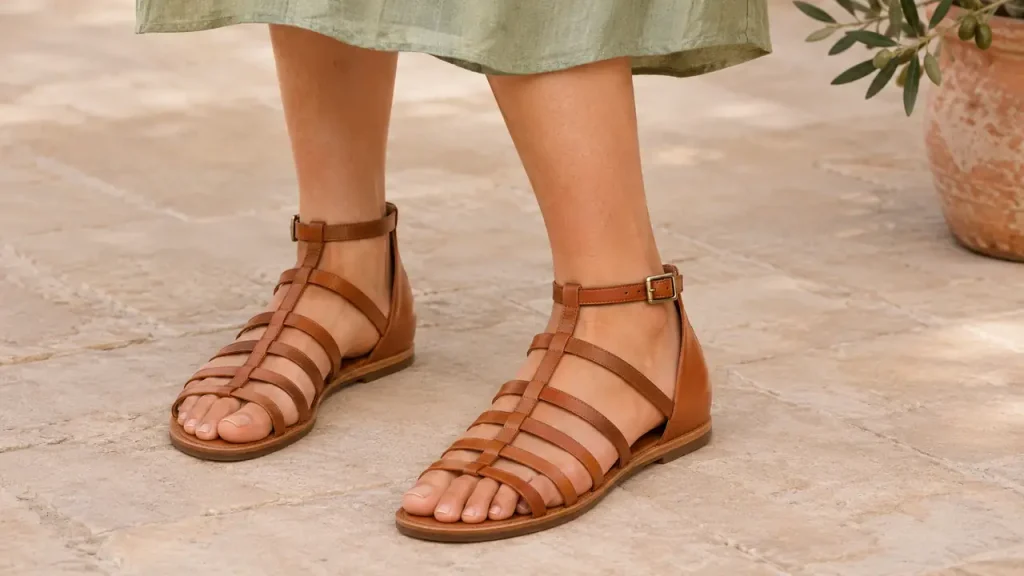
Gladiator sandals have several straps across the foot, sometimes reaching the ankle or calf. A flat, secure version can give a simple dress more character. Yet more straps also mean more possible rubbing points. Check the toe loop, ankle fastening, and edges; a decorative tie should not restrict circulation or slide down as you walk.
The fit and safety of strappy sandals depend on construction, cushioning, and how securely the foot sits in the shoe. Don’t assume every flat gladiator provides enough support for a day of sightseeing.
5. Slides for Relaxed, Short Outings
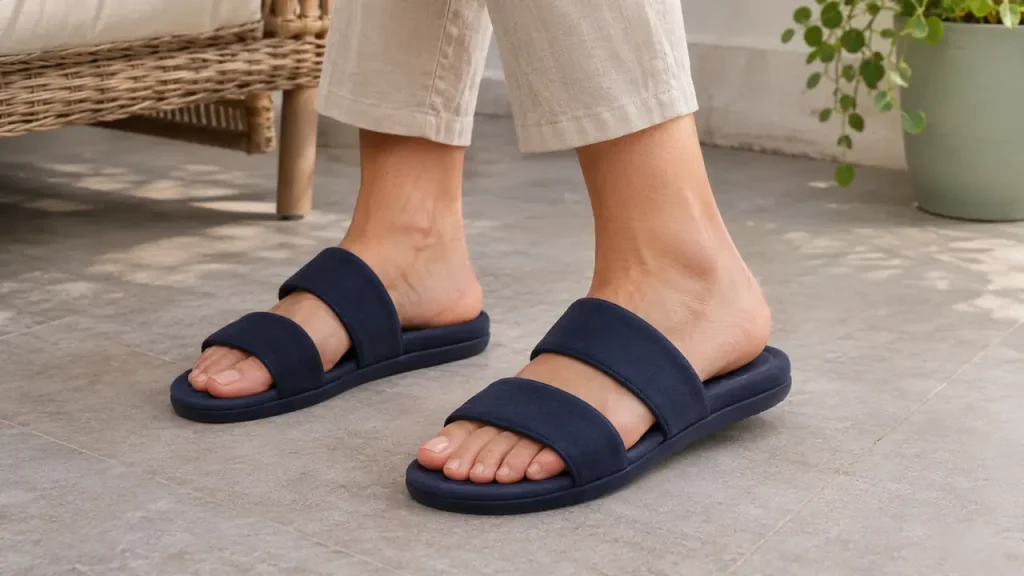
Slides have an open heel and one or more bands over the foot. They are quick to slip on for errands, casual gatherings, or a short walk near a pool.
The challenge is keeping them secure: if you repeatedly curl your toes to hold the shoe in place, try a different fit or a back strap. Also inspect traction; a waterproof upper does not guarantee a non-slip sole. They can complement coordinated family photo outfits when walking is limited. Slides still expose skin to sunburn.
6. Kolhapuri Sandals for Traditional Styling
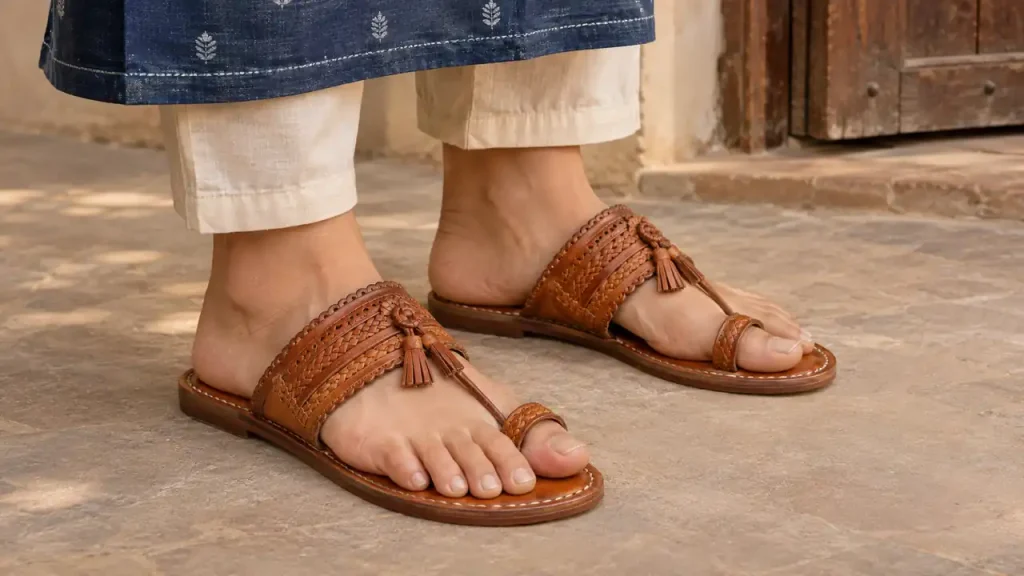
Kolhapuri chappals reflect a longstanding footwear craft associated with Maharashtra and Karnataka in India. Handcrafted versions can include distinctive leather straps, decorative details, and a toe loop. They look lovely with kurtas, wide-leg trousers, or festive outfits, but comfort varies between individual pairs. Examine rough edges, the width of the sole, and any pressure between the toes.
Ask about the maker and materials. If ordering online, inspect close-up photos of the straps and stitching and confirm the exchange policy. Traditional designs can be beautiful without needing to justify discomfort. An attractive handcrafted shoe still needs a proper fit.
7. Everyday Sandals and Slingbacks for Versatility
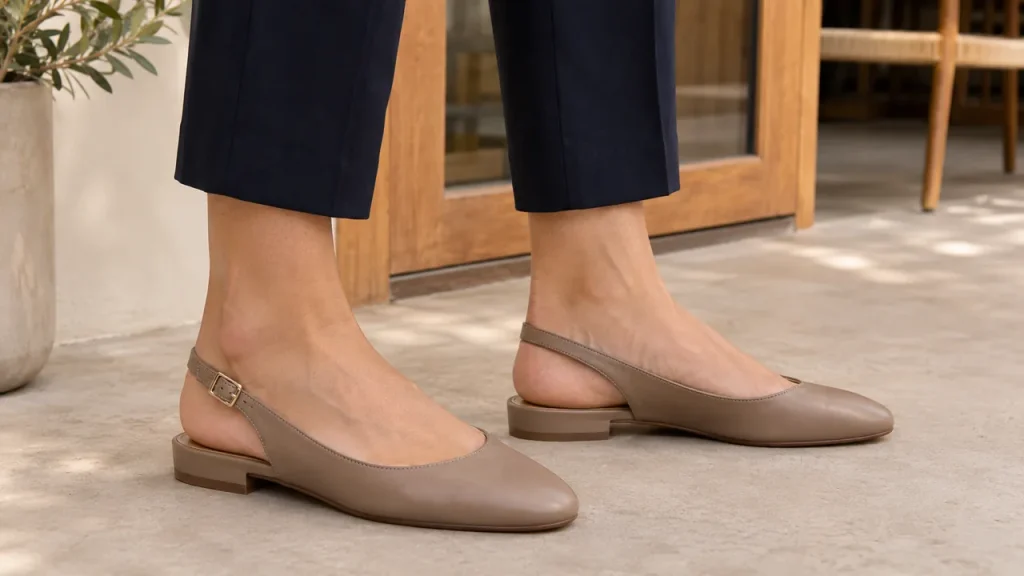
A sandal with adjustable straps and a secure heel can cover more situations than several occasional pairs. T-bar sandals, low block-heel styles, and slingback flats all provide different levels of coverage. Check whether the back strap slips, whether the footbed feels stable, and whether the outsole grips the surfaces you use. Choose colors that work with your wardrobe.
These styles also work with dinner outfits for a night out or office-ready casual blazer combinations. Test the actual pair; heel height alone cannot predict comfort.
Which Pair Works Best for Your Plans?
Summer shoes for women should be chosen by activity first, then color and silhouette.
| Your plans | Consider | Check carefully |
| Long city walk | Walking sneakers or secure sandals | Grip, heel hold, cushioning |
| Pool or changing room | Flip-flops or water-friendly slides | Wet-floor traction, short use |
| Wedding or dinner | Low heels or slingbacks | Toe pressure, standing time |
| Casual errands | Stable slides or everyday sandals | Slipping and rubbing |
| Traditional celebration | Well-fitting Kolhapuris | Toe loops and sole comfort |
Five Fitting-Room Tests That Prevent Regret
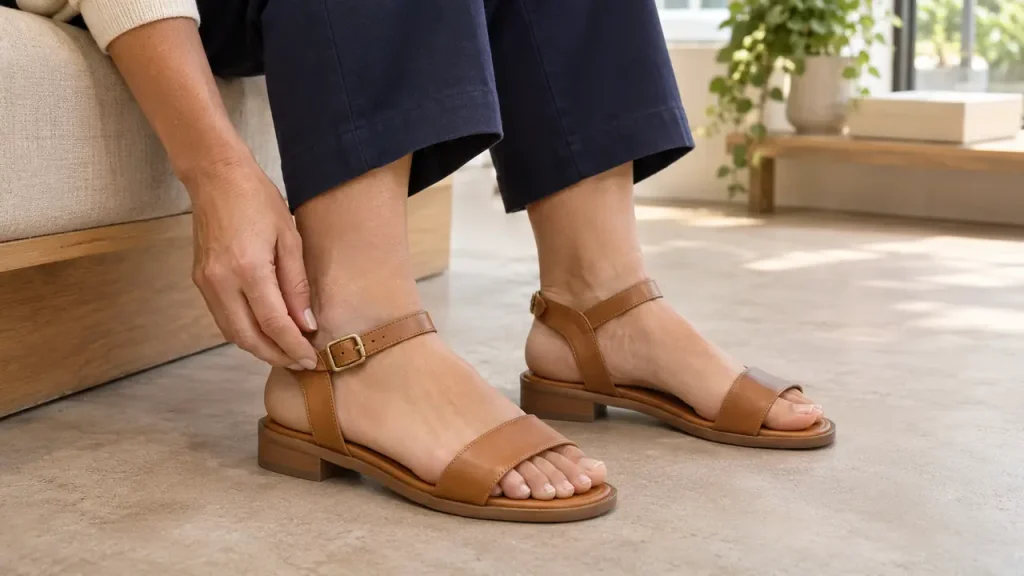
Before paying, try these simple tests on a safe surface, and look for an exchange policy if ordering online.
1. Walk normally: Take several steps, turn, and notice whether the shoe slips or forces you to grip with your toes.
2. Check every edge: Neither your longest toe nor your heel should extend beyond the sole; straps should not scrape your skin.
3. Test stability: Avoid a sole that twists easily in the middle or feels slick underfoot.
4. Allow for real use: Try sneakers with your usual socks; consider how your feet feel later in the day.
5. Imagine repeat outfits: A pair that works with three things you already own may be more useful than a dramatic one-time purchase.
If exposed toes are part of the look, optional simple nail designs can add color, but bare, natural nails are equally appropriate.
Protect Your Feet From Sun and Irritation
Sandals and flip-flops leave skin exposed. When outdoors, protecting the tops of your feet means using broad-spectrum, water-resistant SPF 30 or higher on uncovered areas, alongside shade and suitable clothing. Reapply according to the product directions, especially after swimming or sweating. A wide sandal strap is not a substitute for sun protection.
Dry wet footwear, and do not ignore persistent pain. After a busy day, check for redness where straps touch the skin. Repeated rubbing usually calls for a different fit or design rather than simply enduring it. If you have diabetes, reduced foot sensation, circulation problems, or recurrent injuries, ask a qualified clinician which footwear is appropriate for you.
Frequently Asked Questions
The answers depend on the individual shoe, not just its label.
1. Are Flip-Flops Good for All-Day Walking?
Usually not. They tend to offer limited support and security. Choose walking shoes or secure, supportive sandals for long distances.
2. Can Sneakers Be Comfortable in Hot Weather?
Yes. Breathable materials and suitable socks can help. Match the shoe to walking, running, or the specific activity you plan.
3. Must I Own All Seven Summer Footwear Styles?
No. Choose what fits your schedule, budget, and feet. A dependable everyday pair plus one occasion-specific option may be enough.
Final Thoughts
The best summer shoes for women are the pairs you reach for because they feel good and suit your plans. A flip-flop can be perfect beside a pool but frustrating on a long walk; a sneaker can be practical even when temperatures rise. Prioritize secure fit, appropriate soles, and protection for exposed skin, then enjoy the color and design you like. Comfort that lasts past the first photograph is worth more.



Leave a Reply