

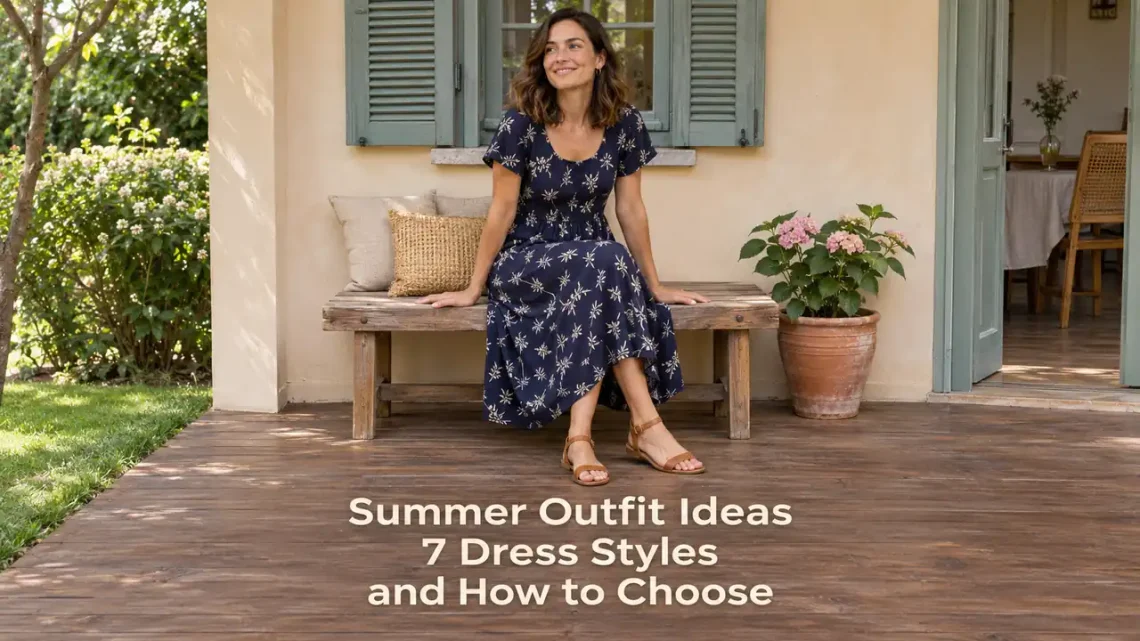
The best summer outfit ideas begin with the day you actually have planned. A lovely dress can still disappoint when its lining traps heat, straps slip, or the hem catches on your shoes. Instead of shopping by trends alone, consider the weather, how long you will be outside, and what feels comfortable against your skin. This guide covers colors, prints, fabrics, seven dress styles, and the small fitting-room checks that prevent regret.
How to Choose a Summer Dress That Works for You
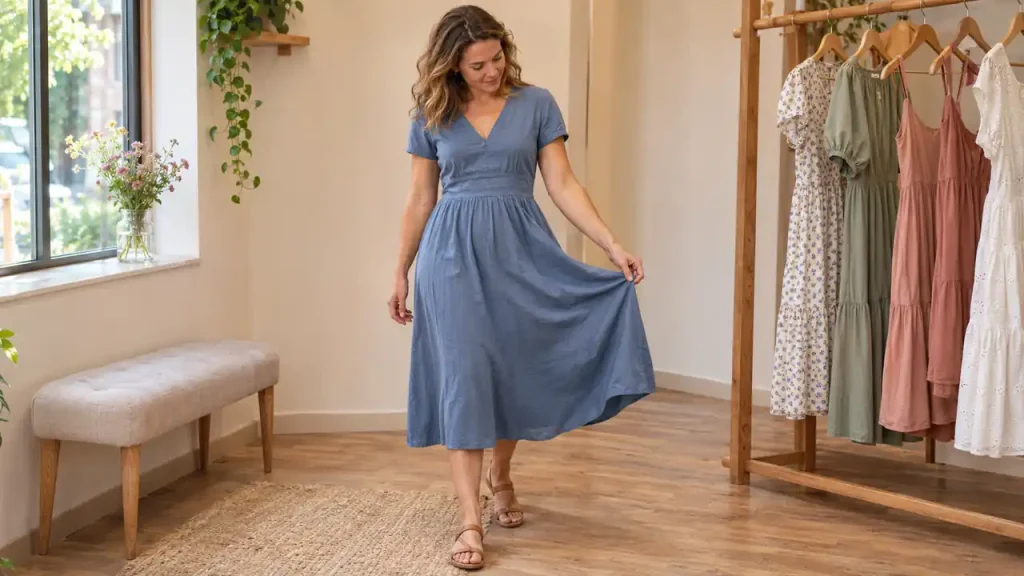
Start with your plans: a humid commute, an air-conditioned office, and an outdoor celebration need different details. Look at coverage, movement, footwear, and laundry requirements before falling for a print. A piece that pulls across your shoulders or needs constant adjustment may not be a useful purchase, however beautiful it looks on a hanger. Many common fashion mistakes are simply mismatches between your clothes and your real routine.
Choose Summer Colors and Prints Without Rigid Rules
Color is personal. White and pastel blue may look fresh, but black, rust, emerald, and deep pink can work just as well. Skin undertones are an optional styling tool, not a test you must pass. Hold a color near your face in daylight and decide whether you enjoy it. Nobody needs to lighten their skin to wear summer clothes.
Prints change the mood more than they change a dress’s suitability. Small florals, stripes, polka dots, gingham, and bold animal prints all work casually. If you prefer an adaptable wardrobe, pick a pattern with at least one color already in your shoes or bag. That principle also helps create classic outfit combinations that survive changing trends. For group occasions, coordinating family photo outfits can mean repeating colors without dressing everyone identically.
Four Fabrics to Consider in Hot Weather
Fabric labels do not tell the whole story. Weight, weave, lining, fit, and how quickly moisture escapes can matter as much as fiber. Research on fabric comfort in summer heat helps explain why different garments perform differently. These summer outfit ideas are more useful when you compare actual dresses, not fabric names in isolation.
1. Cotton: Soft and Easy to Style
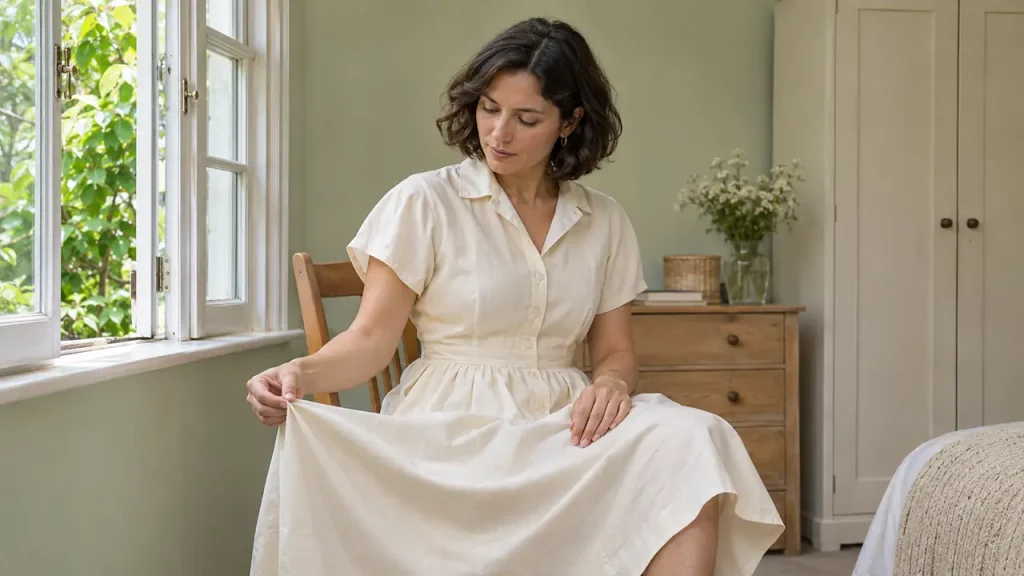
Light cotton poplin, lawn, and gauze can feel comfortable for ordinary outings. Cotton absorbs sweat, however, and thicker versions may stay damp after long periods outside. A substantial cotton lining can make a lightweight-looking dress surprisingly warm. Hold the fabric up, feel its weight, and check whether it restricts airflow.
2. Linen: Airy With a Relaxed Finish
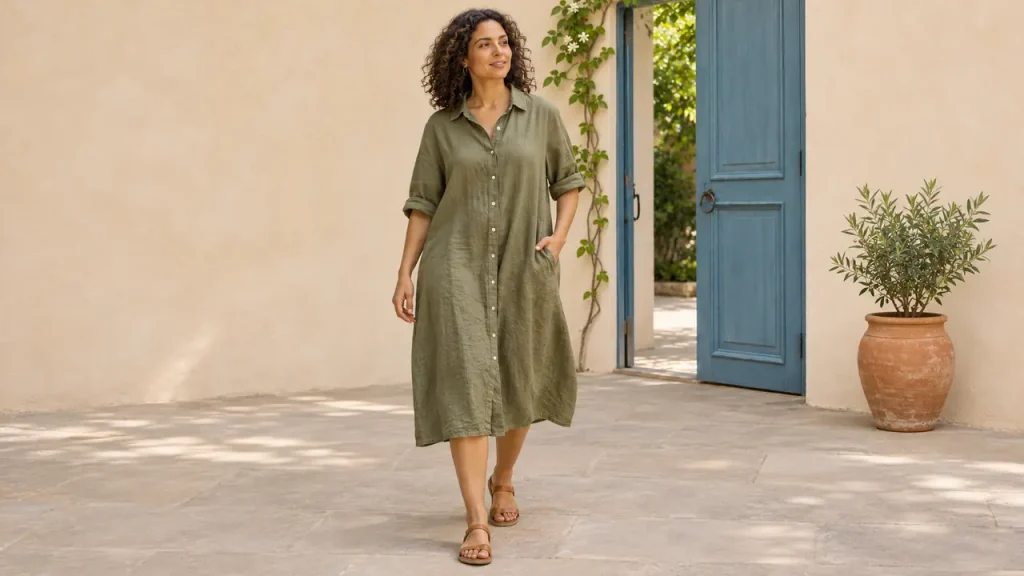
Linen often manages moisture well and has enough structure to sit away from the body. That makes a loose linen shirt dress appealing during humid weather. It also creases naturally. If you prefer a smoother appearance, try a blend, but check the fabric composition and care instructions rather than assuming every linen blend behaves alike.
3. Chambray: Denim-Like Without Necessarily Being Heavy
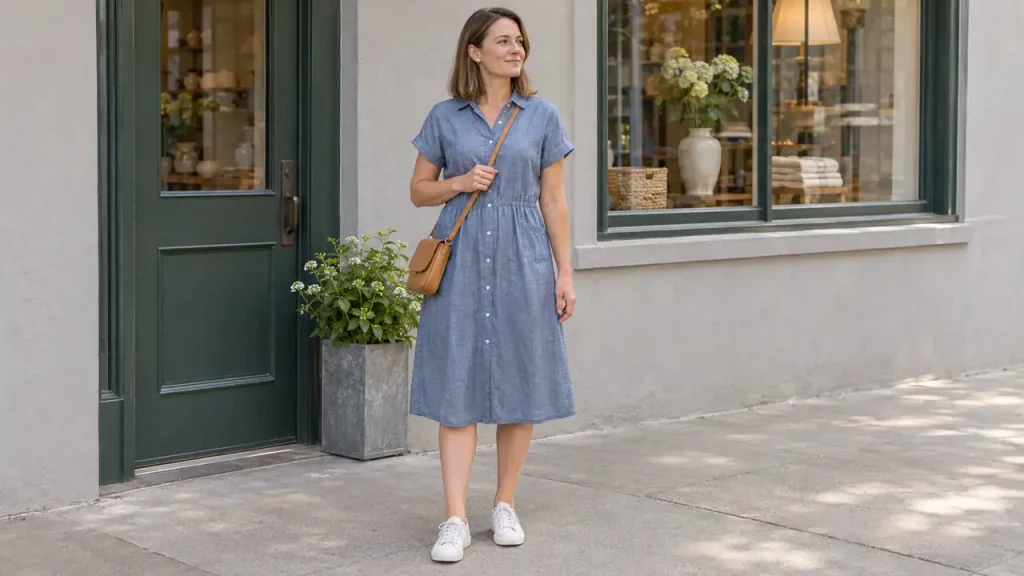
Chambray is a woven fabric, commonly cotton, that can resemble denim. Some versions are light enough for shirt dresses; others are noticeably dense. A dress made from soft chambray may suit errands or travel, but thickness and lining decide whether it feels comfortable. The name alone is not a promise of breathability.
4. Rayon or Viscose: Soft Drape, Variable Care
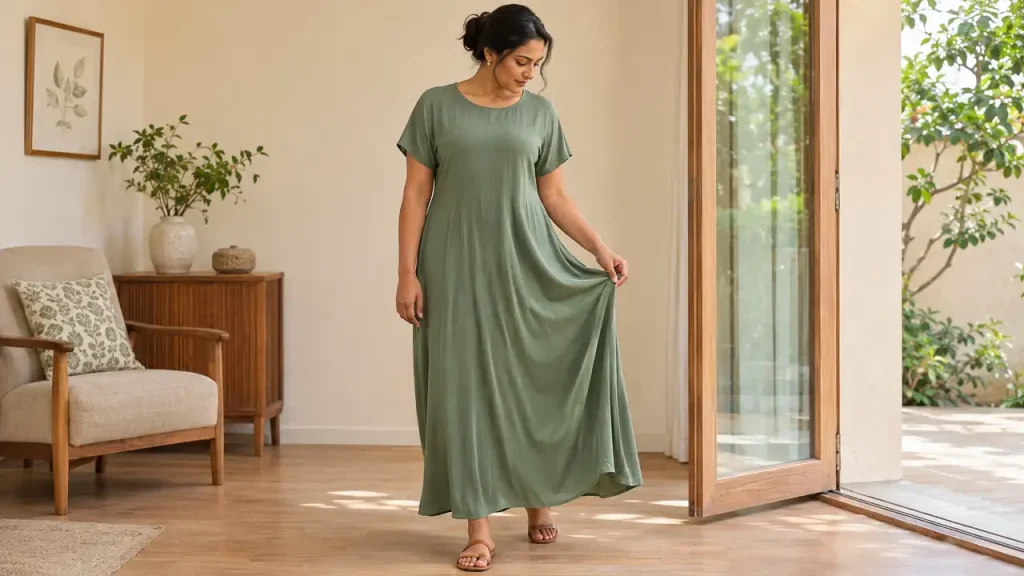
Rayon, including viscose, is made from regenerated cellulose. It can hang beautifully in wrap and maxi dresses, though the performance varies with the fabric’s construction. Some garments wrinkle or shrink easily. Check whether the label calls for gentle washing, drying flat, or professional care before buying for everyday use.
Seven Summer Dress Styles for Different Occasions
The most practical summer outfit ideas help you find a silhouette that moves with you. A dress does not have to conceal a feature, create an illusion of height, or flatter a prescribed body type. Feeling comfortable in your own style matters more than chasing those rules. Choose the shape you like, then evaluate its details.
1. A-Line Dress: Comfortable Everyday Shape
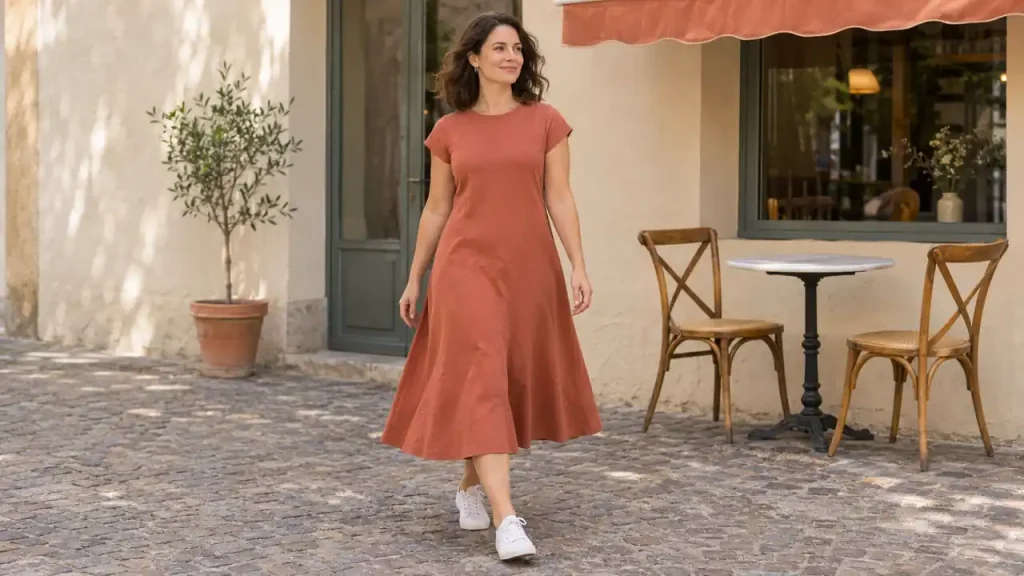
An A-line dress narrows near the upper body and widens toward the hem. It offers room for movement without requiring a tightly fitted waist. A cotton midi version works for shopping or lunch with trainers or flat sandals. If you like this shape in separates, different skirt styles offer similar possibilities.
2. Wrap Dress: Adjustable, but Check the Closure
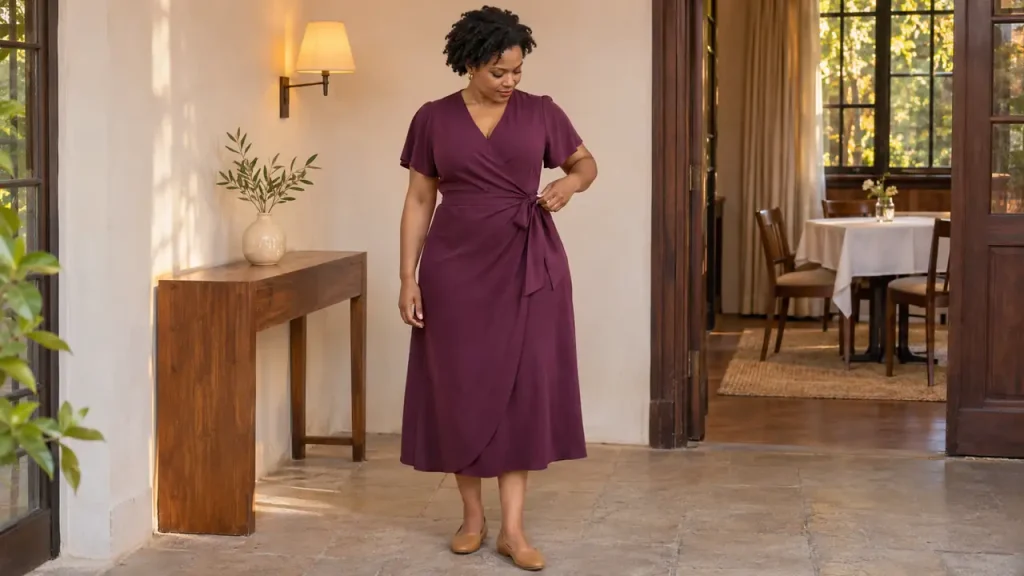
A wrap dress crosses over the front and usually ties at the waist. It can be easy to adjust, yet some versions gape when you sit or walk into a breeze. Test the neckline and overlap before deciding. A lightweight wrap dress pairs easily with comfortable flats for daytime and simple jewelry for dinner. A discreet fastening can make an otherwise lovely design easier to wear.
3. Prairie Dress: Relaxed, Gathered Details

Prairie dresses often feature tiers, gathers, sleeves, or decorative trims. Multiple layers can trap warmth, so inspect the lining and choose the sleeve length you actually want. Try a midi version with trainers for an everyday look. If you enjoy romantic details, ideas for feminine styling can provide inspiration without making ruffles a requirement for anyone.
4. Shift Dress: Straightforward and Unfussy

A shift dress falls fairly straight from the shoulders, usually with less waist definition. It can be practical when you prefer minimal contact around the middle. Check that the armholes sit comfortably and you can reach overhead without the hem riding up. A light blazer can make it office-friendly; casual blazer styling offers ways to use an existing layer rather than buying another outfit.
5. Maxi Dress: Length With Easy Movement
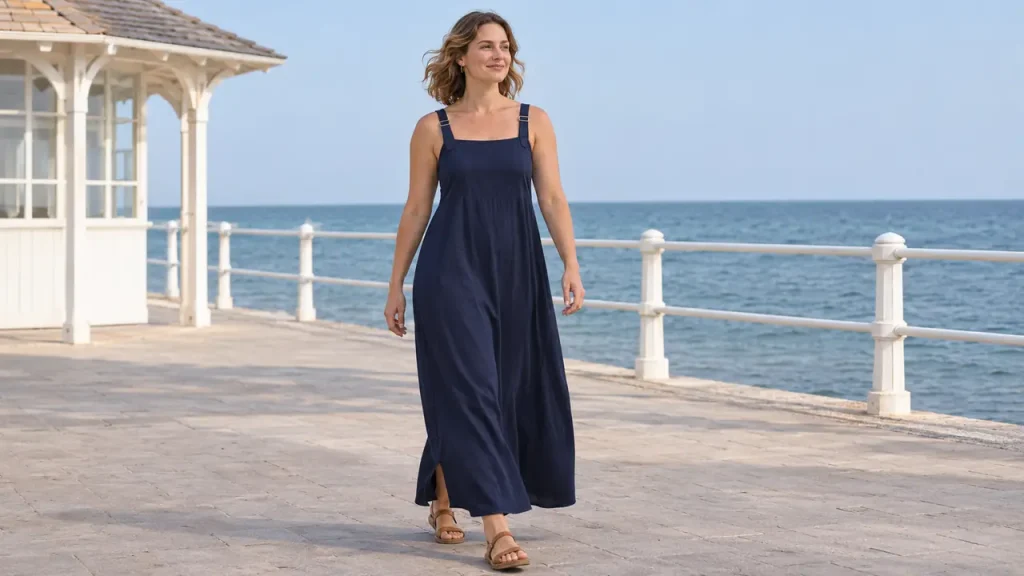
Maxi dresses offer coverage and a ready-made outfit, but the hem should not drag or catch under your shoes. Side openings, adjustable straps, and breathable materials can improve mobility. For a holiday or long walk, select from comfortable summer shoes before deciding on the dress length. Petite shoppers can wear maxis too; hem alterations may be all that is needed.
6. Sheath Dress: Tailored for Work or Dinner

A sheath follows the body’s outline more closely than a shift. Choose fabric with enough give to sit, walk, and eat comfortably, and watch for a stiff lining that defeats a lightweight outer layer. This silhouette can suit an event with a dress code, but it is not the only polished option. For evening plans, the balance of accessories and venue matters more than following strict night-out outfit rules.
7. Ruffle Dress: One Playful Focal Point
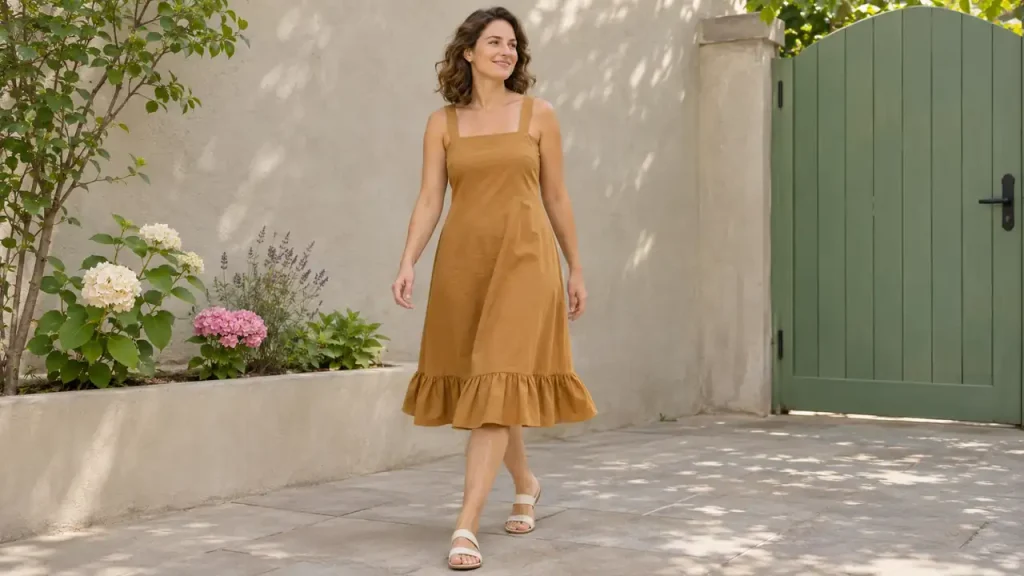
Ruffles add movement at a sleeve, neckline, or hem. One small frill can feel subtle, while several tiers become the main feature. Neither approach requires a certain body shape. Keep jewelry simple if you want the detail to stand out. If a ruffled dress feels too elaborate for your routine, choose a plain silhouette and add texture with a bag or scarf.
A Practical Checklist Before You Buy

Summer outfit ideas only become useful when you check how a dress behaves beyond the mirror. Spend two minutes checking the following details, especially when a garment will be worn in hot weather.
- Sit and move: Walk, bend, and lift your arms. Check straps, waist seams, and whether the dress shifts uncomfortably.
- Inspect transparency and lining: Look in natural light and check whether an extra layer makes the dress warmer.
- Read the care label: Clothing care instructions can reveal washing or ironing requirements you may not want to manage.
- Think about repeat wear: Picture three occasions and two pairs of shoes you already own. A dress worn often can offer better value than a rarely used bargain.
- Plan for sunlight: Airy cloth is not automatically UV protective. Tightly woven or UPF-rated clothing, shade, and protection for exposed skin all matter. Use sun-safe clothing guidance when you will be outdoors for hours.
If a dress repeatedly fails these checks, leave it behind. Another style or even a loose tunic-and-trousers combination may suit your day better. Shoes also deserve a test: heels are optional, not a condition for a dress looking finished.
Frequently Asked Questions
Different climates and routines lead to different shopping priorities. These quick answers can help when two dresses seem equally appealing.
1. What Fabric Is Best for Summer Dresses?
There is no winner for every situation. Lightweight linen can feel airy in humidity, cotton can suit casual wear, and purpose-made performance fabrics can help during vigorous activity. Compare garment weight, weave, and care alongside the fiber label.
2. Can I Wear Dark Dresses in Summer?
Absolutely. Darker colors may absorb more sunlight, but the garment’s fabric, fit, and exposure also influence comfort. Wear colors you enjoy and plan separately for heat and UV protection.
3. Which Dress Style Is the Most Versatile?
A comfortable A-line, wrap, shift, or shirt dress in a repeatable color may move between errands and meals with different shoes. Versatility depends on your schedule, not a universal ranking.
Final Thoughts
Summer outfit ideas should make warm-weather dressing simpler, not turn it into another list of rules about bodies or skin tones. Choose fabrics by how the garment actually feels, match silhouettes to your plans, and check fit and care before buying. Whether you prefer a breezy maxi, an easy A-line, or a playful ruffle, the best summer dress is one you enjoy wearing again and again.


Leave a Reply