


A low carb anti inflammatory diet plan can combine vegetable-rich meals, suitable protein sources, and mostly unsaturated fats without becoming a strict ketogenic diet. The aim is a sustainable eating pattern, not a promise to detox your body, reverse disease, or lose weight rapidly.
These four dinners provide a practical starting rotation. They are not a complete daily menu or personalized treatment plan. Portions, carbohydrate needs, and any changes to prescribed diets should reflect your circumstances.
What Does This Eating Pattern Mean?
Low-carbohydrate eating reduces carbohydrates compared with your usual intake or another defined pattern. “Anti-inflammatory” generally describes an overall dietary approach emphasizing nutritious foods; it is not a guarantee that one ingredient will lower inflammation.
A review of dietary patterns and inflammatory markers found supportive results for Mediterranean-style eating, with important differences between studies and outcomes. That does not prove these four recipes treat an inflammatory condition. Normal inflammation helps the body respond to injury and infection. Persistent symptoms deserve assessment rather than a month of dietary experimentation.
Low-Carb Does Not Automatically Mean Keto
A low carb anti inflammatory diet plan need not exclude fruit, beans, whole grains, or dairy. Ketogenic eating is more restrictive and requires attention to the whole day’s intake, not simply replacing rice at dinner. Lower-carbohydrate meals are not automatically low-calorie either. Oil, nuts, cheese, and large portions still contribute energy.
Use an adaptable healthy eating plan to preserve variety. If you use insulin or medicines that can cause low blood sugar, discuss major carbohydrate reductions with your care team rather than changing food and medication independently.
Build Meals Around These Ingredients
Choose non-starchy vegetables such as broccoli, cauliflower, spinach, zucchini, and asparagus. Add fish, chicken, eggs, tofu, or another suitable protein.
Use olive or rapeseed oil as everyday cooking options rather than assuming butter and coconut oil are interchangeable with unsaturated oils. Nuts and seeds can add texture in appropriate portions. For meat-free meals, explore alternative protein sources, remembering that beans and lentils contain carbohydrates as well as protein and fiber. They can still fit an individualized plan.
Your Four-Dinner Rotation
Each recipe makes approximately two servings. Preparation and cooking times are estimates; equipment, ingredient thickness, and portion sizes affect results.
| Dinner | Main protein | Vegetable base |
| Lemon chicken | Chicken breast | Asparagus |
| Tomato-basil chicken | Chicken breast | Zucchini |
| Cajun shrimp | Shrimp | Cauliflower mash |
| Salmon tray bake | Salmon | Broccoli |
Within a low carb anti inflammatory diet plan, these dishes replace larger starch portions with vegetables. They do not guarantee ketosis, and exact carbohydrate values require calculations using your ingredients and serving sizes.
1. Lemon Chicken With Asparagus
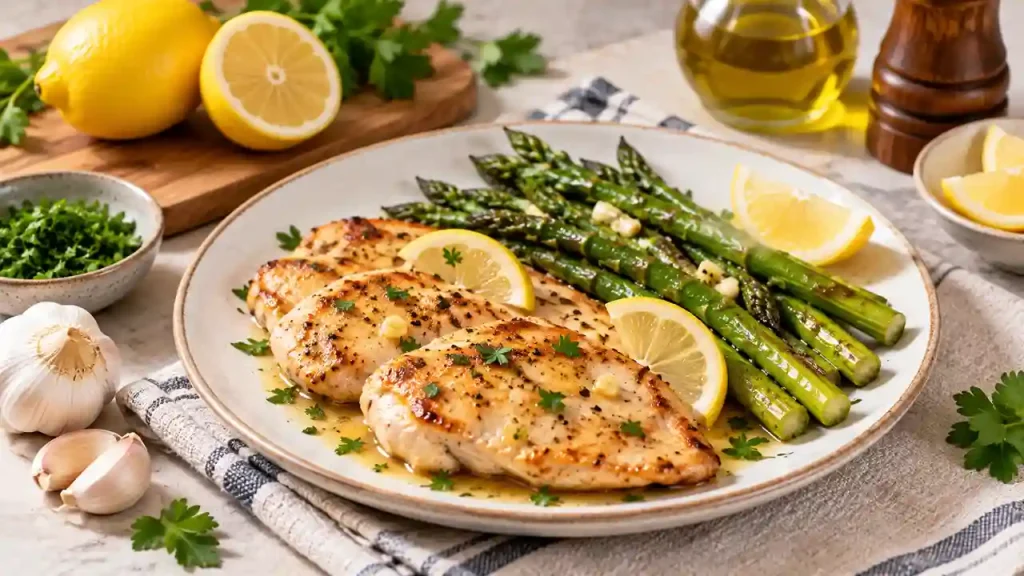
Fresh lemon and garlic provide flavor without requiring a flour coating. Have the vegetables ready before cooking the chicken.
Ingredients
- 300 g boneless, skinless chicken breast, divided into two thin cutlets
- 250 g asparagus, woody ends removed
- 1 tablespoon olive oil, divided
- 1 garlic clove, minced
- ½ lemon, plus extra wedges for serving
- ¼ teaspoon ground black pepper
- Salt to taste
- 1 tablespoon chopped parsley, optional
Method
- Pat the chicken dry and flatten uneven areas to roughly 1.5 cm thickness. Season lightly with pepper and salt.
- Heat two teaspoons of oil in a skillet over medium heat. Add the chicken and cook for approximately 4–6 minutes per side, adjusting the heat if it browns too quickly.
- Check that the thickest part reaches 165°F/74°C. Transfer to a clean plate.
- Add the remaining teaspoon of oil and asparagus. Cook for approximately 4–6 minutes, turning, until tender to your preference. Add garlic during the final minute.
- Squeeze lemon over the vegetables, add parsley, and serve with the chicken.
Time alone does not establish doneness. Follow safe cooking temperature guidance, using a food thermometer rather than relying on browning.
2. Tomato-Basil Chicken With Zucchini
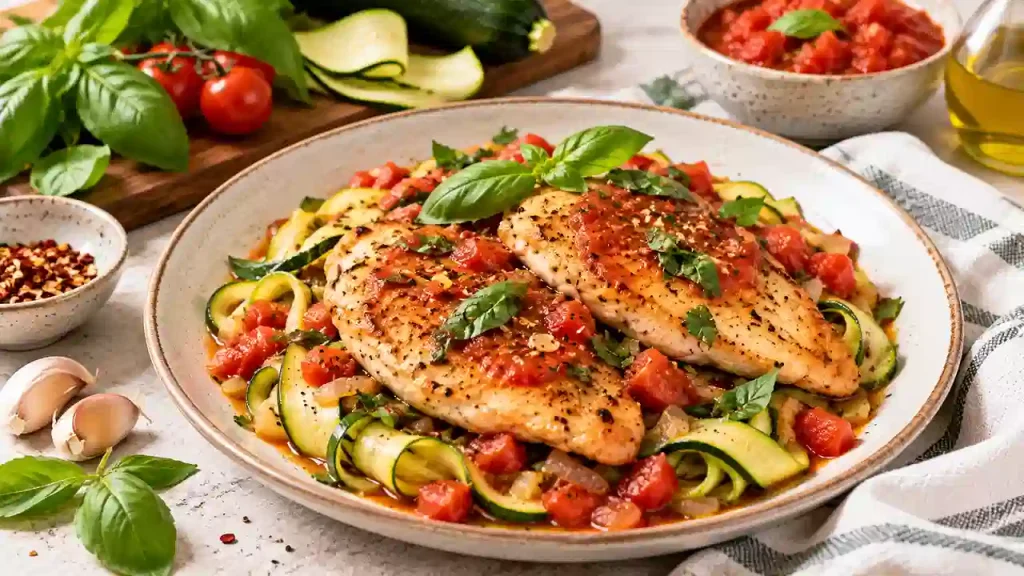
This version uses zucchini ribbons rather than a large pasta portion. Brief cooking helps the zucchini stay tender without making the sauce watery.
Ingredients
- 300 g boneless, skinless chicken breast, divided into two thin cutlets
- 2 medium zucchini, approximately 350 g
- 1 tablespoon olive oil, divided
- ½ small onion, finely chopped
- 2 garlic cloves, minced
- 200 g canned chopped tomatoes
- ¼ cup loosely packed fresh basil, torn
- Chili flakes, optional
- Salt and pepper to taste
Method
- Cut zucchini into ribbons or noodles and pat away surface moisture.
- Season the chicken. Heat two teaspoons of oil in a skillet and cook the cutlets over medium heat until they reach 165°F/74°C. Transfer to a clean plate.
- Add the remaining oil and onion. Cook for approximately 4–5 minutes, then stir in garlic for 30 seconds.
- Add tomatoes and optional chili flakes. Simmer for approximately 6–8 minutes until thickened.
- Add zucchini and cook for 2–3 minutes, just until softened. Stir in basil.
- Return the chicken briefly to warm through, then divide between two plates.
Reduce the tomato sauce before adding zucchini. Prolonged simmering releases more vegetable moisture and can make the dish watery.
3. Cajun Shrimp With Cauliflower Mash
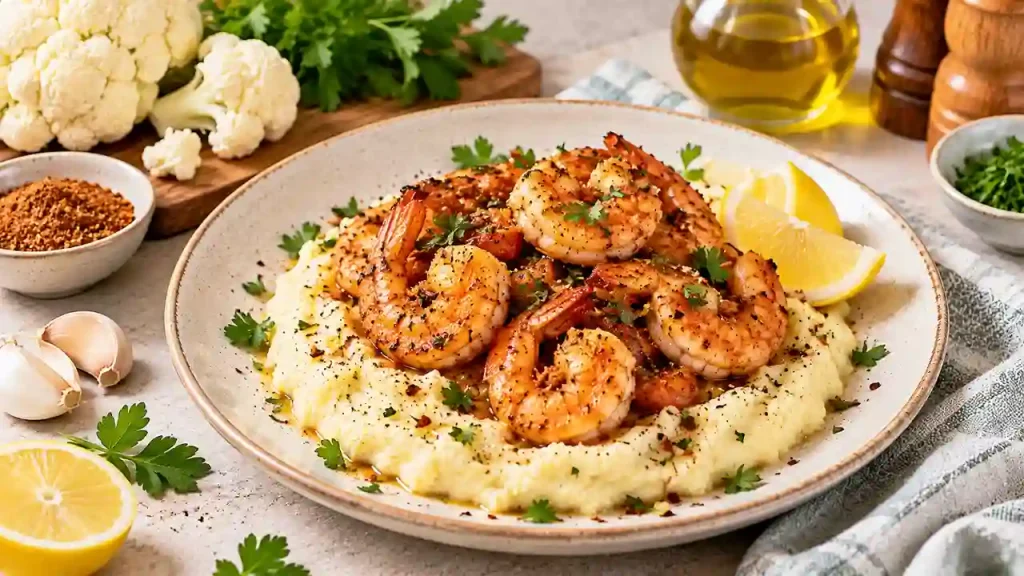
Cauliflower makes a soft vegetable base, with a different texture from corn grits. Keep the mash warm while cooking the shrimp.
Ingredients
- 250 g raw shrimp, peeled and deveined
- 350 g cauliflower florets
- 1 small garlic clove
- 1 tablespoon olive oil, divided
- 1 teaspoon salt-free Cajun seasoning, then adjust to taste
- 1–3 tablespoons warm water, as needed
- Salt and pepper to taste
- Lemon wedges, optional
Method
- Steam cauliflower and garlic until very tender, approximately 10–12 minutes. Drain thoroughly.
- Blend or mash with two teaspoons of olive oil. Add warm water a tablespoon at a time only if needed. Season lightly.
- Pat the shrimp dry and toss with Cajun seasoning.
- Heat the remaining teaspoon of oil in a skillet over medium-high heat. Add shrimp in one layer and turn as they cook.
- Cook until the flesh becomes pearly or white and opaque throughout. Timing varies with shrimp size, so check the flesh rather than relying on a fixed two-minute limit.
- Spoon cauliflower onto plates and top with shrimp. Serve with lemon if desired.
Avoid crowding the skillet. Check seasoning before adding salt, particularly if your Cajun blend already contains it.
4. Salmon and Broccoli Tray Bake
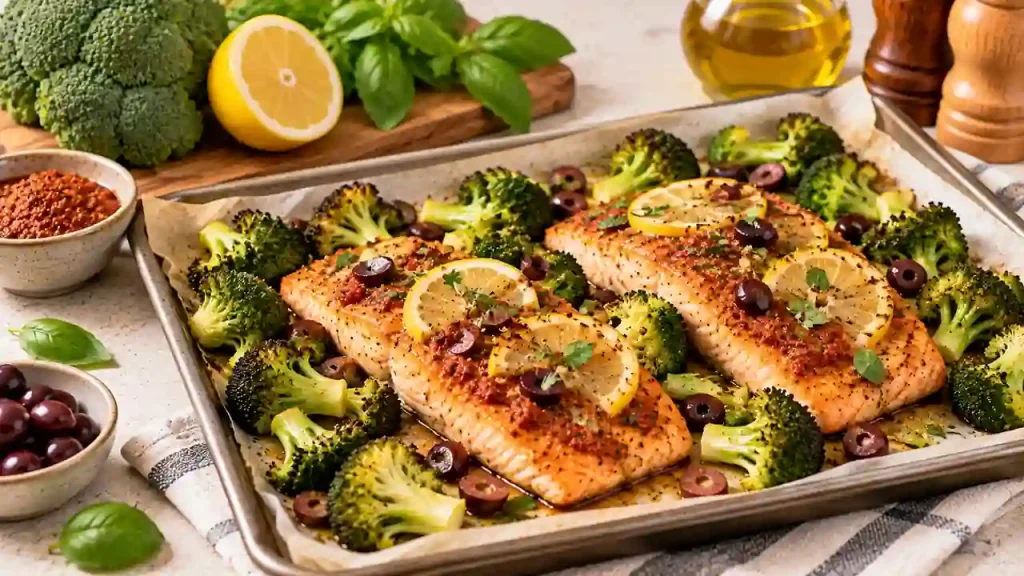
A baking tray lets you cook vegetables and fish together while giving broccoli a head start.
Ingredients
- 250–300 g salmon, divided into two fillets
- 300 g broccoli, cut into small florets
- 2 teaspoons olive oil
- 1 tablespoon red pesto
- 30 g pitted olives, chopped
- ½ lemon, sliced
- 1 tablespoon chopped basil, optional
- Black pepper to taste
Method
- Heat the oven to 200°C/390°F. Line a rimmed tray with oven-safe parchment, following its temperature instructions.
- Toss broccoli with olive oil and pepper. Spread out and roast for 10 minutes.
- Make room for the salmon. Spread pesto over the fish, then add olives and lemon slices.
- Roast for approximately 12–18 minutes more, checking earlier for thin fillets. The salmon should reach 145°F/63°C.
- Check that broccoli is tender, scatter basil if using, and serve.
Pesto can contain milk and nuts; check the label for allergies. If you prefer another preparation, these fish recipe ideas offer different flavors, though carbohydrate content varies.
Make the Plan Work Beyond Dinner
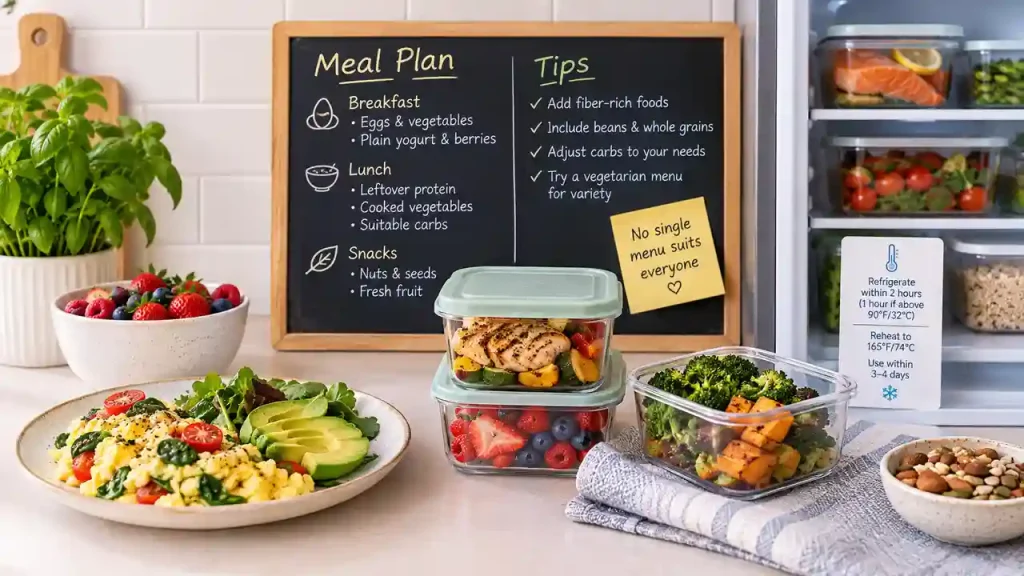
A low carb anti inflammatory diet plan should still provide enough food and dietary variety. Breakfast might include eggs and vegetables or plain yogurt with berries. Lunch could combine leftover protein with cooked vegetables and a suitable carbohydrate portion. Include fiber-rich foods rather than concentrating exclusively on meat and fat. Adjust beans, fruit, and whole-grain portions to your needs. A vegetarian anti-inflammatory menu can offer additional meal ideas, but its carbohydrate content needs separate assessment. No single menu suits everyone.
Store and Reheat Safely
Refrigerate cooked leftovers within two hours, or one hour when the temperature exceeds 90°F/32°C. Use shallow containers, keep the refrigerator at 40°F/4°C or below, and keep raw ingredients separate from ready-to-eat foods.
Follow leftover storage and reheating guidance: use refrigerated leftovers within 3–4 days and reheat to 165°F/74°C. Freeze promptly if you will not use them in time.
Common Questions
1. How Do You Check Carbohydrate Per Serving?
For a low carb anti inflammatory diet plan, add carbohydrates from every measured ingredient, including sauces, then divide by the actual number of portions. Use package labels and a reliable food-composition database. Serving the recipe over rice changes the total and should be counted separately.
2. Can These Dinners Replace Medical Treatment?
No. A dietary pattern may support health, but feeling better after a meal change does not establish that an inflammatory condition has resolved. Continue prescribed treatment and discuss persistent symptoms with your clinician. Do not judge success solely by a rapid change on the scale.
Final Thoughts
A low carb anti inflammatory diet plan works best as a flexible framework for nutritious meals, not a treatment promise. Start with vegetables, appropriate protein portions, and mostly unsaturated fats. Adapt carbohydrate intake to your needs, cook food safely, and seek professional advice for medical symptoms or restrictive dietary changes.


Leave a Reply