

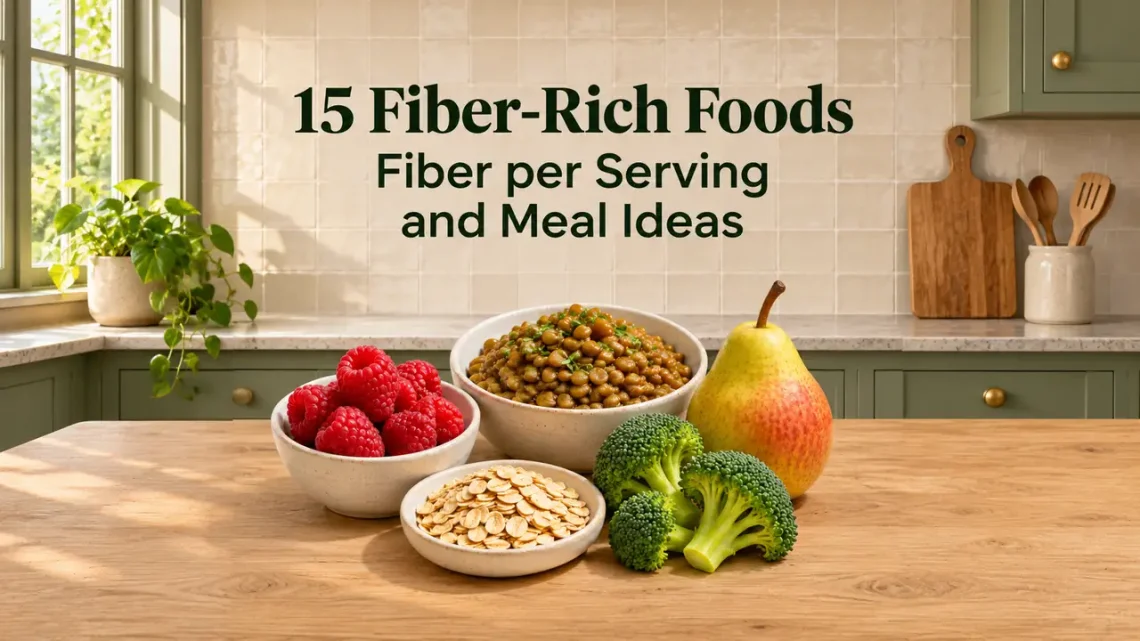
Some of the most useful fiber-rich foods are already on your shopping list. One cup of raspberries gives you about 8 grams of fiber, half a cup of cooked lentils provides 7.8 grams, and a medium pear has 5.5 grams. The chart compares 15 familiar options in everyday servings, so you can see what each adds to a meal or snack.
Dietary fiber is a type of carbohydrate your body doesn’t fully digest. Some soluble fibers form a gel in water, while some insoluble fibers add bulk to stool. Gut bacteria can break down certain fibers in the large intestine. Eating a mix of plant foods gives you a variety of fibers.
15 Fiber-Rich Foods Compared by Serving
The amounts below are estimates from USDA FoodData Central (SR Legacy records), rounded to one decimal place. Weights refer to the edible portion, and preparation matters: the oats are measured dry, while the lentils and barley are measured after cooking. Check the nutrition label if you’re buying a packaged version.
| Food | Serving | Fiber |
| Raspberries, raw | 1 cup (123 g) | 8.0 g |
| Lentils, cooked | ½ cup (99 g) | 7.8 g |
| Globe artichoke, boiled | 1 medium (120 g edible portion) | 6.8 g |
| Pear, raw with skin | 1 medium (178 g) | 5.5 g |
| Avocado, raw and cubed | ½ cup (75 g) | 5.0 g |
| Apple, raw with skin | 1 medium (182 g) | 4.4 g |
| Plain regular or quick oats, dry | 40 g (about ½ cup) | 4.0 g |
| Popcorn, air-popped | 3 cups (24 g) | 3.5 g |
| Banana, raw | 1 medium (118 g) | 3.1 g |
| Strawberries, raw and halved | 1 cup (152 g) | 3.0 g |
| Pearled barley, cooked | ½ cup (about 79 g) | 3.0 g |
| Pecans, plain | 28 g (about 1 oz) | 2.7 g |
| Broccoli, boiled and chopped | ½ cup (78 g) | 2.6 g |
| Peanuts, dry-roasted and unsalted | 28 g (about 1 oz) | 2.4 g |
| Beets, boiled and sliced | ½ cup (85 g) | 1.7 g |
How Much Fiber Do Adults Need?
The National Academies’ fiber reference values list the following adequate intakes for total fiber. These are daily reference values for generally healthy people, and individual needs may differ.
| Age | Women | Men |
| 19–50 years | 25 g | 38 g |
| 51 years and older | 21 g | 30 g |
The same reference lists 28 grams a day during pregnancy and 29 grams during breastfeeding. To see how much you usually get, compare a typical day with the chart. If breakfast is usually just toast, adding a pear or switching to oats with berries may be an easy place to start.
Easy Ways to Eat Each of These Foods
Start with a flavor or texture you enjoy. If you prefer savory breakfasts, avocado toast may suit you better than a bowl of berries. If you already make soup every week, lentils or barley are easy additions.
To keep fiber-rich foods on hand between shopping trips, stock one or two options that store well. Dried lentils and oats are easy to keep in the cupboard. Frozen fruit lets you use what you need without racing to finish a punnet.
1. Raspberries
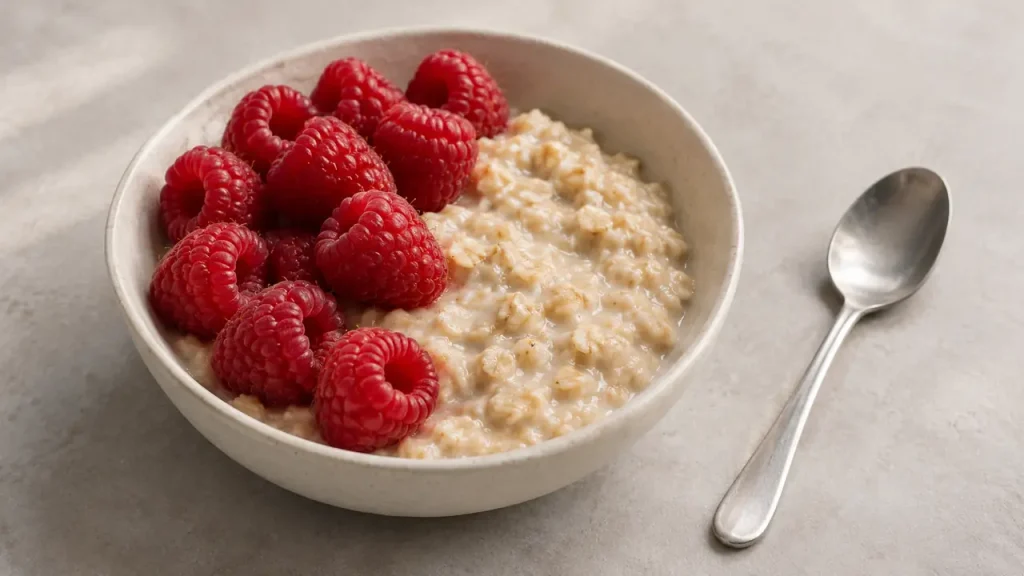
Stir them into oatmeal or spoon them over yogurt. If fresh berries are pricey, buy plain frozen ones and warm a small handful until the juices run. Half a cup of fresh raspberries still gives you about 4 grams of fiber.
2. Lentils
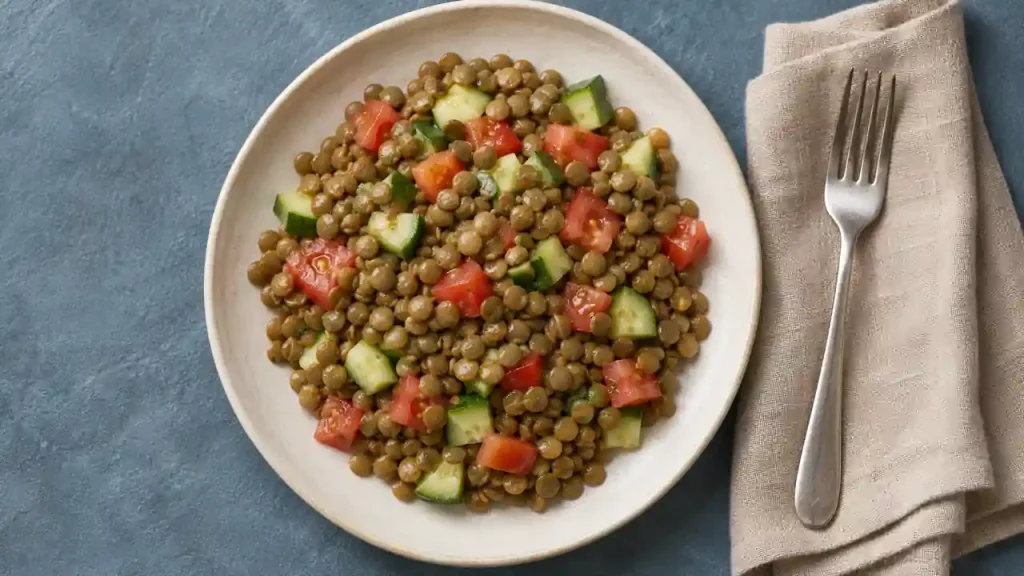
Make a pot of dal or fold cooked lentils into a chopped cucumber and tomato salad. Red lentils tend to soften into a creamy base; green or brown lentils generally hold their shape better in salads. Lentils and beans also double as plant protein sources. If beans are what you have on hand, try beans and cornbread.
3. Globe Artichokes
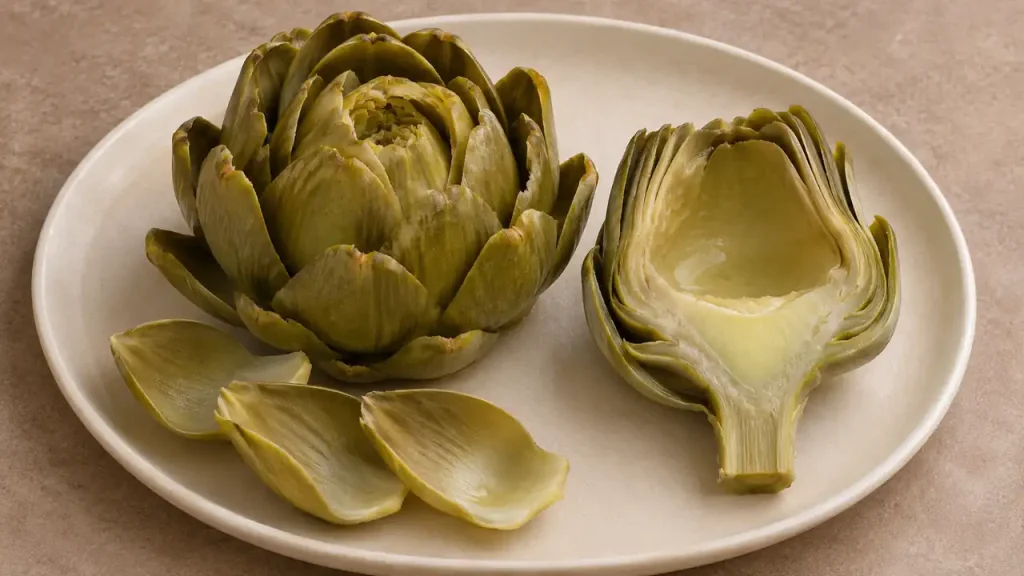
To eat a cooked whole artichoke, pull off the leaves and scrape the tender flesh from the base of each leaf with your teeth. Discard the tough parts and remove the fuzzy choke before eating the heart. Plain frozen or canned hearts save prep time; their fiber amounts can differ from the chart.
4. Pears

Leave the skin on and slice a ripe pear over yogurt or tuck it into a lunchbox. Firmer pears hold up better in a salad with greens and chopped pecans. A whole medium pear adds more fiber than a few decorative slices.
5. Avocado
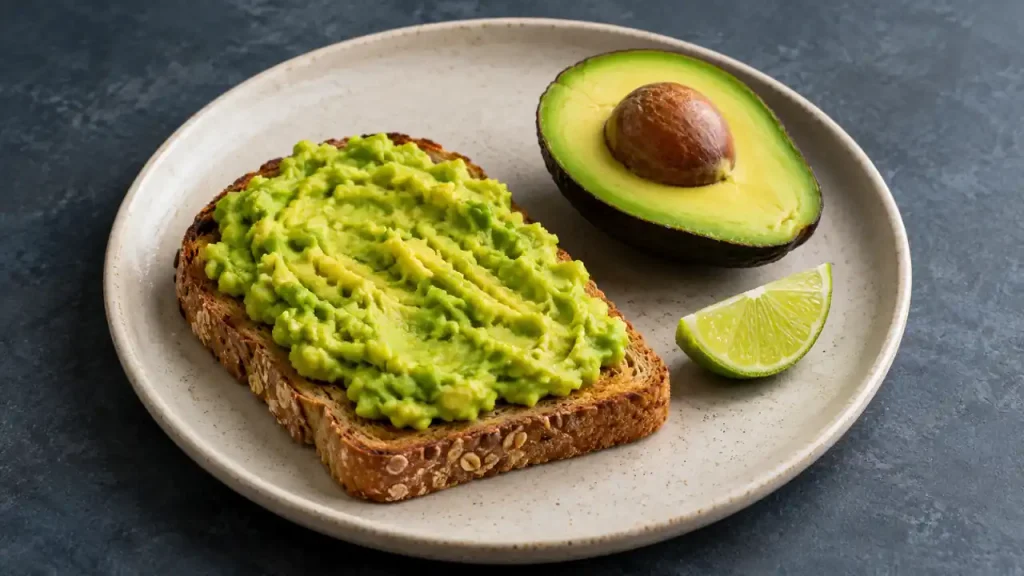
Mash avocado with lime for toast, or cube it into a black bean bowl. The chart uses half a cup of flesh because avocados vary so much in size. A few spoonfuls still work if you’re adding it to a meal with beans or vegetables.
6. Apples
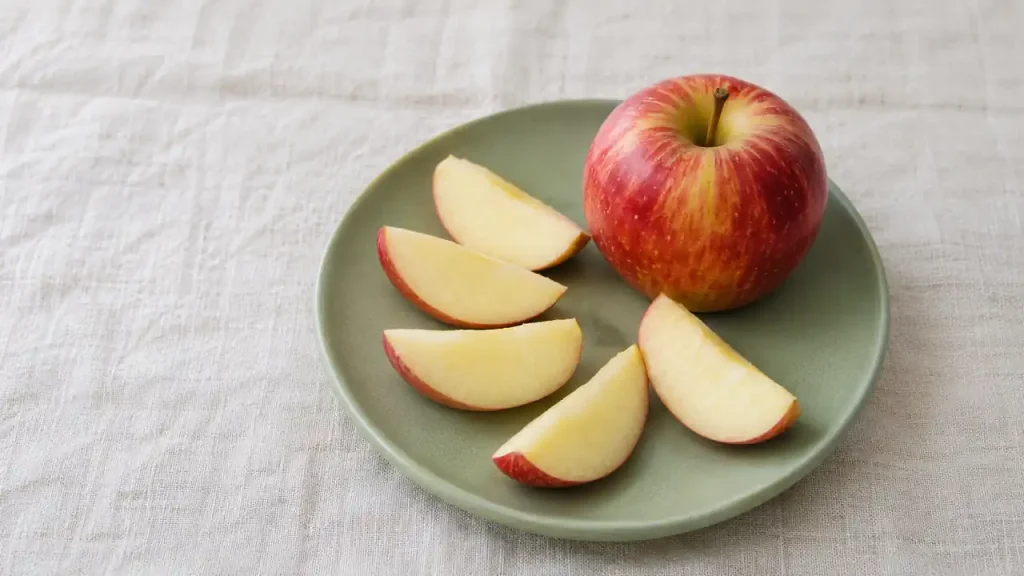
Pack a whole apple or slice it into wedges for a snack. Leave the peel on if you enjoy it. For a warm breakfast topping, simmer diced apple with a splash of water and cinnamon until tender.
7. Oats
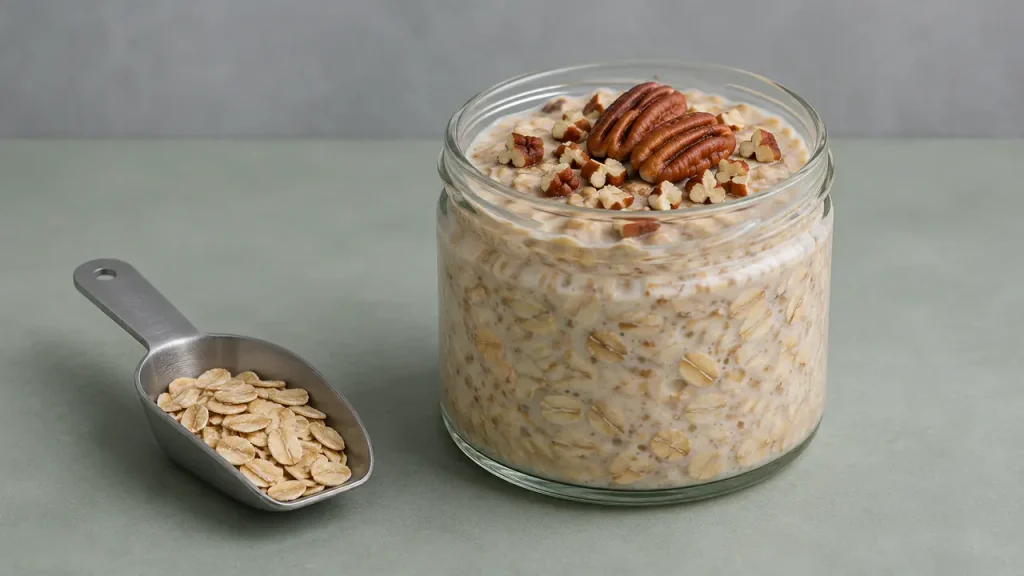
Cook plain oats as porridge or soak them overnight in the fridge. Measure the 40 grams before adding liquid. For extra crunch, add pecans; for a softer topping, try berries or learn how to prepare chia or basil seeds.
8. Popcorn

Three cups sounds like a lot until you see how little air-popped popcorn weighs. Measure it after popping, then try smoked paprika or black pepper. If you buy microwave popcorn, check the label rather than assuming it matches the air-popped entry.
9. Bananas
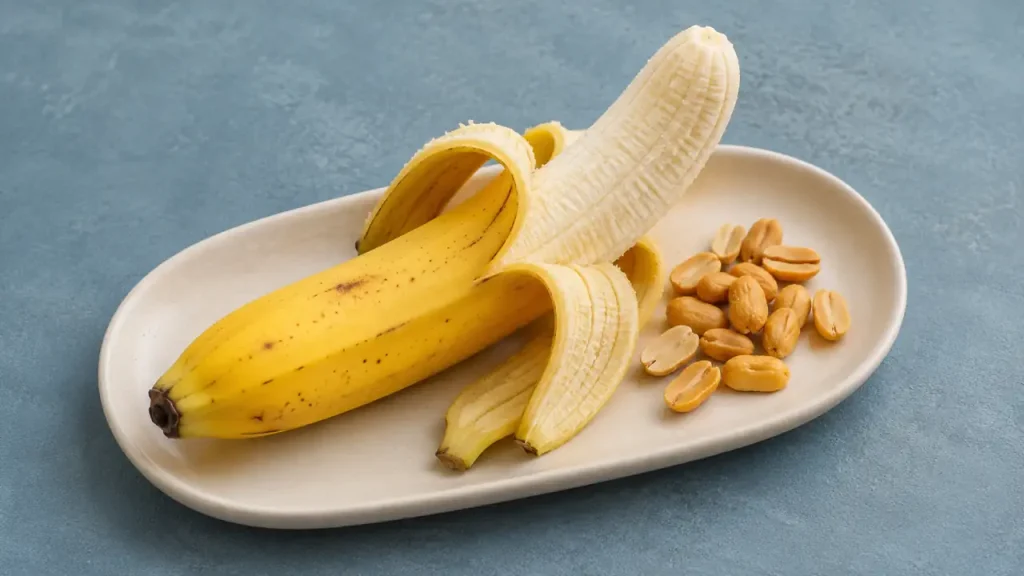
Slice one into cereal or eat it as a snack with a handful of peanuts. Ripeness changes the flavor and texture, so choose what you like. The medium serving in the chart is the flesh without the peel.
10. Strawberries

Halve them for yogurt, overnight oats, or a salad with greens. For a snack with more protein, pair them with plain Greek yogurt. Our guide to how much protein fruit provides explains why the pairing is useful.
11. Pearled Barley

Add cooked barley to mushroom soup or use it as the base for a grain bowl. It absorbs broth as it sits, so keep some broth handy when reheating. Barley contains gluten and is unsuitable for people with celiac disease.
12. Pecans
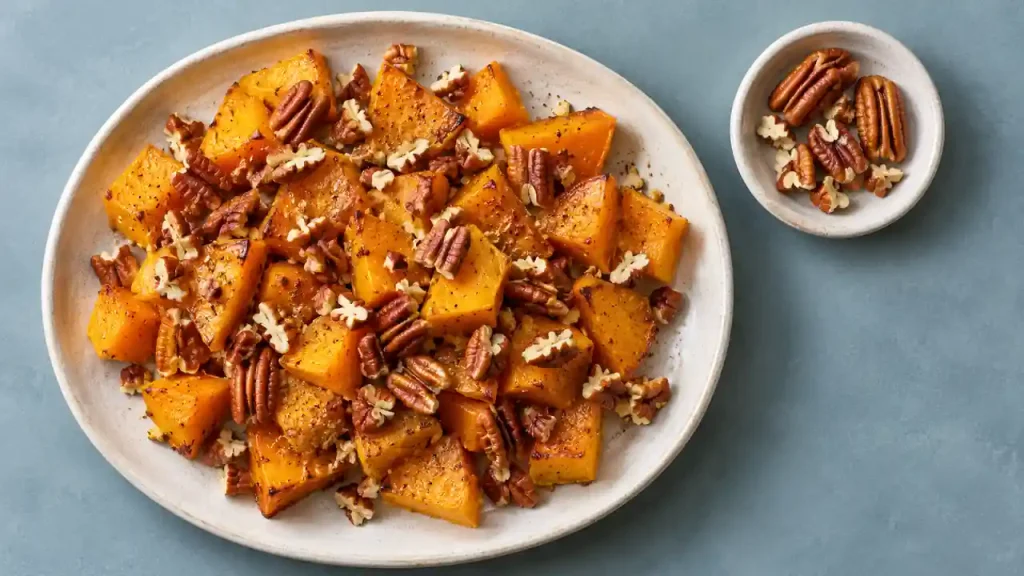
Chop a small handful over roasted squash, oats, or a pear salad. Toast them in a dry pan for a few minutes if you want a nuttier flavor. Buy them shelled if you want a topping you can use straight from the bag.
13. Broccoli
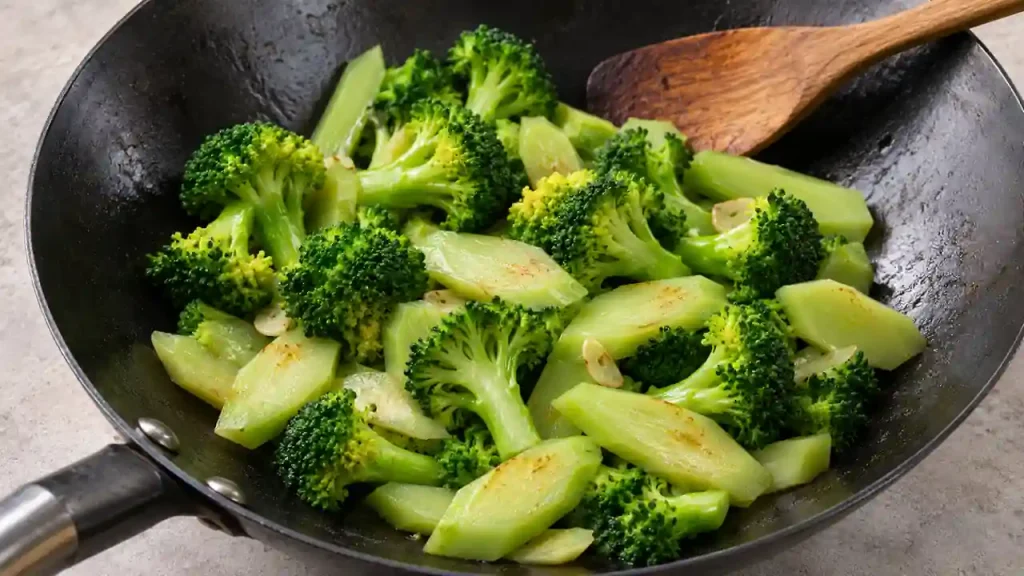
Use the stalk as well as the florets. Peel away the tough outer layer, slice the tender stalk, and cook it with the florets. Broccoli fits into stir-fries and these green and red Thai vegetable curries.
14. Peanuts
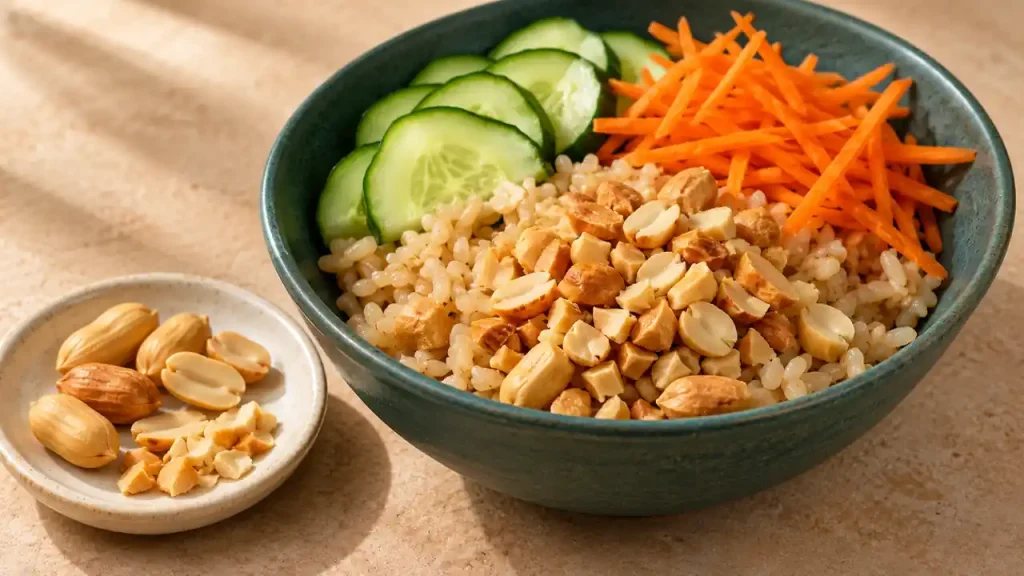
Sprinkle chopped unsalted peanuts on a grain bowl or pack them with a banana. Peanut butter works too, but two spoonfuls won’t necessarily have the same fiber content as 28 grams of whole peanuts. Check the label for the amount you use.
15. Beets
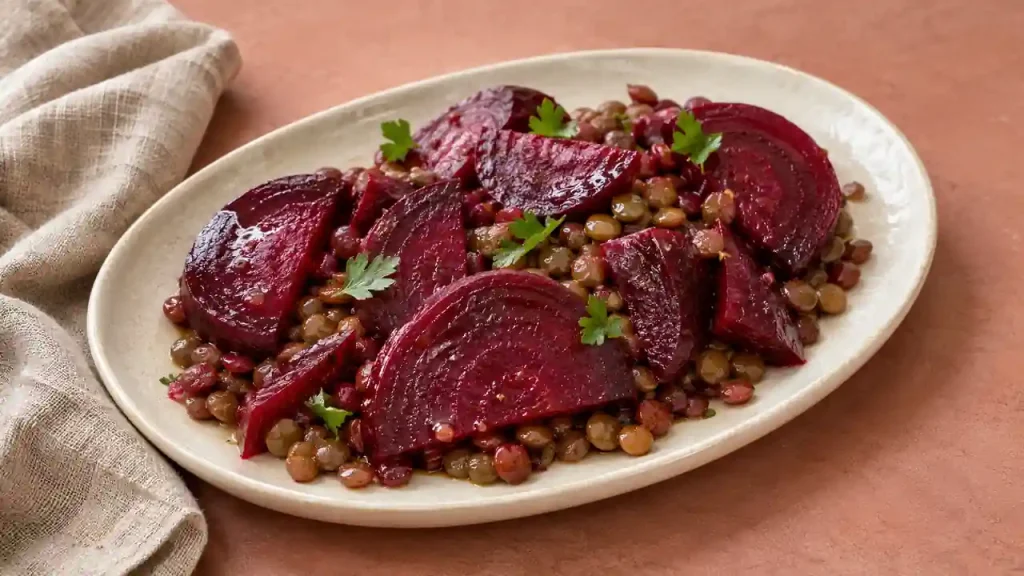
Toss sliced cooked beets with lentils and a simple oil-and-vinegar dressing. Beets supply less fiber than lentils in the portions shown. Using both gives you an earthy, tangy side dish with more fiber than beets alone.
What Does a Day With More Fiber Look Like?
Here’s how a few fiber-rich foods can add up across the day. The numbers cover the foods listed, so you can build meals around them using this guide to balanced eating.
| When | Foods | Approximate fiber |
| Breakfast | 40 g dry oats, cooked, with 1 cup raspberries | 12.0 g |
| Lunch | ½ cup cooked lentils and ½ cup cooked broccoli | 10.4 g |
| Snack | 1 medium pear | 5.5 g |
| Dinner | ½ cup cooked pearled barley | 3.0 g |
| Total from these foods | 30.9 g |
If that’s much more fiber than you usually eat, start with one change. Add berries to breakfast this week, for example, then try stirring lentils into a soup you already make.
How to Increase Fiber Without Overdoing It
The National Institute of Diabetes and Digestive and Kidney Diseases recommends increasing fiber gradually and drinking enough fluids to help it work. If a larger serving leaves you bloated, try a smaller one and see how you feel. Our guide to foods that may trigger digestive symptoms explains why tolerance varies.
Follow any fiber or fluid limits your healthcare team has set for you. If constipation persists despite self-care, talk to a clinician. Seek medical care promptly if it comes with blood in your stool or constant abdominal pain.
Does Juice Have as Much Fiber as Whole Fruit?
Usually, no. Juicing removes much of the pulp, which is where some of the fiber is. A smoothie made with the whole edible fruit keeps more of that fiber if you don’t strain it. If you’re following the chart, count the fruit you put in rather than the size of the finished drink.
Why Do Dry and Cooked Grains Show Different Fiber Numbers?
Grains absorb water as they cook. That means 100 grams of cooked barley contains less barley grain than 100 grams of dry barley, so it has less fiber per 100 grams. For fiber-rich foods you weigh at home, match the number to the preparation. Use a dry value if you weighed your oats before cooking and a cooked value if you measured barley from the pot.
Final Thoughts
The most useful fiber-rich foods are the ones you’ll happily eat again. Pick one that fits a meal you already make: oats with breakfast, lentils in soup, or a pear with lunch. Once that feels routine, use the serving chart to find another option you enjoy.



Leave a Reply