

The best pans for cooking fish depend on the result you want. Delicate skinless fillets need easy release, crisp salmon skin benefits from good surface contact, and a lemony pan sauce calls for a material that handles acidic ingredients comfortably. No single pan does every job equally well.
For most beginners, an intact nonstick skillet is the easiest place to start. Stainless steel offers versatility for searing and sauces, while seasoned cast iron suits cooks who value heat retention and accept the extra weight and maintenance.
Which Pan Should You Choose?
| Pan type | Best suited to | Main limitation |
| Nonstick | Delicate fillets and easy release | Coating requires careful use |
| Clad stainless steel | Searing and acidic pan sauces | Technique matters for release |
| Seasoned cast iron | Skin-on fish and sturdy steaks | Heavy and slower to adjust heat |
These are practical recommendations based on cooking characteristics, not results from a hands-on product test. Manufacturer specifications support the examples below; they don’t prove one brand outperforms every alternative.
What to Check Before Buying the Best Pans for Cooking Fish
The right dimensions and handling often matter more than a brand name. Check these details before comparing prices.
1. Usable Cooking Space
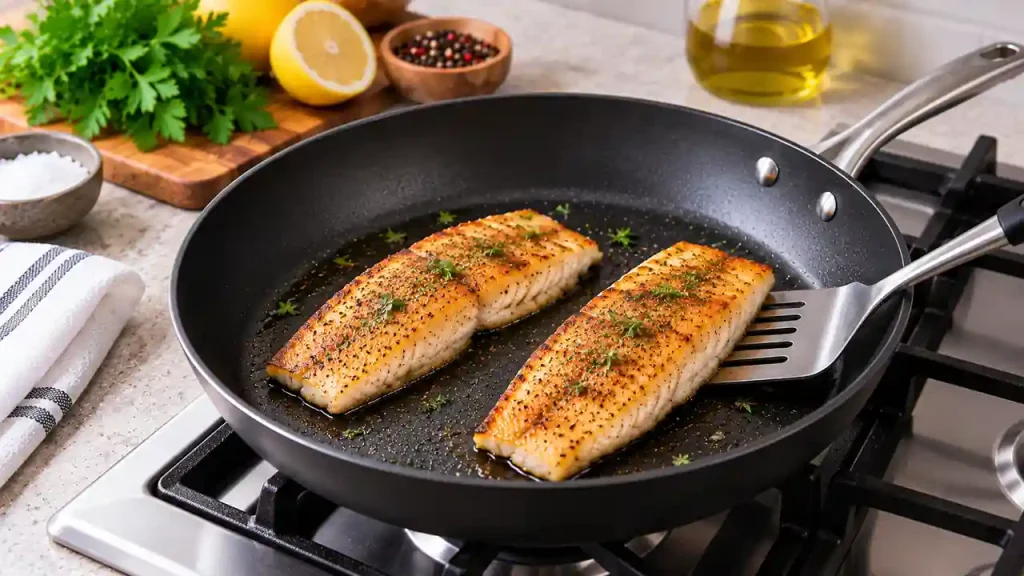
Measure the flat cooking surface, not just the diameter across the rim. Sloping sides can make a nominally large pan feel smaller when you lay two fillets inside. Fish should fit without overlapping, with room to slide a spatula underneath. An elongated whole fish may need an oval pan, a griddle, or a different cooking method. Avoid buying an oversized skillet unless your burner and storage space can accommodate it.
2. Construction and Heat Control
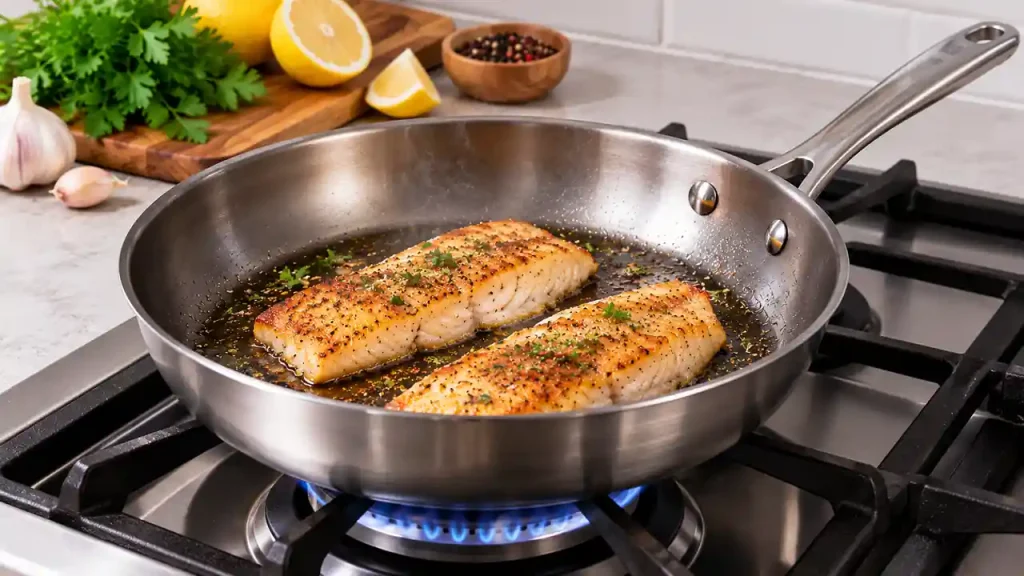
A pan should respond predictably to your stove. An aluminum core can help distribute heat in clad stainless steel; cast iron retains heat but needs gradual preheating. Thickness alone does not guarantee good performance. A very large pan over a small burner may develop uneven cooking zones regardless of its material. Match the base to the heat source and follow the cookware’s instructions.
3. Shape, Handle, and Weight
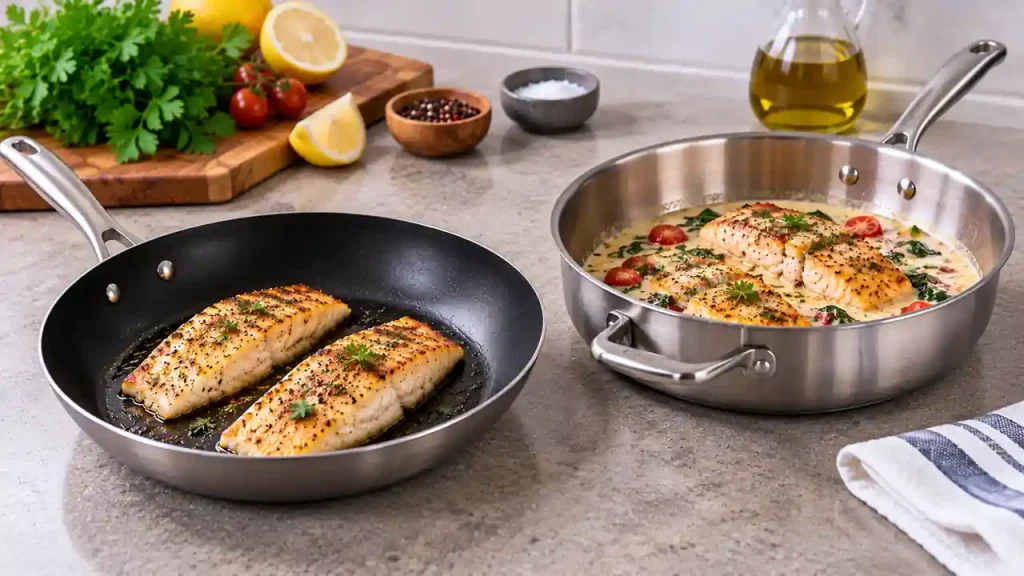
Sloping sides help with sliding out a fillet, while deeper straight sides provide more room for sauce. Neither shape automatically provides more usable cooking space. Pick up the pan if shopping in person. Consider its weight when full, whether you need a helper handle, and how securely you can move it. Check oven limits for the entire pan, including handles and lids.
3 Pan Materials to Compare for Cooking Fish
Each pan material offers a different balance of easy release, heat control, and maintenance. Your choice depends on the fish you cook and whether you prefer gentle frying, searing, or making sauces. Compare the three options below to find one that suits your everyday cooking.
1. Nonstick: The Easiest Choice for Delicate Fillets
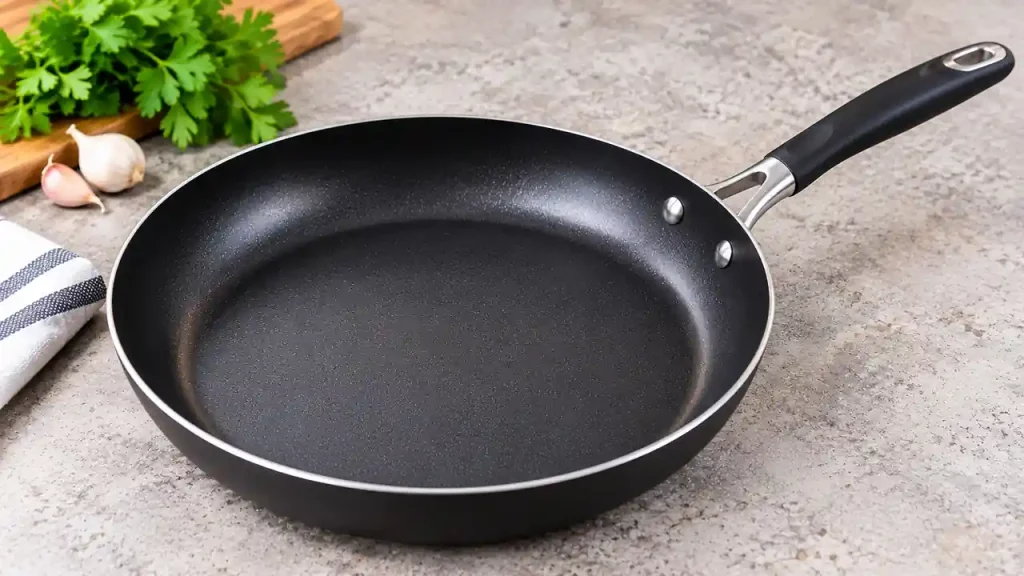
Thin cod, sole, or tilapia fillets can break when you force them away from a cooking surface. A well-maintained nonstick skillet reduces that frustration and is a sensible choice when easy release matters more than a deeply browned crust.
One option to consider is the Tramontina 10-inch Tri-Ply Base Fry Pan with Nonstick Interior, available through Target. It combines a stainless-steel body with a nonstick cooking surface, and the listing specifies compatibility with induction, gas, electric, and ceramic-glass cooktops. Check current availability and delivery options before ordering. It is also useful for breaded fish cooked with controlled heat. If you are planning homemade fish sticks, these fish recipes for people who dislike fish offer a relevant starting point.
What to look for: A stable base, comfortable handle, clearly stated cooktop compatibility, and care instructions you can follow. Do not assume every aluminum nonstick pan works on induction.
Trade-offs: Coatings require appropriate utensils and cleaning. Avoid abrasive scrubbing and follow the manufacturer’s temperature limits. Do not leave an empty coated pan heating unattended.
The word “ceramic” describes a coating category, not proof of superior durability or universal safety. Compare the actual instructions rather than choosing from broad marketing claims.
A suitably sized skillet can also handle a cheese omelette or other preparations, such as fried and scrambled eggs. Choose the size for your usual portions instead of automatically buying the largest option.
2. Clad Stainless Steel: Versatile for Searing and Sauces
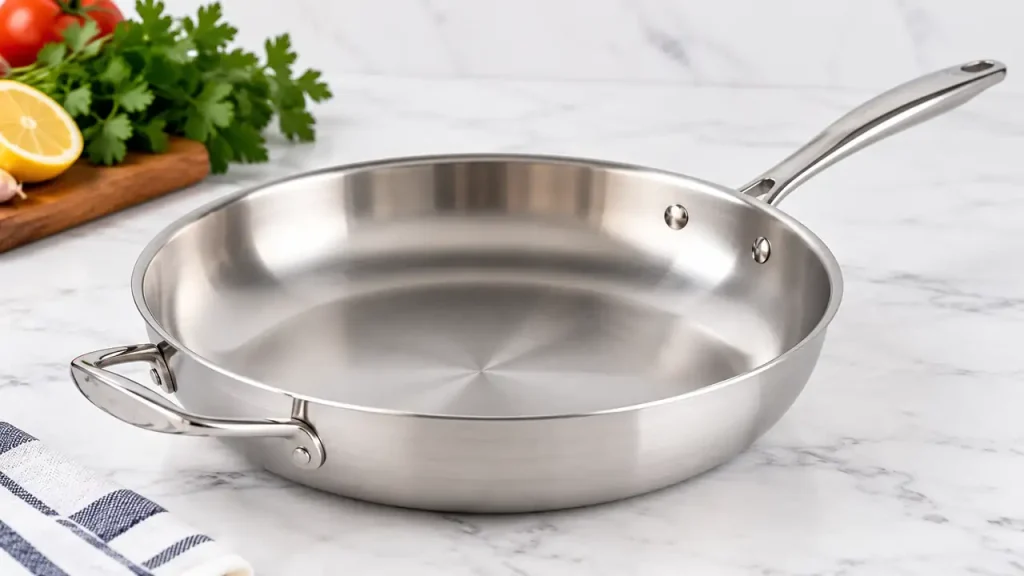
Stainless steel is a strong choice when you want browned fish and a sauce made in the same pan. It is particularly convenient for recipes involving lemon, wine, or tomatoes because you are not maintaining an exposed seasoning layer.
“Clad” describes layered construction. “All-Clad” is a brand name, so the terms should not be used interchangeably.
Example to compare: The Tramontina Signature 12-inch tri-ply clad fry pan with helper handle, model 80116/057DS, has an aluminum core between stainless-steel layers. The manufacturer lists induction compatibility and an oven limit of 500°F. Verify the model number before comparing retailer listings.
What to look for: A flat base, useful cooking area, secure handles, and clearly documented oven limits. Check availability and specifications for the exact model being sold.
Trade-offs: Stainless steel is not a nonstick surface. Dry the fish, use appropriate heat and cooking fat, and avoid forcing a fillet loose before it has formed a crust.
After removing the fish, lower the heat before adding sauce ingredients. Taste before adding salt, especially when using stock, capers, or salted butter. Knowing how to fix overly salty food is useful, but careful seasoning is easier than repairing a concentrated sauce.
3. Seasoned Cast Iron: Useful for Crisp Skin and Heat Retention
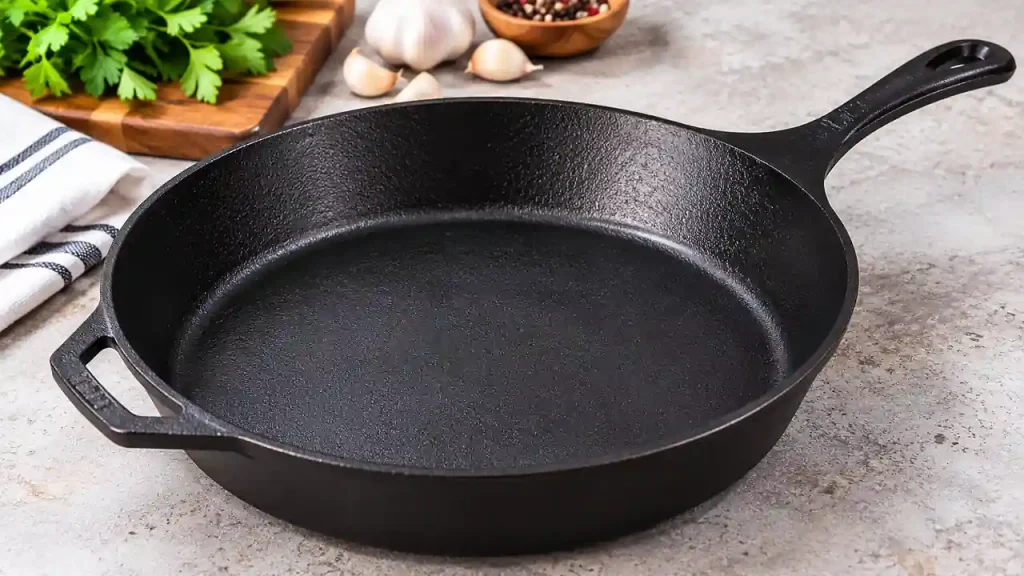
A seasoned cast-iron skillet can work well for skin-on salmon and firmer fish steaks. Its retained heat is useful when adding food, although it does not automatically heat evenly across every burner.
Preheat gradually and avoid assuming that the highest stove setting gives the best result. Once the pan becomes very hot, reducing the burner will not cool it immediately.
Example to compare: The Lodge seasoned cast-iron skillet range includes the 15-inch L14SK3. That size deserves particular attention to burner coverage, handling, and storage. A smaller option may fit your everyday cooking better.
What to look for: A manageable weight, suitable base diameter, and a helper handle where needed. “Pre-seasoned” means an initial seasoning layer is present; it does not guarantee that fish can never stick.
Trade-offs: Wash, dry thoroughly, and maintain the surface according to its instructions. Seasoned cast iron is different from enameled cast iron: the former has an oil-derived seasoning layer, while the latter has an enamel coating.
For a lengthy acidic sauce, stainless steel or suitable enameled cookware is generally more convenient than preserving seasoning on bare iron.
Where Does Carbon Steel Fit?
Whether carbon steel belongs among the best pans for cooking fish depends on your cooking habits and willingness to maintain seasoning. It is not a natural mineral, and it is not automatically nonstick straight from the box.
Weight varies with dimensions and thickness, so compare actual specifications rather than assuming every carbon-steel pan is light. Follow the exact product’s initial preparation, seasoning, and heat-source instructions. This material is an additional option rather than an essential purchase. If you already own a suitable skillet, improve your cooking technique before buying another pan.
How to Keep Fish From Sticking
A new purchase will not correct every cooking problem. Before replacing your cookware, try this sequence:
- Thaw safely and dry the surface. Excess moisture makes browning harder and can cause splattering.
- Use the right heat for the pan. Follow coating instructions; preheat stainless steel and seasoned iron appropriately.
- Add cooking fat as needed. Spread it across the contact area rather than leaving dry patches.
- Leave space between portions. Cook in batches when the pan becomes crowded.
- Turn carefully. Use a suitable spatula and avoid repeatedly lifting delicate flesh.
- Stop cooking when done. Extra time can dry fish out even in excellent cookware.
For food safety, FoodSafety.gov’s cooking-temperature chart gives 145°F (63°C) for fish. Check the thickest part with a food thermometer. A browned exterior alone does not establish the internal temperature.
A Simple Buying Decision
When comparing the best pans for cooking fish, match the purchase to your regular meals rather than an occasional ambitious recipe. Before comparing brands, choose the cooking job you repeat most often. For two delicate fillets on a weeknight, prioritize release and easy handling. For fish followed by a lemon sauce, prioritize a surface suited to that sauce. For occasional large gatherings, consider whether cooking in batches makes more sense than storing an unusually large skillet.
If you finish thick portions in the oven, verify the handle and lid ratings before purchasing. For induction, check the exact listing rather than relying on the material name alone. Read the return policy, too, especially if you cannot test the weight in person. Compare current delivered prices and warranty terms rather than relying on old sale prices. A discount only helps when the pan suits your cooking.
Common Questions About the Best Pans for Cooking Fish
1. Do I need a separate pan just for seafood?
Usually not. A suitable multipurpose skillet can cook fish and other foods when cleaned properly. Separate equipment may be necessary for managing a fish allergy, where individual advice matters.
2. Is expensive cookware necessary?
No. Appropriate size, intact construction, manageable handling, and correct technique matter more than a premium label. Compare the complete specification before paying extra.
3. Should I replace a pan with fish sticks?
Not automatically. Review preparation, heat, oil, and timing first. Damaged cookware or a deteriorating coating needs a separate assessment using the manufacturer’s guidance.
Final Thoughts
The best pans for cooking fish match your preferred recipes and the care you are willing to provide. Start with nonstick for easy release, choose clad stainless steel for versatility, or consider seasoned cast iron for heat retention. Buy a manageable size, follow its instructions, and practice with the fish you actually enjoy cooking.


Leave a Reply