

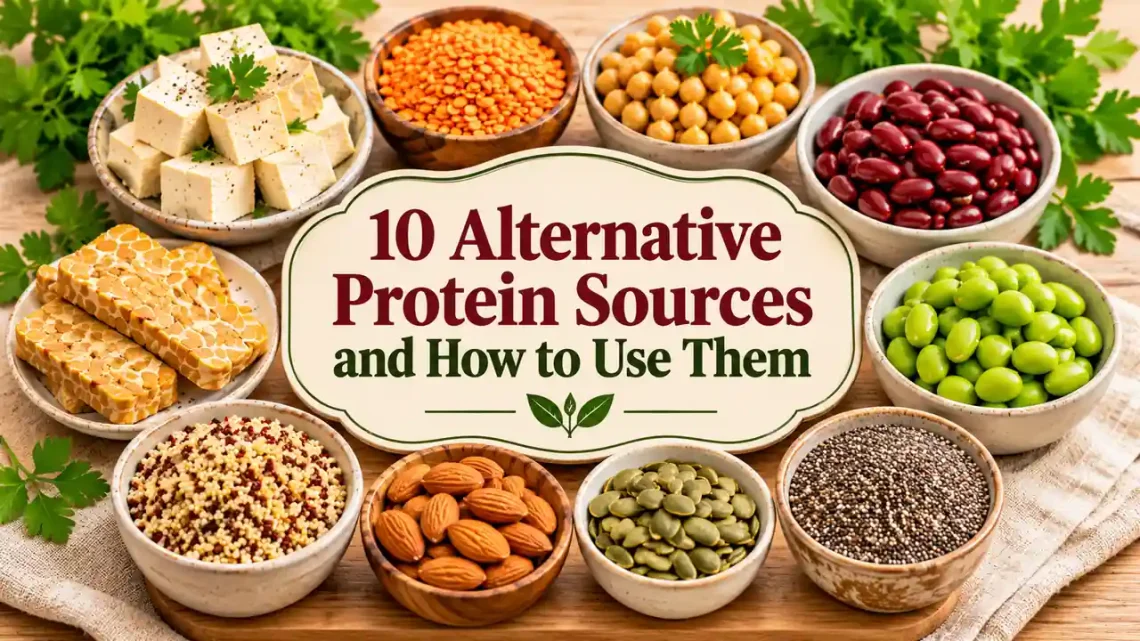
Alternative protein sources can be as familiar as a bowl of dal, chickpeas in a salad, or tofu added to dinner. You do not need expensive powders or imitation burgers to begin. Whether you eat meat, follow a vegetarian diet, or avoid animal foods entirely, the useful questions are how much protein a serving provides and how it fits into your meals.
A balanced eating plan includes enough energy and a variety of nutrients. Choosing a protein source is one part of that picture, alongside vegetables, carbohydrates, fats, and foods you enjoy.
What Are Alternative Protein Sources?
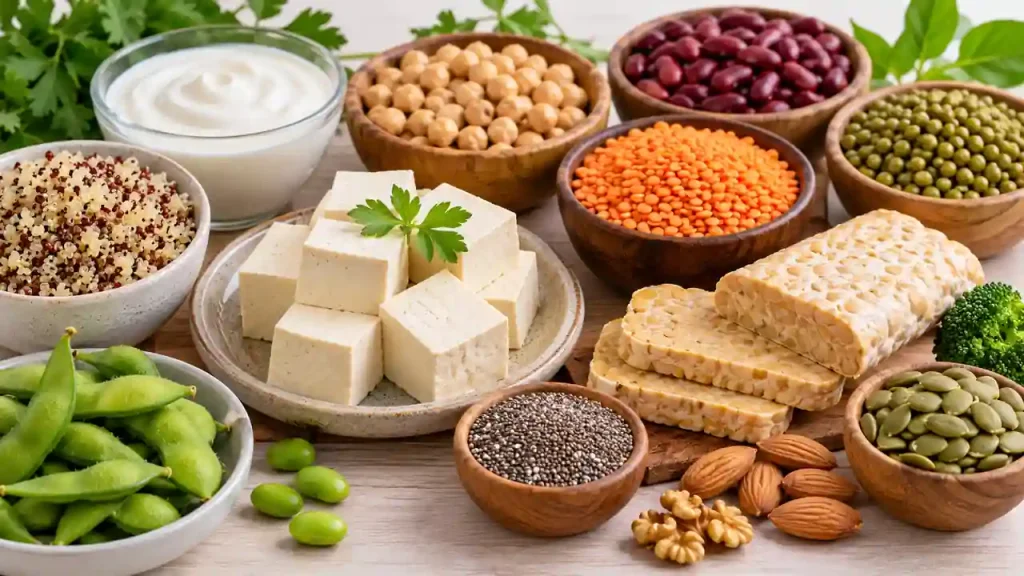
In everyday cooking, the term usually describes foods used instead of meat or other animal proteins. Beans, lentils, tofu, tempeh, nuts, seeds, and wheat-based seitan are familiar examples. The wider food industry also includes proteins produced using fungi, fermentation, or cultivated animal cells. These categories differ: cultivated meat comes from animal cells, while mycoprotein comes from fungi. Neither should automatically be described as a plant food.
Vegetarians and vegans are different too. Some vegetarians eat eggs or dairy; vegans exclude animal-derived foods. Dairy yogurt can contribute protein to a vegetarian diet, but it is not a plant-based option.
Why Are People Choosing Them?
People choose alternative protein sources for several reasons. Taste, religious practices, animal-welfare concerns, environmental priorities, and dietary preferences can all influence the decision. Practicality matters as well. Canned beans need little preparation, lentils work in familiar dishes, and tofu takes on different seasonings. Prices vary, so compare the cost of usable portions rather than assuming every meat substitute is economical.
Nutrition is another consideration. Pulses contribute fiber alongside protein, while nuts and seeds provide fats and other nutrients. However, a plant-based label does not guarantee low sodium, low saturated fat, or a balanced meal. A breaded meat substitute and a bowl of lentils can have very different nutritional profiles. You can also include plant proteins without giving up every animal food. One bean-based lunch or tofu dinner is a practical starting point.
Why Protein Matters—and What “Complete” Means
Protein helps build and repair tissues and is needed for enzymes, hormones, and many other body functions. During digestion, proteins are broken into amino acids, which the body uses to make its own proteins. Nine amino acids are essential, meaning they must come from food. A “complete” protein provides all nine in adequate proportions. Plant proteins differ in amino-acid balance and digestibility, so quantity and variety both matter.
You can meet protein needs without animal foods. A varied diet containing adequate food and different protein sources is important. You generally do not need to combine particular foods at the same meal to achieve a useful balance of amino acids across the day. Rice and dal make a sensible meal because they work well together nutritionally and practically. They do not need to become a rigid rule for every plate.
Ten Foods to Build Meals Around
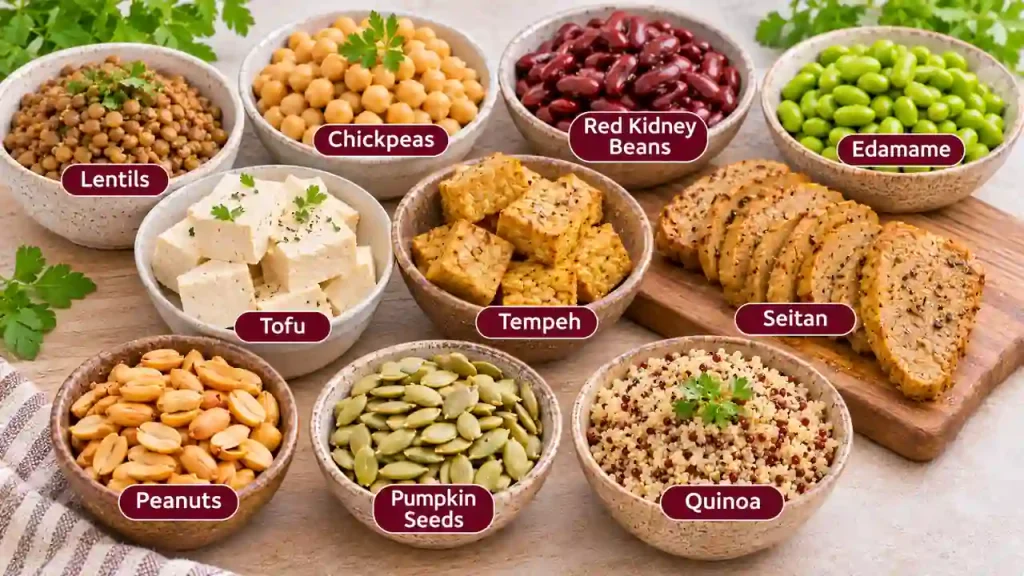
These alternative protein sources offer different textures, preparation methods, and protein amounts. The table uses reference values for food composition for specific preparations, rounded to whole grams. They are examples, not universal values for every brand or recommended portion sizes for everyone.
Weights refer to the edible amount. Check the package for the food you buy, particularly tofu, tempeh, and seitan.
| Food | Example amount | Approximate protein | Simple use |
| Lentils, boiled | 100 g | About 9 g | Dal, soup, or patties |
| Chickpeas, boiled | 100 g | About 9 g | Chana, salad, or curry |
| Red kidney beans, boiled | 100 g | About 9 g | Rajma or chili |
| Firm tofu, calcium-set, uncooked | 100 g | About 17 g | Scramble, curry, or stir-fry |
| Tempeh, cooked | 100 g | About 20 g | Marinated slices or crumbles |
| Edamame, prepared and shelled | 100 g | About 12 g | Grain bowls or snacks |
| Seitan | Label serving | Check product label | Sandwiches or stir-fries |
| Peanuts, dry-roasted, unsalted | 30 g | About 7 g | Snacks or chopped toppings |
| Pumpkin seed kernels, dried | 25 g | About 8 g | Oats, yogurt, or salads |
| Quinoa, cooked | 100 g | About 4 g | A grain-style meal base |
The serving matters as much as the headline number. A spoonful of peanut butter, an egg, and a bowl of beans are different amounts of food. Comparing them only per 100 grams can obscure what you actually eat.
Start With Beans and Lentils
Use pulses in dishes you already know: add lentils to soup, chickpeas to a salad, or kidney beans to a vegetable chili. Canned versions are convenient; drain and rinse them when appropriate. If your usual diet contains little fiber, increase portions gradually. Large, sudden changes can cause discomfort. Our guide to foods that may trigger digestive symptoms explains why tolerance and portion size matter more than blanket avoidance.
Use Tofu, Tempeh, and Seitan for Texture
Firm tofu works well in stir-fries, while softer varieties blend into sauces. Tempeh has a firmer bite, and seitan provides a chewy wheat-based option. Seitan contains gluten and is unsuitable for people with coeliac disease. For an approachable dinner, add tofu to Thai vegetable curry, then serve with rice. Check curry pastes and sauces if the entire meal needs to be vegan.
Treat Nuts, Seeds, and Grains as Contributors
These foods add protein, but the amount varies. A sprinkling of seeds or a small serving of quinoa may contribute less than a substantial portion of tofu or beans. Vegetables contribute too, although they usually serve a different nutritional role. The broccoli versus steak protein comparison shows why realistic portions are more informative than isolated claims about calories or food weight.
Separate Meat-Like Texture From Protein Content
Mushrooms and young jackfruit can create satisfying savory dishes, but texture does not establish nutritional equivalence to meat. When cooking jackfruit, add beans, lentils, or tofu if the meal otherwise lacks a substantial protein component. Mycoprotein and ready-made substitutes can offer further options. Check ingredients: some products contain egg, milk, or other ingredients unsuitable for a vegan diet.
How to Build a Practical Day of Meals
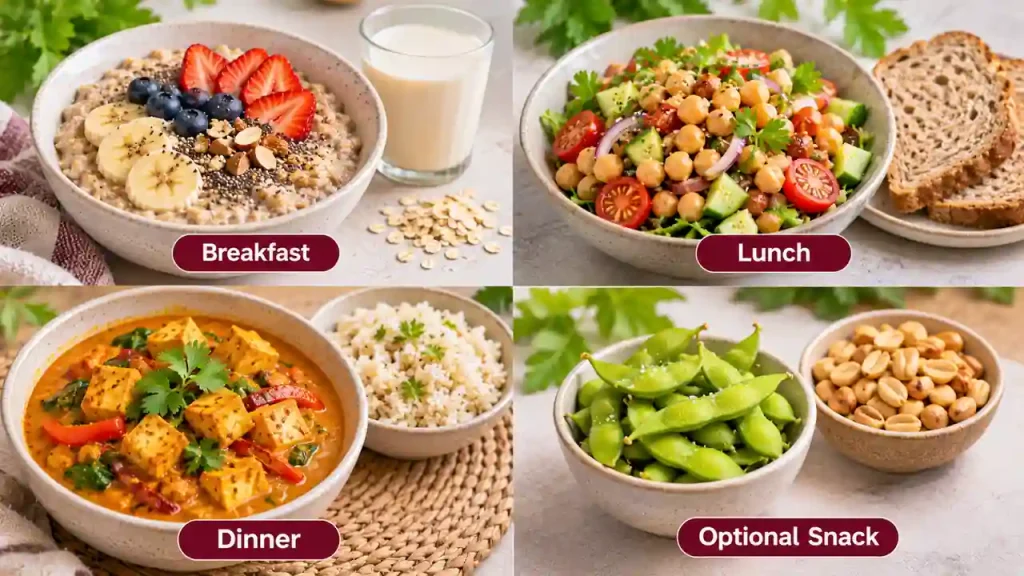
Use these examples as combinations to adapt, rather than a fixed menu:
- Breakfast: Oats made with a protein-containing fortified soy drink, plus fruit and seeds.
- Lunch: Chickpea salad with whole-grain bread, or leftover rajma with rice and vegetables.
- Dinner: Tofu curry, lentil soup with bread, or tempeh with vegetables and a grain.
- Optional snack: A small handful of peanuts, edamame, or another food that suits your appetite.
Build each main meal around an identifiable protein food. Adjust quantities to your needs instead of assuming that a few toppings will provide the same amount as the main ingredient.
Check Plant-Based Drinks and Packaged Foods
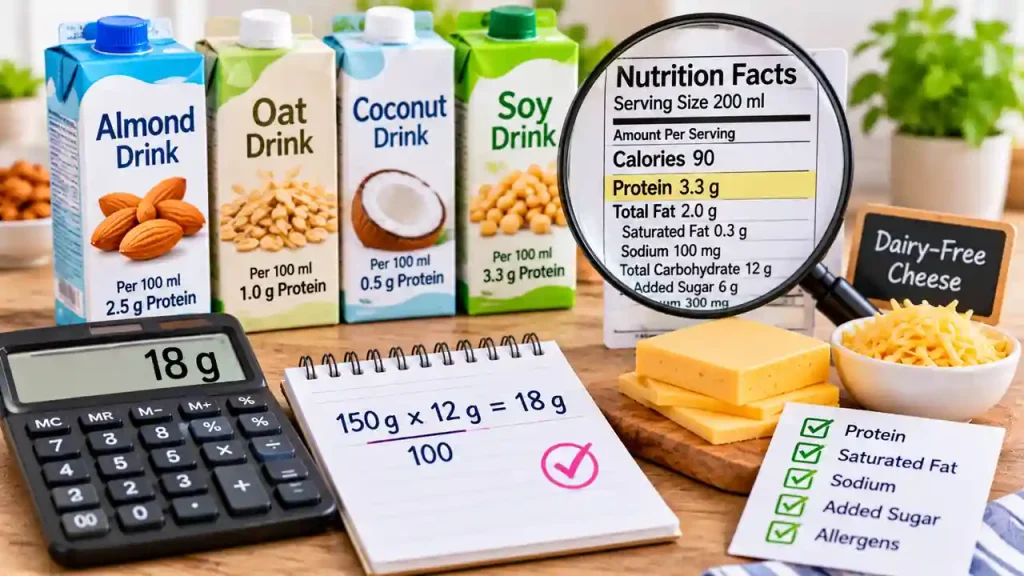
Compare protein per serving, saturated fat, sodium, added sugar, and allergens. For beverages, also check calcium and vitamin fortification. Almond, oat, coconut, and soy drinks can differ considerably; use the nutrition label to compare plant-based beverages. To calculate your portion, multiply protein per 100 grams by the weight you will eat, then divide by 100. For example, 150 grams of food labeled 12 grams of protein per 100 grams supplies 18 grams of protein.
Likewise, dairy-free cheese is not automatically a protein replacement for dairy cheese. Look beyond the product name. If replacing foods you eat regularly, consider the nutrients they previously supplied.
Remember Nutrients Beyond Protein
A vegan diet needs a reliable vitamin B12 source through fortified foods or an appropriate supplement. Calcium, vitamin D, iodine, iron, and omega-3 fats also deserve attention when planning meals. Pairing plant sources of iron with vitamin C-rich foods can improve absorption. For example, add peppers to chickpea salad or tomatoes alongside a bean dish. Use practical vegan nutrient-planning guidance to review the whole diet. Our guide to foods rich in vitamin D also explains why fortification needs checking rather than assuming.
Do You Need Protein Powder?
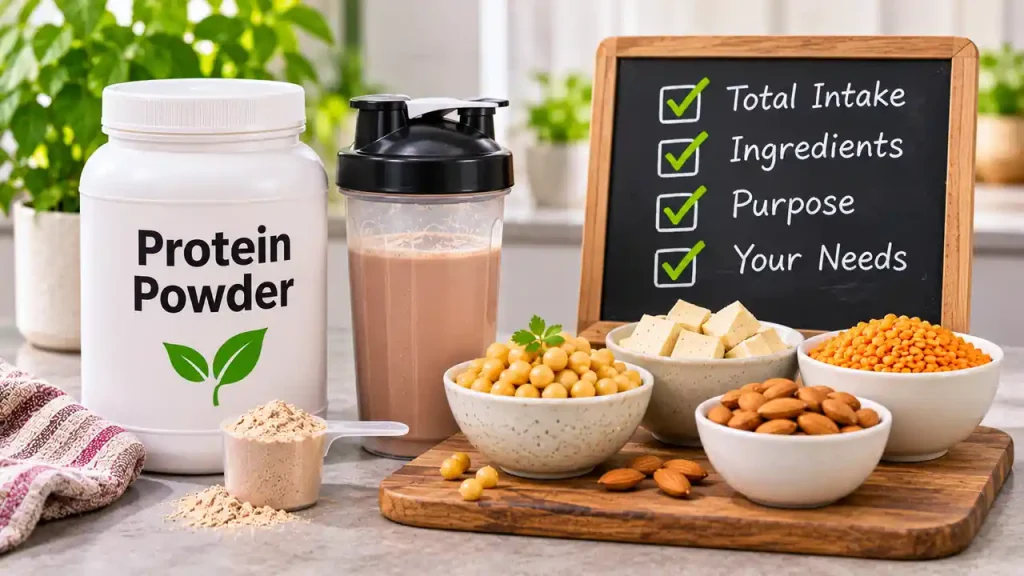
Food can meet protein needs, although a powder may be convenient for some people. It does not automatically make a diet balanced or cause weight loss. If considering protein shakes for weight management, consider total intake, ingredients, and the role the shake serves.
Needs vary with body size, activity, age, pregnancy, and health. People with kidney disease or prescribed dietary restrictions should get individualized advice before changing protein intake substantially.
Choosing Alternative Protein Sources for Your Needs
If you avoid soy, consider lentils, chickpeas, beans, nuts, seeds, or quinoa according to your other dietary requirements. If you need a gluten-free diet, exclude seitan and check for manufactured substitutes for wheat and other gluten-containing ingredients. A food can be vegan while still containing an ingredient you need to avoid.
Choose around a diagnosed allergy or intolerance rather than eliminating whole food groups simply because they appear on a general avoidance list. If several restrictions overlap, a dietitian can help maintain variety and adequate nutrition.
How Can You Keep Costs Manageable?
Begin with one familiar pulse and one new food you have a recipe for. Compare the cost per usable portion, including how much a package supplies after draining or preparation. Dried pulses may offer value, while canned versions save preparation time. Buy a small amount of an unfamiliar substitute before committing to a large pack that may go unused.
Final Thoughts
Alternative protein sources work best when they fit your appetite, budget, preferences, and nutritional needs. Start with familiar foods, compare realistic portions, and make one useful change at a time. Lentils, beans, tofu, and other options can bring variety to meals while helping you build a balanced eating pattern you can maintain.



Leave a Reply