


Basil seeds, commonly called sabja or tukmaria, are small edible seeds that develop a soft gel coating when soaked in water. They are familiar ingredients in falooda, chilled drinks, and desserts. Their texture makes them useful in the kitchen, while their nutrient content deserves a more measured explanation than many “superfood” claims suggest.
This guide covers what they are, how to prepare them, what their proposed benefits mean, and how to make a lemon-mint drink. Start with food-grade ingredients and package instructions rather than treating a spoonful of seeds as a remedy.
What Are Basil Seeds?
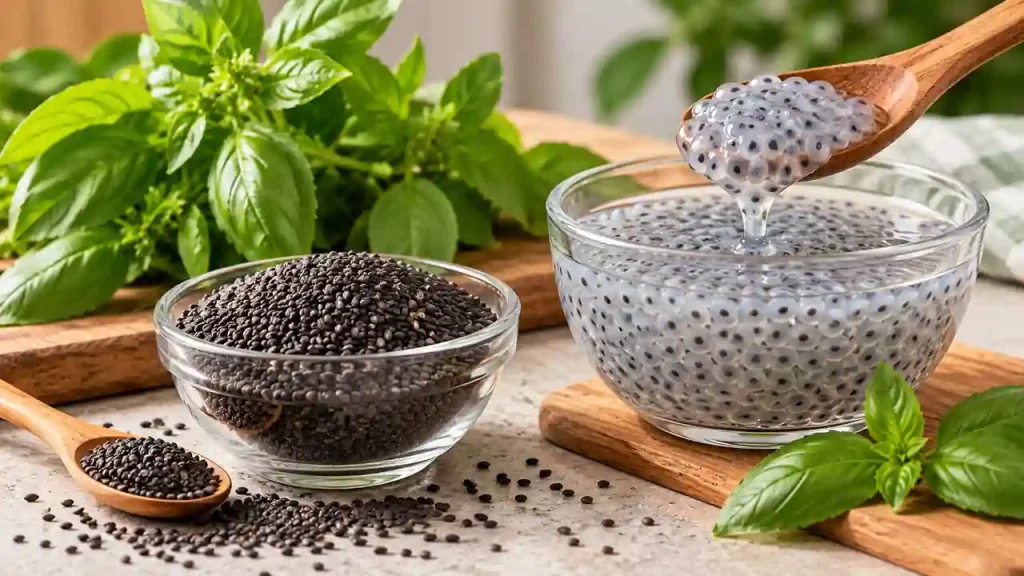
Edible sabja commonly comes from sweet basil, Ocimum basilicum. Regional names can vary, so look for a clearly labeled food product and, where available, its botanical name. Sweet basil is different from holy basil or tulsi. Research on a tulsi supplement or leaf extract should not be presented as evidence that a sabja lemonade has the same effects.
The dry seeds are small and dark. Once hydrated, a translucent layer develops around the dark center. Buy products intended for eating, with preparation directions and storage information. Seeds sold for gardening may be treated and are not suitable substitutes.
How Do They Differ From Chia?
Both ingredients form a gel in water, but they come from different plants and have different preparation characteristics. Check the product name rather than identifying them by color alone.
For a fuller comparison of basil seeds versus chia seeds, keep the intended recipe and your preferred texture in mind. Neither ingredient is automatically superior for everyone, and substitutions may change the finished result.
Nutrition: Look at the Serving, Not Just the Headline
A 2021 review of seed composition describes fiber, protein, fats, minerals, and plant compounds, with substantial variation between analyses. These findings establish nutritional potential rather than guaranteed benefits from one drink. Reported fats include alpha-linolenic acid, a plant omega-3 fatty acid. That does not establish a fat-burning effect. Similarly, identifying antioxidant compounds in an ingredient does not prove that eating it prevents disease or improves skin.
The serving size matters. A teaspoon is much smaller than the 100-gram quantities used in many nutrition tables. For usable numbers, check your package, weigh the dry portion, and calculate nutrients from that amount. Soaking adds water and volume; it does not multiply the original quantity of protein, minerals, or fiber. Exact calories in a drink also depend on sweetener, milk, juice, or other additions.
Basil Seeds Benefits: What Can You Reasonably Expect?
Their clearest role is as an optional food ingredient. The broader effects depend on portion size, the rest of the meal, and individual tolerance.
1. Fiber and Food Texture
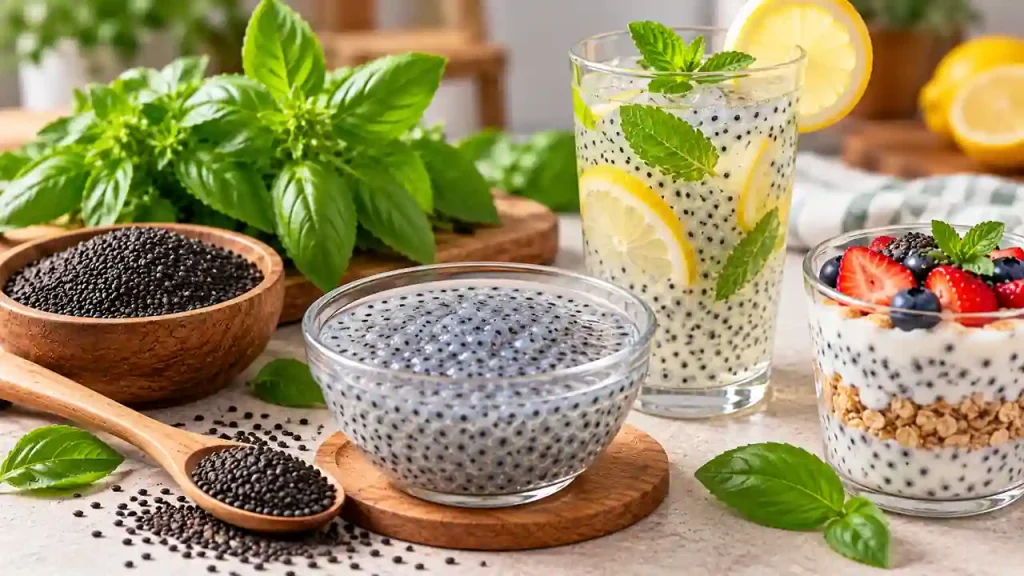
The gel-forming coating creates a different texture in drinks, yogurt, and desserts. Fiber-containing foods can contribute to an overall dietary pattern that supports digestive health. However, a small amount is not a guaranteed treatment for constipation, and increasing fiber quickly can cause discomfort. Persistent digestive symptoms need an assessment rather than repeated experiments with larger portions.
2. A Way to Vary Meals and Drinks
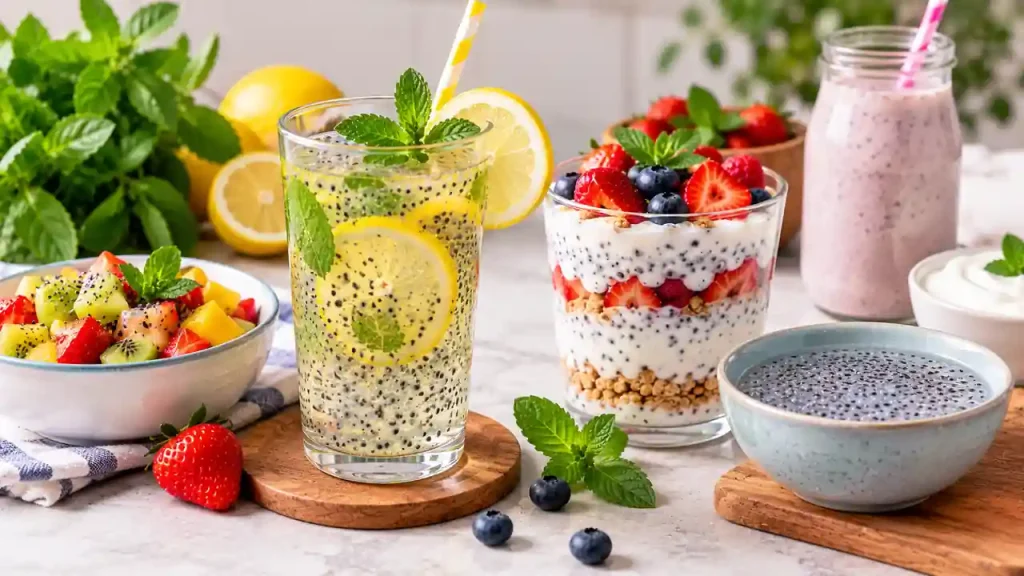
Fully hydrated seeds can add interest to foods you already enjoy. Their mild flavor allows lemon, mint, fruit, or yogurt to remain prominent. If this helps you enjoy a less sweet drink, that is a practical benefit. Adding them to a highly sweetened dessert does not erase its sugar or turn it into a balanced meal.
3. Weight Management and Blood Sugar Claims

Do not assume that swelling in water guarantees lasting fullness or weight loss. Nutrition findings, laboratory experiments, and studies of extracts cannot automatically predict what a homemade drink will do. There is also insufficient basis here to promise diabetes control or advise changing medication. Consider the complete recipe, including sugar and honey. A varied healthy eating plan is more useful than assigning a special metabolic effect to one ingredient.
4. “Detox” and Body-Cooling Claims
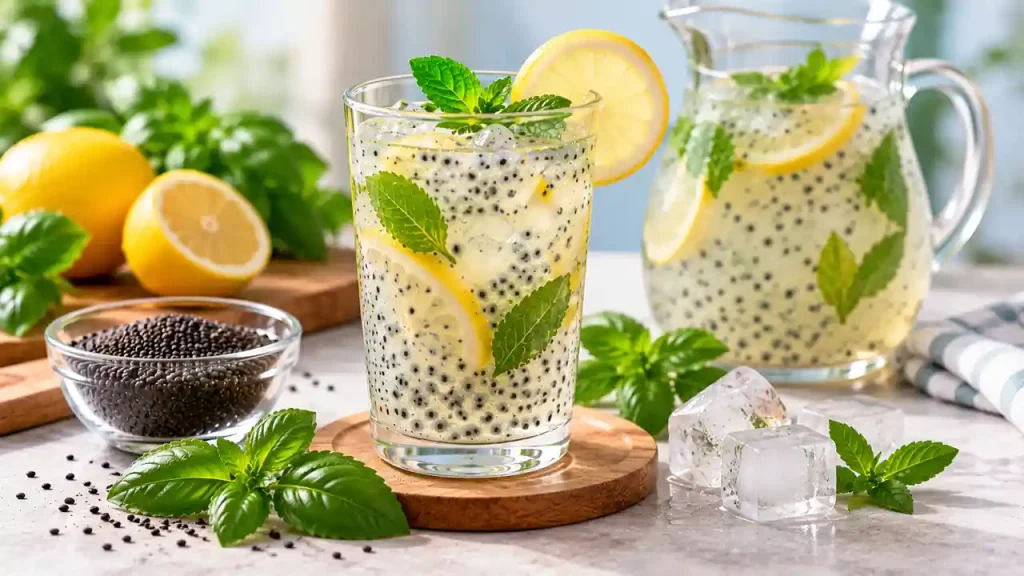
A chilled drink may be refreshing and contribute fluid. That is different from demonstrating a special ability to lower body temperature or treat heat illness. The NIH’s guidance on detoxes and cleanses explains that convincing evidence for general detox claims is lacking. Enjoying lemonade does not require describing it as a toxin-removal treatment.
How to Soak Sabja Properly
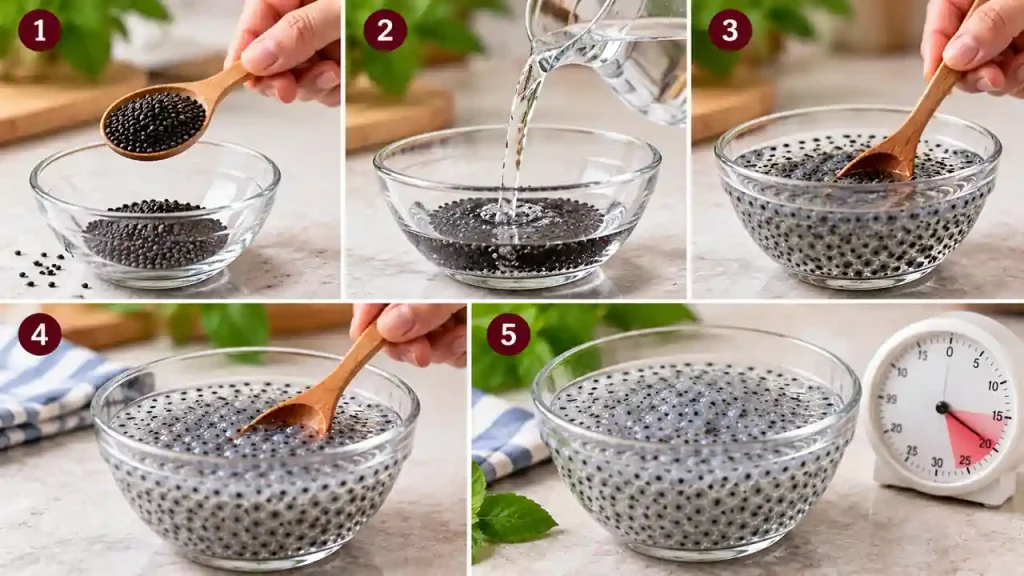
Use the directions on your edible-seed package. A common preparation takes approximately 15–20 minutes, but products and instructions vary.
- Measure a small quantity: For the recipe below, use two teaspoons.
- Add drinking water: Begin with 200 ml in a clean bowl, unless the package specifies otherwise.
- Stir immediately: Separate clusters so water can reach the seeds.
- Stir again: Check after a few minutes and add water if the mixture becomes difficult to stir.
- Check hydration: Wait until the seeds are evenly surrounded by gel before using them.
The center remains dark; it does not need to become transparent. Do not swallow dry seeds and then drink water to hydrate them in your throat. Adding dry seeds at the last moment is not a substitute for proper preparation.
Lemon-Mint Sabja Drink Recipe

Using basil seeds in lemonade is a simple introduction to their texture. These proportions make two generous glasses and are a starting point for taste, not a therapeutic dose.
Preparation: Approximately 5–10 minutes, plus soaking.
Ingredients
- 2 teaspoons food-grade sabja seeds
- 200 ml drinking water for soaking, plus more if required
- 400 ml chilled drinking water
- 2 tablespoons freshly squeezed lemon juice, then adjust to taste
- 5–6 washed mint leaves
- 1–2 teaspoons sugar or honey, optional
- A few ice cubes, optional
Method
- Soak the seeds separately using the instructions above and any package directions.
- Mix the chilled water and lemon juice in a jug.
- If using sugar, dissolve it in a little of the measured water first. Stir honey thoroughly if choosing that instead.
- Gently press the mint leaves with a spoon and add them.
- Stir in the hydrated seeds with their soaking water.
- Taste, dilute or adjust the lemon gradually, and divide between two glasses.
- Add ice last and stir again before serving.
The 600 ml water total includes the soaking water. If you need additional water during soaking, taste the mixture before adding more lemon or sweetener. Seeds may settle, so stir between pours.
Adjust Sweetness and Texture
Honey is not a sugar-free alternative. The WHO guideline on free sugars includes sugars naturally present in honey. Choose one optional sweetener rather than automatically adding both.
| Problem | Practical adjustment. |
| The drink is too thick. | Add chilled water gradually. |
| Seeds clump together. | Stir during soaking and use sufficient water. |
| Lemon tastes too strong. | Dilute before deciding whether sweetness is needed. |
| Mint dominates. | Remove the leaves and use fewer next time. |
| Ice dilutes the flavor. | Chill the ingredients first and add less ice. |
| You want more seed texture. | Hydrate another small portion separately. |
Avoid “fixing” a finished drink with extra dry seeds. For another fruit-and-mint option, watermelon-mint fizz offers a different flavor; assess its sweetness separately.
Other Ways to Use the Hydrated Seeds
Stir a small amount into plain yogurt, spoon it over fruit, or add it to a chilled dessert. Follow the same hydration instructions before adapting a recipe. They can also change the texture of homemade protein shakes, but a small seed addition is not a substitute for the recipe’s main protein source. Adjust the liquid so the result remains comfortable to drink. For a family get-together, offer the lemonade chilled and let guests choose whether they want a seed-textured serving. There is no need to add it to every drink.
Storage and Who Should Take Extra Care
Store dry seeds according to the package, protected from moisture. Prepare soaked portions with clean utensils and drinking water, then refrigerate promptly if not using immediately. For the freshest flavor, make the lemonade close to serving and aim to finish a refrigerated batch within 24 hours. Lemon juice does not sterilize it or make refrigeration unnecessary. Follow stricter package directions where given.
People with swallowing difficulties should seek individualized advice before trying this texture. Do not assume a seed drink is suitable for young children. Stop using an ingredient that causes an allergic reaction or persistent digestive discomfort. There is no established universal daily amount for the health benefits advertised online. The recipe quantity is a culinary suggestion, and long-term high-intake safety should not be assumed.
Common Questions
1. Does One Tablespoon Equal One Teaspoon?
No. One tablespoon equals three teaspoons. Use measuring spoons rather than ordinary cutlery, particularly when following a recipe for the first time.
2. Is There a Best Time to Have Them?
There is no established best hour for the benefits discussed here. Choose a time that fits your meals and comfort rather than assuming an empty stomach improves results.
3. Can Lemonade Replace Breakfast?
No. It is a light drink. Pair it with an appropriate meal rather than using the gel texture to justify skipping food.
Final Thoughts
Basil seeds can add a distinctive texture and some nutrients to drinks, yogurt, and desserts. Buy food-grade products, follow soaking instructions, and judge nutrition by the actual serving. Enjoy a lemon-mint drink if you like it, while keeping expectations realistic: it is food, not a detox treatment, guaranteed weight-loss method, or replacement for medical care.



Leave a Reply