

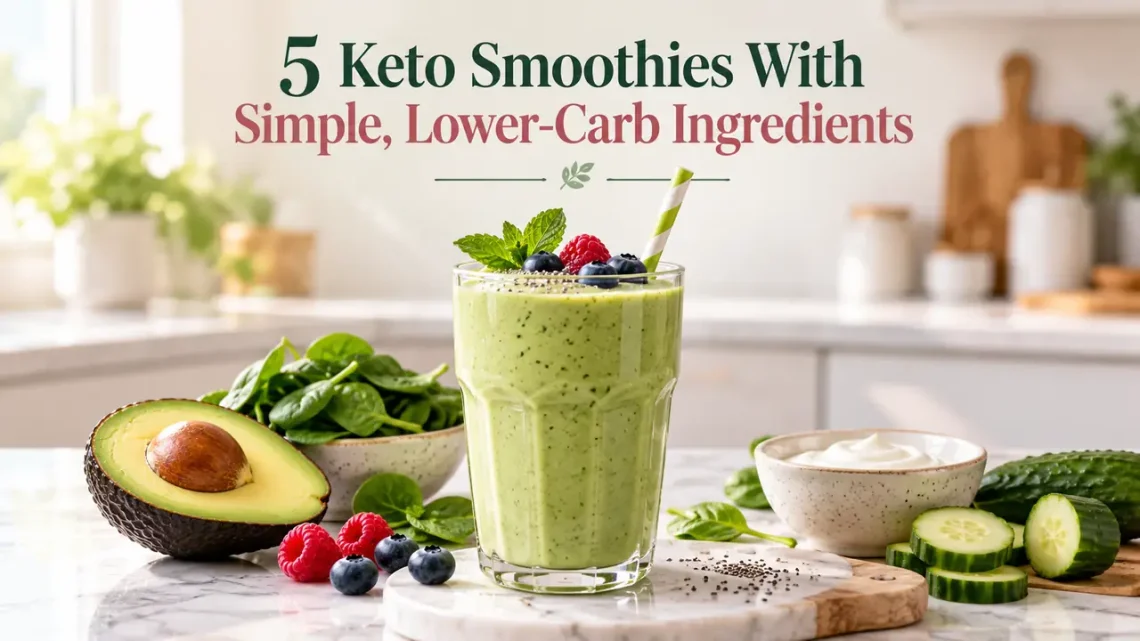
Keto smoothies can be a convenient way to combine a creamy base, a measured portion of fruit or vegetables, and ingredients you enjoy. They are not automatically low-calorie, nutritionally complete, or a shortcut to weight loss. What matters is the recipe, the serving size, and how the drink fits into your overall eating pattern.
The five recipes below offer green, raspberry, peanut butter, coconut, and strawberry flavors. Each makes one serving. Check your ingredient labels before deciding whether a recipe fits your carbohydrate target; no single drink guarantees ketosis.
Can Keto Smoothies Help With Weight Loss?
They may fit into a weight-management plan, but adding a smoothie to your usual intake does not automatically help you lose weight. Large quantities of nut butter, cream, coconut milk, or oil can contribute considerable energy. The CDC’s weight-loss guidance favors gradual, sustainable change rather than rapid-loss promises. Eating patterns, activity, sleep, medications, and health conditions all influence results. Choose a drink because it is useful and enjoyable, not because it claims to burn fat. A sustainable healthy eating plan should also provide variety, sufficient nourishment, and meals you can maintain.
How to Build Keto Smoothies Without Guesswork
A ketogenic eating pattern is more restrictive than simply reducing added sugar. Daily carbohydrate targets vary; one fixed allowance will not suit every reader.
Start by checking the ingredients you actually buy:
| Ingredient | What to check |
| Plant-based drink | Unsweetened variety, serving size, carbohydrate, and protein |
| Greek yogurt | Plain rather than flavored; carbohydrate varies by product |
| Nut butter | Ingredient list and measured portion |
| Frozen fruit | Fruit alone, without syrup or added sugar |
| Protein powder | Carbohydrate, protein per serving, and allergens |
| Coconut product | Carton beverage, canned milk, and sweetened cream differ |
The liquid matters. Unsweetened almond milk, water, or a suitable unsweetened soy drink may work, depending on the recipe. Comparing plant-based milk options can help you choose by taste and nutritional profile rather than assuming they are interchangeable.
Check Carbohydrate for the Whole Serving
For packaged ingredients, use the quantity you add, not the label’s serving size by default. If your yogurt lists carbohydrates per 100 grams and you use 80 grams, multiply that figure by 0.8. For example, a hypothetical yogurt containing 4 grams of carbohydrate per 100 grams contributes 3.2 grams when you use 80 grams. Repeat that calculation for the other ingredients. For whole ingredients, USDA FoodData Central provides food-composition information. Add the contributions from every ingredient, including toppings and powders.
On US-style labels, a common net-carbohydrate calculation subtracts dietary fiber from total carbohydrate. Labeling conventions differ internationally, so do not automatically subtract fiber again from a label that already reports available carbohydrate. Your exact brands and measured quantities determine the final nutrition values. Recalculate whenever you change a serving size or substitute an ingredient.
5 Easy Recipes to Blend at Home
These keto smoothies use modest fruit portions and clearly identified liquids. Preparation takes about five minutes per recipe when ingredients are ready. Wash fresh produce, use plain whole-milk Greek yogurt, and add ice gradually so the mixture remains easy to blend.
1. Green Avocado and Cucumber Smoothie
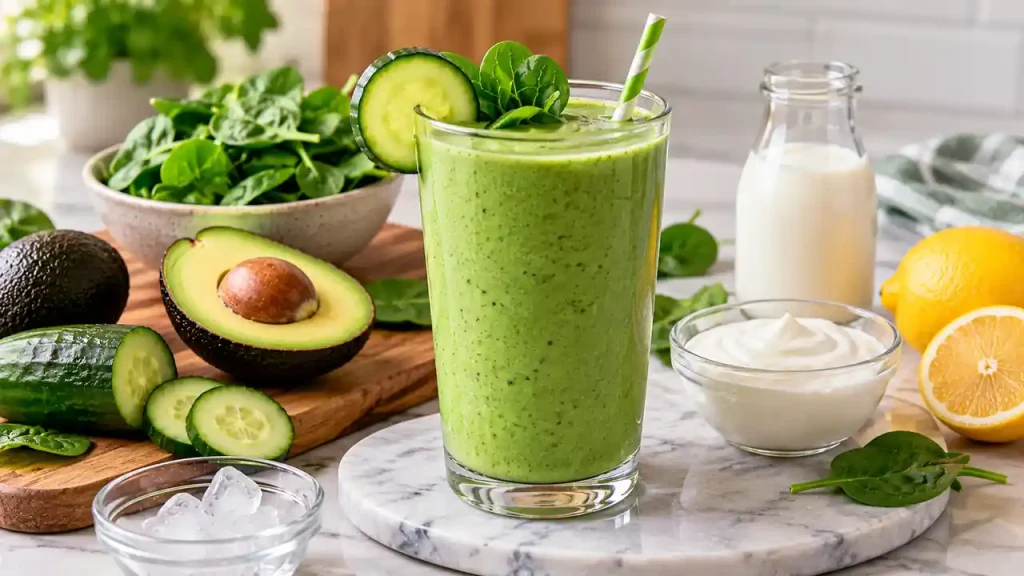
Spinach and cucumber give this drink a fresh flavor, while avocado and yogurt provide its creamy texture. Lemon brightens it without requiring juice as the main liquid.
Ingredients — one serving
- 240 ml unsweetened almond milk
- 50 g avocado flesh, fresh or frozen
- 30 g baby spinach
- 40 g cucumber, chopped
- 80 g plain whole-milk Greek yogurt
- 1 teaspoon lemon juice
- A few ice cubes, optional
Method: Add the almond milk and spinach first. Blend briefly, then add the remaining ingredients and blend until smooth. Add a little water if the mixture is too thick.
Practical adjustment: Start with less lemon and taste before adding more. Avoid extra avocado or oil solely to increase the fat content.
2. Raspberry and Yogurt Smoothie
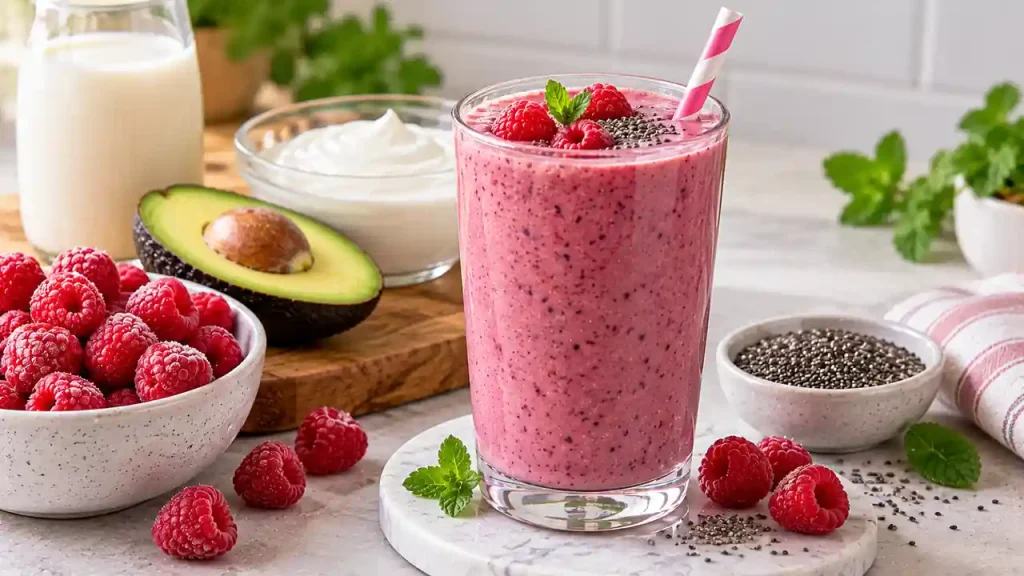
Raspberries provide a tart flavor, so taste the finished drink before deciding whether it needs sweetening. A small amount of chia thickens the mixture as it stands.
Ingredients — one serving
- 180 ml unsweetened almond milk
- 40 g frozen raspberries
- 80 g plain whole-milk Greek yogurt
- 30 g avocado flesh
- 1 teaspoon chia seeds
- A few ice cubes, optional
Method: Blend the almond milk, yogurt, avocado, and raspberries. Add the chia and blend again. Rest for five minutes if you prefer a thicker drink, then stir.
Practical adjustment: Add water rather than more milk when thinning it without changing the ingredient proportions substantially. Drink from a glass or serve as a small smoothie bowl without sugary toppings.
3. Peanut Butter and Vanilla Smoothie
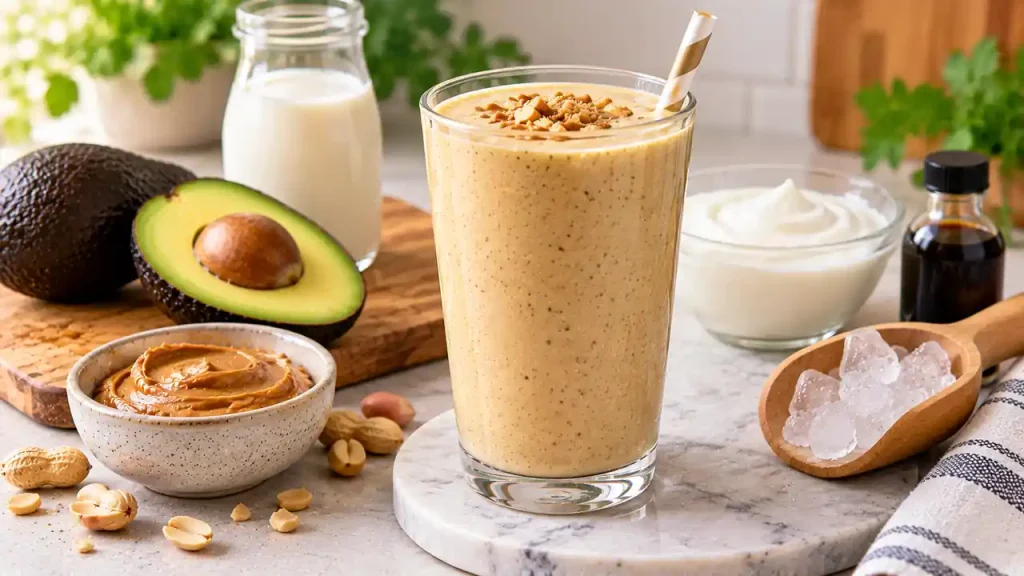
This version keeps the peanut flavor while using one measured tablespoon instead of an unrestricted scoop. Avocado supplies the body without relying on bananas.
Ingredients — one serving
- 240 ml unsweetened almond milk
- 16 g unsweetened peanut butter
- 40 g avocado flesh
- 60 g plain whole-milk Greek yogurt
- ¼ teaspoon vanilla extract
- A few ice cubes
Method: Blend the liquid and yogurt first. Add peanut butter, avocado, vanilla, and ice, then blend until creamy. Scrape down the sides if necessary.
Practical adjustment: Choose peanut butter made primarily from peanuts. If you substitute almond or sunflower-seed butter, check its carbohydrate and allergen information rather than assuming identical nutrition. Skip the recipe if its ingredients conflict with your allergy needs.
4. Coconut and Lime Smoothie
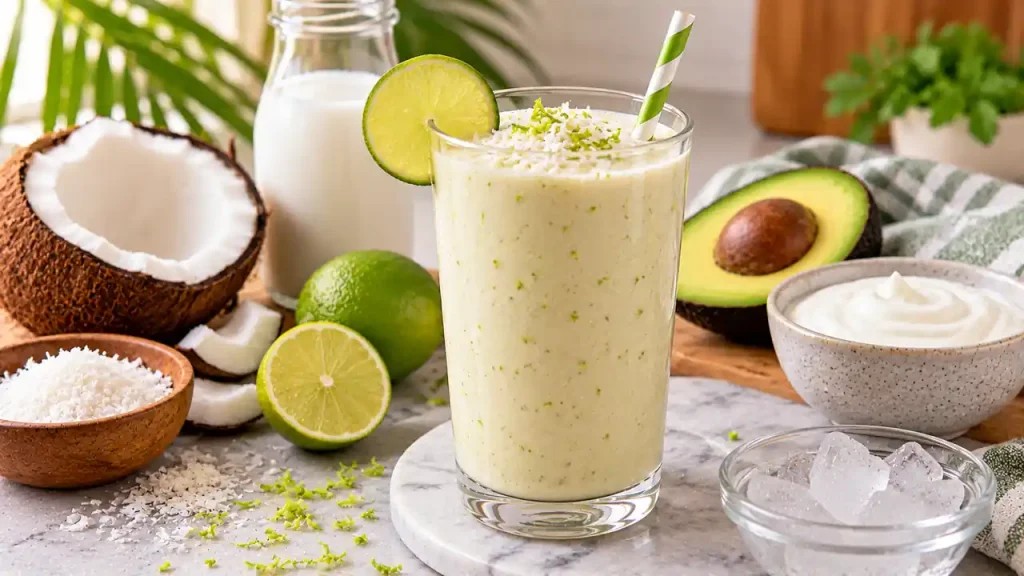
Coconut and lime give this blend a tropical flavor. It contains neither pineapple nor juice, so expect a creamy coconut drink with a citrus finish.
Ingredients — one serving
- 180 ml unsweetened carton coconut beverage
- 80 g plain whole-milk Greek yogurt
- 30 g avocado flesh
- 1 teaspoon unsweetened desiccated coconut
- 1 teaspoon lime juice
- A little finely grated lime zest
- A few ice cubes
Method: Blend everything until smooth, starting with fewer ice cubes. Taste and adjust the lime zest for a brighter aroma.
Practical adjustment: Do not replace the carton beverage with the same quantity of canned coconut milk without recalculating the recipe. Sweetened cream of coconut is another different product.
5. Strawberry and Avocado Smoothie
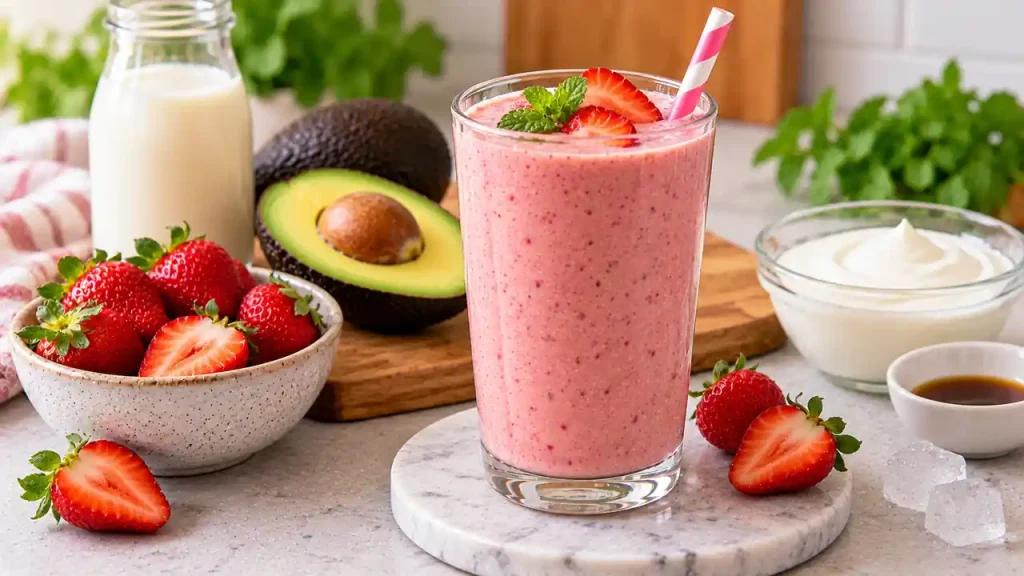
Strawberries supply a familiar fruity flavor. Frozen berries help create thickness, so you may not need much ice.
Ingredients — one serving
- 180 ml unsweetened almond milk
- 60 g frozen strawberries without added sugar
- 80 g plain whole-milk Greek yogurt
- 30 g avocado flesh
- ¼ teaspoon vanilla extract, optional
- Water or a few ice cubes, as needed
Method: Blend the milk, yogurt, and avocado, then add the strawberries. Blend again until smooth. Adjust with a splash of water if your blender struggles.
Practical adjustment: Measure the berries rather than filling the blender by eye. Fruit contributes carbohydrates, but it is not forbidden simply because it contains natural sugar. Portion size determines how it fits your plan.
Make Keto Smoothies More Useful, Not Just Richer
A smoothie made mostly from avocado, ice, and almond milk may contain little protein. Fruit contributes some nutrients, but fruit is not a concentrated protein source. If the drink is replacing part of breakfast, consider its protein and overall nourishment. More yogurt, suitable soy milk, or an appropriate protein powder may help, but every change requires checking the recipe again.
Do not automatically add MCT oil, butter, or cream. More fat does not establish that the drink is better for your needs. Meals built around satisfying foods can also be a practical alternative when a drink leaves you hungry.
Adjust the Texture Without Overloading the Recipe
For a thicker smoothie, use frozen avocado or berries and start with slightly less liquid. Add the remaining liquid gradually until your blender runs smoothly. Too much ice can dilute the flavor as it melts. For a thinner drink, add water a tablespoon at a time. If the result tastes bland, try a little vanilla or citrus zest before adding more sweetener. Wash the blender promptly, especially around the blade assembly, and keep yogurt-based ingredients refrigerated until needed.
Who Should Get Individual Advice First?
Changing carbohydrate intake can affect diabetes management. Diabetes UK’s low-carbohydrate guidance advises discussing changes with your healthcare team, especially when taking insulin or medicines that can cause low blood glucose. Very low-carbohydrate diets also require particular caution with SGLT2 inhibitors because of the ketoacidosis risk.
Do not change prescribed medication yourself. Seek individualized advice before restrictive dieting during pregnancy or breastfeeding, with kidney disease, or with a history of an eating disorder. These recipes are not a treatment plan.
Common Questions
1. Do I need sweetener?
No. Taste first. If you use one, check its ingredients: some products include carbohydrate-containing fillers, and tolerance varies.
2. Will these drinks boost metabolism?
No recipe guarantees that effect. Sustainable ways to support metabolic health involve broader habits rather than a special blender ingredient.
3. Can I make a dairy-free version?
Yes, but substitute thoughtfully. Unsweetened dairy-free yogurt varies in carbohydrate and protein, so recalculate rather than assuming a direct nutritional match.
Final Thoughts
Keto smoothies work best as practical recipes rather than promises of rapid weight loss. Measure the ingredients, check your labels, and choose a flavor you enjoy. Whether you prefer berries, peanut butter, or a fresh green blend, consider the whole meal and your individual needs before deciding how often the drink belongs in your routine.



Leave a Reply