


Every partnership encounters rough patches, but when silence, resentment, and poor communication become the norm, you may wonder how to save a dying relationship.
A struggling relationship is not necessarily a broken one. Emotional disconnection can develop through unresolved conflict, poor communication, broken trust, chronic stress, or growing emotional distance. When both partners are willing to take responsibility and change unhealthy patterns, learning how to save a dying relationship becomes a realistic path forward—as long as personal safety and psychological well-being remain intact.
Quick Answer: A dying relationship may be repairable when both partners still want the relationship, can communicate without fear, and are willing to change the patterns causing disconnection. Start by identifying what changed, practicing non-defensive communication, taking accountability, rebuilding trust through consistent actions, and seeking professional counselling when the same problems continue despite sincere attempts to change them. If the dynamic involves abuse, coercive control, intimidation, or persistent safety violations, preserving the relationship should not be the goal.
What Does a “Dying Relationship” Mean?

While “dying relationship” is a common emotional phrase rather than a clinical diagnosis, it generally describes a relationship marked by persistent emotional distance, unresolved conflict, eroded trust, loss of intimacy, or growing indifference where both people feel the core connection slipping away.
Can a Dying Relationship Be Saved?
Before investing emotional energy into repairing a strained bond, take a step back to assess whether both partners share the same commitment. A relationship cannot be rescued by one person carrying the emotional weight alone. Understanding the signs of an unhappy marriage and how to heal can give you initial clarity on whether your dynamic is repairable.
When Repair Is Realistic
Relationship repair is more realistic when:
- Mutual Problem Awareness: Both partners openly admit that the dynamic is unhealthy and requires change.
- Willingness to Self-Reflect: Each person is willing to examine their own reactions rather than solely pointing fingers.
- Fundamental Emotional Safety: Difficult conversations can happen without fear of explosive rage, intimidation, or cruelty.
- Patience with Rebuilding Trust: Both individuals understand that healing takes time and cannot be rushed with a single conversation.
- Genuine Desire to Stay: Neither partner is staying purely out of societal guilt, financial fear, or convenience.
- Ability to Show Empathy: Both partners can acknowledge that the other’s pain matters, even when they disagree about what happened.
The 3-Point Repair Test
Before committing to months of intensive repair work, evaluate three practical questions:
- Willingness: Are we both genuinely willing to change our current habits?
- Safety: Can we disagree without fear, threats, or emotional cruelty?
- Consistency: Are everyday actions beginning to match spoken promises?
If willingness, safety, and consistent action are present, the relationship has important foundations that can support repair. If one or more remain persistently absent, additional effort from only one partner is unlikely to resolve the underlying breakdown.
5 Signs Your Relationship May Be in Serious Trouble
Recognizing destructive relationship patterns early can help prevent temporary emotional drift from developing into deeper detachment.
1. Communication Has Become Rare or Consistently Negative

When conversations are reduced purely to household logistics (groceries, bills, child schedules) or develop into toxic communication involving sarcasm, defensiveness, and criticism, emotional safety disappears. When silence feels easier than speaking, emotional withdrawal has taken hold.
2. Emotional and Physical Warmth Have Disappeared

While intimacy naturally ebbs and flows with stress, a prolonged absence of physical affection—no hugging, avoiding eye contact, or pulling away from touch—can accompany emotional estrangement, particularly when it occurs alongside withdrawal, loss of emotional intimacy, and little desire to reconnect. When you no longer confide in your partner or turn to them for comfort, the bond is in distress.
3. Constant Negative Interpretation (Negative Sentiment Override)
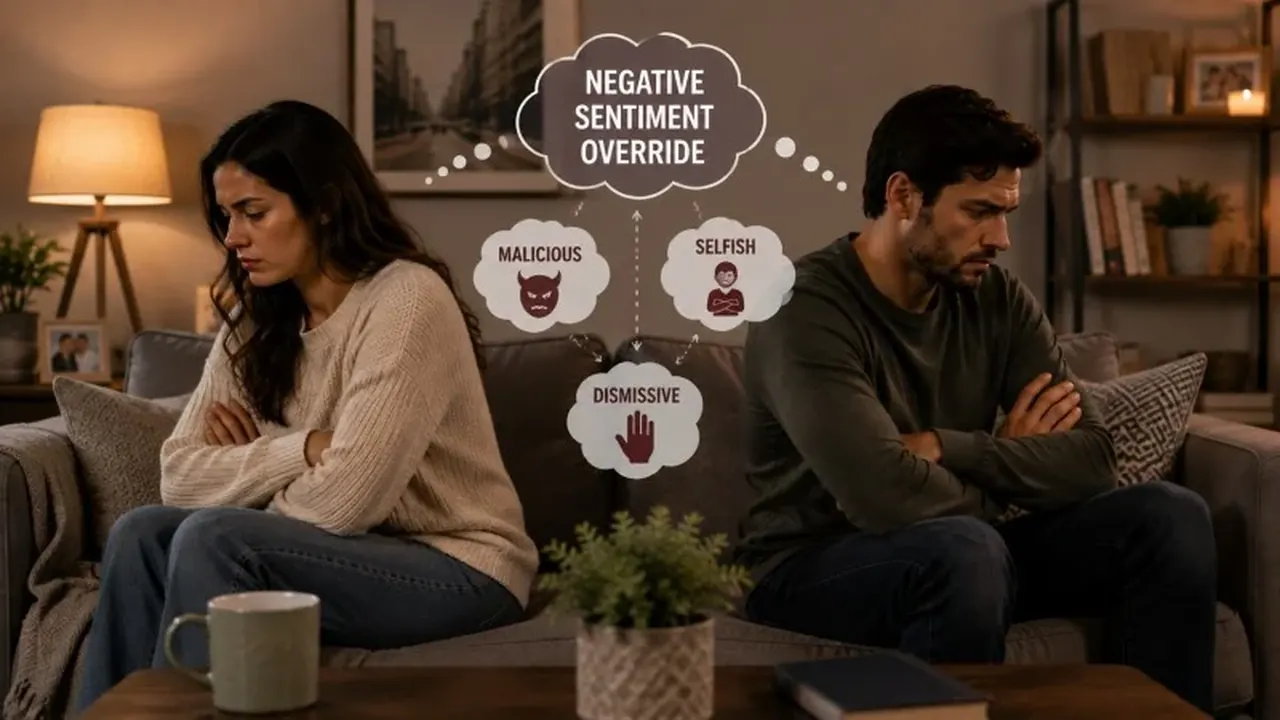
Psychologist Robert Weiss coined the term “negative sentiment override”, and relationship researcher John Gottman later studied how this pattern appears in distressed couples to describe a state in which accumulated negative feelings cause neutral or even positive interactions to be interpreted negatively. In this state, a partner’s perspective becomes so guarded that even neutral or well-meaning gestures are interpreted as malicious, selfish, or dismissive.
4. Regularly Fantasizing About Life Without Them

Occasionally daydreaming about a different life is normal, but repeatedly feeling relief when your partner leaves the house—or constantly imagining a happier future alone—signals significant emotional dissatisfaction that requires immediate attention.
5. Emotional Indifference (Checking Out)

Emotional indifference can be particularly concerning because partners may stop trying to understand, repair, or even resolve what is happening between them. When one or both partners stop expressing needs, attempting repair, or caring whether problems are resolved, emotional disengagement has taken hold.
Why Do Relationships Start to Die?
Relationships rarely deteriorate overnight. They gradually break down through problems that build up when they are repeatedly left unresolved, many of which align with the common causes of divorce and how to avoid it:
- Unresolved Resentment: Minor everyday hurts and unspoken grievances compound into lasting bitterness over time.
- Chronic Communication Breakdown: Partners begin interacting defensively to protect themselves instead of seeking mutual understanding.
- Loss of Emotional Intimacy: Vulnerability ceases; partners stop sharing everyday fears, dreams, and affectionate gestures.
- Weakened or Broken Trust: Dishonesty, broken commitments, or emotional betrayal erode the sense of safety and trust.
- External Stress Without Teamwork: Career pressure, financial hurdles, parenting, or caregiving consume daily bandwidth when couples stop operating as a unified team.
How to Save a Dying Relationship: 8 Actionable Steps
Reviving a struggling relationship requires moving past temporary romantic gestures and addressing the underlying patterns driving you apart. Recognizing these warning patterns is only half the work; knowing the practical steps needed to save a dying relationship requires deliberate emotional discipline from both partners. When both individuals are committed, these eight actionable steps provide a clear path forward.
1. Identify What Truly Changed

Trace back to when the emotional distance first began. Did it start after a betrayal of trust, unmanaged career stress, the transition into parenthood, or years of feeling unheard? Recognising your own contribution to the damage is especially important when trying to fix a relationship you ruined through past mistakes or unresolved conflicts. Pinpointing the root issue prevents you from endlessly arguing over surface-level frustrations.
2. Practice Non-Defensive Communication

When trying to break destructive, toxic communication habits, shift the objective of difficult conversations from proving who is right to understanding each other’s internal experience. Psychological research on healthy communication in relationships emphasizes that framing grievances through “I” statements—rather than accusatory language—helps de-escalate defensive reactions and protects emotional safety.
- Instead of: “You never make time for me and always put work first.”
- Try: “I feel lonely and disconnected when we go days without catching up. Can we set aside 20 minutes tonight to talk?”
After speaking, ask your partner to reflect on what they heard before responding and offer the same courtesy when they share their perspective.
3. Take Full Accountability for Your Reactions
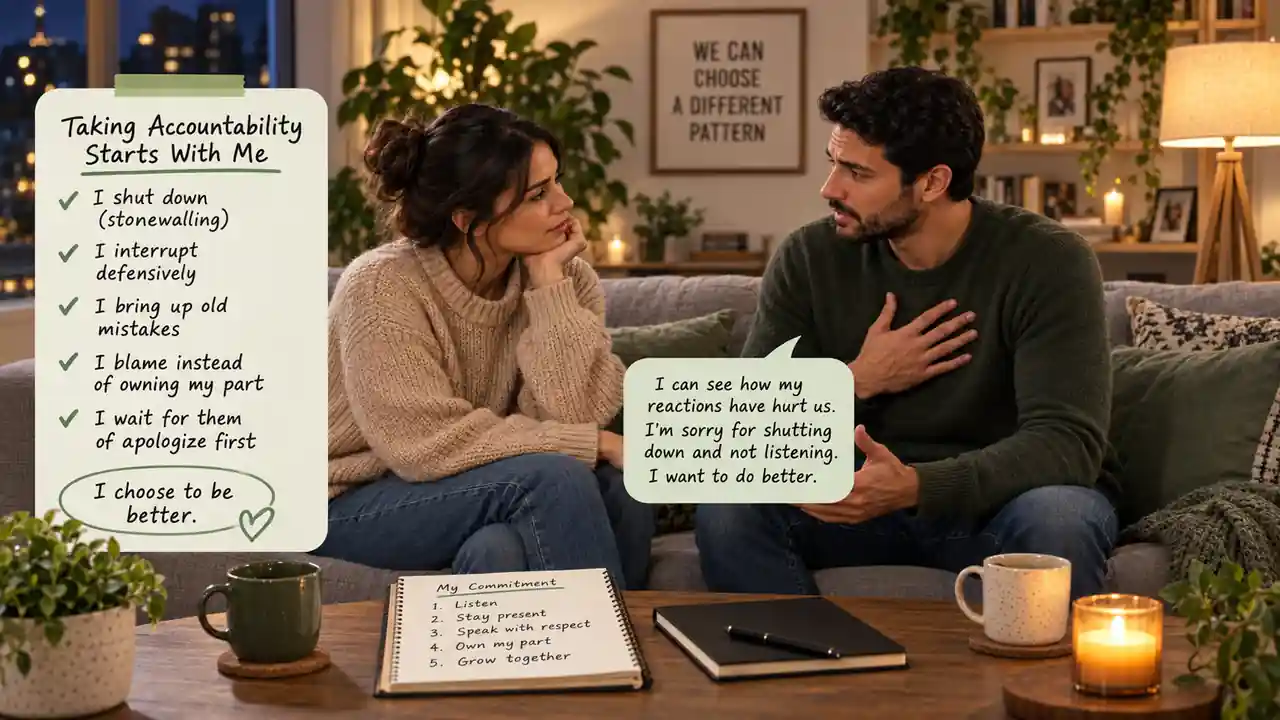
Reconciliation starts when you look in the mirror. Notice how you respond during tension—do you shut down and walk away (stonewalling), interrupt defensively, or bring up old mistakes? Acknowledge your role in recurring patterns rather than waiting for your partner to apologize first.
Note: Taking accountability means owning your personal behaviour; it never means accepting responsibility for a partner’s manipulation, cruelty, or abuse.
4. Establish Clear, Respectful Boundaries

Boundaries are not ultimatums; they are mutual guidelines designed to make both partners feel emotionally safe and respected during conflict.
- Instead of: Slamming doors or storming out mid-fight.
- Try: “I really want to resolve this, but my emotions are running too high right now. Let’s take a 20-minute break to cool down and resume this at 8:00 PM.”
A healthy pause includes a clear, explicit intention to return to the conversation; disappearing indefinitely does not.
5. Rebuild Trust Through Daily Consistency

Grand romantic gestures rarely save a dying relationship; instead, trust is restored through small, predictable, and verifiable actions repeated over time.
- Transparency: Keep everyday commitments and communicate proactively if plans change.
- Real Accountability:
- Instead of: “I said I’m sorry, why are you still bringing it up?”
- Try: “I understand why my actions hurt your trust. I’m focusing on [specific action] to show you I’m committed to doing better.”
- Patience: Avoid forcing a timeline on the hurt partner. Emotional security develops gradually through dependable follow-through.
6. Schedule Dedicated, Low-Pressure Quality Time

Reconnecting should not feel like another chore on your to-do list. Plan low-stress, shared experiences where you pause relationship talk—such as taking a walk without phones, cooking a meal together, or enjoying a quiet cup of tea. Repeated positive experiences gradually make the relationship feel less dominated by conflict, creating room for warmth, ease, and connection to return.
7. Reintroduce Appreciation into Everyday Life

When resentment builds, we hyper-focus on what our partner is doing wrong while ignoring what they do right. Make a deliberate effort to notice and verbally acknowledge small gestures.
- Instead of: Staying silent when things run smoothly and only speaking up to criticise.
- Try: “Thank you for handling breakfast this morning while I was rushing—it took a lot of stress off my plate.”
Genuine appreciation reinforces positive changes, though it should support repair rather than be used to bypass unresolved issues.
8. Seek Structured Relationship Counselling

When you repeatedly return to the same unresolved conflict despite sincere attempts to change it, structured couples counselling can help. Understanding what to expect from marriage counselling can also help both partners approach the process with realistic expectations. A licensed couples therapist or LMFT can provide structured tools to identify recurring interaction patterns, de-escalate reactivity, and explore unhealed emotional wounds.
What Not to Do When Rebuilding Your Connection
| Destructive Habit | Constructive Alternative |
| Threatening a breakup during arguments | Focus strictly on solving the specific problem without putting the entire relationship on the line. |
| Keeping a mental scorecard of mistakes | Deal with today’s issue directly rather than weaponizing past grievances. |
| Broadcasting private issues to everyone | Protect your privacy; confide in a qualified therapist or a trusted, discreet person who can offer balanced support. |
| Demanding instant emotional recovery | Respect that trust and emotional safety heal through consistent, repeated positive actions. |
| Using physical affection to sweep issues away | Combine physical warmth with open, honest discussions about lingering pain. |
| Ignoring deep red flags to keep peace | Address uncomfortable truths with gentle firmness rather than resorting to toxic positivity. |
When Saving the Relationship Is Not the Right Choice
Not every relationship can or should be preserved. No relationship should require you to sacrifice your fundamental safety or psychological well-being to preserve it. Understanding how to move on from a toxic relationship is essential when a partnership is no longer healthy or safe.
Continuing to pursue repair may no longer be healthy or realistic when you are facing:
- Emotional, Physical, or Verbal Abuse: Safety must always come before relationship longevity.
- Coercive Control & Gaslighting: Systematic intimidation, isolation from support systems, or feeling constant fear around your partner’s reactions.
- Repeated Betrayal Without Remorse: Ongoing infidelity or dishonesty paired with a total lack of empathy or accountability.
- Unilateral Refusal to Engage: When one partner has completely detached and refuses to participate in repair efforts.
Crucial Safety Note: Healthy couples therapy depends on sufficient emotional and physical safety for both partners to participate openly. The National Domestic Violence Hotline advises against couples counselling in relationships involving abuse because joint therapy cannot correct the unequal power dynamics of abuse and may create additional risks for the abused partner. In these situations, individual support, trusted domestic violence resources, and confidential safety planning are the necessary and safe next steps.
Frequently Asked Questions
Can a dying relationship really be saved?
It can be. The chances of repair are stronger when both partners are genuinely committed to confronting underlying patterns, practicing emotional honesty, and consistently demonstrating changed behaviour over time.
How do you know if a relationship is worth fighting for?
Repair may be worth exploring when mutual respect, personal safety, some emotional investment, and a shared willingness to change remain present. The 3-Point Repair Test above can help you evaluate willingness, safety, and consistent action.
How long does it take to repair a damaged bond?
There is no fixed schedule. Healing depends on the depth of the hurt, the history of the relationship, and how consistently both people follow through with new, healthy habits.
Can one person save a relationship alone?
Not fully. One person can change their own behaviour, communicate differently, and set healthier boundaries, which may influence the dynamic. But rebuilding a mutually fulfilling relationship ultimately requires participation from both partners.
How do you rebuild trust after a major betrayal?
Trust is rebuilt through honest communication, appropriate transparency, accountability, and dependable behaviour over time. The partner who broke trust also needs to acknowledge the hurt without becoming defensive and consistently follow through on agreed changes.
When is it time to walk away?
It is time to walk away when there is chronic abuse, complete indifference, or continuous boundary violations or when your partner refuses to participate in healing despite repeated opportunities.
Final Thoughts
Navigating a struggling relationship can feel overwhelming, but emotional distance does not automatically mean the relationship is beyond repair. Learning how to save a dying relationship comes down to repeated choices: listening rather than immediately defending, expressing vulnerability instead of allowing resentment to accumulate, and taking mutual responsibility for unhealthy patterns. When willingness, safety, and consistent action are present, clear boundaries, dependable follow-through, and professional counselling when needed can create meaningful conditions for reconnection.
Ultimately, it takes deliberate effort and emotional honesty from both sides to save a dying relationship, but if both individuals remain open to repair, lasting healing is entirely possible. When safety or mutual participation is absent, recognizing that reality can be as important as knowing how to repair the relationship.



Leave a Reply