


Making green and Thai red curry with vegetables starts with creamy coconut milk, fragrant curry paste, and vegetables that still have some bite. These two recipes use the same pantry staples with different chilli pastes. They include tofu, clear cooking stages, and adjustable seasoning, so you can make a satisfying dinner without guessing when to add everything.
Both are practical home versions using prepared curry paste. Choose one for tonight, serve it with rice, and adjust the heat to suit the people around your table. Timings exclude rice; cook it following packet instructions.
How Do You Make Green and Thai Red Curry With Vegetables?

Briefly cook curry paste in oil, stir in coconut milk and stock, then simmer the vegetables in stages. Add firm vegetables first, quicker-cooking vegetables later, and tofu near the end. Taste before adding soy sauce or sugar, and finish with fresh basil. The important detail is timing. Carrots and eggplant need a head start; broccoli and peppers can become soft if they spend the whole cooking time in the sauce.
Red Versus Green Curry: Which Is Hotter?
Neither colour guarantees a particular heat level. Green curry can be very spicy, and red curry can be comparatively mild. The chillies, brand, amount of paste, and quantity of coconut milk all affect the finished dish.
| Detail | Red curry | Green curry |
| Typical chilli base | Dried red chillies | Fresh green chillies |
| Colour | Red to orange | Green to pale green |
| Heat | Depends on the paste and recipe | Depends on the paste and recipe |
| Vegetables in these recipes | Eggplant, broccoli, pepper, mushrooms | Carrot, beans, broccoli, pepper, mushrooms |
Other Thai curry varieties include massaman and panang. For these recipes, choose red or green paste according to your taste and its availability.
Ingredients to Check Before You Start
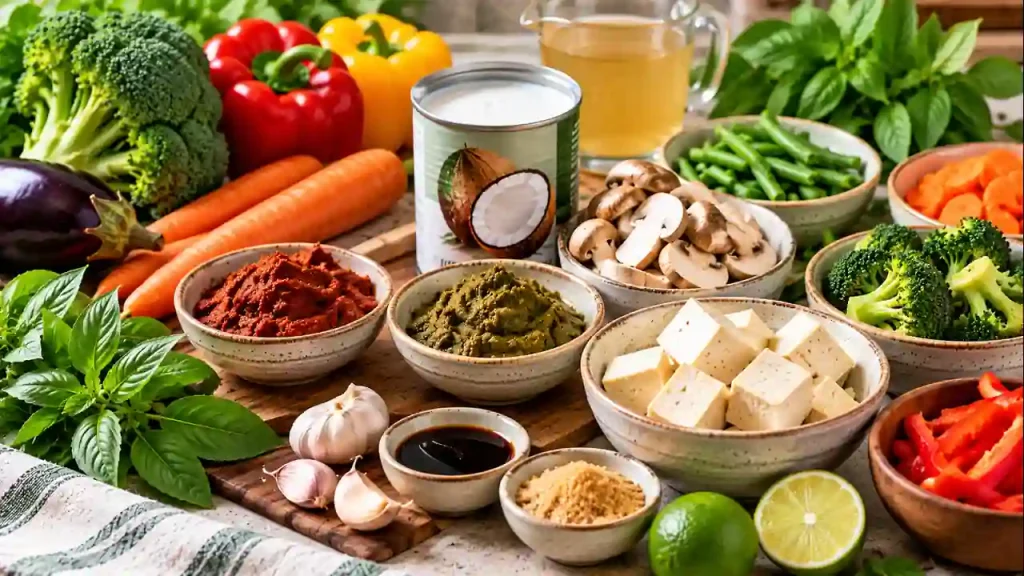
Prepared paste saves time, but its ingredients matter. Some pastes contain shrimp paste or fish ingredients, so a vegetable-filled curry is not automatically vegetarian. Curry-paste comparisons also show why brands cannot be treated as interchangeable for flavour and strength. For vegetarian or vegan cooking, check the paste, stock and seasoning labels. Both recipes contain soy through tofu and soy sauce. For a gluten-free version, choose labelled gluten-free paste, stock and tamari; ordinary soy sauce often contains wheat.
Use unsweetened canned coconut milk intended for cooking. Carton coconut drinks, including some plant-based milk alternatives, have a different consistency and will not necessarily give the same sauce. Thai basil adds a distinctive fragrance. If unavailable, use ordinary sweet basil for a different flavour, or omit it. Wash and cut vegetables before heating the pan. Keeping ingredients ready is one of the most useful cooking preparation habits for a recipe with several short stages.
Red Thai Curry With Vegetables: The Recipe
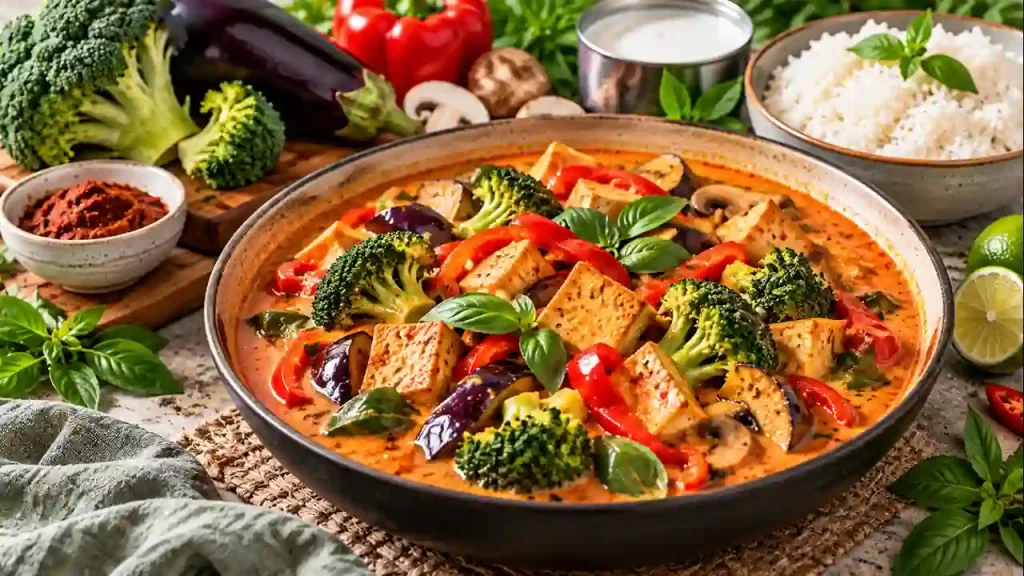
Serves: 4 with rice.
Prep: approximately 15 minutes.
Cook: approximately 20–25 minutes.
Total: approximately 35–40 minutes. Use a large, deep frying pan or saucepan. Cut eggplant into roughly 2 cm pieces so it cooks reasonably evenly.
Ingredients
- 1 tablespoon neutral vegetable oil
- 2 tablespoons vegetarian red curry paste; use 1 tablespoon initially if its heat is unfamiliar
- 400 ml unsweetened canned coconut milk
- 120 ml low-sodium vegetable stock, plus extra if needed
- 150 g eggplant, cut into bite-sized pieces
- 150 g broccoli, divided into small florets
- 1 medium bell pepper, about 150 g, sliced
- 100 g mushrooms, sliced
- 300 g firm tofu, drained and cubed
- 1–2 teaspoons soy sauce, added to taste
- 1–2 teaspoons brown sugar, optional
- A small handful of Thai basil leaves
- Lime wedges, optional, for serving
- Cooked jasmine or brown rice, for serving
Method
- Cook the paste. Heat the oil over medium heat. Add the curry paste and stir for 30–60 seconds until fragrant. Reduce the heat if it catches; do not let it burn.
- Build the sauce. Gradually stir in the coconut milk, loosening the paste, then add the stock. Bring to a gentle simmer rather than a vigorous boil.
- Start the eggplant. Add the eggplant and simmer for about 7–10 minutes, stirring occasionally, until it begins to soften. Add a splash of stock if the sauce becomes too thick.
- Add the remaining vegetables. Stir in the broccoli, pepper and mushrooms. Simmer for another 5–7 minutes, checking that the eggplant is tender and the broccoli has your preferred bite.
- Warm the tofu. Fold in the tofu and simmer gently for 3–4 minutes, or until hot throughout. Stir carefully to keep the cubes intact.
- Season and finish. Taste the sauce before adding soy sauce. Add optional sugar gradually if the flavour needs rounding out. Remove from the heat, fold in the basil and serve with rice and optional lime.
For milder green and Thai red curry with vegetables, use a paste labelled mild and start with less.
Green Thai Vegetable Curry: The Recipe
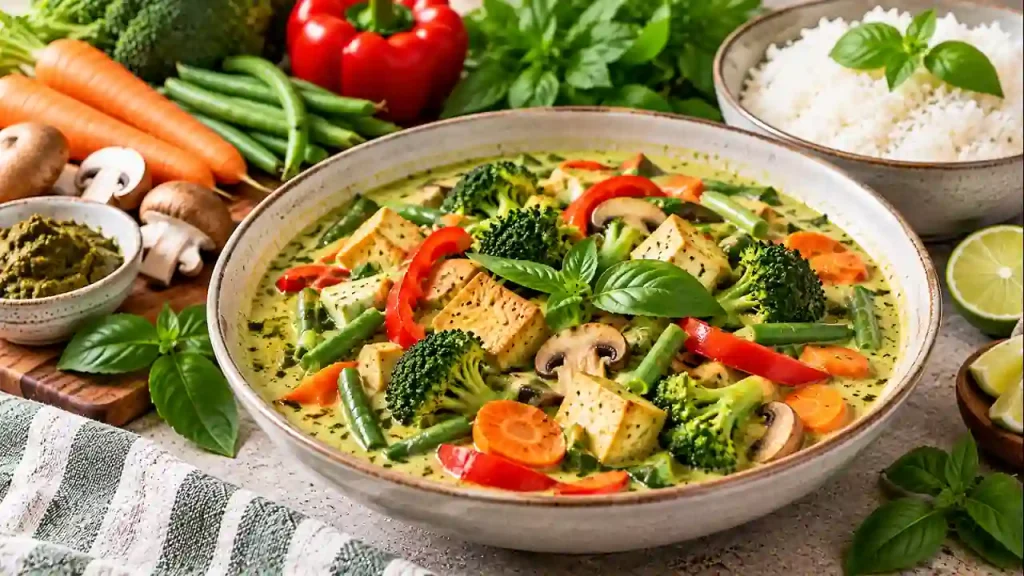
Serves: 4 with rice.
Prep: approximately 15 minutes.
Cook: approximately 20–25 minutes.
Total: approximately 35–40 minutes. This version uses carrots and green beans for texture. Green paste can be powerful, so check its label before measuring.
Ingredients
- 1 tablespoon neutral vegetable oil
- 2 tablespoons vegetarian green curry paste; use 1 tablespoon initially if its heat is unfamiliar
- 400 ml unsweetened canned coconut milk
- 120 ml low-sodium vegetable stock, plus extra if needed
- 1 medium carrot, about 100 g, thinly sliced
- 100 g green beans, trimmed and halved
- 100 g mushrooms, sliced
- 1 medium bell pepper, about 150 g, sliced
- 100 g broccoli, cut into small florets
- 300 g firm tofu, drained and cubed
- 1–2 teaspoons soy sauce, added to taste
- 1–2 teaspoons brown sugar, optional
- A small handful of Thai basil leaves
- Lime wedges, optional, for serving
- Cooked jasmine or brown rice for serving
Method
- Heat the oil over medium heat. Stir in the green curry paste and cook for 30–60 seconds until fragrant, without scorching it.
- Gradually add the coconut milk, stirring to distribute the paste, then pour in the stock. Bring to a gentle simmer.
- Add the carrot and green beans. Cook for about 6–8 minutes until they start to soften.
- Add the mushrooms, pepper, and broccoli. Simmer for another 5–7 minutes, or until all the vegetables reach your preferred tenderness.
- Fold in the tofu and heat gently for 3–4 minutes until hot throughout. Add a little stock if needed.
- Taste and adjust with soy sauce and optional sugar, then remove from the heat. Fold in the basil and serve with rice and optional lime.
Cooking times are guides; vegetable size, pan shape and simmer strength make a difference. Check a carrot slice rather than relying entirely on the clock.
Swaps, Serving Ideas and a Balanced Meal
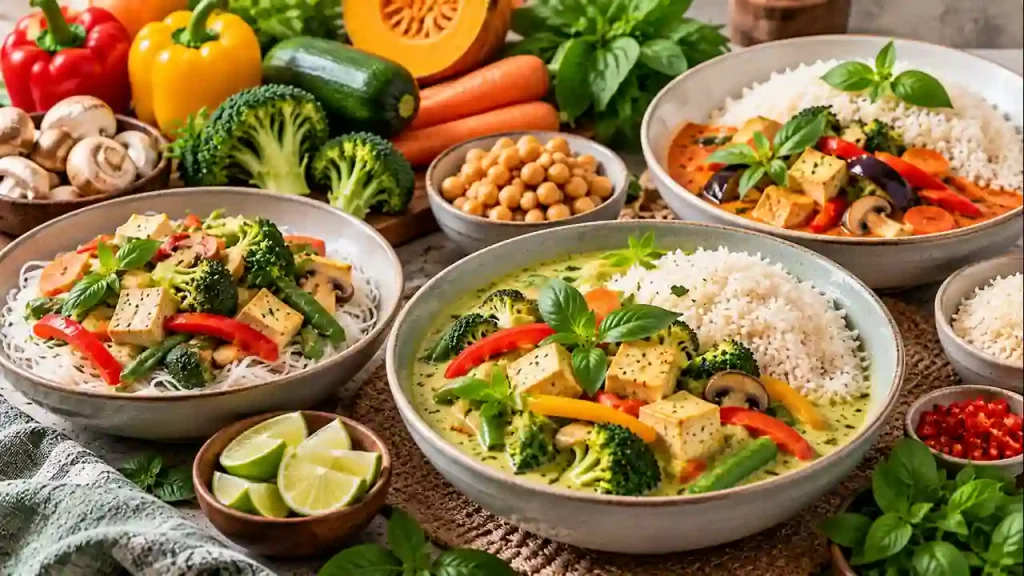
For either curry, swap similar quantities of vegetables you enjoy. Thinly sliced courgette cooks quickly; diced squash needs longer. Add frozen vegetables according to their packet instructions. Tofu supplies protein alongside the vegetables. For variety, replace it with drained, cooked chickpeas, which also contribute to a meal containing fibre-rich foods.
Curry can fit a balanced eating plan, but “vegetable curry” does not automatically mean low-calorie or low-sodium. Portions and ingredient choices matter. Taste before adding salty seasoning, and serve an amount of rice that suits your appetite. If children are trying it, offer a small portion with plain rice and familiar vegetables. Involving them in choosing produce can support introducing vegetables to kids without pressure to finish everything. Rice noodles are another serving option. Cook them separately following their packet directions, then spoon curry over them; skip any salty flavour sachet. Coconut-based noodle dishes offer a similar serving format.
Fixing Common Curry Problems
- Too thin: Simmer the sauce uncovered briefly before adding the quicker-cooking vegetables. Avoid reducing it so much that the seasoning becomes concentrated.
- Too thick: Stir in small splashes of stock or water.
- Too mild: Fry a little extra paste separately in oil, stir it into the sauce, and simmer before serving.
- Too hot: Expand the batch with coconut milk and suitable cooked vegetables or tofu. This also changes the seasoning and taste again before serving.
- Too salty: Add an unsalted sauce base and suitable solids, using the same principle as diluting oversalted food. Sugar and lime do not remove sodium.
Storing and Reheating Leftovers
Divide leftover curry into shallow containers, cool promptly and refrigerate within one to two hours. Keep the fridge at 5°C or below. Eat refrigerated curry within 48 hours or freeze it promptly. Defrost in the fridge and use within 24 hours after thawing. Store rice separately. Cool cooked rice quickly, ideally within one hour, and refrigerate it. Eat it within 24 hours of cooking. Reheat curry and rice only once, until steaming hot throughout, stirring for even heating. Reheating cannot reliably rescue rice that was stored poorly.
Frequently Asked Questions
1. Can I make green and Thai red curry with vegetables without tofu?
Yes. Use drained, cooked chickpeas instead, or keep the curry vegetable-only and include a protein source elsewhere in the meal.
2. Can I use light coconut milk in green and Thai red curry with vegetables?
Yes, but expect a thinner sauce. Start with less stock and add more only if needed.
Final Thoughts
Making green and Thai red curry with vegetables becomes easier when you know your paste, give firm vegetables a head start, and season gradually. Both versions follow the same practical rhythm while offering different flavours. Pick one, keep the rice and curry storage instructions in mind, and make small adjustments next time based on what everyone enjoyed.



Leave a Reply