

A professional makeup look doesn’t have to mean heavy foundation, nude lipstick, or an early-morning routine that takes half an hour. If you enjoy makeup at work, aim for comfort, suitable products and a routine you can repeat. Makeup is a choice, not a requirement for being taken seriously at work.
Quick answer: For a professional makeup look, start with gentle skin care and sunscreen, choose the coverage you prefer, add concealer only where wanted, groom brows, define eyes, and finish with blush or lip color. Use powder or setting spray selectively. Skip steps that do not suit you.
What Makes Makeup Suitable for Work?
Workplaces differ. A creative studio, hospital, law office and remote-work setup may have different practical needs and policies. Neither bare skin nor colorful lipstick determines competence. Prioritize comfort, hygiene and role-specific safety requirements. Think about lighting, commuting, long shifts and whether you wear a face covering or safety equipment. Make choices that stay comfortable, rather than trying to hide freckles, pores or natural skin texture.
How to Create a Professional Makeup Look in 9 Steps
Choose only the steps that add value.
1. Cleanse, Moisturize and Protect Your Skin
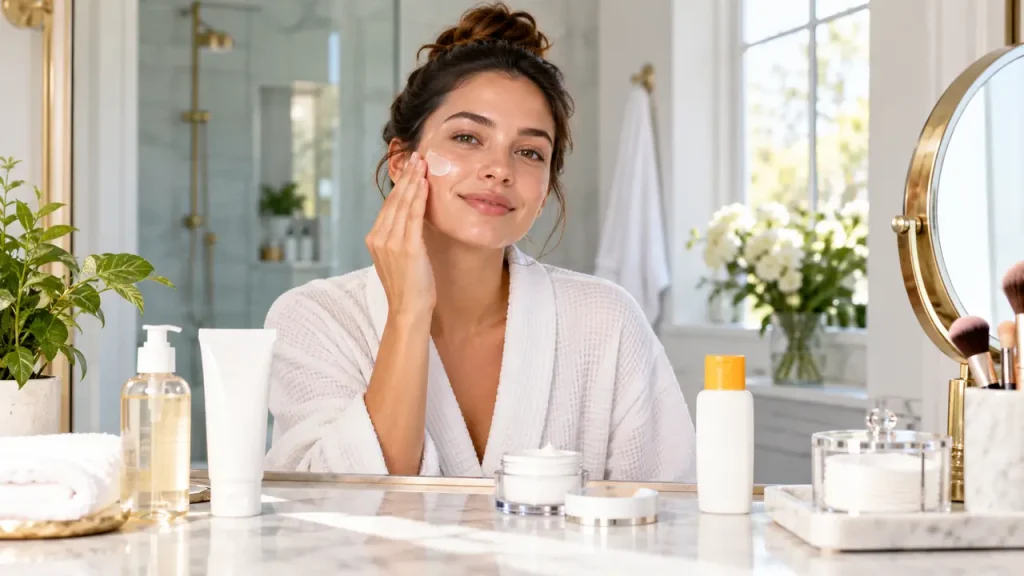
Begin with gentle cleansing, then moisturizer appropriate for your skin type. For daytime outings, use broad-spectrum SPF 30 or higher and follow its directions, including reapplication when needed. A thin layer of foundation containing SPF does not automatically replace properly applied sunscreen. Let products settle. The American Academy of Dermatology’s application order puts treatments, moisturizer or sunscreen before optional makeup. Avoid harsh scrubs on irritated skin.
2. Choose Foundation, Skin Tint or No Base
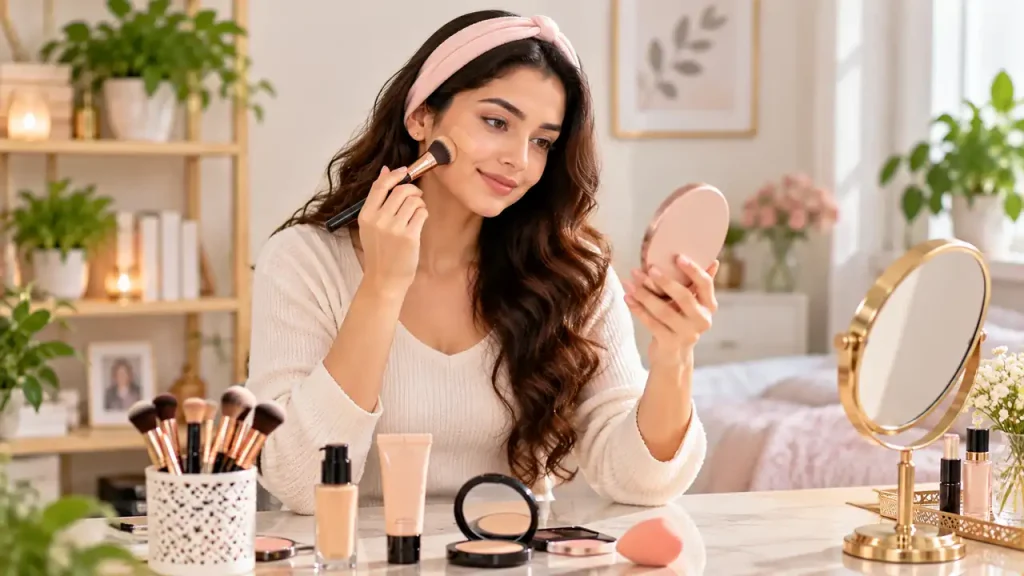
Foundation is optional. For a light finish, try a skin tint or BB cream; for more coverage, apply a small amount of foundation, blending from the center outward. Test the shade along your jaw and compare it with your neck in daylight, not only under shop lighting. Our BB cream versus foundation comparison explains these different formats. Dry skin may feel better with a moisturizing formula, while oily skin may prefer shine control. Check the actual product finish and ingredients: liquid foundation is not always hydrating, and powder is not automatically suitable for every oily complexion.
3. Conceal Only Where You Want Coverage
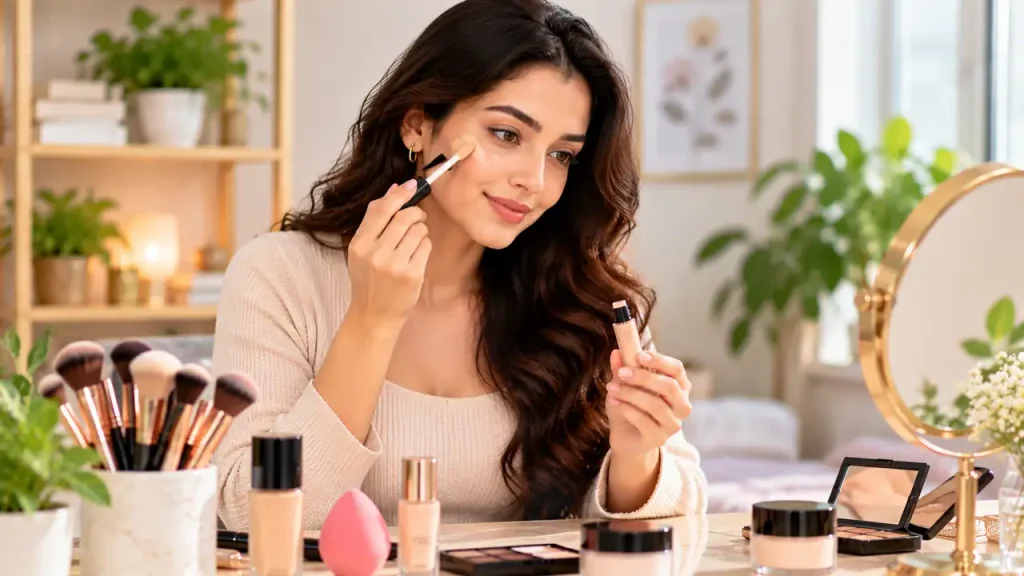
Use small amounts of concealer only where you want coverage, such as beside the nose or under the eyes. Blend the edges with clean fingertips, a brush, or a sponge instead of applying thick triangles. You need not conceal natural skin. Choose a comfortable formula and build coverage slowly. Our concealer techniques offer additional ways to blend and target small areas.
4. Shape Brows Without Overdrawing Them

Brush brow hairs upward and outward, then fill only noticeable gaps using light, hairlike strokes. A pencil, powder or tinted gel can work. Match the general depth of your brows. Clear brow gel may be enough. Check overall balance, not perfect symmetry; avoid plucking that causes redness.
5. Add Eye Color or a Simple Liner

Neutral brown, taupe, rose, and bronze shades are easy options, but they are not the only colors suitable for professional settings. Choose what suits your setting. A sheer wash of eyeshadow may be enough; an eyeshadow stick is another quick option. For definition, draw a fine line close to the upper lashes or softly blend pencil along the outer corner. Use eye-safe products.
6. Apply Mascara Carefully
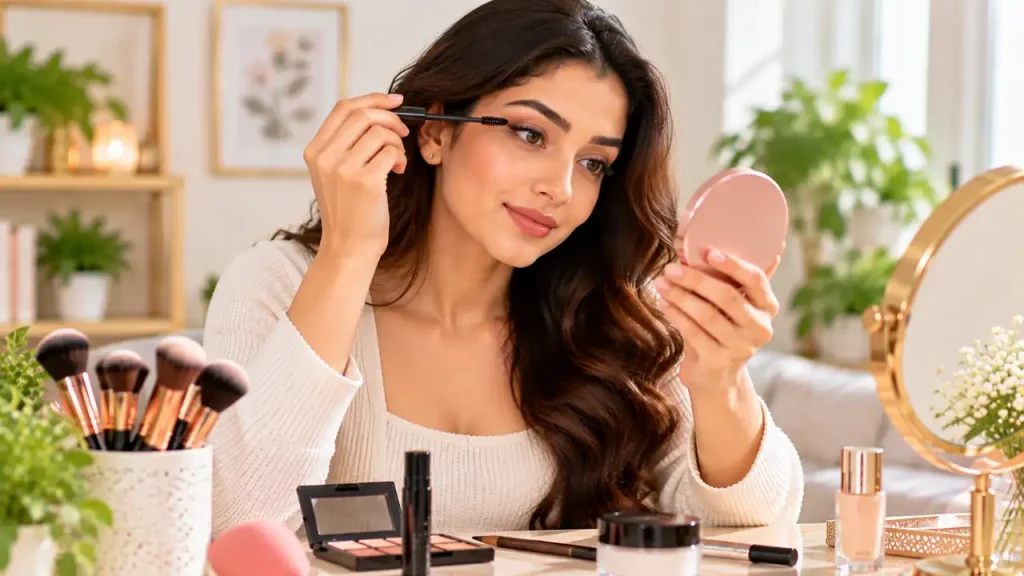
One coat may be enough; two are optional. Wiggle the wand gently near the lash roots, then sweep outward. If mascara smudges during your commute, consider another formula or simply skip it. The FDA’s eye-cosmetic guidance advises against sharing eye makeup or adding water or saliva to dried mascara. Stop using any eye product that causes irritation, and never apply mascara in a moving vehicle.
7. Use Blush and Powder Where Helpful
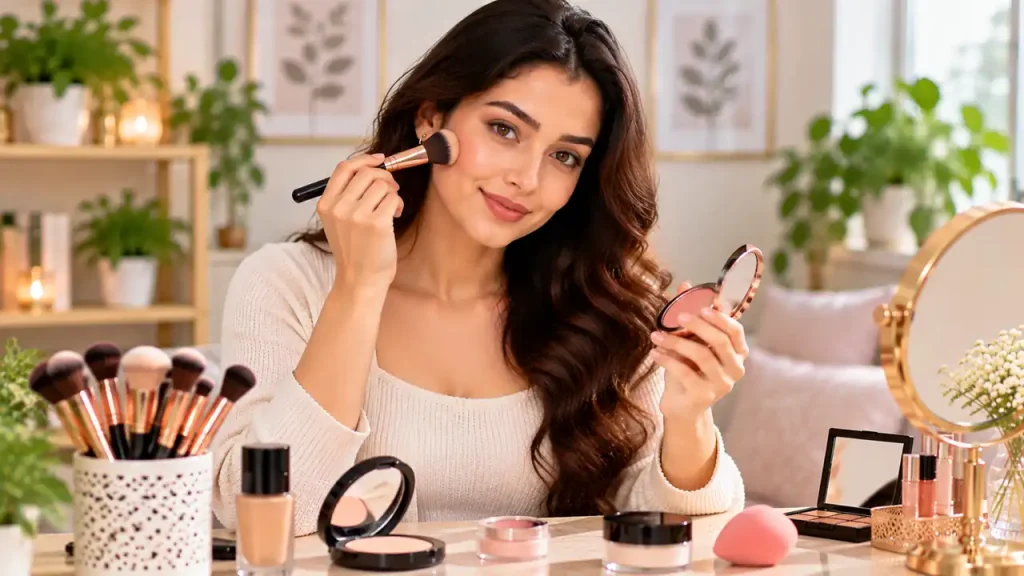
Blush adds color after foundation. Cream textures can blend easily over lightweight coverage, while powders work for people who like a softer matte finish. Smile naturally, apply lightly and blend the edges instead of relying on a fixed placement rule. Press a little powder onto areas that turn shiny, rather than covering your entire face. If you enjoy subtle sculpting, our face-contouring guide explains an optional technique.
8. Choose a Lip Color You Enjoy

Tinted balm, lipstick, a lip stain or gloss can all suit a workday. There is no universal nude shade: rose, brown, berry, or bold red can each suit different skin tones and preferences. Choose a comfortable formula if you will be drinking coffee or speaking for hours. Blot lipstick and carry it for touch-ups. If lipstick dries your lips, start with balm and use color only when wanted.
9. Finish With Setting Spray If Needed

Setting spray may help the finish of certain formulas, but it is not necessary for everyone and cannot guarantee all-day wear. If you use one, follow the label and keep the mist out of your eyes. Let it dry naturally before touching your face. Light layers matter more than extra steps. These long-lasting foundation tips cover additional ways to manage a base throughout the day.
The Do’s and Don’ts of a Professional Makeup Look
A practical routine allows individual choices. Consider these six decisions.
1. Do Prioritize Skin and Eye Safety

Wash your hands, keep products capped, and avoid sharing mascara or applicators. The American Academy of Dermatology’s makeup guidance for acne-prone skin recommends looking for products labeled non-comedogenic when breakouts are a concern and removing makeup before bed. Clean tools regularly; our brush-cleaning instructions can help.
2. Don’t Assume False Lashes Are Forbidden

False lashes are a personal choice, not a universal workplace mistake. If you wear them, use appropriate adhesive, watch for irritation, and remove them as directed. In roles requiring goggles, masks or other protective equipment, check whether extensions or long lashes interfere with a secure fit.
3. Do Make Your Routine Manageable

Once skincare and sunscreen are applied, try this five-minute sequence: minute one, spot-conceal; minute two, brush and fill brows; minute three, blend cheek color; minute four, add mascara or liner if you enjoy it; minute five, apply lip color and check the edges. Skip any step and use the spare time where it matters. This is a flexible practice plan, not a tested time guarantee.
4. Don’t Treat Bright Colors as Unprofessional

Glitter, graphic liner, or vivid lipstick can be perfectly appropriate in many workplaces. Choose finishes based on your preferences, any genuine workplace rules and comfort. Neither bold makeup nor bare skin defines competence.
5. Do Keep Skincare Consistent and Gentle
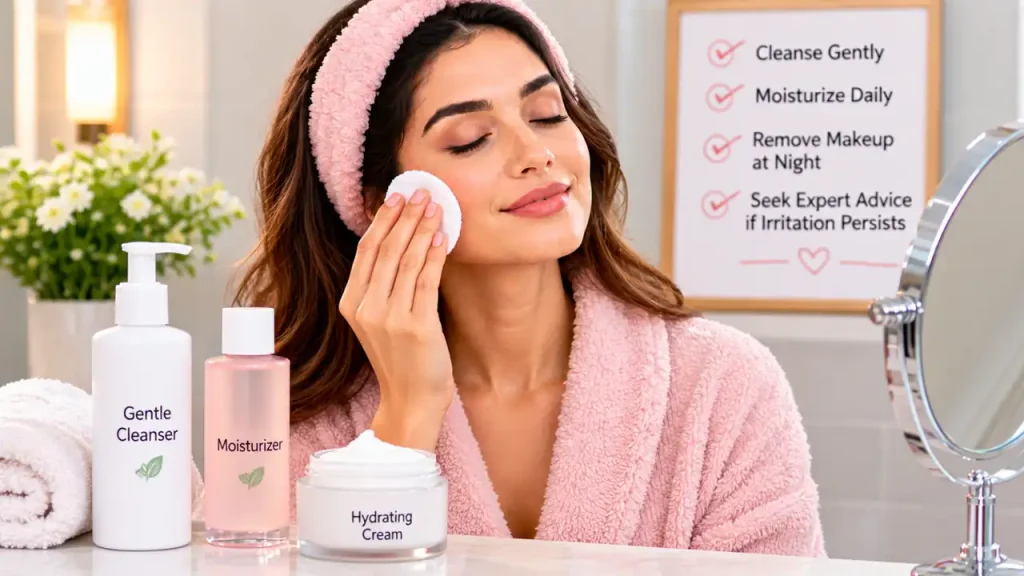
You do not need retinol, vitamin C serum, or frequent exfoliation simply to look ready for work. Choose activities only for specific skin needs. Makeup should not sting or burn. Remove it gently at night, moisturize, and seek dermatology advice for persistent irritation.
6. Don’t Keep Adding Powder to Fix Every Problem

If your forehead looks shiny after lunch, blot first and add powder only if wanted. Keep lip balm, tissues, and one complexion product in a small pouch. Wash your hands before touching your face and avoid sharing applicators.
Adapt the Routine to Your Skin Type
Dry skin: Choose a comfortable moisturizer and a flexible, lightweight base. Apply less powder to areas that already feel tight or flaky. If foundation catches on dry patches, stop layering and reassess the skin preparation.
Oily or combination skin: Try a light formula and set the shiniest areas only. Blotting paper can refresh your makeup without building a heavy layer over existing products.
Acne-prone skin: Look for non-comedogenic makeup if products tend to trigger breakouts. Avoid using concealer to cover painful, irritated skin without first checking whether the product makes it worse.
Sensitive skin: Introduce one unfamiliar product at a time. Fragrance-free options may suit some people, but individual reactions vary. Remove any cosmetic that causes persistent stinging or redness. Natural skin texture is fine.
How to Make Workplace Makeup Last Longer
For an air-conditioned office, start with a comfortable moisturizer rather than repeatedly powdering dry areas. For a humid commute, use lighter layers and blot oil before touching up. On video calls, check how your chosen colors look on camera, but do not mistake camera filters or harsh lighting for a skin problem. Trial the routine on an ordinary workday before an interview or event; note what transfers, creases or feels uncomfortable.
Frequently Asked Questions
1. Is Makeup Necessary to Look Professional?
No. Professionalism relates to your work and conduct, not wearing cosmetics. Makeup can be enjoyable self-expression when chosen freely.
2. What Makeup Is Best for a Job Interview?
Wear something that feels familiar, comfortable, and appropriate to the setting. Avoid trying an unfamiliar product immediately before an interview, especially around your eyes.
3. Can You Wear Bold Lipstick or Eyeliner to the Office?
Often, yes. Workplace norms vary, and style alone does not determine professionalism. Choose what you enjoy while respecting any genuine safety or role-specific requirements.
Final Thoughts
A professional makeup look is not a single lipstick shade or a demand for flawless skin. Whether you prefer a full routine, a five-minute tint, or no makeup, focus on products that feel good, techniques you can repeat, and skin care that supports comfort. Let your routine fit your life, not the reverse.



Leave a Reply