


Dinner is nearly ready, you taste a spoonful, and the salt overwhelms everything else. If you are wondering what to do if you added too much salt, start by putting the salt aside and checking whether you can remove any visible excess. Once it has dissolved, the most dependable fix is usually adding suitable unsalted ingredients. Small adjustments can rescue dinner, but the right approach depends on what you are cooking.
Quick Answer: Remove loose salt before mixing it in. For salty soup, curry, or sauce, add unsalted liquid or more of the original unsalted ingredients. For rice or other solids, mix with an unsalted batch. Lemon, cream, and sugar may improve flavor, but they do not remove dissolved salt. Never rinse raw meat or poultry.
Before changing the whole pot, put a little food in a bowl and test your proposed fix. This helps you avoid turning a salty dinner into one that is also watery, sour, or sweet.
Choose the Right Fix for Your Dish
| Dish | Best starting point | Watch out for |
| Brothy soup | Water or unsalted stock | Boiling away the added water |
| Thick stew or curry | More unsalted sauce base and solids | Changing the texture |
| Tomato sauce | No-salt-added tomatoes or unsalted sauce | Salty canned ingredients |
| Cooked rice or pasta | A separately cooked unsalted batch | Overcooking while adjusting |
| Cooked meat or vegetables | Remove loose surface salt; pair with unsalted food | Assuming a side dish removes sodium |
| Raw meat or poultry | Carefully remove loose salt without rinsing | Splashing raw juices |
10 Ways to Make Food Less Salty
1. Remove Visible Salt Before Stirring

If a shaker lid comes off, stop before reaching for your spoon. Scoop away the mound of salt and, if necessary, a small amount of food directly underneath it. On solid ingredients, gently brush off loose crystals where practical. This works only while the excess salt is still separate. Once it dissolves into gravy or spreads through a dish, scraping the surface will not fix the seasoning throughout.
2. Dilute Soup With Unsalted Liquid

For broth-based soups, add water or unsalted stock in small amounts, stirring and tasting between additions. Use the smallest amount that makes a noticeable improvement. Check the stock label first: reduced-sodium stock can still contribute substantial sodium. If dilution weakens the flavor, restore it with garlic, onion, herbs, or more suitable unsalted ingredients. Avoid simmering the soup back to its original volume. Evaporation removes water while leaving the salt behind, undoing your adjustment.
3. Increase the Unsalted Sauce Base
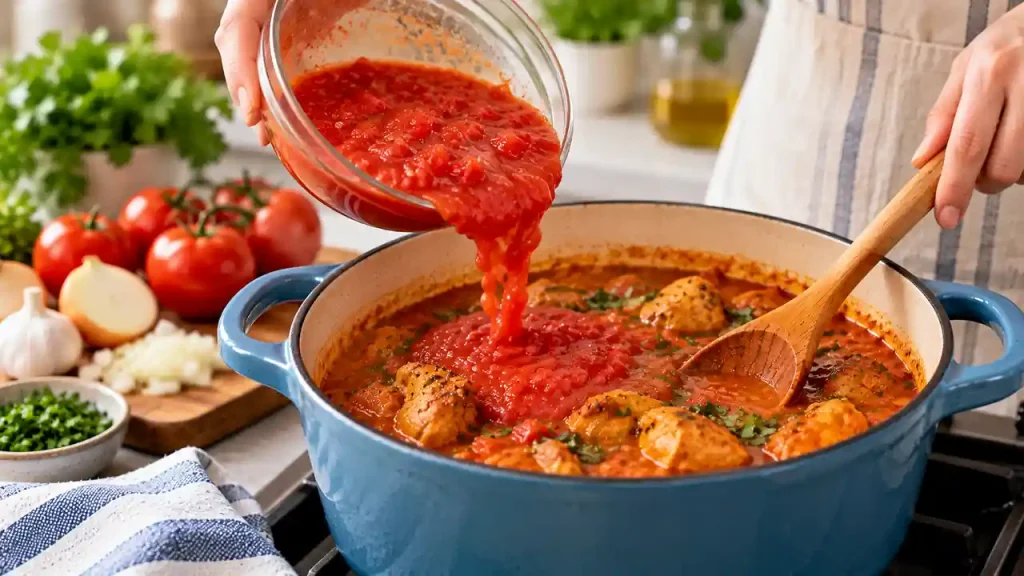
Thick dishes usually need more than water. Add no-salt-added crushed tomatoes to tomato sauce, more cooked onion-and-tomato base to curry, or extra unsalted gravy to a stew. For a dish such as murgh kari chicken curry, prepare the additional base separately without salt, then combine it with the original curry. This helps preserve the intended consistency. Refrigerate extra tomato sauce promptly, using homemade pasta sauce storage guidelines to decide whether to keep it in the fridge or freeze it for another meal.
4. Combine With an Unsalted Batch

When deciding what to do if you added too much salt to rice, pasta, or a thick mixed dish, making an unsalted batch is often more useful than adding random ingredients. Cook extra rice or pasta separately without salt, then combine gradually. For vegetable pulao, plain cooked rice can stretch the seasoned mixture without adding more salty liquid. As a simple illustration, combining equal quantities of a uniformly salted dish and a matching sodium-free batch roughly halves the original sodium concentration. The total sodium from the original batch remains; there is simply more food.
5. Add Suitable Unsalted Solids

Cooked vegetables, beans, lentils, or plain tofu can spread the seasoning across more food. Choose additions that belong in the recipe: chickpeas in curry, vegetables in stew, or beans in chili. Cook firm vegetables separately if the original dish is already done. Otherwise, the extra cooking time may turn the existing ingredients mushy. Egg whites are not a special salt-removal ingredient. Add eggs only when they suit the recipe, and cook them properly rather than relying on them to counteract salt.
6. Replace Some Salty Cooking Liquid

If soup or stew contains plenty of liquid, remove a portion and replace it with unsalted stock or water. Unlike simply expanding the recipe, discarding some salty liquid removes some dissolved salt from the pot. Start with a modest amount and reassess. You will also discard flavor, so this works best when you can rebuild it with suitable unsalted ingredients. For thick sauces, adding more unsalted base is usually easier than trying to separate liquid.
7. Add Plain Dairy When It Fits

Plain yogurt, cream, or milk can soften the impression of saltiness while adding volume to a compatible dish. They do not chemically neutralize salt, and dairy sugar is not a special salt-removal mechanism. In broccoli cauliflower cheese soup, additional plain dairy or an unsalted vegetable base may help; adding more cheese can introduce more sodium. Stir yogurt gently over low heat to reduce the chance of splitting. Unsweetened coconut milk is another option when its flavor suits the recipe. Check labels and accommodate dietary needs.
8. Try a Little Acid for Mild Saltiness

A few drops of lemon juice or vinegar may improve the balance of a dish that is only slightly too salty. Test a spoonful first, especially with delicate sauces. Acid changes the overall flavor; it does not remove sodium. More is not automatically better, and a large splash can leave you with food that tastes both salty and sour. For heavily oversalted food, dilute or expand the recipe before considering this finishing adjustment.
9. Use Sweetness Sparingly
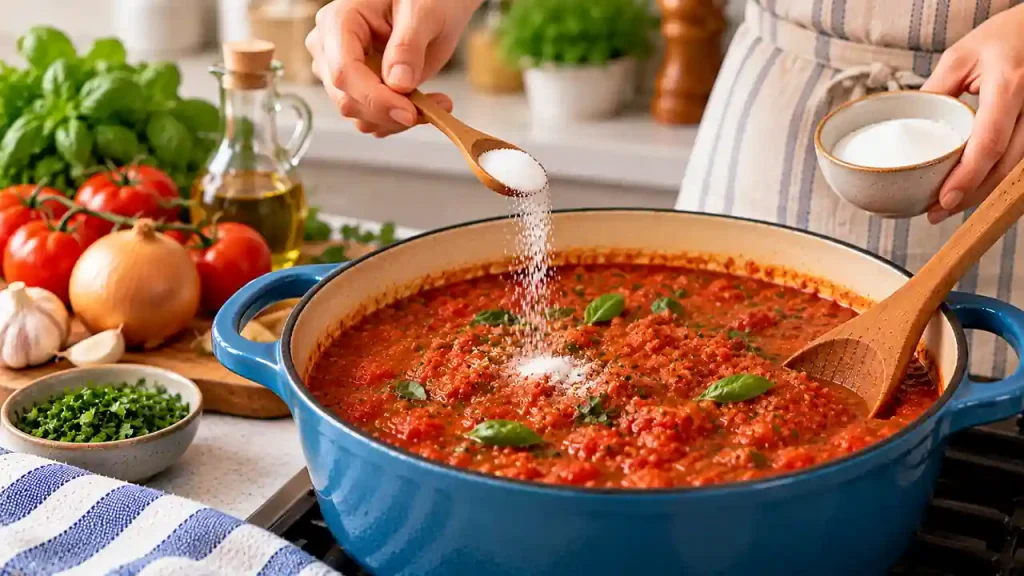
A small pinch of sugar may soften the flavor of slightly oversalted tomato sauce or a recipe that already includes sweetness. Stir thoroughly and taste before adding more. Sugar and honey do not cancel salt or reduce sodium. They can also make savory food taste noticeably sweet. Skip this approach when sweetness would be out of place. An unsalted base is a better starting point for a strongly oversalted dish.
10. Serve a Smaller Amount With Unsalted Food

Slightly salty cooked meat, roasted vegetables, or sauce may be more enjoyable with plain rice, potatoes, pasta, or an unsalted salad. Slice cooked meat and distribute a smaller amount through a larger unsalted dish rather than serving a heavily seasoned portion by itself. The salty component retains its sodium. This approach helps spread the flavor across the meal, and eating less of that component reduces the sodium it contributes to your serving. If it remains unpleasant, starting again may be the better choice.
Common Salt Fixes That Need Caution
Does a Potato Remove Excess Salt?
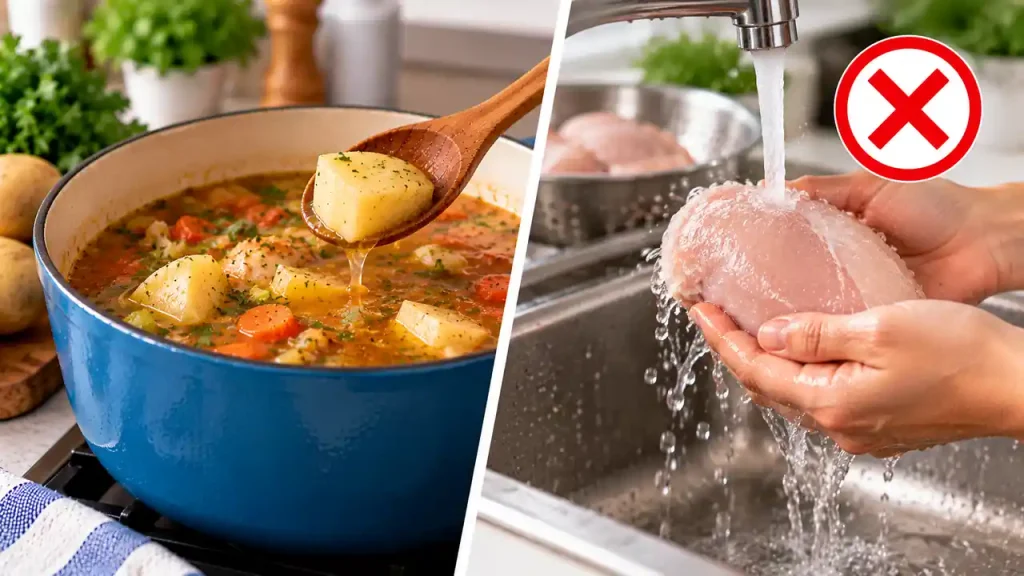
A potato absorbs some salty liquid, but it is not a reliable way to selectively extract excess salt. In The Kitchn’s potato-and-broth test, the improvement was limited, and the broth also lost some flavor. Keep potatoes in a dish when they suit the recipe and increase its volume. Do not expect one potato, later removed, to rescue an entire oversalted pot.
Should You Rinse Salty Raw Meat?
No. USDA guidance on washing food advises against washing raw meat or poultry because it can spread bacteria around the kitchen. Carefully remove loose surface salt without splashing juices, then cook safely. This will not remove salt already absorbed into the meat.
How to Avoid Adding Too Much Salt Next Time

Measuring ingredients before cooking and checking seasoning as you go are simple cooking tips that help prevent oversalting. Add salt gradually and taste when the food is safe to sample. Never taste raw meat mixtures. Check the sodium in stock, soy sauce, seasoning packets, olives, and cheese before adding extra salt.
Table, sea, and kosher salts differ in crystal size and packing, so equal spoonfuls can contain different amounts of salt. Follow the recipe’s specified type or weight rather than substituting spoon for spoon. Finish seasoning after substantial reduction. Leave salty toppings until the end; if you save unused cheese, our Parmesan storage guide covers keeping it for another meal. The FDA’s sodium guidance explains why flavor alone cannot tell you a food’s sodium content. A dish that tastes less salty may still contain considerable sodium. Keep any prescribed sodium limit in mind.
Frequently Asked Questions
1. What to Do If You Add Too Much Salt to Gravy?
Add unsalted gravy or stock gradually. If it becomes thin, thicken it with a suitable unsalted thickener rather than boiling away all the added liquid. Recheck the seasoning before serving.
2. Can You Fix Salty Food Without Adding Water?
Yes. Increase the unsalted sauce base, add compatible cooked ingredients, or combine with an unsalted batch. These options are especially useful when extra water would spoil the texture.
Final Thoughts
Knowing what to do if you added too much salt starts with choosing a fix that suits the dish. Remove loose excess, dilute dissolved salt with compatible unsalted ingredients, and taste between adjustments. Save lemon, dairy, or sugar for suitable finishing touches. With a small test portion and a little patience, you can decide whether dinner needs a gentle correction, a larger batch, or a fresh start.



Leave a Reply