


Homemade pasta sauce generally keeps for about 3 to 4 days in the refrigerator when stored promptly at 40°F (4°C) or below. If you will not use it within that timeframe, freezing is the better option for longer storage. The exact storage quality and texture can vary depending on whether the sauce is a simple tomato marinara, a hearty meat-based Bolognese, or a dairy-rich cream sauce.
Knowing how long homemade pasta sauce lasts involves more than tracking the calendar. How quickly you refrigerate the cooked batch, the temperature of your refrigerator, and how safely you thaw and reheat leftovers play an equal role in preserving quality and preventing foodborne illness.
Quick Storage Guide
| Storage Method | General Shelf-Life & Temperature Guideline |
| Refrigerator | 3 to 4 days at 40°F (4°C) or below |
| Freezer | Best quality within about 3 months at 0°F (-18°C) or below |
| Room Temperature | Discard if left out longer than 2 hours |
| Hot Environment (>90°F / 32°C) | Discard if left out longer than 1 hour |
According to leftover safety standards outlined by the U.S. Food and Drug Administration (FDA), perishable cooked foods must be refrigerated promptly to prevent rapid bacterial multiplication within the temperature danger zone.
Does Sauce Type Make a Difference?
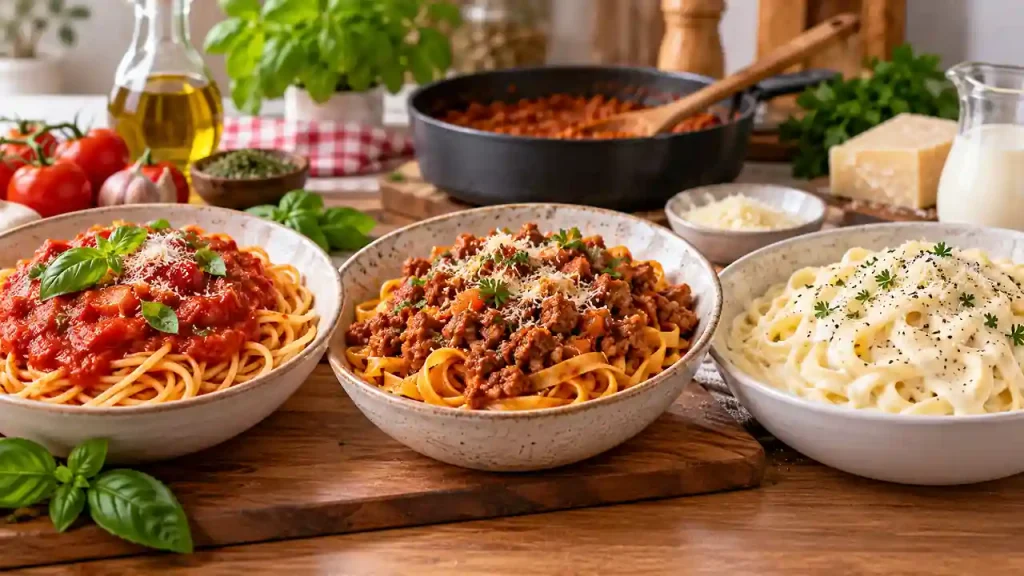
Yes. While the general 3-to-4-day refrigeration window applies to most cooked leftovers, the ingredients in your recipe significantly affect freezing performance and overall texture:
- Tomato-Based Sauces (Marinara, Arrabbiata): Tomato-based sauces generally retain their texture well after freezing and reheating. If you prepare homemade tomato sauce with fresh herbs, our guide on how to store fresh basil outlines practical ways to preserve leftover leaves before they wilt.
- Meat-Based Sauces (Bolognese, Ragù): Sauces containing ground beef, pork, or poultry should also be used within the 3-to-4-day refrigerated-leftover window. They generally freeze well, although some fat separation may occur during thawing and reheating.
- Dairy- and Cream-Based Sauces (Alfredo, Béchamel): Cream sauces can be refrigerated for 3 to 4 days, but they require extra care when frozen. Because dairy emulsions can break during the freezing and thawing cycle, the texture may separate or become slightly grainy upon reheating.
How to Store Homemade Pasta Sauce Safely

To maximize freshness and prevent bacterial growth, follow these food-safety storage practices:
- Refrigerate Promptly: Transfer freshly prepared sauce into clean, airtight containers and refrigerate it within 2 hours of cooking. If the room or outdoor temperature is above 90°F (32°C), refrigerate it within 1 hour.
- Cool in Shallow Portions: Do not leave a deep, hot stockpot of sauce sitting on the counter to reach room temperature. Large volumes cool more slowly, which can keep the center of the sauce at temperatures that allow bacteria to multiply. Divide large batches into shallow containers before chilling so they cool rapidly.
- Verify Refrigerator Temperature: Ensure your refrigerator maintains an internal temperature of 40°F (4°C) or lower.
- Leave Headspace for Freezing: Liquids expand as they freeze. If storing sauce in rigid freezer-safe containers or glass jars, leave at least ½ to 1 inch of headspace at the top to prevent cracked containers or shattered glass. Alternatively, pour cooled sauce into heavy-duty freezer bags and lay them flat on a baking sheet to freeze into compact, stackable portions.
If grated Parmesan is one of your regular pasta toppings, proper temperature control and wrapping matter just as much there. See our guide on how to store parmesan cheese to understand its refrigerator shelf life and freezing considerations.
How Long Does Homemade Pasta Sauce Last in the Fridge?
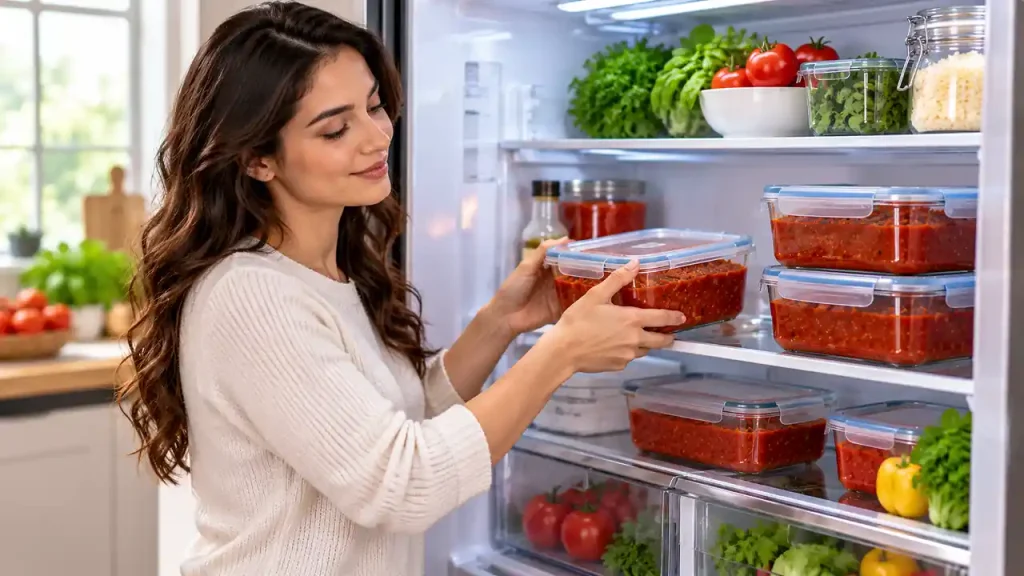
As a general guideline for home-cooked leftovers, homemade pasta sauce should be consumed within 3 to 4 days when kept in an airtight container at or below 40°F (4°C).
Store the container on an interior refrigerator shelf rather than in the door bins, where temperatures fluctuate every time the door is opened. If you prepare a large batch on Sunday, plan to freeze any portion you do not intend to consume by Wednesday or Thursday.
How Long Does Homemade Pasta Sauce Last in the Freezer?
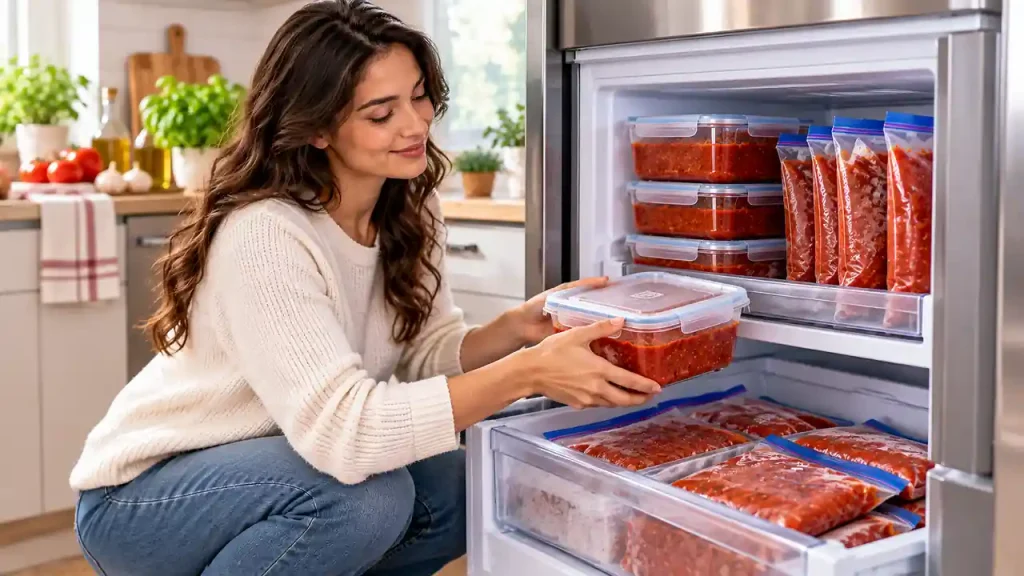
For optimal flavor, aroma, and consistency, aim to use frozen homemade pasta sauce within about 3 months.
Freezing food continuously at 0°F (-18°C) keeps it safe indefinitely, although quality can decline over time. Freezing inactivates microbial growth rather than destroying all microorganisms. Therefore, the 3-month guideline represents a quality target rather than a sudden safety expiration date. After several months in the freezer, sauces may slowly lose aroma or develop freezer burn, but properly sealed, continuously frozen sauce remains safe to eat.
How to Thaw and Reheat Frozen Sauce
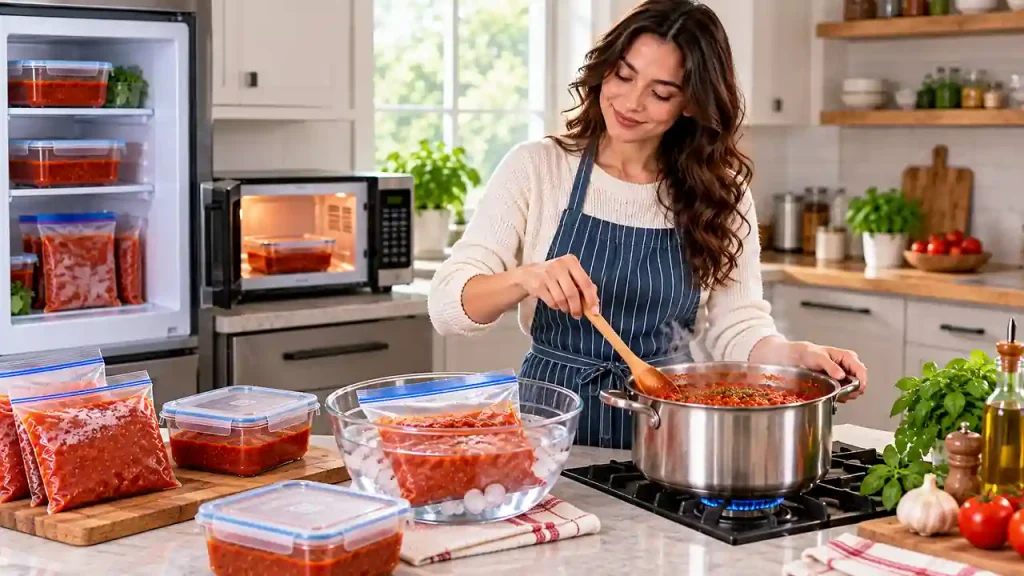
Thawing and reheating require the same food-safety attention as initial cooling:
- Safe Thawing Methods: The safest way to thaw frozen pasta sauce is gradually in the refrigerator overnight. For faster use, submerge the sealed freezer container or bag in cold tap water (changing the water every 30 minutes), or defrost it directly in the microwave if you plan to heat and serve it immediately. Never thaw sauce on the kitchen counter at room temperature.
- Reheating Thoroughly: Follow USDA FSIS guidance on reheating leftovers by heating leftovers thoroughly to an internal temperature of 165°F (74°C). When reheating sauces, soups, and gravies on the stovetop, bring them to a boil. If using a microwave, cover and stir the sauce as needed to promote even heating.
How Can You Tell If Pasta Sauce Has Gone Bad?
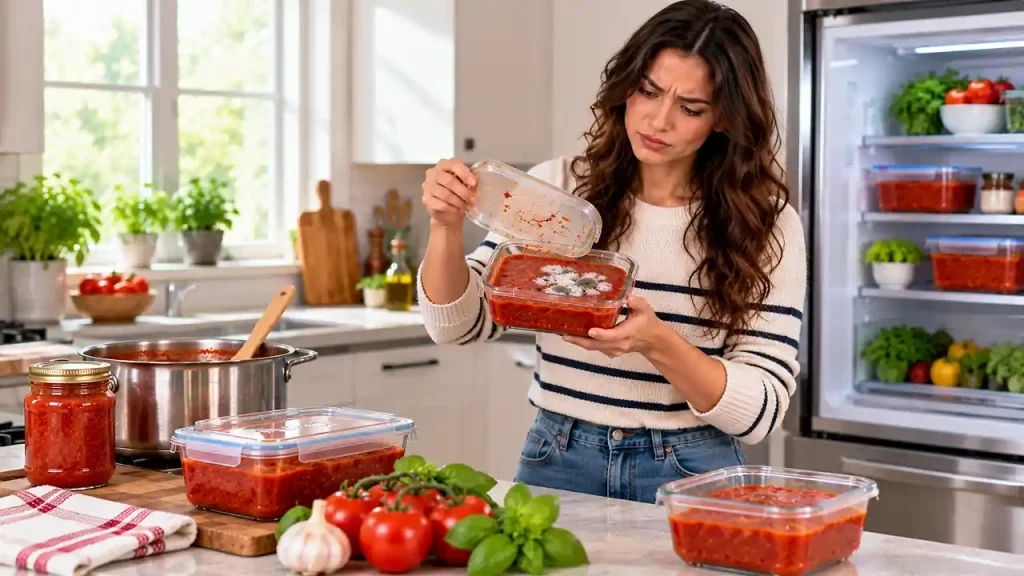
Always inspect leftover sauce carefully before reheating:
- Visible Mold: Any fuzzy white, green, grey, or dark spots on the surface or along the container rim indicate mold colonies.
- Off-Odor: A sour, sharp, yeasty, or fermented smell signals spoilage.
- Active Bubbling or Gas: Frothiness or a container lid bulging under pressure is a sign of active microbial fermentation.
- Unusual Texture With Other Spoilage Signs: Separation alone can occur after freezing, especially in dairy-based sauces. However, major textural changes accompanied by an off odor, mold, or unusual discoloration are reasons to discard the sauce.
Keep in mind that smell and appearance can reveal obvious spoilage, but they cannot confirm that food is safe. Harmful microorganisms do not always cause noticeable changes in odor, taste, or appearance.
Important Safety Note: Never heat or taste-test questionable sauce to “check if it is still good.” Reheating cannot reliably make improperly stored food safe, and some bacterial toxins can survive normal reheating. If the sauce shows signs of spoilage or has exceeded the recommended refrigerated storage time, discard it.
Final Thoughts
Understanding how long homemade pasta sauce lasts allows you to enjoy fresh, flavorful meals without worrying about food waste or foodborne illness. Store your sauce in clean, shallow containers, refrigerate it within 2 hours at 40°F (4°C) or below, and consume it within 3 to 4 days. When in doubt about how long a batch has sat on the counter or in the refrigerator, prioritize food safety and discard it.



Leave a Reply