


Murgh kari combines tender chicken with an onion-and-tomato gravy, yogurt, and warming spices. Served with rice or roti, it makes a satisfying meal for a weekend lunch or a comforting weeknight dinner. This version uses boneless chicken and familiar pantry spices, with adjustable heat.
The method is straightforward: briefly brown the chicken, build the sauce in the same pan, then gently simmer everything until cooked. Browning adds flavor; it does not cook the chicken through or seal in its juices. Careful heat control and checking doneness matter more than chasing a dark crust.
What Is Murgh Kari?

Here, the name refers to an Indian-style chicken curry with a spiced gravy. Chicken curries vary widely across regions and households, so this recipe represents one practical home version rather than a single definitive preparation.
Yogurt adds tang and body, tomatoes provide acidity, and onions form the base. The finished sauce should coat the chicken while remaining loose enough to spoon over rice. Unlike a heavily reduced restaurant-style sauce, it does not need cream or a large quantity of oil.
Recipe at a Glance
Use the timing as a planning estimate. Your pan, heat, and chicken pieces will affect how quickly each stage cooks.
| Detail | Guide |
| Yield | Approximately 6 servings |
| Preparation | About 20 minutes |
| Cooking | About 45–55 minutes |
| Total | About 65–75 minutes |
| Main equipment | Deep 12-inch skillet or wide heavy pot, lid, food thermometer |
| Heat level | Adjustable; begin with less cayenne |
| Allergen | Milk from the yogurt |
Read the method before starting and measure the spices together. Chop the onions and prepare the yogurt first so you are not handling raw chicken while reaching for other ingredients.
Ingredients for Murgh Kari
Use 2 pounds of chicken in total, not two pounds per piece. Cut it into roughly equal pieces so they cook at a similar rate.
Chicken and Aromatics
- 2 pounds (approximately 900 g) boneless, skinless chicken breast, cut into roughly 2-inch pieces
- 3 tablespoons neutral cooking oil, divided
- 1½ cups finely chopped onion
- 1 tablespoon minced garlic
- 1½ teaspoons minced fresh ginger
- 1 teaspoon fine table salt, divided, then adjust if needed
Spices and Gravy
- 1 tablespoon curry powder
- 1 teaspoon ground coriander
- 1 teaspoon ground cumin
- 1 teaspoon ground turmeric
- ¼ teaspoon cayenne pepper, or less for a milder curry
- 1 can of crushed tomatoes, 15 ounces (approximately 425 g)
- 1 cup plain, unsweetened whole-milk yogurt, whisked smooth
- ½ cup water, plus small splashes as needed
- 1 teaspoon garam masala
- 2 tablespoons chopped fresh cilantro, divided
- Up to 1 tablespoon freshly squeezed lemon juice, to taste
Check whether your curry powder contains salt or chili before seasoning. Blends vary, and the same spoonful can produce noticeably different results. Greek yogurt is thicker than regular yogurt and may require extra water.
How to Make the Curry
Prepare the sauce in the same pan used for browning. Keep the heat moderate when cooking the spices, and lower it before adding yogurt.
1. Prepare the Chicken Safely

Pat the chicken dry with disposable kitchen paper and season with ½ teaspoon salt. Do not rinse it: splashing water can spread contamination around the sink.
Keep raw chicken and its utensils separate from ready-to-eat food. Wash your hands and clean the board and work surface afterward. The USDA’s chicken-handling guidance explains these precautions.
2. Brown Briefly in Batches

Heat 2 tablespoons of oil over medium-high heat. Add the chicken in two batches, leaving space between pieces. Brown the surfaces briefly, turning as needed; approximately 2–3 minutes per side is a guide, not a requirement for a dark crust.
Transfer to a plate reserved for the partially cooked chicken. Continue immediately with the recipe; do not refrigerate partially cooked chicken to finish later. It will finish cooking in the gravy.
3. Soften and lightly brown the onions
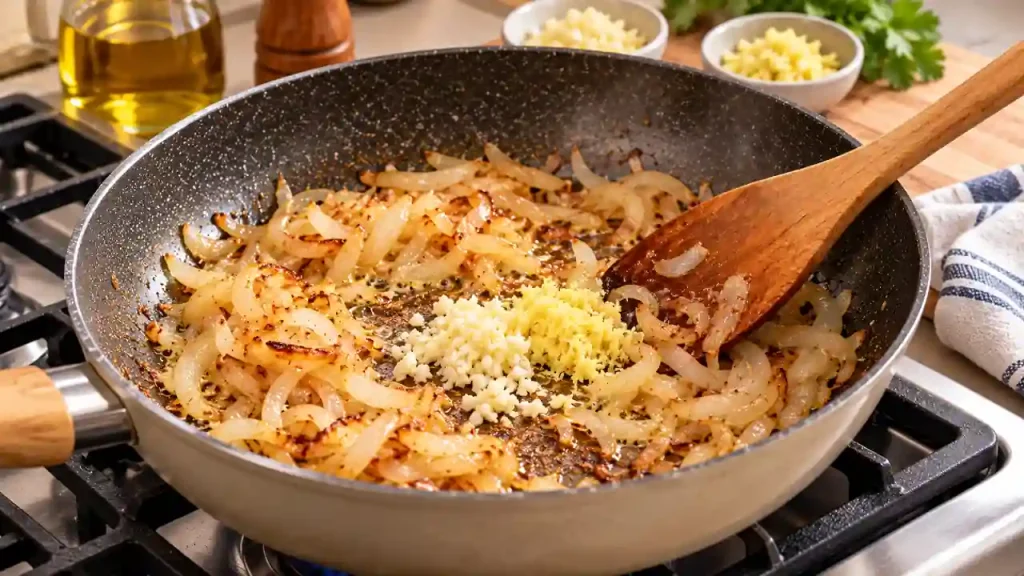
Reduce the heat to medium and add the remaining tablespoon of oil if needed. Add the onions and cook for approximately 8–12 minutes, stirring, until soft and lightly golden.
Scrape up browned chicken residue without allowing it to burn. If the pan catches, add a small splash of water and reduce the heat. Add ginger and garlic, then stir for about 30–60 seconds until fragrant.
4. Cook the Spices and Tomatoes
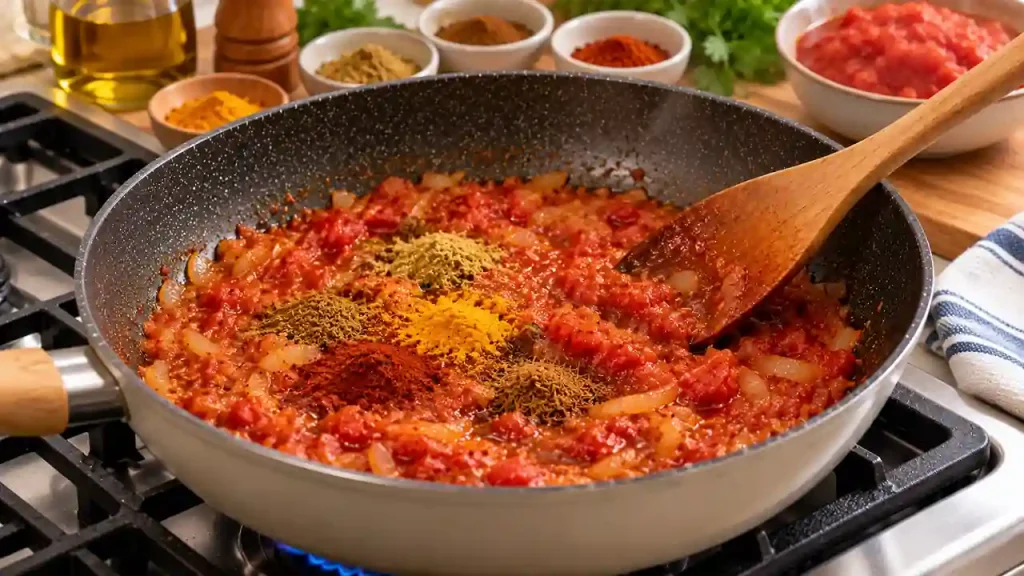
Add curry powder, coriander, cumin, turmeric, and cayenne. Stir for about 20–30 seconds, adding a tablespoon of water if the mixture is dry.
Add the crushed tomatoes and the remaining ½ teaspoon of salt. Cook, stirring occasionally, for approximately 5–8 minutes until the mixture thickens and loses its raw tomato smell. Avoid letting the spices scorch; burnt spices can make the entire sauce bitter.
5. Incorporate the Yogurt Gently

Turn the heat to low and let vigorous bubbling subside. Stir a few spoonfuls of warm tomato sauce into the whisked yogurt, then gradually stir that mixture back into the pan.
Add ½ cup water and 1 tablespoon of cilantro. Stir to create a spoonable sauce. Whisking the yogurt and controlling the heat can reduce splitting, although they do not guarantee a perfectly smooth result with every product.
6. Simmer Until the Chicken Is Cooked

Return the chicken and collected juices to the pan. Bring the sauce to a gentle simmer, cover partially, and cook for approximately 10–18 minutes, stirring occasionally.
Begin checking the thickest pieces after about 8 minutes, sooner if they are small. They must reach 165°F (74°C) on a food thermometer; color and elapsed time cannot reliably establish safety. Follow the minimum-temperature chart. Avoid prolonged cooking after the chicken reaches the required temperature.
7. Finish and Adjust

Stir in the garam masala. Check the sauce consistency, adding a little hot water if needed. Taste only after the chicken is safely cooked.
Turn off the heat, then add lemon juice gradually; tomatoes and yogurt may already provide enough tang. Finish with the remaining cilantro. Use clean utensils and a clean serving dish, rather than the plate that held partially cooked chicken.
Keep the Chicken Tender and the Gravy Balanced
For murgh kari, uniform pieces and a gentle simmer are more useful than repeatedly extending cooking time. Breast meat can become dry when left bubbling after it is done. Boneless, skinless thighs are an alternative, but cooking time may differ. Check their temperature rather than following the breast timing blindly. Bone-in pieces need a separately adjusted method and longer cooking; do not substitute them without changing the instructions. If the sauce needs reducing after the chicken is cooked, transfer the chicken to a clean dish. Reduce the gravy separately, then return the meat briefly to coat.
Common Problems and Simple Fixes
Use these adjustments gradually. Adding several corrections at once makes it difficult to judge what the curry actually needs.
| Problem | What to try |
| Sauce is too thick. | Stir in hot water, a tablespoon or two at a time |
| Sauce is too thin. | Remove the cooked chicken and simmer the gravy uncovered. |
| Curry tastes too sharp. | Skip the lemon; a little cream can soften perceived sharpness. |
| Curry is too hot. | Increase the quantity of mild, unsalted sauce; serve with plain rice. |
| Curry is too salty. | Add more unsalted gravy ingredients; lemon does not remove sodium. |
| Yogurt looks grainy. | Lower the heat and stir gently; avoid aggressive boiling. |
| Chicken is dry. | Stop cooking; extra simmering will not restore lost moisture. |
For a milder family meal, choose a mild curry powder and omit cayenne initially. Adults can add heat to their own portions without making the entire pan difficult for others to enjoy.
What to Serve Alongside
Serve murgh kari with steamed basmati rice, roti, or naan. A cucumber-and-onion salad or simply cooked vegetables can add freshness without competing with the gravy. For a more substantial rice accompaniment, vegetable pulav provides another option. Keep its seasoning moderate if you want the curry to remain the main flavor.
When building a balanced meal, choose portions that fit your appetite rather than treating curry as either a diet food or an indulgence. If cooking for mixed preferences, a separate jackfruit curry offers a plant-based alternative; it needs its own preparation.
Can You Make It Ahead?
Yes. Prepare the complete dish, cool it promptly using the storage instructions below, and refrigerate. Reheat only the portion you need; the gravy may thicken, so loosen it with water.
Final Thoughts
Murgh kari rewards a little preparation: measure the spices, soften the onions properly, add yogurt gently, and check the chicken’s temperature. Share manageable tasks when cooking together as a family, then serve the curry with the sides you enjoy. Adjust heat and tang gradually, and let the finished gravy guide your final seasoning.



Leave a Reply