


Learning how to make egg fried rice comes down to a few useful habits: start with rice that is not wet, cook the eggs separately, and give everything enough room in the pan. Below are two versions: a simple egg-and-scallion recipe and a takeaway-inspired version with vegetables and optional chicken. Both use ordinary ingredients, with clear quantities and practical advice for handling cooked rice safely.
Choose Your Version
The classic version keeps the seasoning light so the eggs and scallions stand out. The second adds garlic, ginger, carrots, peas, and a little more soy sauce. Neither requires specialist equipment or a claim to be the one authentic Chinese recipe.
Each recipe makes three moderate main-course portions or four side portions. Allow approximately 10 minutes for preparation and 10–20 minutes for frying, excluding cooking and cooling the rice. Chicken and cooking in batches take longer.
Which Rice Works Best?
For separate grains, choose cooked long-grain white rice. Jasmine is a good option; basmati also works, although its aroma and texture differ. The rice should be fully cooked without being waterlogged.
Chilled rice is convenient, but an overnight wait is not compulsory. Freshly cooked rice can also work: spread it thinly on a clean tray and let excess steam escape briefly before frying. The aim is separate grains with less surface moisture. Break chilled clumps apart gently before frying. Do not rinse cooked rice for this method; that adds water just when you want a relatively dry surface.
Preparing Fresh Rice
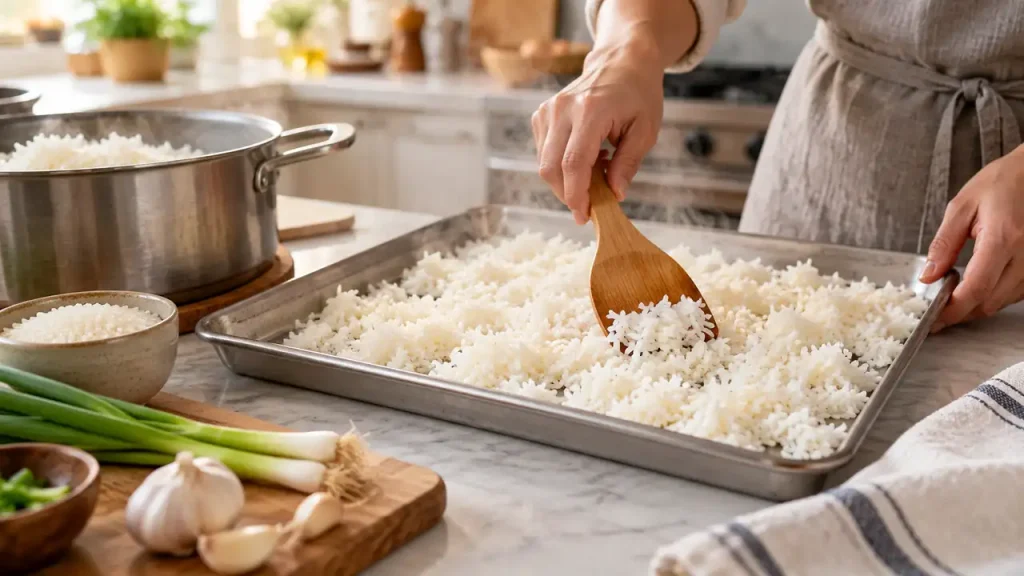
Cook rice according to its packet instructions, using the water ratio recommended for that variety. One cup of uncooked rice often produces roughly three cups cooked, but measure the cooked amount for these recipes. Let it rest as directed, then fluff it and spread it thinly on a clean tray. Allow excess steam to escape briefly before frying immediately. If preparing ahead, cool it quickly and refrigerate it promptly; follow the storage guidance below. Do not leave it on the counter for hours to “dry out”.
Get Everything Ready Before Heating the Pan
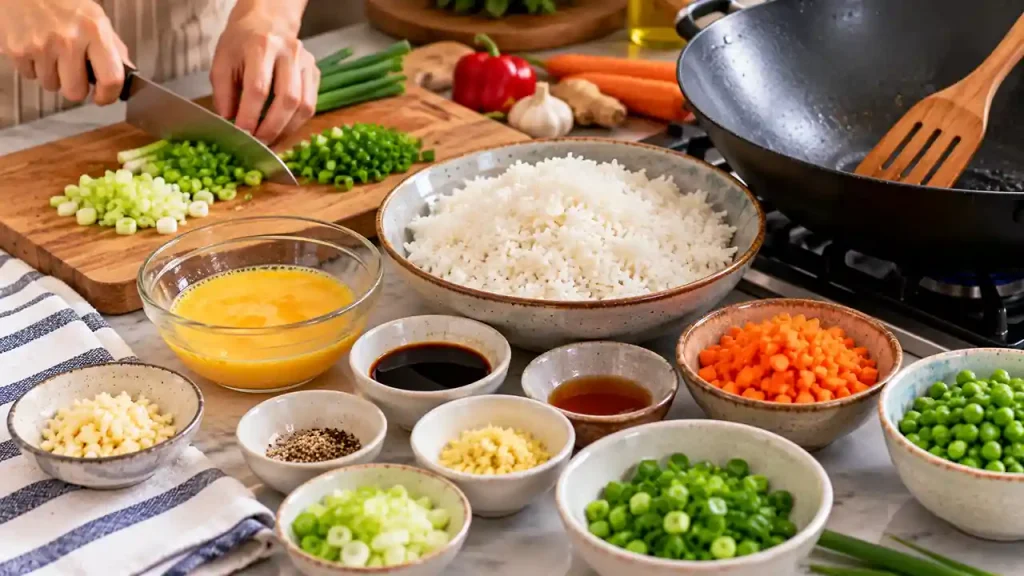
Use a large wok or a wide frying pan, a spatula, and bowls for the ingredients. A small saucepan full of rice will steam more readily than a wide pan with room to stir. Wash the vegetables, beat the eggs, measure the sauces, and separate scallion whites from greens. Keep your chopping board steady with a damp cloth underneath, one of the most useful basic cooking tips for preparation.
This manageable prep also makes the recipe suitable for families learning to cook together. Have one person prepare ingredients while another handles the hot pan.
How to Make Egg Fried Rice: Classic Version
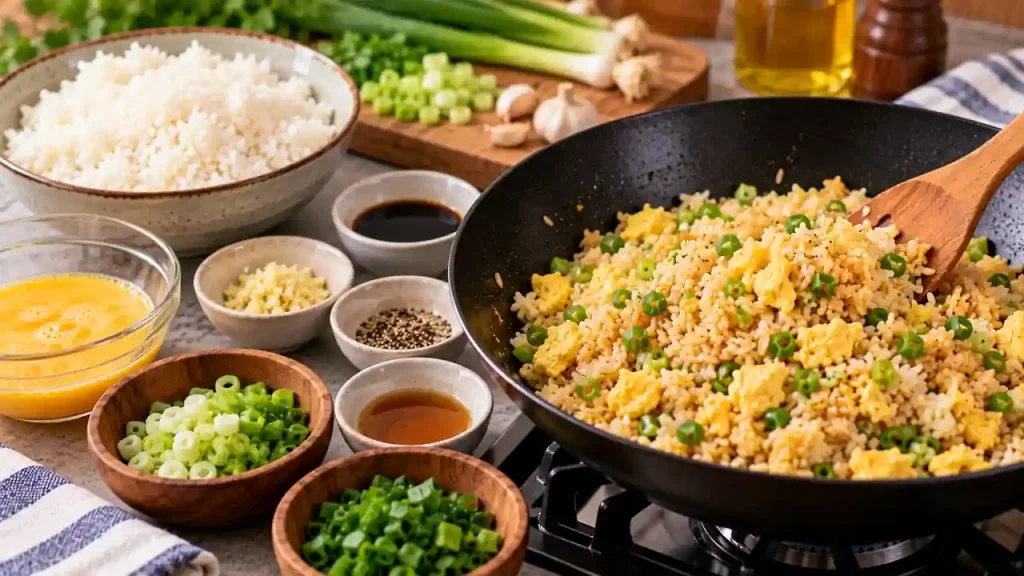
This lightly seasoned version works as a side or a simple meal. Garlic and toasted sesame oil are optional; the eggs and scallions provide plenty of flavor on their own.
Ingredients
- 3 cups cooked rice, prepared as described above
- 3 large eggs, beaten
- 2 tablespoons neutral oil, divided
- 3 scallions, thinly sliced, with whites and greens separated
- 1 garlic clove, finely chopped, optional
- 2 teaspoons light soy sauce
- ¼ teaspoon ground white or black pepper
- 1 teaspoon toasted sesame oil, optional
- Salt, only if needed after tasting
Method
- Scramble the eggs. Heat 1 tablespoon of neutral oil over medium heat. Add the beaten eggs and gently move them around until fully set, without the wet egg remaining. Transfer to a clean plate; avoid cooking them until dry and rubbery.
- Cook the aromatics. Add the remaining tablespoon of oil. Increase to medium-high heat, within your pan’s recommended limits. Add scallion whites and optional garlic; stir briefly until fragrant, without letting the garlic turn dark.
- Fry the rice. Add the rice and spread it across the pan. Stir and turn it for about 3–5 minutes, breaking apart the remaining clumps gently. If the pan is crowded or the rice stays wet, divide everything into two batches.
- Season and combine. Distribute the soy sauce over the rice and add pepper. Return the eggs, breaking them into bite-sized pieces, and toss until everything is thoroughly hot. When using chilled rice, heat the finished dish to 165°F/74°C throughout.
- Finish. Add scallion greens and optional toasted sesame oil. Toss briefly, taste, and add salt only if necessary. Serve immediately.
How to Make Egg Fried Rice: Takeaway-Inspired Version
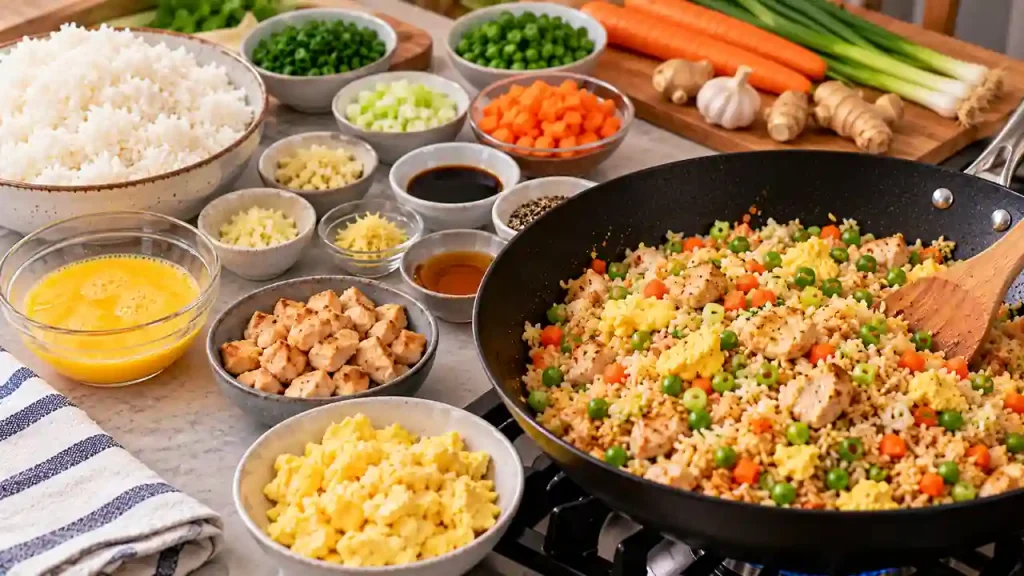
This version adds vegetable sweetness and stronger aromatics. It is designed for a home hobby; professional restaurant burners can produce different results, so focus on good texture rather than recreating every smoky restaurant flavor.
Ingredients
- 3 cups cooked rice
- 3 large eggs, beaten
- 2 tablespoons neutral oil, divided
- 1 small carrot, finely diced
- ½ cup frozen peas
- 3 scallions, sliced, whites and greens separated
- 2 garlic cloves, finely chopped
- 2 teaspoons grated fresh ginger
- 1 tablespoon light soy sauce
- 1 teaspoon toasted sesame oil
- ¼ teaspoon ground white or black pepper
- Salt, only if needed
- Optional: 200 g boneless chicken, finely diced, plus 1 teaspoon neutral oil
Method
- Prepare optional chicken first. If using it, follow the chicken instructions below and transfer the cooked pieces to a clean plate.
- Scramble the eggs. Heat 1 tablespoon of oil over medium heat. Scramble the eggs until fully set, then transfer them to another clean plate.
- Cook the vegetables. Add the remaining tablespoon of oil. Stir-fry the carrot over medium-high heat until beginning to soften, about 2–3 minutes. Add peas and cook according to their packet instructions until hot and tender. Add scallion whites, garlic, and ginger; stir until fragrant.
- Add the rice. Stir in the rice, loosening clumps and distributing the vegetables. Fry until the grains are separated and hot. Work in batches if needed; split the seasoning between them.
- Combine and finish. Add soy sauce, pepper, eggs, and optional cooked chicken. Toss until uniformly hot, reaching 165°F/74°C throughout when using chilled rice. Add sesame oil and scallion greens, taste, and serve.
Adding Chicken Safely
Heat the extra teaspoon of oil and cook the diced chicken, turning it regularly. Check the thickest pieces with a food thermometer to make sure they reach 165°F/74°C. Cooking time varies with piece size and heat.
Keep raw chicken away from ready-to-eat ingredients. Wash hands and clean the board and utensils after handling it. Use a clean plate for cooked chicken, and do not wash raw chicken.
Troubleshooting Texture and Flavor
Learning how to make egg fried rice gets easier when you can recognize what the pan is telling you.
| Problem | Likely cause | What to change |
| Mushy rice | Overcooked or wet grains | Start with properly cooked rice and release surface moisture |
| Rice steaming heavily | Crowded pan | Cook a smaller batch |
| Bitter flavor | Burnt garlic or excessive heat | Lower the heat and add aromatics briefly |
| Greasy rice | Too much oil | Measure oil rather than pouring freely |
| Overly salty rice | Soy sauce plus extra salt | Taste before salting; mix in unseasoned rice or vegetables |
Dark soy sauce is not an equal substitute for light soy sauce: it changes the color and flavor. Add cautiously if that is all you have.
Variations and Serving Ideas
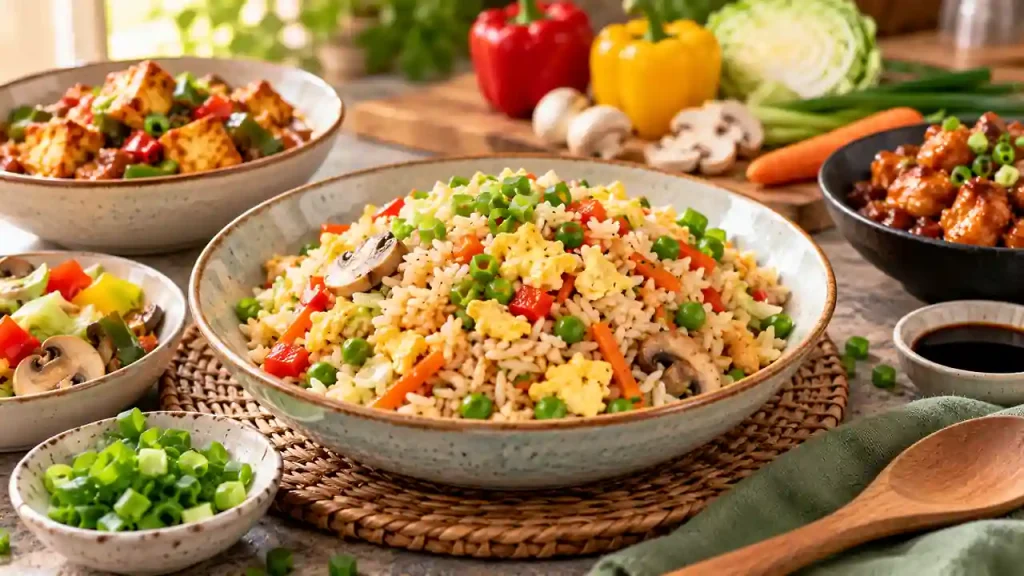
Add small amounts of diced bell pepper, chopped cabbage, or cooked mushrooms. Cook vegetables before adding rice, allowing excess moisture to evaporate. Keep additions modest so the pan remains easy to manage. For another vegetarian rice dish, paneer fried rice offers a different flavor and texture. Egg fried rice also pairs with chilli paneer or chicken Manchurian. Serve saucy accompaniments alongside rather than stirring their gravy into the rice.
Vegetables and suitable portions help this dish fit a healthy eating plan. Its nutritional balance depends on the ingredients, serving size, oil, and seasoning. These recipes contain egg and soy, plus sesame when used. Many soy sauces also contain wheat. If avoiding gluten, choose a sauce specifically labelled ‘gluten-free’; do not assume every tamari qualifies. Check additional ingredients and avoid allergen cross-contact when preparing food for someone with an allergy.
Rice Storage and Reheating
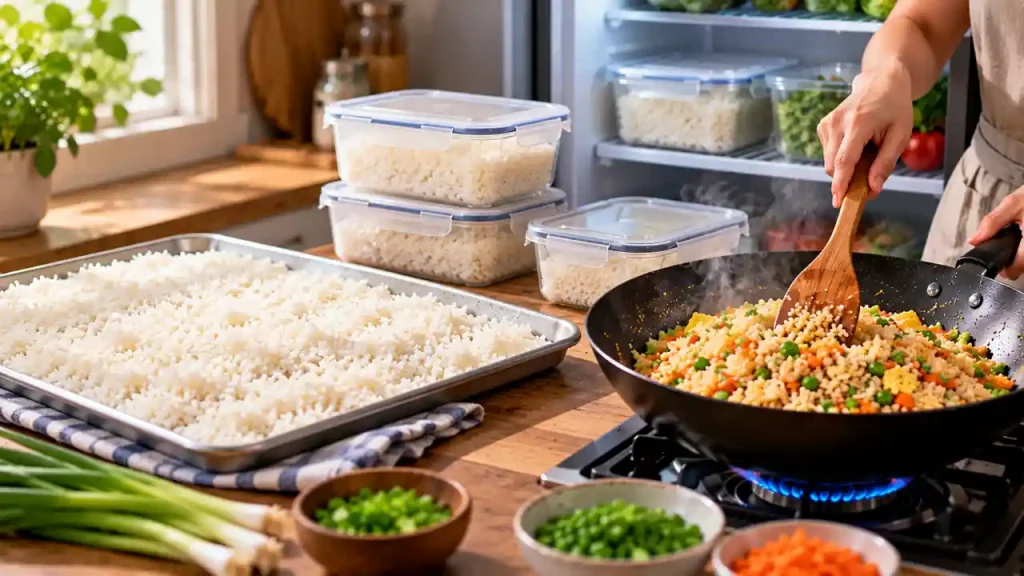
- Cool cooked rice quickly, ideally within one hour, using small, shallow portions.
- Refrigerate promptly and use within 24 hours of the original cooking.
- Reheat rice only once, making sure it is steaming hot throughout.
Frying refrigerated rice counts as reheating it. Prepare only the amount you intend to eat immediately, rather than saving the finished fried rice for another reheating. Reheating does not reset the storage clock.
Rice can contain bacterial spores that survive cooking. Poor storage can allow bacteria and toxins to develop, so extra frying cannot be relied on to make mishandled rice safe. Discard rice if its storage history is uncertain.
Frequently Asked Questions
1. Do I Need Work?
No. A wide frying pan works, especially with smaller batches. Follow its heat limits; do not overheat an empty nonstick pan or heat oil until it smokes heavily.
2. Can I Leave Out Soy Sauce?
Yes. Season lightly with salt and pepper instead. The result will taste different, but eggs, scallions, and optional garlic still provide flavor. Add salt gradually and taste before serving.
Final Thoughts
Knowing how to make egg fried rice means paying attention to the rice, the pan, and the order of cooking. Start with the classic version, then add vegetables or chicken when you want a fuller meal. Measure the seasoning, keep the eggs tender but cooked through, and handle leftovers carefully. With those habits, a few everyday ingredients can become a satisfying meal without a complicated cooking routine.



Leave a Reply