

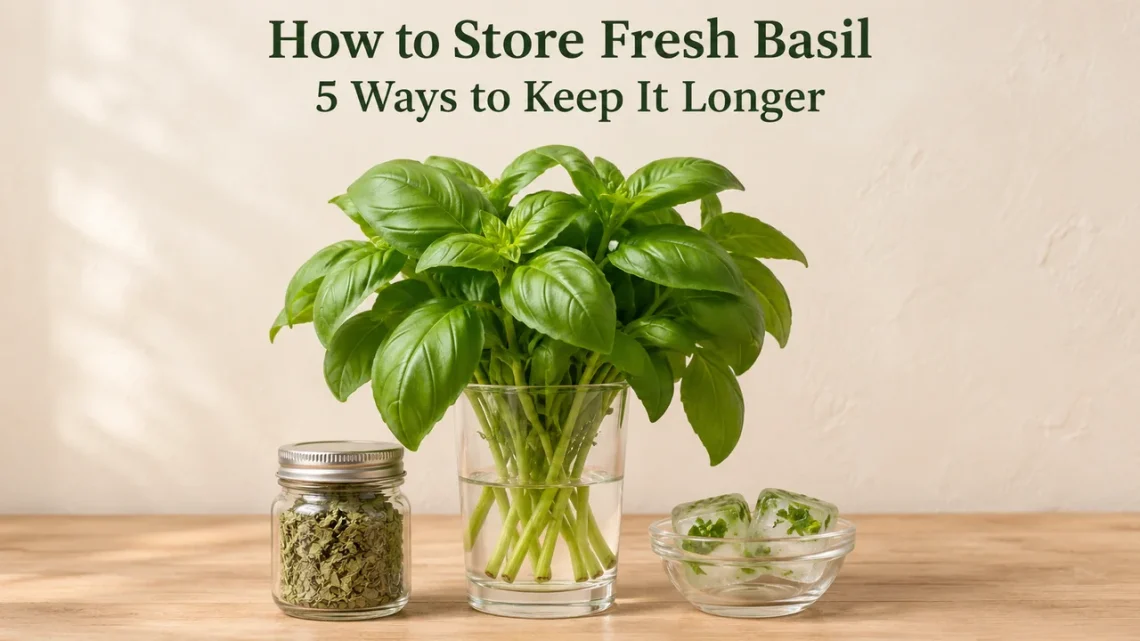
If you’re wondering how to store fresh basil, stand a bunch with stems in a jar of water at room temperature and plan to use it within a few days. If you only have loose leaves, use them soon or refrigerate them briefly. For a bigger bunch than you can use, freeze the extra for cooked dishes or dry it for the spice cupboard.
The right method depends on what you’ll cook. A frozen basil leaf can still flavor a pot of soup, but it won’t have the texture you want on a tomato salad. Set aside the best leaves for dishes that use raw basil, then preserve the rest while it’s still in good condition.
How to Store Fresh Basil: Choose by What You Have
| What you have | What to do | Best use |
| A bunch with stems | Stand the stems in water at room temperature | Garnishes, salads, and toast over the next few days |
| Loose leaves | Refrigerate briefly and check daily | A meal you’ll make soon |
| Extra leaves for cooking | Freeze whole leaves or chopped basil in water | Soups, sauces, and stews |
| Homemade pesto | Refrigerate at 40°F (4°C) or below and use within four days, or freeze | Pasta, beans, and sandwiches |
| Leaves you want to keep in the pantry | Dry completely before packing | Cooked dishes and seasoning blends |
Sort the bunch before you put it away. A torn but otherwise fresh leaf can go into a sauce tonight; save whole leaves for serving raw. If you only need a handful for dinner, preserve the rest while it still has its aroma.
1. Keep Basil Stems in a Jar of Water
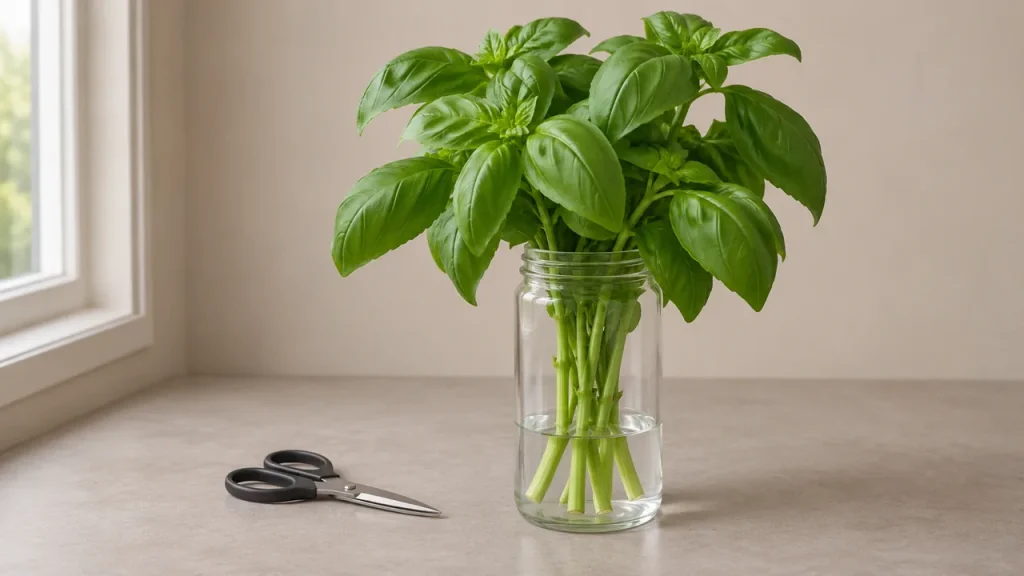
The jar method works best when the leaves are still attached to their stems. University of Illinois Extension recommends holding freshly cut basil in water at room temperature for a few days.
- Trim the stem ends with clean scissors, especially if they look dry.
- Put the bunch upright in a clean glass with enough water to cover the stem ends.
- Remove any leaves that would sit below the waterline. Keep the jar away from direct sun and the heat of the stove.
- Change the water daily. Rinse the leaves you take under running water before using them.
A tall glass keeps the bunch upright. Use a few tender sprigs in tomato and basil bruschetta while the leaves still look and smell fresh. If you grow basil in an indoor vegetable garden, cut only the amount you need when you can. The jar is most useful for a bunch you’ve already bought or harvested.
2. Refrigerate Loose Basil Leaves Briefly
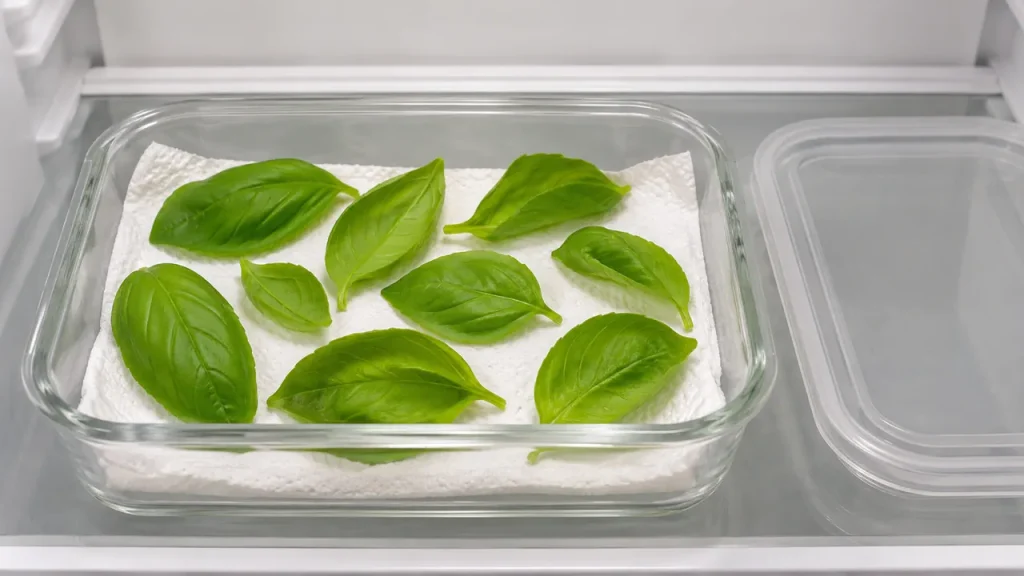
Knowing how to store fresh basil without stems is useful when you’ve bought a clamshell or stripped a bunch for dinner. Follow any storage instructions on the package. For loose leaves, you’ve taken off the stems yourself, remove damaged pieces and place the dry leaves loosely in a clean container lined with a paper towel. If you’ve already rinsed them, pat away surface water first.
Basil is sensitive to cold. Refrigerated leaves may develop dark patches or lose some of their aroma, so check them daily and use them as soon as you can. Avoid crushing them under other produce. If the towel gets damp, replace it. Save crisp leaves for a tomato and basil bread salad. If they’ve wilted slightly but are otherwise sound, chop them into the lemon dressing for herb-roasted potatoes. Discard basil that is slimy, moldy, or smells spoiled.
3. Freeze Plain Basil for Cooking
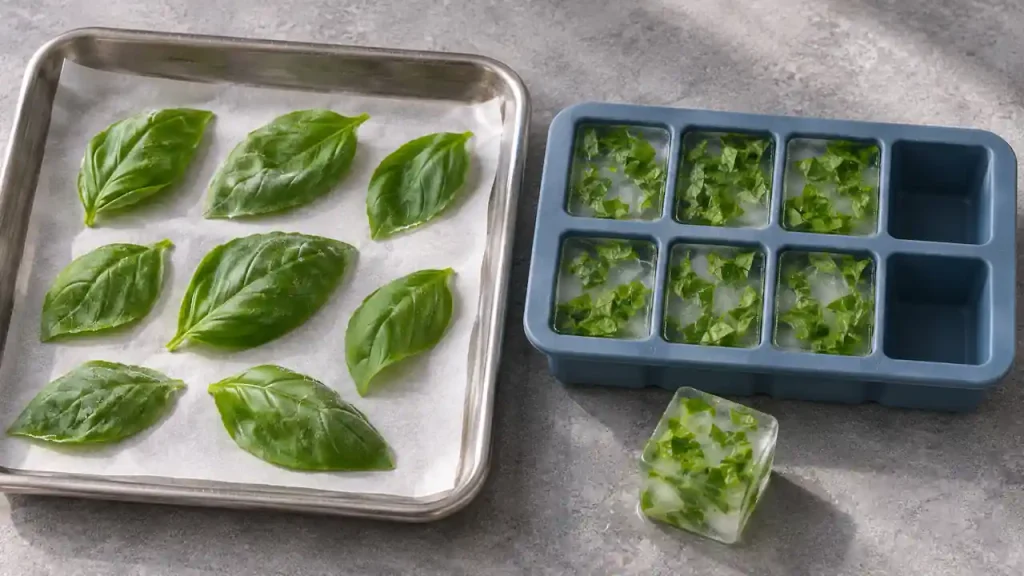
If you’re deciding how to store fresh basil for later cooking, freeze it plain. Freeze whole leaves to take out a few at a time, or use water cubes for dishes that already have liquid.
- Whole leaves: Pick the leaves off the stems, rinse them, and pat them dry. Spread them on a tray in a single layer and freeze until firm. Transfer them to a freezer bag, press out excess air, and label it with the date. Return the bag to the freezer promptly.
- Water cubes: Chop clean leaves and divide them among the wells of an ice cube tray. Add enough water to cover the basil and freeze. Once solid, move the cubes to a labeled freezer bag. If you usually use a teaspoon at a time, portion the basil that way before adding the water.
The leaves soften after thawing and may darken. Add them straight from the freezer to a soup, stew, or tomato sauce. If you’re making enough for several meals, follow the storage guidance for homemade pasta sauce once the basil is mixed in. Freeze Thai basil separately if you have both varieties, so you can choose the right flavor later. Thai basil works especially well in these green and red Thai vegetable curries.
4. Freeze Pesto or Basil Mixed With Oil
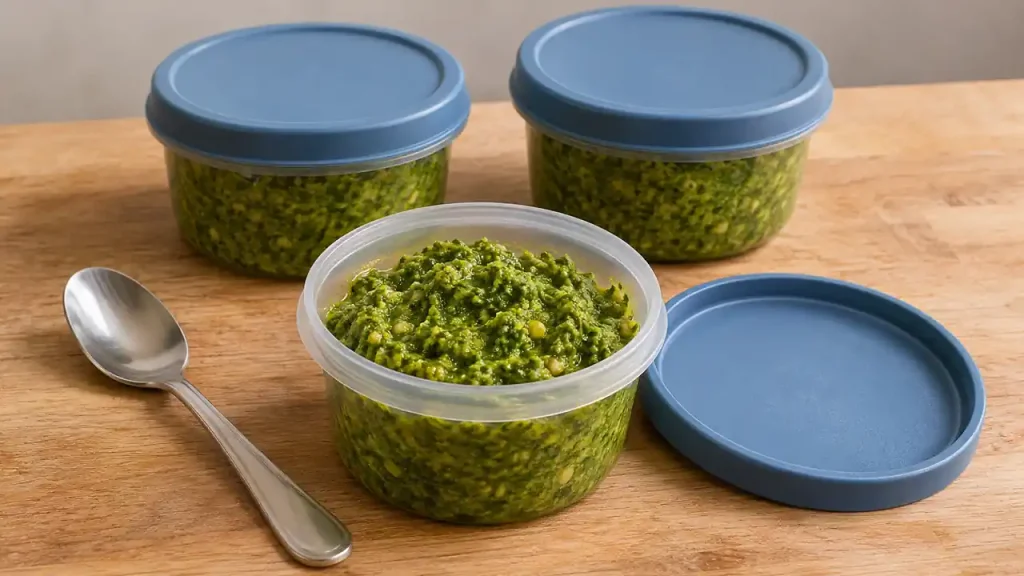
When a large bunch is already destined for pasta, make pesto and divide it into portions you can use at one meal. Freeze it promptly in small freezer containers or in a clean ice cube tray. Transfer solid cubes to a labeled bag and return them to the freezer. Thaw only the portion you need in the refrigerator.
Keep homemade pesto and basil mixed with oil out of the pantry. Fresh herbs or garlic in oil can create conditions that allow the bacteria that cause botulism to grow. Oregon State University Extension’s food safety guidance advises refrigerating homemade pesto at 40°F (4°C) or below and using it within four days of making it, or freezing it. Freeze plain basil-and-oil cubes promptly and keep them frozen after bagging. Don’t make homemade pesto for pantry storage. Stir a small portion into cooked beans or spoon it over roasted tomatoes and garlic. If you grate cheese for a batch, wrap and refrigerate the leftover Parmesan separately.
5. Dry Basil for the Spice Cupboard
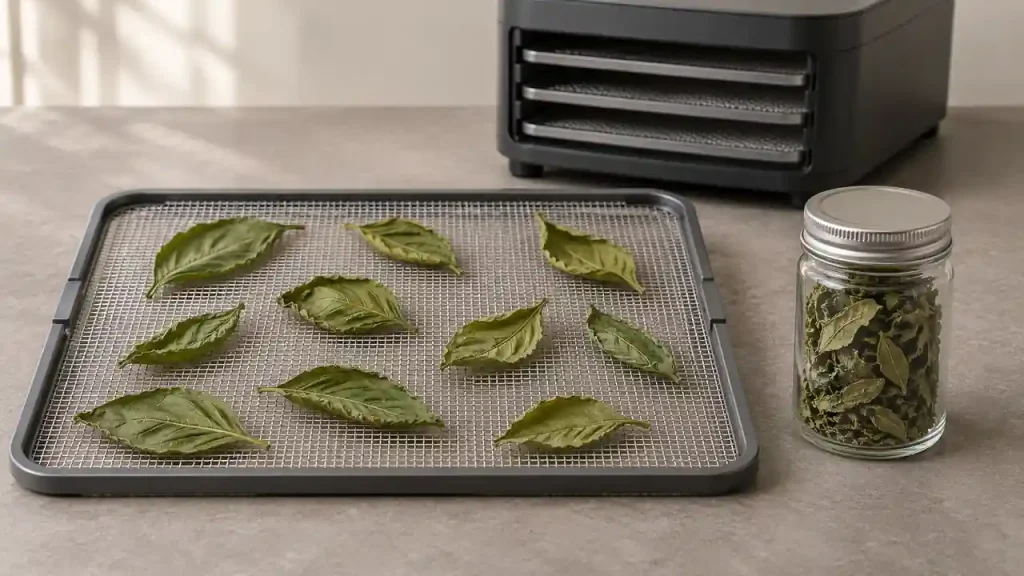
Drying makes sense when you want a seasoning you can reach for without thawing anything. Dried basil has a different aroma from fresh basil, but it still works in soups, sauces, and savory toast toppings. Basil leaves contain enough moisture that slow drying in humid conditions can lead to mold. The National Center for Home Food Preservation’s herb-drying guide recommends a dehydrator set to 95–115°F (35–46°C) for most conditions. Rinse the leaves, shake or pat off extra water, and spread them in a single layer. Check them as they dry; they should crumble easily when fully dry.
Let the leaves cool before putting them in a clean, airtight jar. Store them in a cool, dark cupboard. If you see condensation soon after packing, take the leaves out and dry them further. Discard the batch if you see mold. Keep the dried leaves whole if you like, then crumble only what you need over a simmering tomato sauce or into a pot of beans. If a recipe calls for a tablespoon of chopped fresh basil in a cooked sauce, start with about a teaspoon of dried basil, then taste before adding more. For a dish that depends on fresh leaves, such as a tomato and mozzarella salad, save the dried basil for another meal.
Common Questions About Storing Basil
1. How Long Does Fresh Basil Last in Water?
Plan on a few days at room temperature. The condition of the bunch when you bring it home matters, as do heat and handling. If you need the leaves to look good for a particular meal, use the best ones first and freeze any surplus while it’s still in good condition.
2. How Long Does Frozen Basil Keep Its Flavor?
For plain leaves or water cubes, aim to use them within about six months for good flavor. Keep the freezer at 0°F (−18°C) or below and close the bag tightly after each use. Use the date to rotate older batches first. Six months is a quality target rather than a safety deadline.
3. How to Store Fresh Basil After Washing
For a bunch in water, rinse only the leaves you need just before using them. If the whole bunch is already rinsed, pat the leaves dry before storing them. For freezing or drying, wash under running water and remove excess moisture first so leaves are less likely to clump or dry unevenly. If the package says the leaves are already washed and ready to eat, follow the package directions.
4. Why Did My Basil Turn Black?
Basil can develop dark spots from cold or bruising. A spot by itself doesn’t tell you whether the leaves have spoiled. If the bunch is slimy, moldy, or smells spoiled, discard it. Freezing works best with sound leaves; it won’t rescue a bunch that has already spoiled.
Final Thoughts
Once you know how to store fresh basil for the dish you have in mind, you can split one bunch instead of committing to one method. Stand a few stems in water for tomorrow’s salad, then freeze the rest in portions for soup or pasta. You’ll have tender leaves when texture matters and basil ready to cook when it doesn’t.



Leave a Reply