

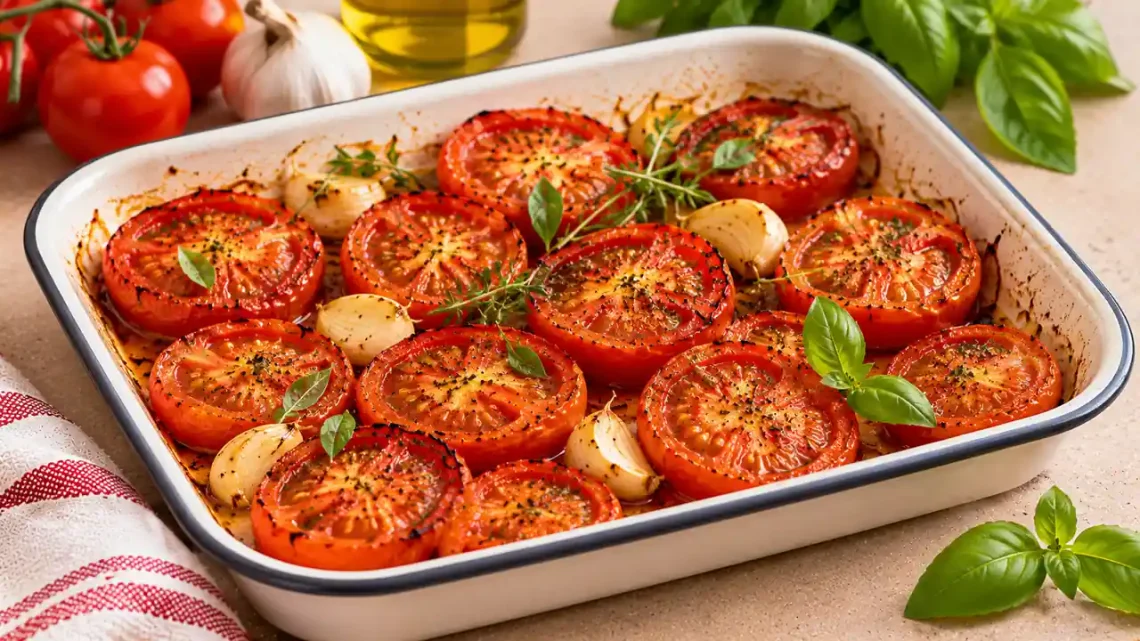
Roasted tomatoes and garlic are what I make when a handful of cherry tomatoes needs using, and dinner needs a little extra flavor. The tomatoes soften and release their juices while whole garlic cloves turn tender and mellow. Toss everything with olive oil, salt, and pepper, then let the oven do most of the work. This five-ingredient recipe makes a small side dish or a quick topping for pasta, toast, vegetables, and chicken.
Why Roast Tomatoes With Garlic?
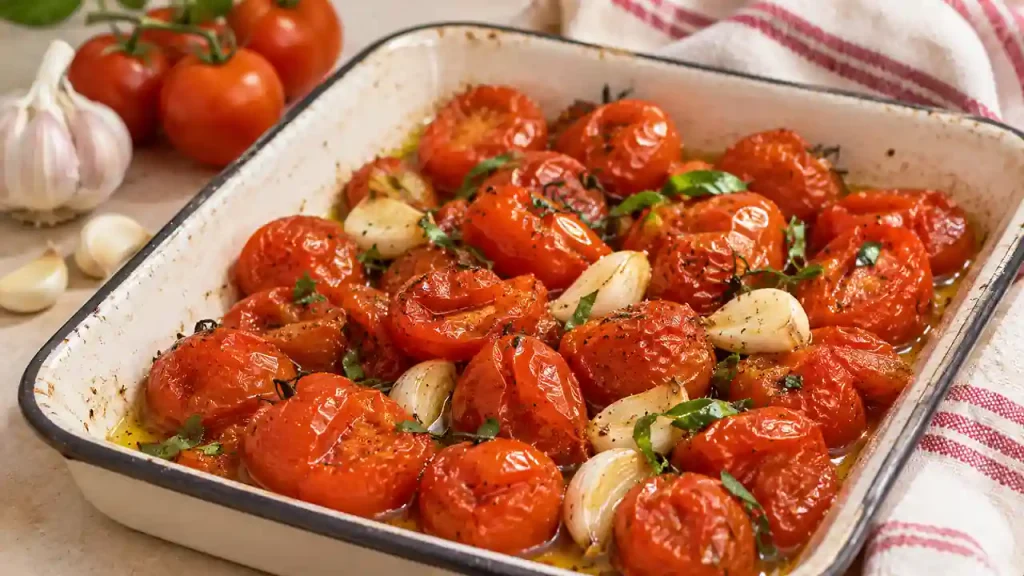
Fresh tomatoes are bright and juicy; roasting gives them a richer, slightly concentrated flavor. Garlic softens in the tomato juices and loses much of its sharp raw edge. The result is somewhere between a warm vegetable side and a chunky sauce, without simmering a pot on the stove.
The method is flexible, but don’t expect crisp, dried tomatoes at 375°F (190°C). You want collapsed skins, tender garlic, and delicious juices to spoon onto the plate. For more caramelized edges, a wider tray and a few extra minutes may help.
Roasted Tomatoes and Garlic: Recipe at a Glance
| Detail | Amount |
| Prep time | 10 minutes |
| Oven time | 25–30 minutes |
| Total time | 35–40 minutes |
| Temperature | 375°F (190°C) |
| Yield | 4 small side servings |
| Equipment | Rimmed baking sheet or shallow oven-safe dish |
This amount is ideal for two generous pasta toppings or four smaller sides. Double it for company, using two trays rather than crowding everything onto one.
Five Ingredients
- 10 oz (280 g) cherry or grape tomatoes
- 6 garlic cloves, peeled and lightly crushed
- 2 tablespoons olive oil
- ¼ teaspoon fine salt, then more to taste
- ¼ teaspoon freshly ground black pepper
Optional: 1 teaspoon fresh thyme leaves, fresh basil, a little crumbled feta, or a pinch of chili flakes. The original recipe called for much more black pepper and salt; this restrained starting point lets the vegetables shine. Add extra seasoning after tasting.
How to Make Roasted Tomatoes and Garlic
Work with clean produce and a tray large enough to hold the tomatoes in one layer. These five steps require little hands-on time, but check the garlic near the end so it doesn’t become bitter.
1. Heat the Oven and Prepare a Tray
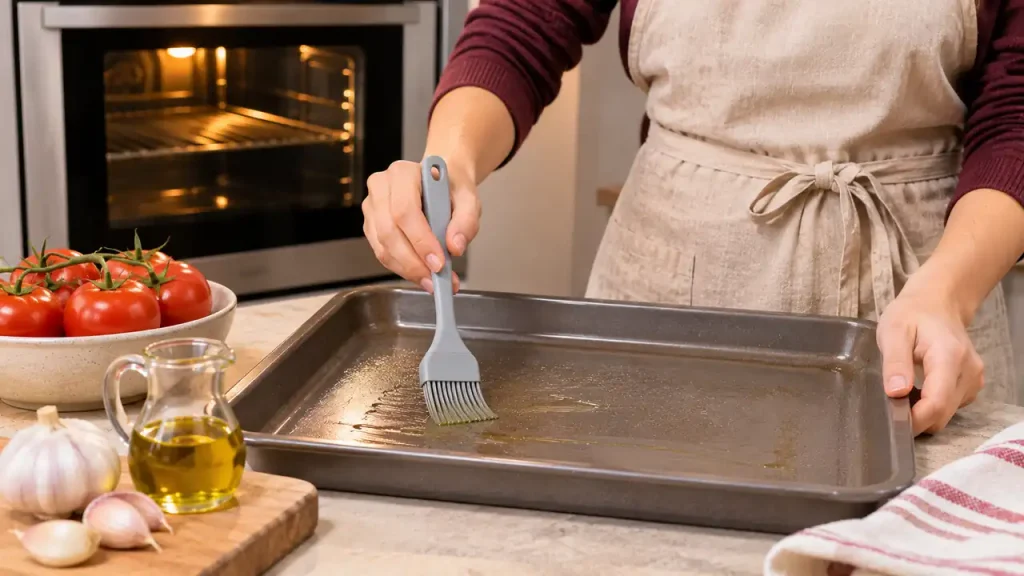
Preheat to 375°F (190°C), with a rack near the center. Choose a small rimmed tray or shallow baking dish that catches the tomato juices. Lightly oil it or use oven-safe parchment according to the packaging directions.
Avoid a deep, crowded pan. Tomatoes stacked on top of each other release steam and soften without much browning. When making a double batch, divide the ingredients between trays and rotate them if your oven heats unevenly.
2. Wash and Cut the Tomatoes
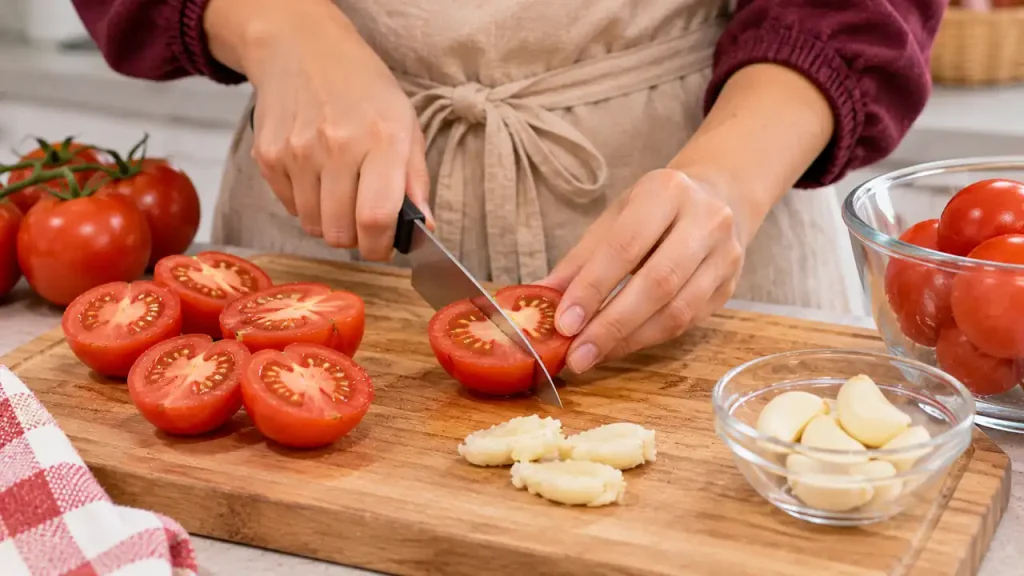
Rinse the tomatoes under running water and pat them dry. Halve them lengthwise, removing any damaged pieces. Whole cherry tomatoes can burst in the oven, so halving gives you more control and exposes the juicy centers.
Peel six garlic cloves and press each lightly with the flat side of a knife. Leave them fairly large. Finely chopped garlic can scorch before the tomatoes finish; large cloves soften more gently.
3. Toss With Oil and Seasoning
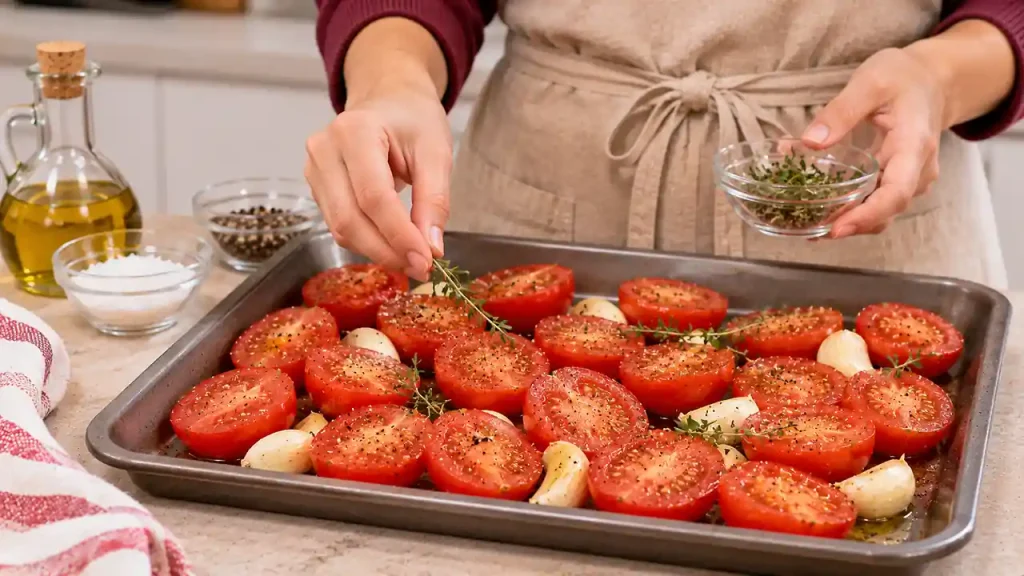
Combine the tomatoes, garlic, olive oil, salt, and pepper in a bowl. Toss to coat, then spread onto the tray. Arrange most tomato halves cut-side up and nestle the garlic between them, coated with oil and tomato juice.
If using thyme, add it now. Save delicate basil for the end; long roasting can dull its fresh aroma. The guide to storing fresh basil is useful when you have more herbs than this recipe requires.
4. Roast Until Soft, Not Burnt
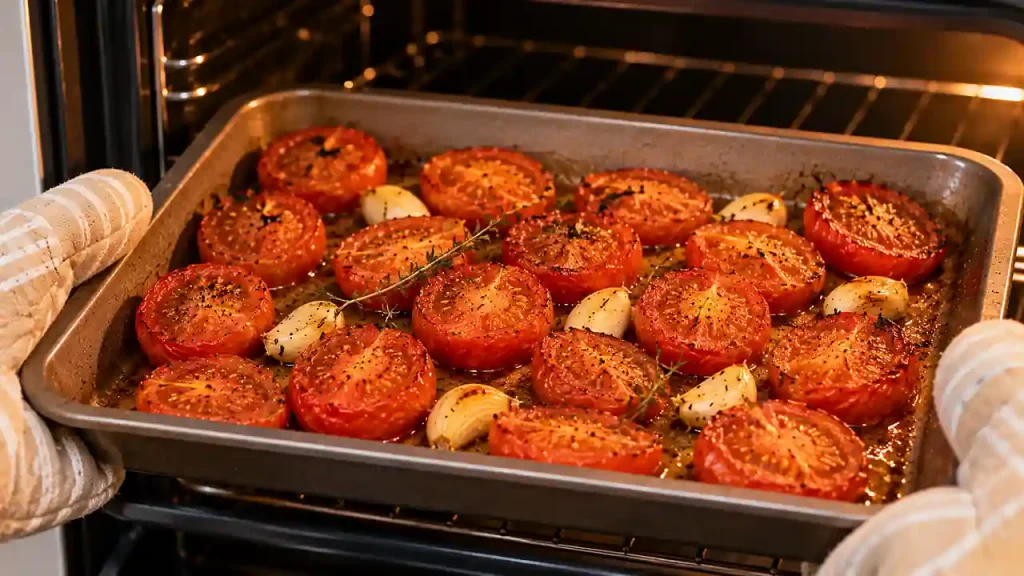
Roast for 25–30 minutes. Check after 20 minutes: the tomatoes should be collapsing, some edges may lightly brown, and the garlic should mash easily with a fork. If the cloves are darkening too fast, tuck them under the juicy tomatoes.
Ovens and tomato sizes vary, so watch the food rather than relying only on the timer. Extra-large tomatoes may take longer; very small ones can finish sooner. Don’t cook until the garlic turns dark brown, which can make the dish bitter.
5. Finish and Taste
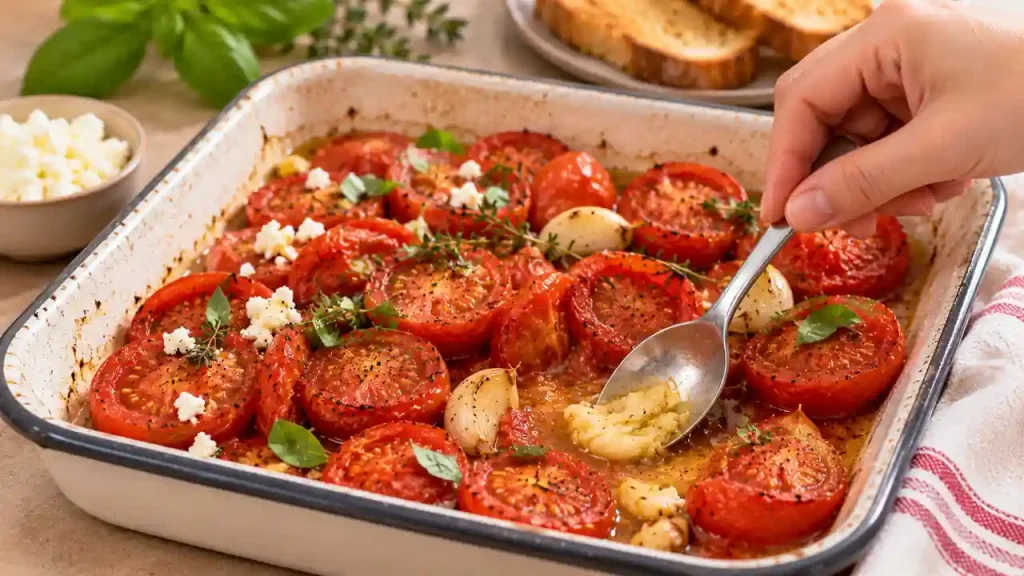
Let the tray rest for a few minutes. Mash one or two garlic cloves into the pan juices and gently stir with a spoon. Taste before adding more salt or pepper. Sprinkle with fresh basil, thyme, or feta if you like.
Serve warm, with the juices included. Those juices are a major part of the recipe: they coat pasta or soak into toasted bread without needing a separate sauce.
Four Ways to Serve the Finished Dish
The easiest use for roasted tomatoes and garlic is as a side, but leftovers can become the beginning of another meal. Choose a serving idea based on how much sauce you want.
1. Toss With Pasta
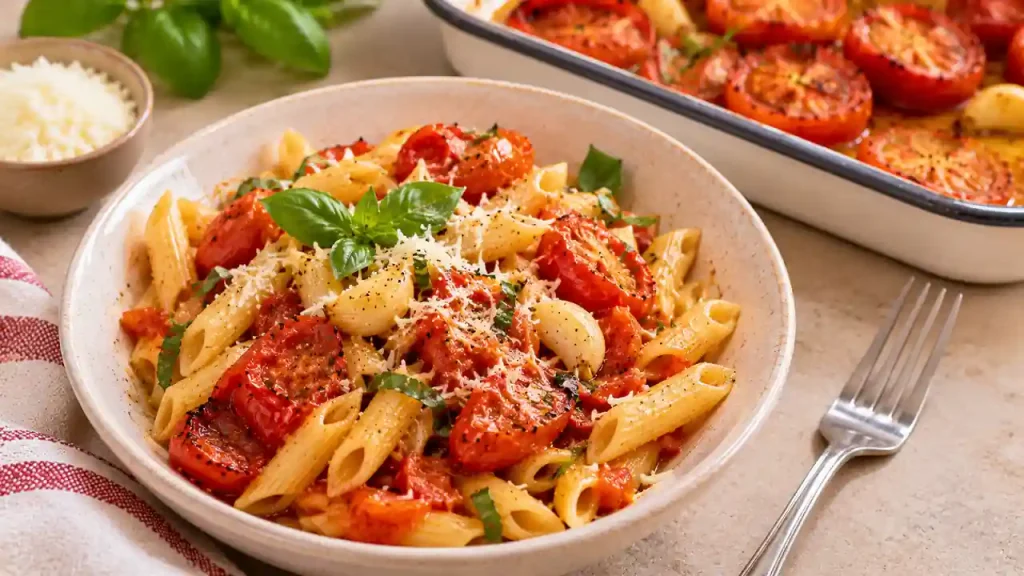
Add the warm mixture to cooked pasta with a spoonful of reserved pasta water. Crush a few tomatoes to make a loose sauce, then finish with basil or Parmesan. If you’ve made extra, follow the same sensible refrigeration principles explained in the homemade pasta sauce storage guide.
2. Spoon Over Toast
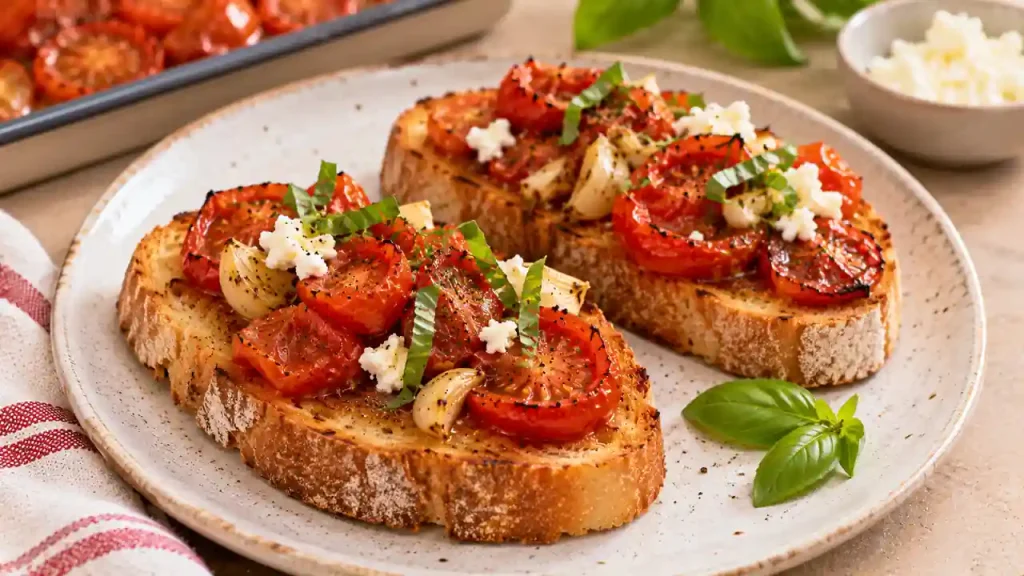
Pile the tomatoes on thick toast or crusty bread. Add ricotta, feta, or beans for a more substantial snack. This also works as a quick topping variation for sweet and savory bread ideas.
3. Serve Alongside a Main
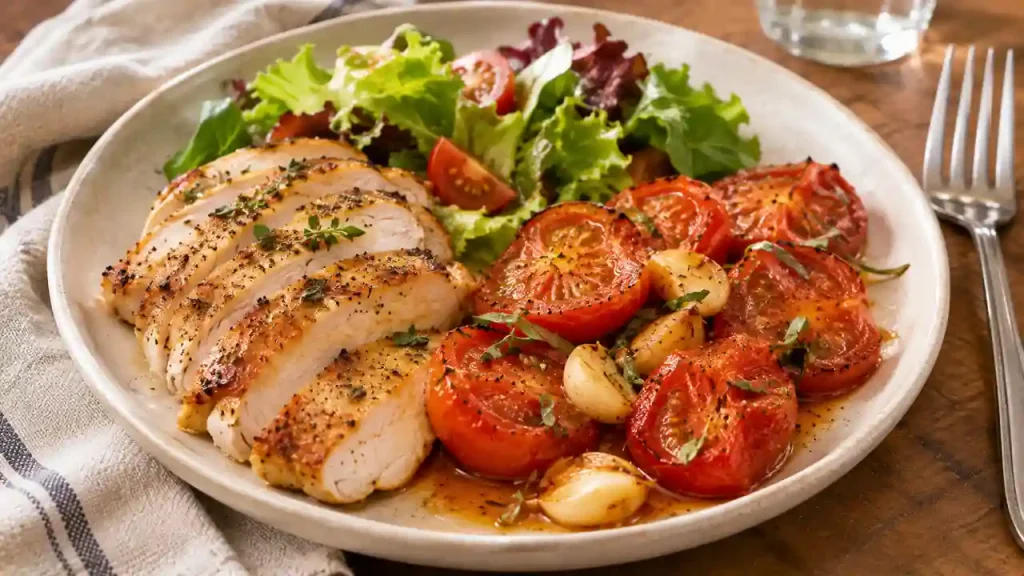
The bright tomato juices complement simple roast chicken, fish, tofu, or white beans. Keep the protein seasoned lightly so the tomato-garlic flavor remains noticeable. A green salad or crisp air-fryer kale chips can provide a contrasting texture.
4. Blend Into a Rustic Sauce
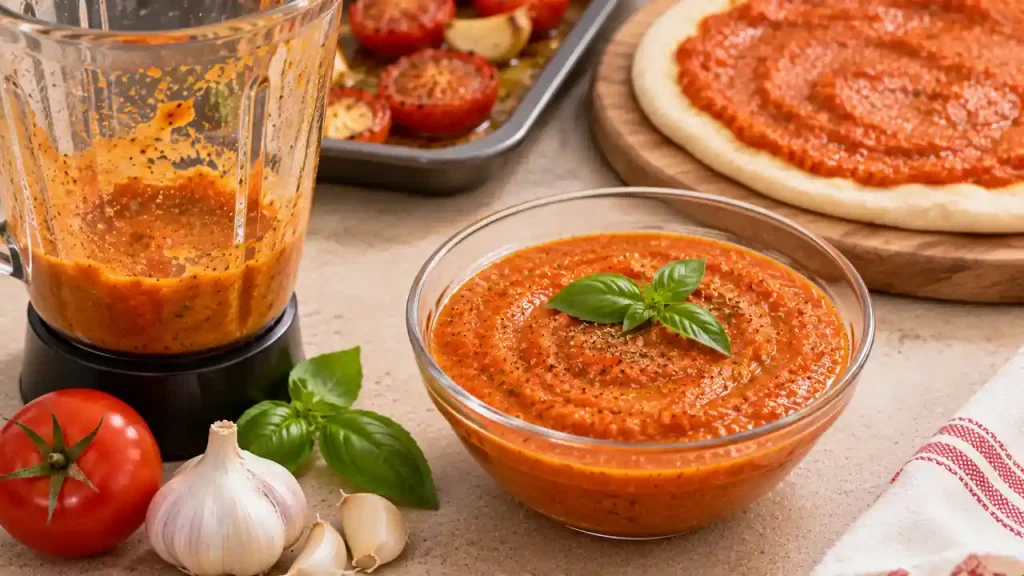
Cool slightly, then blend the roasted mixture until it reaches your preferred texture. Add a little water only if needed. It makes a quick pizza base or vegetable sauce, though the small batch won’t cover several large pizzas.
Troubleshooting: Why Didn’t It Turn Out Right?
- Too watery? Tomatoes vary enormously in moisture. Spread them out and roast a little longer, watching the garlic. For pasta, use a slotted spoon for the tomatoes and add the juices gradually.
- Garlic tastes bitter? It probably browned too far. Next time, keep cloves large, coat them with oil, and nestle them beneath tomatoes. Discard badly burnt pieces rather than blending them into the sauce.
- Too sour? Try sweeter, fully ripe cherry tomatoes next time. A little cheese or a mild starch alongside the dish can balance the flavor; extra sugar isn’t usually necessary.
- Too salty or peppery? Add more unsalted roasted tomatoes, beans, or pasta. It’s easier to season at the table than to rescue an over-seasoned tray.
- Not browned? A crowded dish holds steam. Use a wider tray next time, but remember that this particular recipe is intended to stay juicy.
Are Roasted Tomatoes Nutritious?
Tomatoes provide vitamin C, potassium, and carotenoids such as lycopene. Some processing methods can improve lycopene availability by changing the food structure, but that doesn’t mean roasting increases every nutrient. Vitamin C, for example, is sensitive to heat. Research on cooked tomatoes and carotenoid availability explains the difference.
Olive oil contributes fat and richness. Garlic is a useful seasoning, not a proven treatment for colds or chronic disease. This recipe contains no wheat ingredients, though anyone avoiding gluten should check whatever they serve with it. Nutrition also depends on portion size and toppings; a low-carbohydrate vegetable side becomes a different meal when combined with a large bowl of pasta.
How to Store, Freeze, and Reheat Safely
Move leftovers into a shallow, covered container and refrigerate promptly, within two hours of cooking, or one hour in very hot conditions. Keep the refrigerator at 40°F (4°C) or colder. Because this recipe includes garlic and oil, use refrigerated portions within three days, or freeze them promptly for longer storage.
Don’t leave the mixture in oil on a countertop overnight or preserve it in a sealed pantry jar. Guidance about vegetables and garlic in oil describes the botulism risk of unsafe storage. Freeze small portions in suitable containers, label the date, and thaw in the refrigerator. Reheat until steaming throughout. Frozen tomatoes become softer, making them best for sauces.
Frequently Asked Questions
1. Can I use regular tomatoes?
Yes. Cut them into similar-sized wedges, removing tough cores. Larger tomatoes often release more liquid and may need additional roasting time. Check for softness rather than using the clock alone.
2. Should garlic be minced or left whole?
Lightly crushed, peeled cloves are easier to manage at this temperature. Minced garlic cooks quickly and can burn before the tomatoes soften. Mash the tender cloves after roasting for a stronger blended flavor.
3. Can I use an air fryer?
Yes, in a suitable shallow, air-fryer-safe dish that catches the juices. Check the appliance instructions, use a moderate temperature, and check early because air fryers vary considerably. A loose sheet of parchment alone may move around in the airflow.
4. Can I roast the tomatoes without oil?
You can use a small amount of water and a suitable baking dish, but the results will be less rich and may stick more. Don’t expect the same flavor or browning.
Final Thoughts
Roasted tomatoes and garlic prove that a few ordinary ingredients can make a versatile, flavorful side. Keep the garlic in larger pieces, roast until tender, and save the juices for pasta, toast, or a simple main dish. Taste before adding extra seasoning and refrigerate leftovers promptly. Once you’ve tried the basic tray, experiment with herbs and serving combinations rather than making the method complicated.



Leave a Reply