

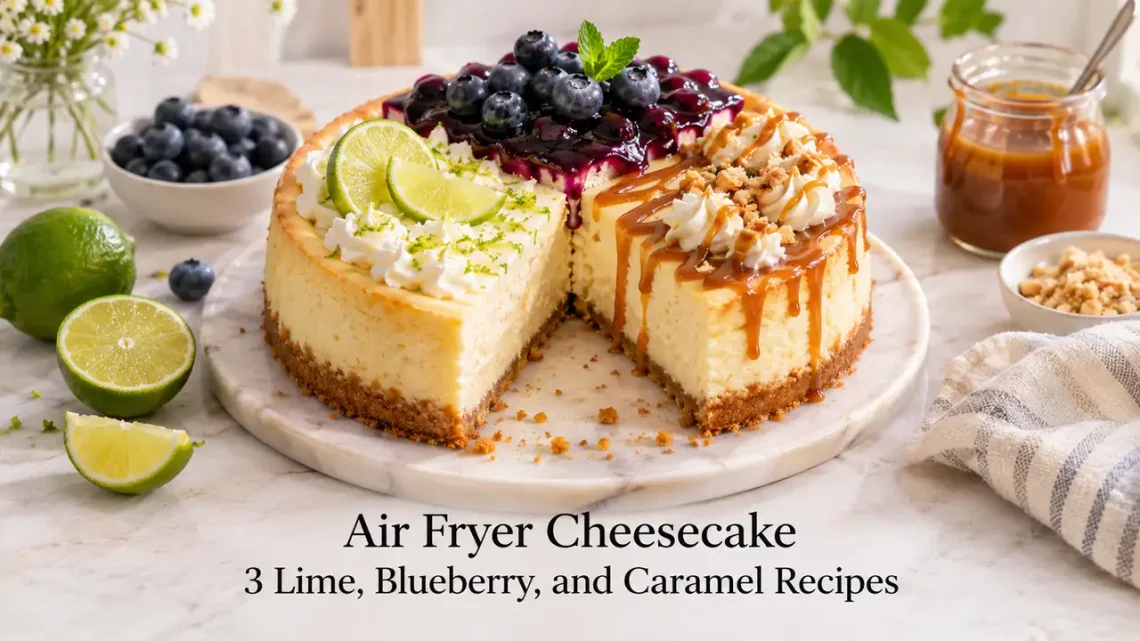
Air fryer cheesecake is a small-batch dessert you can make without switching on a full-size oven. The secret is not speed; it is a pan that fits, a smooth cream-cheese filling, moderate heat, and proper chilling. This guide uses one carefully measured six-inch base with three flavor options—lime, blueberry, and caramel—so you can choose a topping without guessing the ingredients. Baking times are starting estimates, not kitchen-tested guarantees.
Quick Answer: Can You Bake Cheesecake in an Air Fryer?
Yes. An air fryer circulates hot air around a suitable baking pan, much like a compact convection oven. Small cheesecakes can bake well at 300°F (150°C), although appliance size, preheating, airflow, and filling depth affect the result. An appliance-maker’s miniature cheesecake method also uses this temperature; its smaller ramekins bake faster than the six-inch cake here.
An air fryer does not make cheesecake sugar-free, low-fat, or cholesterol-free. It simply changes the heating method. If you are deciding between appliances, this air fryer and toaster oven comparison introduces their different cooking setups; check your model’s manual for actual baking capacity.
Recipe Overview and Equipment
Plan for 15–20 minutes of hands-on preparation, roughly 25–40 minutes of baking, 20–30 minutes of initial cooling, and at least four hours of refrigeration. One cake serves approximately six modest slices. Flavor toppings take a few additional minutes.
You need a mixing bowl, spatula, mixer or sturdy whisk, measuring tools, instant-read food thermometer, and a 6-inch (15-cm) oven-safe round pan at least 2 inches deep. Choose a solid-sided or secure removable-bottom pan. Measure the basket and leave clearance for airflow. An oversized pan may block the fan, while loose foil or parchment can contact a heating element. Preheat the empty appliance to 300°F if its instructions recommend preheating; use Bake mode where available.
One Cheesecake Base for Three Flavors
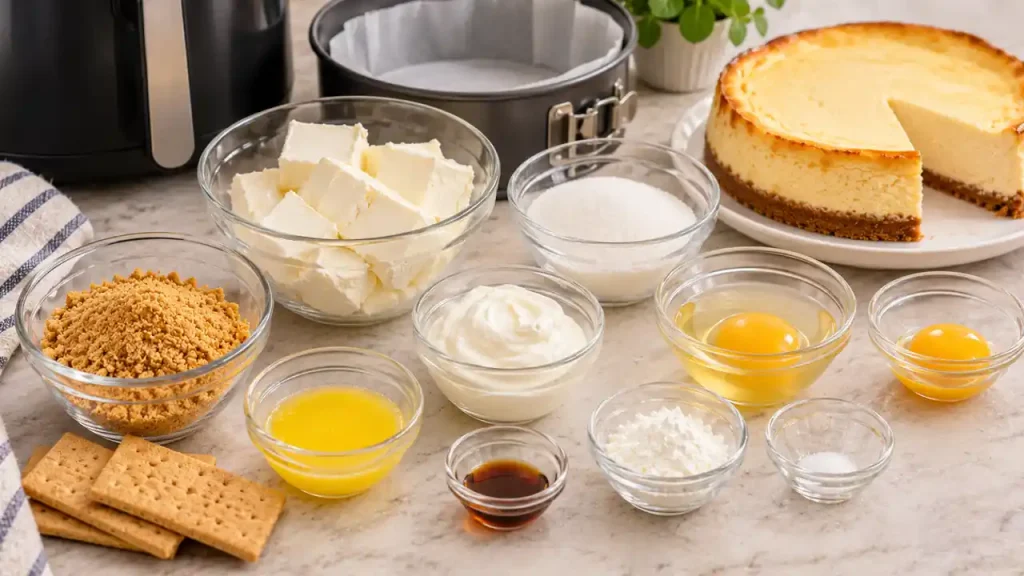
Every air fryer cheesecake variation starts with the entire crust and filling below. The ingredients make one cake, not three. Make a separate batch if you want all three flavors.
Graham-Cracker Crust
- ¾ cup (approximately 85 g) finely crushed graham crackers or digestive biscuits
- 2 tablespoons (28 g) unsalted butter, melted
Cream-Cheese Filling
- 12 ounces (340 g) full-fat block-style cream cheese, softened
- ⅓ cup (approximately 65 g) granulated sugar
- ¼ cup (60 g) sour cream
- 1 large egg plus 1 egg yolk
- 1 teaspoon vanilla extract
- 2 teaspoons cornstarch
- Small pinch of salt
Basic Baking Method
1. Prepare the pan. Grease its sides lightly and fit a parchment circle against the bottom. Keep the paper entirely inside the pan.
2. Make the crust. Stir crumbs and melted butter together until evenly moistened. Press firmly over the base with the bottom of a small glass. Refrigerate while mixing the filling.
3. Smooth the cheese. Beat softened cream cheese and sugar on low, scraping the bowl. Add sour cream, vanilla, cornstarch, and salt, mixing just until uniform.
4. Add the eggs. Mix in the whole egg and yolk on low only until combined. Excessive beating introduces air that can produce cracks. Fold in the lime addition now if making that version.
5. Fill the pan. Spoon the mixture over the crust. Smooth its surface and tap the pan gently to release large bubbles. Add a caramel swirl now if using it.
6. Bake. Carefully place the pan into the preheated appliance. Set it to 300°F (150°C), start checking around 25 minutes, and continue as necessary. The center of this egg-based filling should reach 160°F (71°C) on a clean thermometer without touching the pan.
7. Cool and chill. Rest the pan on a rack for around 20–30 minutes, then transfer to the refrigerator within the safe cooling window. Chill for at least four hours, preferably overnight, before unmolding and slicing.
Use the temperature reading rather than a fixed timer. The surface may brown before the center finishes, especially in models with strong top heating. Consult the manual before attempting any foil covering; never allow unsecured foil near a fan or element.
Three Flavor Variations to Make at Home
The three recipes share the same foundation, but each addition changes the finished taste. Keep the quantities modest so the custard can set reliably.
1. Lime Air Fryer Cheesecake
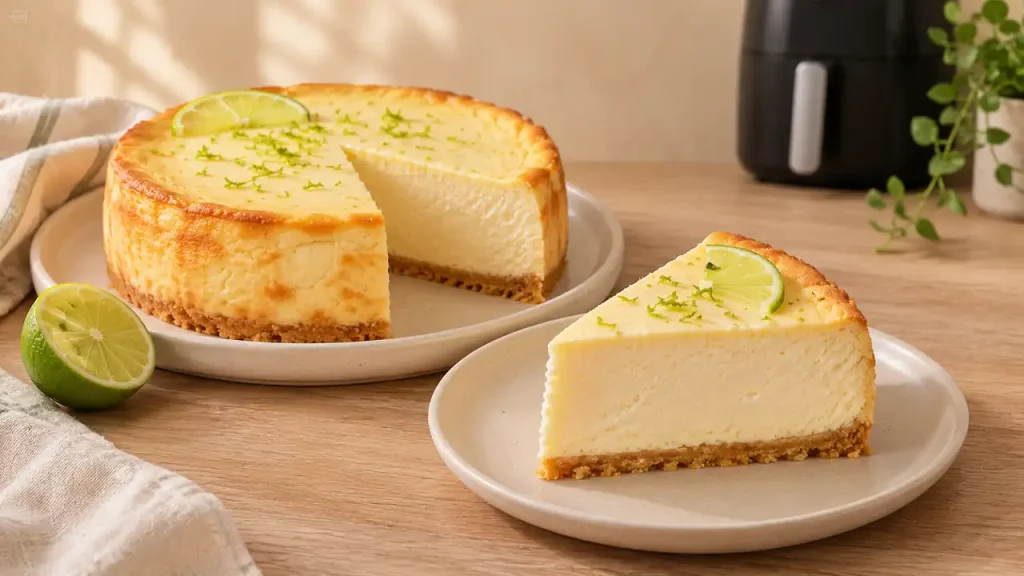
For a gently tart cake, add 1 tablespoon freshly squeezed lime juice and 1 teaspoon finely grated lime zest to the complete base filling. Fold them in after mixing the eggs, then bake and chill according to the main method. Decorate with extra zest or a thin lime slice just before serving.
Do not substitute six ounces of lime juice from the original article; that much additional liquid can disrupt the cheesecake’s balance. For a stronger citrus impression, increase the fresh zest slightly rather than pouring in more juice. Wash the lime before zesting, and grate only the colored outer peel.
2. Blueberry Air Fryer Cheesecake
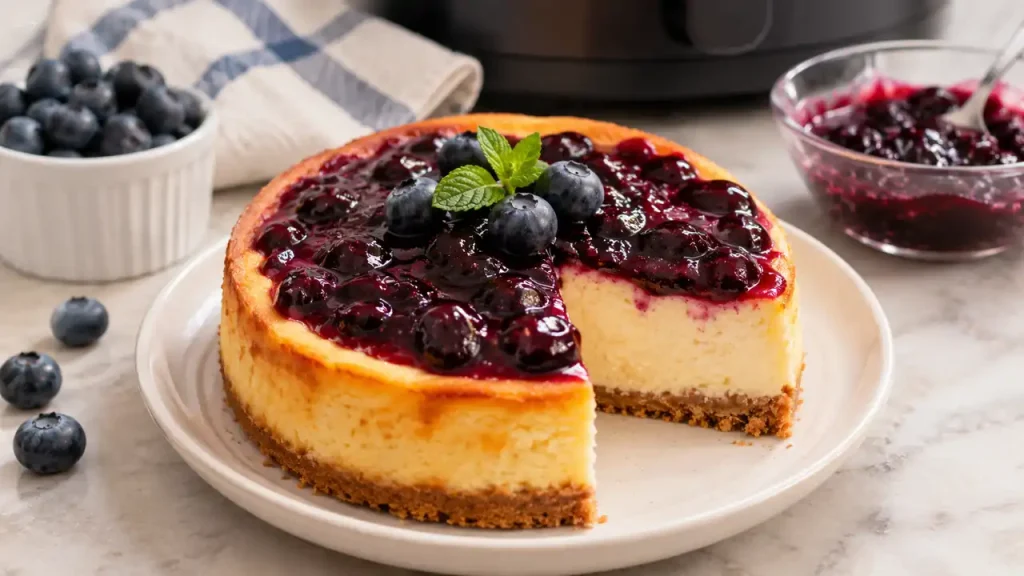
Bake the plain base and chill it. For the topping, combine ¾ cup (about 110 g) blueberries, 1 tablespoon sugar, 1 teaspoon lemon juice, and 1 tablespoon water in a small saucepan. Simmer gently for approximately 5–8 minutes until some berries burst and the juices thicken slightly. Cool, refrigerate, then spoon over the chilled cheesecake.
Fresh and frozen blueberries can both work; frozen berries may need a little longer to reduce. Adding the compote after baking makes the center easier to check with a thermometer. For a different fruit finish, a strawberry glaze for cheesecake is another option; follow safe refrigeration practices for homemade toppings.
3. Caramel Air Fryer Cheesecake
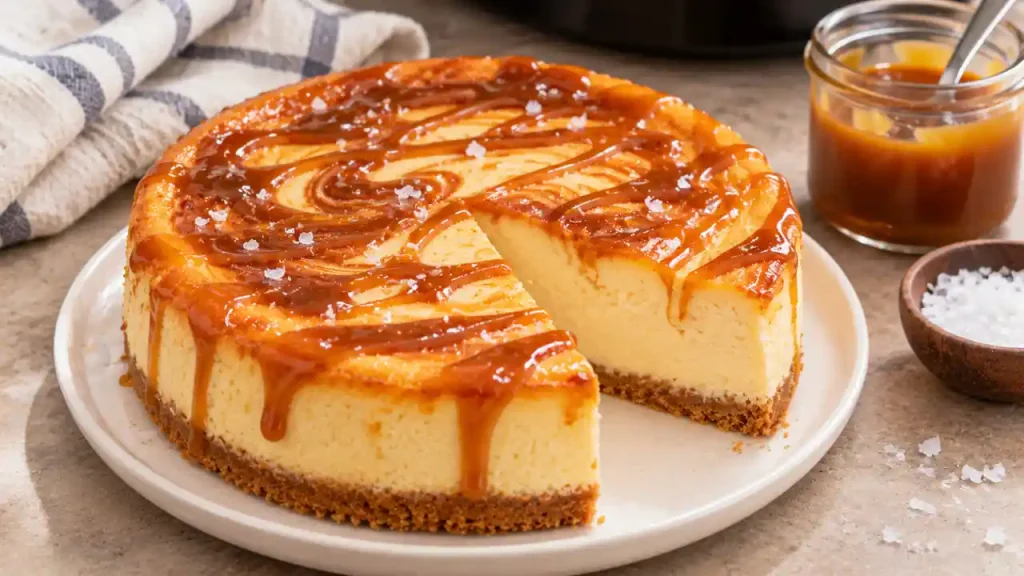
Make the complete base and have 3 tablespoons of thick, cooled caramel sauce ready. Before baking, dot 1 tablespoon over the batter and draw a skewer through it just once or twice. Bake, chill, and drizzle the remaining 2 tablespoons over the cold cake before serving. A tiny pinch of flaky salt is optional.
Use caramel sauce thick enough to sit on the surface rather than sinking immediately. Avoid the original recipe’s water-and-vinegar step, which does not belong in a conventional cream-cheese filling. If you want a second finish instead of caramel, a little gently melted chocolate can be added after chilling.
How to Check Doneness Without Guesswork
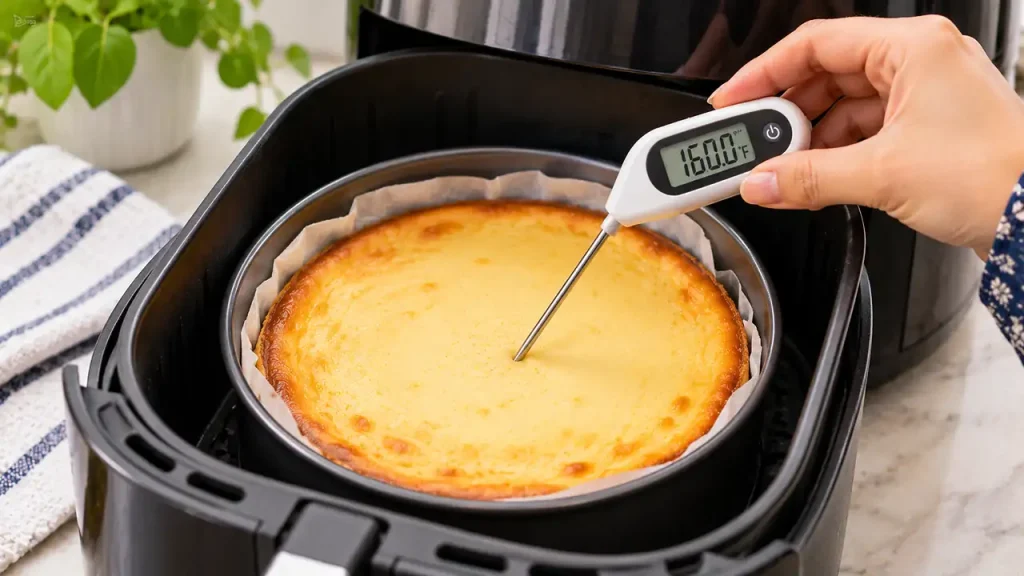
Cheesecake can have firm-looking edges while the middle remains undercooked. For food safety, egg-based dishes should reach 160°F (71°C). Insert a clean instant-read thermometer near the center and avoid the pan bottom. A small wobble may remain; refrigeration completes the firm texture.
The air fryer’s 300°F setting is the hot-air temperature, not the cake’s internal temperature. They are different measurements. If the cheesecake needs longer, continue in short intervals, checking the center again. When removing the pan, use oven mitts and protect your hands from the hot basket. Record your appliance, pan type, and actual baking time for the next batch.
Troubleshooting Common Problems
Some cosmetic imperfections are normal in a home-baked cheesecake. These checks help distinguish appearance issues from underbaking.
| Problem | Likely reason | What to try next time |
| Cracked top | Excess air or strong heat | Mix slowly; watch browning |
| Lumpy filling | Cheese too cold | Soften briefly; scrape well |
| Dark top, cool center | Intense upper heat | Use moderate heat; verify center |
| Crumbly crust | Loose, dry crumbs | Measure butter; press firmly |
| Soft slices | Too little chilling or baking | Check internal temperature; chill longer |
A crack does not automatically make a fully cooked cheesecake unsafe. A center that has not reached the safe temperature, however, needs additional cooking rather than extra refrigeration alone.
How to Refrigerate, Freeze, and Serve
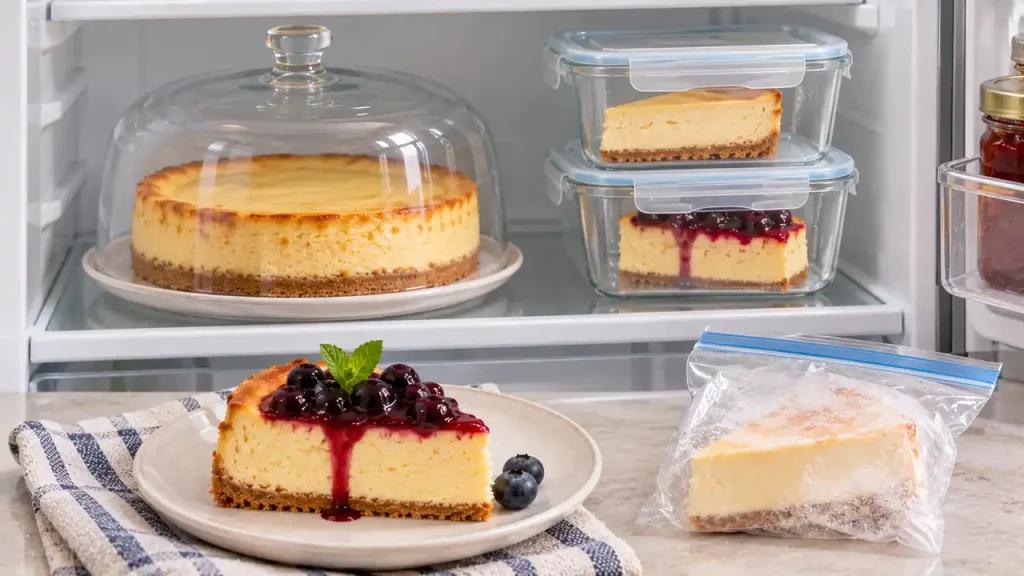
Air fryer cheesecake contains perishable eggs and dairy. Refrigerate it within two hours of cooking, or within one hour if the surrounding temperature exceeds 90°F (32°C). Keep your refrigerator at 40°F (4°C) or below. Use refrigerated leftovers within three to four days, or freeze portions for longer storage. These safe leftover-storage rules apply even if the cake still looks and smells fine.
Cover the cheesecake once it has cooled enough to avoid excessive condensation. Slice with a clean knife, wiping between cuts. Keep fruit compote chilled separately until serving if you want a crisp-looking topping. For freezing, wrap plain slices well, then thaw them in the refrigerator, not on the counter. The site’s cheesecake storage guide offers additional make-ahead ideas.
Frequently Asked Questions
These quick answers address pan substitutions and practical timing questions before your first attempt.
1. Can I Use a Regular Cake Pan?
Yes, provided it is oven-safe, fits with airflow clearance, and can be handled safely while hot. A solid-sided pan is fine; serving the chilled cake directly from it may be easier than trying to turn it upside down.
2. Do I Need a Water Bath?
Not for this proposed small-batch method. Do not pour water into the air fryer unless the manufacturer’s instructions explicitly permit that setup.
3. Can I Make the Cheesecake a Day Ahead?
Yes. Overnight chilling generally makes slicing easier. Add a blueberry topping or the final caramel drizzle shortly before serving for a neater appearance.
Final Thoughts
Air fryer cheesecake is easiest to approach as one measured base with three distinct finishes: bright lime, juicy blueberry, or buttery caramel. Check that your pan fits, mix the eggs gently, bake to a safe internal temperature, and refrigerate promptly. The times here are informed estimates rather than results from a completed kitchen test. With careful measuring and a record of your appliance’s performance, the next batch becomes easier to repeat.



Leave a Reply