

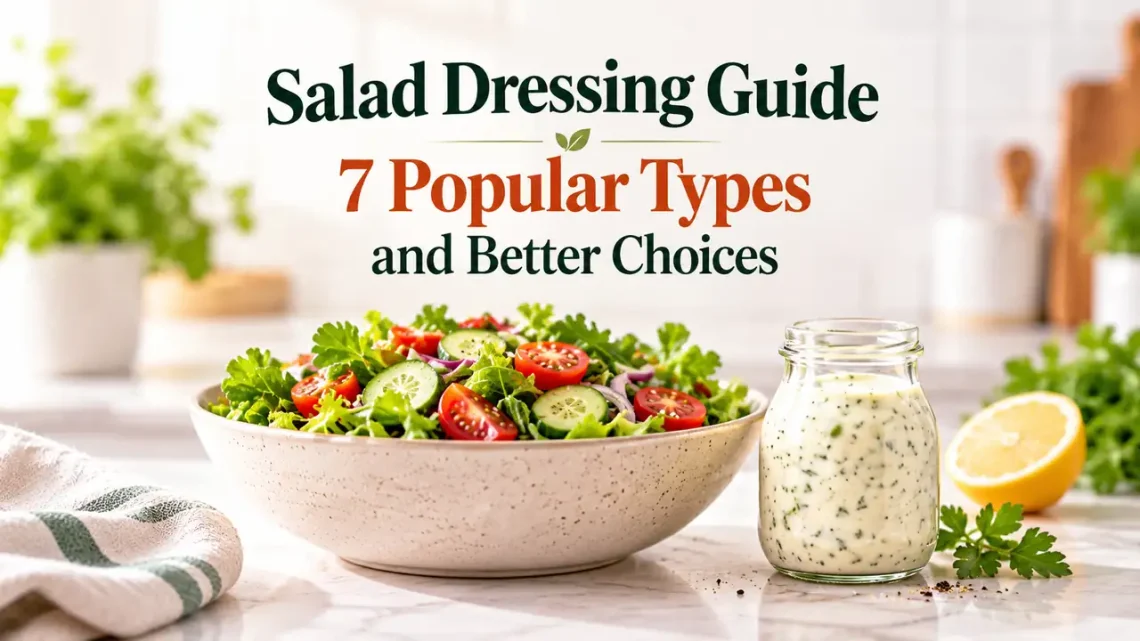
Choosing a salad dressings should make your meal more enjoyable, not turn lunch into a test of willpower. Ranch, Caesar, French, and other familiar options vary in ingredients, calories, sodium, and added sugar. None automatically cancel the value of vegetables. The useful question is which option, and how much of it, suits your preferences and needs.
This guide compares seven familiar types, explains what to check on the label, and offers simple alternatives. You can keep a favorite flavor, adjust a portion, or try something different without banning an entire category.
What Makes a Good Salad Dressings?
A suitable choice balances flavor, ingredients, portion, and the rest of your meal. The lowest-calorie bottle isn’t necessarily the one you enjoy or the best fit for your dietary needs. The NHLBI’s heart-healthy eating guidance includes unsaturated fats while recommending limits on saturated fat, sodium, and added sugars. Those distinctions matter more than assuming you should avoid all fat.
Look at what else is in the bowl. A dressing that tastes salty on its own may become overpowering alongside olives, cheese, and seasoned chicken. A lighter coating may be enough when other ingredients already add richness. Within a healthy eating plan, salad can be a side or a complete meal. Choose the amount and ingredients accordingly rather than expecting every bowl to have the fewest possible calories.
7 Popular Dressings and How to Choose Between Them
The following options are not ranked from healthiest to least healthy. Bottled, restaurant, and homemade versions can differ considerably. Read the current label rather than relying on a fixed calorie figure attached to a dressing’s name.
1. Ranch
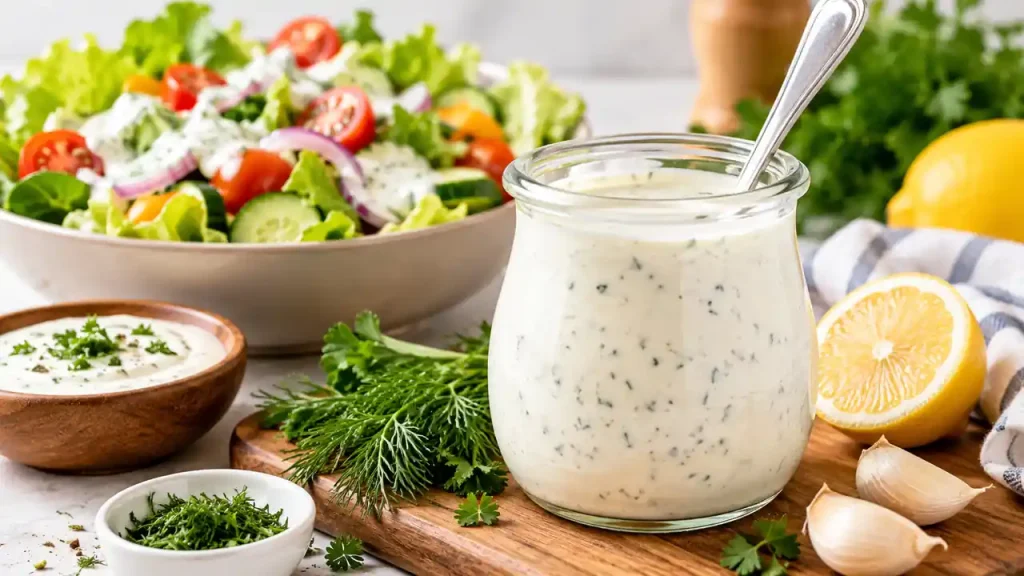
Ranch commonly combines oil, mayonnaise, or dairy ingredients with herbs and seasonings. Regular versions can be energy-dense, particularly when poured generously, but recipes vary.
What to check: Compare sodium, saturated fat, and the listed serving size. “Made with yogurt” describes an ingredient; it does not tell you the complete nutritional profile.
Simple alternative: Stir plain yogurt with dill, garlic powder, lemon juice, and black pepper. Add water gradually until it pours easily, then taste before adding salt.
If you prefer the original: Start with a measured amount, toss thoroughly, and add more if needed. A smaller portion of a flavor you enjoy may be more satisfying than a substitute you dislike.
2. Blue Cheese
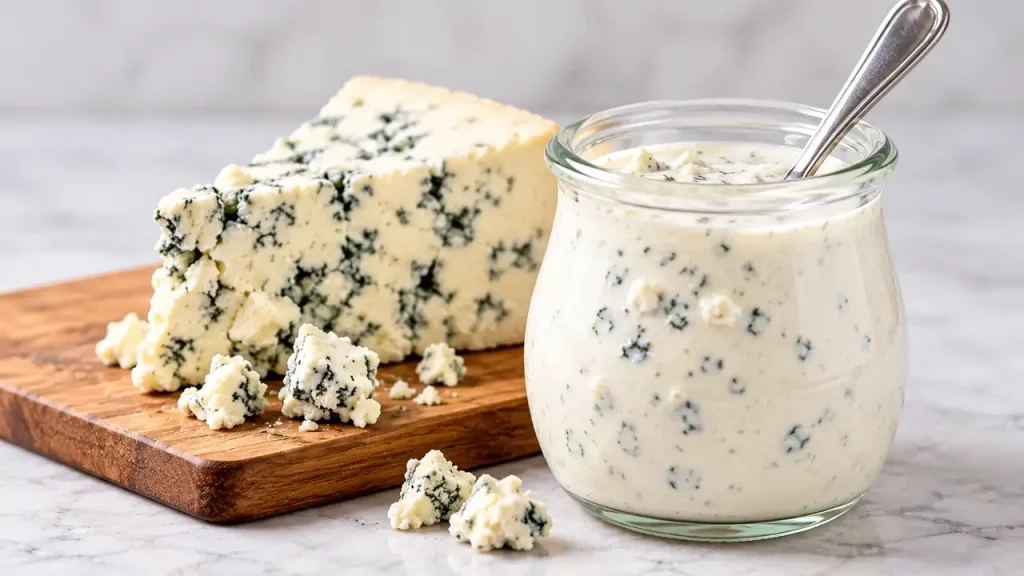
Blue cheese brings a strong, distinctive flavor, while the surrounding base may contain mayonnaise, cream, oil, or yogurt. Its nutritional profile is not automatically the same as ranch.
What to check: Look at sodium and saturated fat. A classic Cobb salad already includes blue cheese and bacon, so consider those toppings before adding a rich coating.
Simple alternative: Mash a little blue cheese into plain yogurt, then loosen with lemon juice or water. Add pepper and taste before adding more cheese.
Practical tip: Decide whether you want the cheese mainly in the coating or scattered over the vegetables. Either can work. The aim is intentional flavor, not removing every ingredient that makes the meal enjoyable.
3. Thousand Island
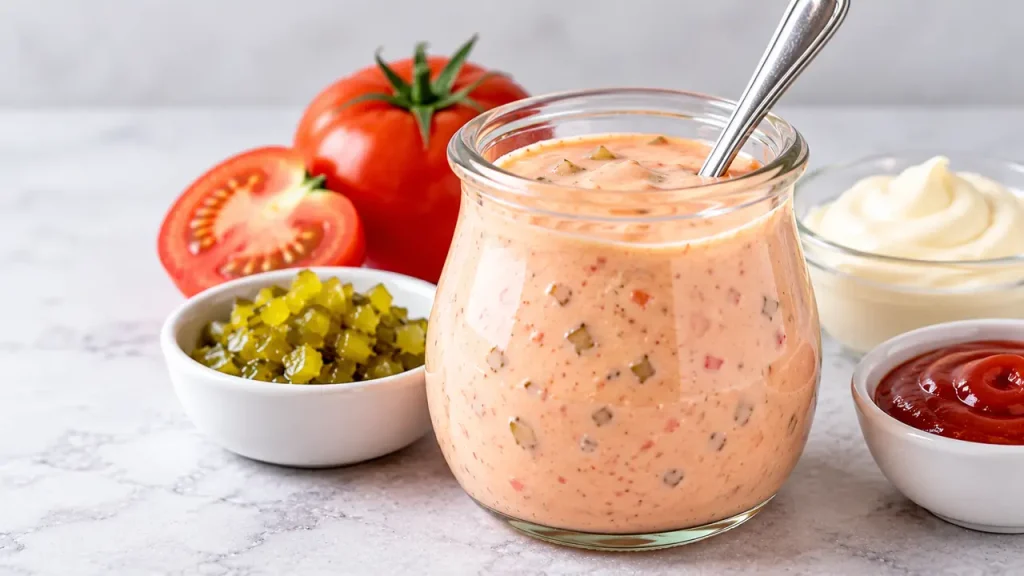
Thousand Island often combines a creamy base with tomato ingredients and relish. Depending on the recipe, sweetness and richness can both be prominent.
What to check: Compare added sugar, sodium, and saturated fat. A pale or pink color cannot tell you how much mayonnaise, oil, or sweet relish the recipe contains.
Simple alternative: Mix plain yogurt with a little mayonnaise, tomato puree, finely chopped cucumber, and vinegar. Adjust the proportions to taste rather than assuming a homemade mixture is automatically lower in everything.
Practical tip: If your bowl already includes sweetcorn, pickles, and cheese, taste the complete combination before adding extra seasoning. You may need less dressing than you expected because those ingredients contribute their own flavors.
4. French
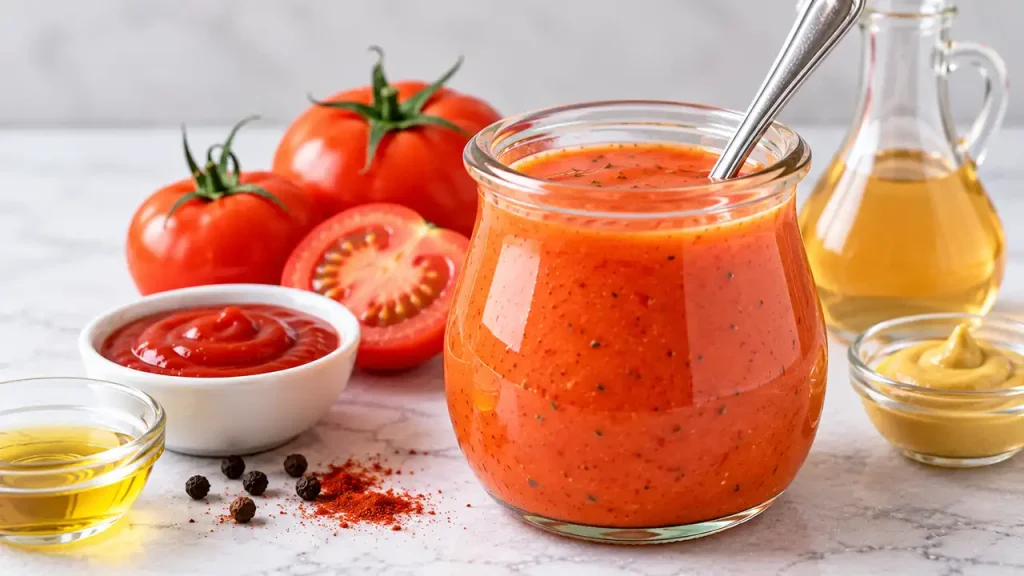
French-style bottled versions often taste sweet and tangy. Some contain substantial oil or added sugar; others use different proportions or lighter formulations.
What to check: Compare equal serving sizes. There is no reliable rule that every French version contains more calories than every ranch version, and its red color does not make it lighter.
Simple alternative: Whisk tomato puree, vinegar, paprika, a little mustard, and measured oil. Taste before deciding whether it needs sweetening.
Practical tip: If roasted tomatoes and garlic are already in your bowl, taste them with the leaves before adding a sweet dressing. Their concentrated flavor may work better with a simpler, tangier coating.
5. Italian
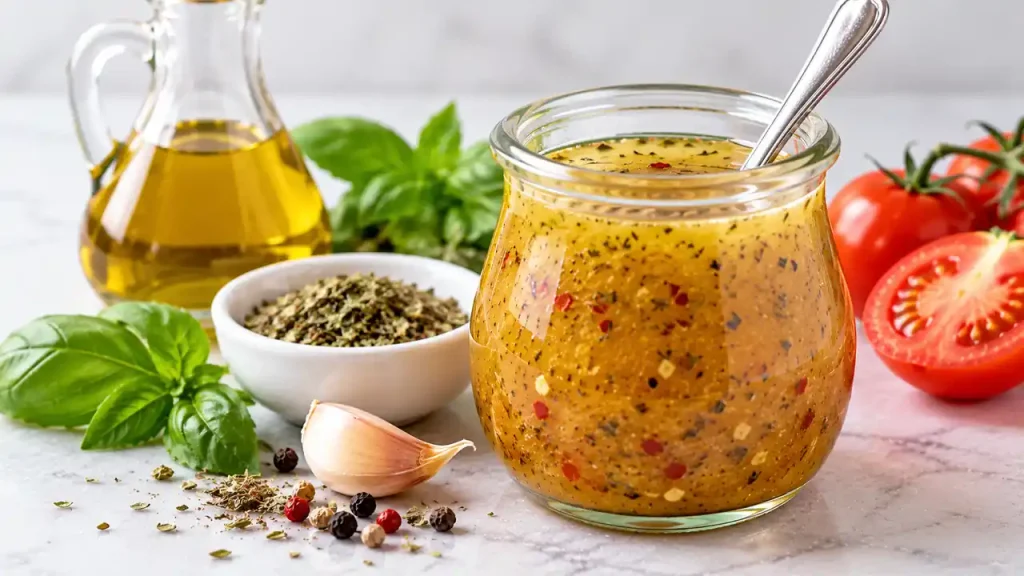
Many Italian-style options use oil, vinegar, herbs, and seasonings. This can fit a balanced eating pattern, so it does not belong on a blanket avoidance list.
What to check: Notice the sodium, any added sweeteners or cheese, and how much oil contributes to the portion. A homemade olive-oil version is not automatically lower in calories than a bottled one.
Simple alternative: Measure olive oil, then add vinegar, oregano, black pepper, and a little water to suit your taste. Shake or whisk before serving.
Practical tip: A biscuit panzanella-style salad pairs tomatoes and toasted biscuit pieces with an acidic coating. Add it gradually: bread-based salads absorb liquid differently from a bowl of leaves.
6. Caesar
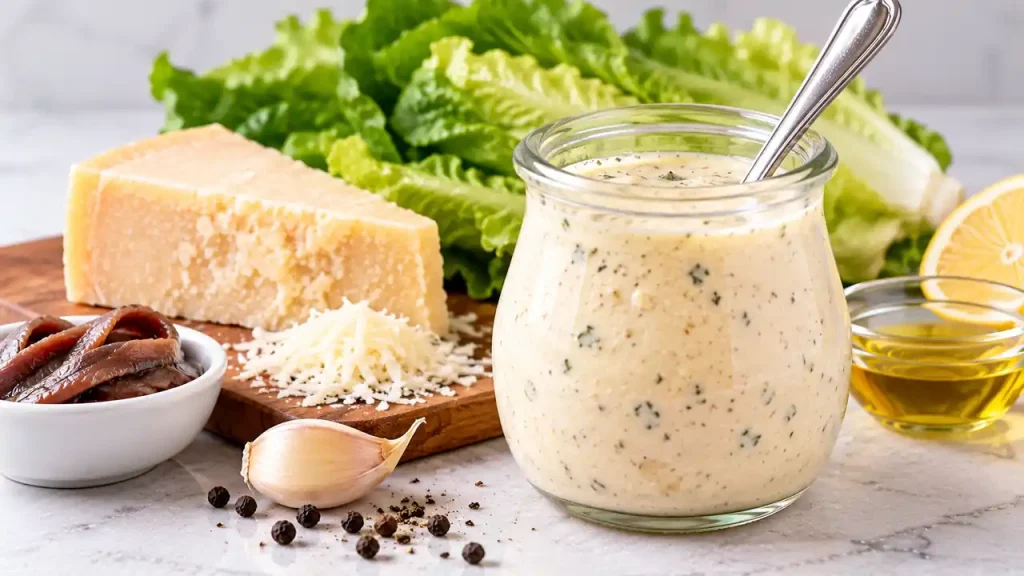
Caesar recipes may include oil, cheese, egg, anchovies, and salty seasonings. The complete dish often adds Parmesan and croutons, which deserve consideration alongside the coating.
What to check: Compare sodium and saturated fat. Also check allergens: depending on the product, milk, egg, fish, or other ingredients may be present.
Simple alternative: Make a Caesar-inspired mixture with plain yogurt, lemon juice, mustard, Parmesan, and black pepper. Expect a tangier result and adjust the lemon and mustard gradually.
Practical tip: Choose the flavors that matter most. If Parmesan is the main attraction, keep some and adjust another topping instead of stripping the bowl of everything you like. The dressing’s name alone cannot establish whether it meets your dietary requirements.
7. Honey Mustard
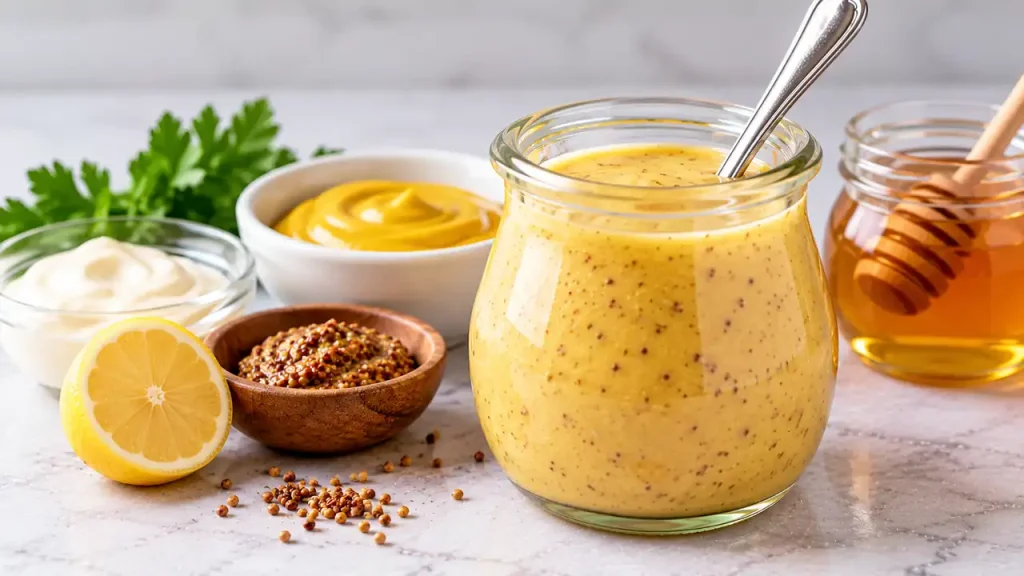
Honey mustard can range from tangy and mustard-forward to sweet and mayonnaise-rich. The balance depends on the formulation, not simply the two ingredients named on the bottle.
What to check: Read the added-sugar line and consider the base. Honey contributes added sugar, while oil or mayonnaise can make the mixture more energy-dense.
Simple alternative: Stir mustard into plain yogurt, add a small amount of honey, and finish with a splash of vinegar. Taste after each addition.
Practical tip: Regular honey mustard remains an option. Choose an amount that contributes the sweetness you want without overwhelming the vegetables. A product advertised as natural still needs the same label check as any other bottle.
How to Compare Salad DressingS Labels
The FDA’s Nutrition Facts guide explains that serving size reflects typical consumption, not a recommendation for how much you must eat. All listed calories and nutrients apply to that serving.
Compare equivalent quantities. On U.S. labels, 5% Daily Value or less is considered low and 20% or more high for a nutrient per serving. Use this to compare sodium, saturated fat, and added sugars, without treating one number as a complete judgment.
For example, these hypothetical figures show what happens when the portion doubles:
| Amount used | Calories | Sodium |
| One labeled serving | 120 | 240 mg |
| Two labeled servings | 240 | 480 mg |
These are illustration figures, not measurements for a particular brand. If two bottles list different serving sizes, convert them to the same amount before deciding which fits your needs.
Does Your Salad Need Some Fat?
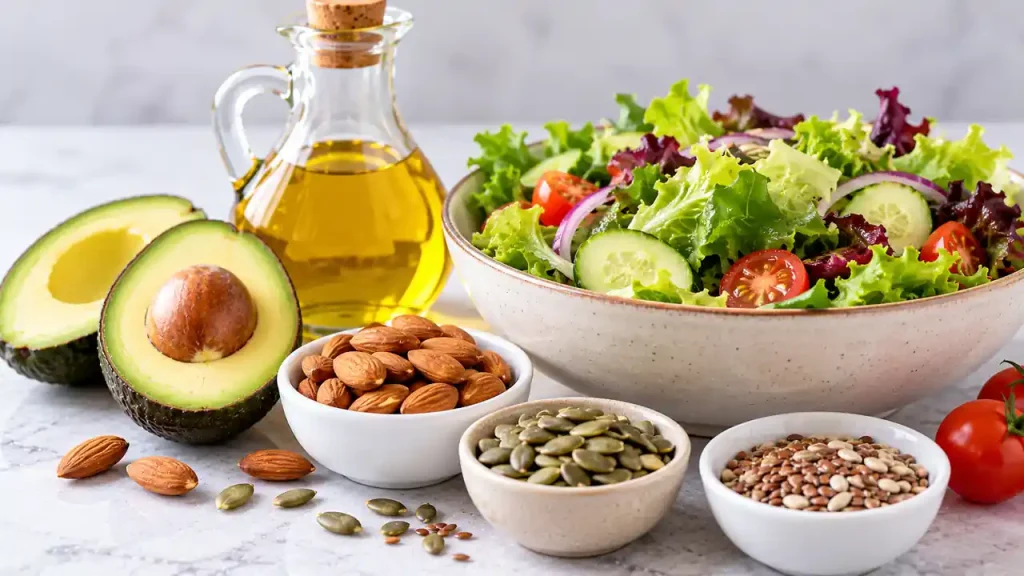
Fat is not something every salad must eliminate. A small study of oil and nutrient absorption found that adding soybean oil increased absorption of several carotenoids and fat-soluble vitamins from vegetables. The study involved 12 women and tested specific oil amounts. It does not establish an ideal portion for everyone or justify unlimited pouring.
Avocado, nuts, and seeds are heart-healthy foods that may already contribute fat to your bowl. A salad dressings should complement these ingredients; you do not need extra oil solely because the vegetables seem incomplete without it.
Build a Satisfying Bowl
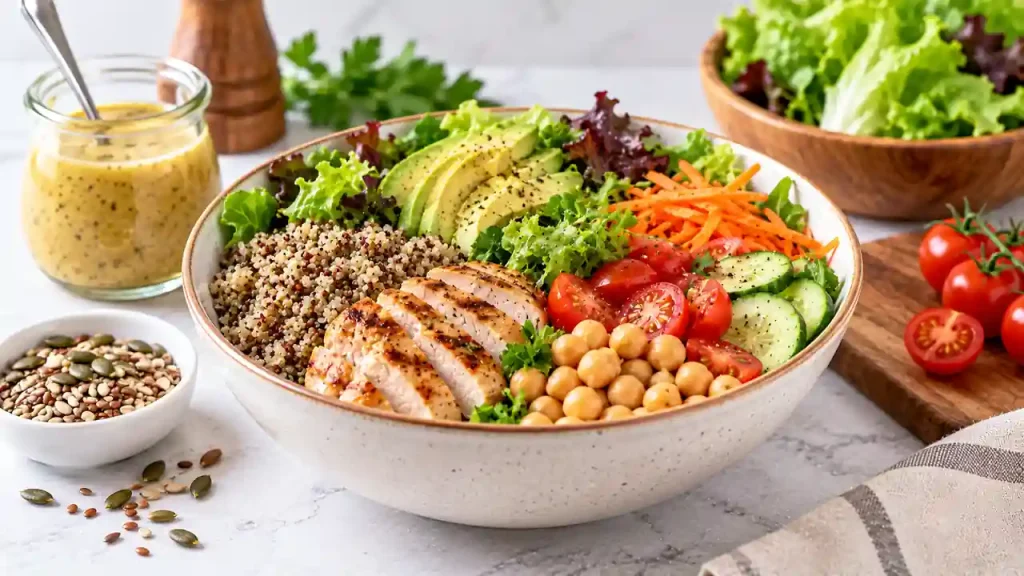
If salad is your main meal, consider adding beans, tofu, eggs, fish, or chicken. Vegetables, beans, and whole grains can also bring fiber-rich foods into the combination. If it accompanies a mushroom frittata, a simple leafy side with a tangy coating may be enough. Think about the complete plate rather than asking one bowl to supply everything. At a restaurant, asking for the sauce on the side gives you control over the amount. At home, measure occasionally to understand your usual pour rather than turning every meal into a calculation.
Frequently Asked Questions
1. Is Creamy Salad Dressings Always Unhealthy?
No. Texture alone does not establish nutritional quality. Yogurt-based or blended-bean versions may be creamy, while an oil-heavy vinaigrette can be energy-dense. Compare ingredients and portions.
2. Is Fat-Free Always Better?
No. Compare sodium, added sugar, taste, and the complete meal. Removing fat does not answer every nutritional question or guarantee that you will prefer the product.
3. When Should I Avoid a Product Completely?
Avoid one containing an ingredient you are allergic to or that conflicts with specific medical advice. A smaller portion does not make an allergen suitable. Check packaging each time, and ask restaurant staff about ingredients.
Final Thoughts
The best salad dressings for you is one that suits your taste, dietary needs, and overall meal. Compare labels, understand your usual portion, and adjust ingredients where useful. Ranch, Italian, Caesar, and other familiar options can all be considered thoughtfully. Your salad can remain nourishing and satisfying while including flavors you genuinely enjoy.



Leave a Reply