

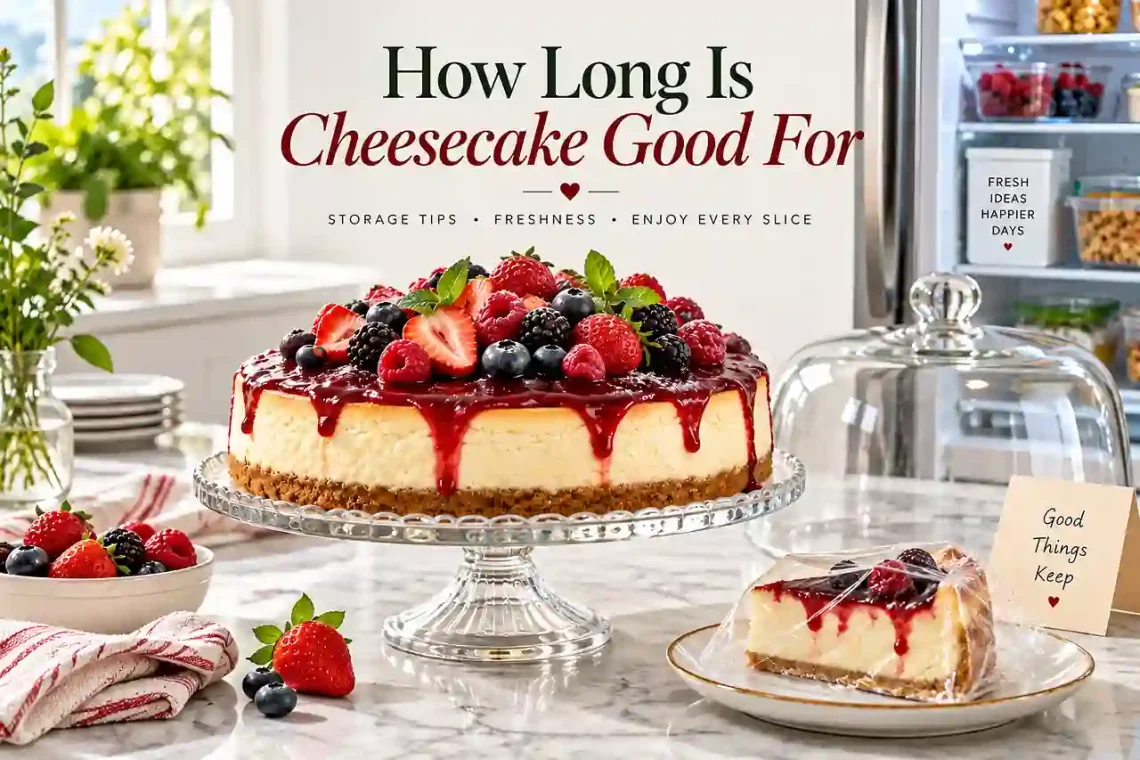
If you are a dessert lover, you know how irresistible this rich, velvety treat can be. Whether you baked a fresh batch at home or brought one home from a bakery, knowing how long is cheesecake good for is essential for enjoying every slice safely without risking foodborne illness. Because cheesecake is made with highly perishable dairy and egg products, it requires proper handling from the moment it leaves the oven or bakery box.
Quick Answer: How Long Is Cheesecake Good For?
In short, cheesecake has a recommended storage window of 3 to 5 days in the refrigerator and up to 1 to 2 months in the freezer for optimal texture and flavor. Because cheesecake is a high-moisture perishable custard, it should never remain at room temperature for more than 2 hours.
| Storage Location | Temperature Threshold | Recommended Storage Window | Quality Window |
| Countertop (Room Temp) | Ambient room temperature | Up to 2 hours maximum | Immediate |
| Warm Ambient Temp | Above 90°F (32°C) | Up to 1 hour maximum | Immediate |
| Refrigerator | 40°F (4°C) or below | 3 to 5 days | Best within the first 3 days |
| Freezer | 0°F (−18°C) or below | Best within 1 to 2 months | 1 to 2 months for best texture |
Note: For commercially sealed, store-bought cheesecakes, follow the manufacturer’s printed expiration date. Once opened, follow standard refrigeration guidelines.
How Long Is Cheesecake Good For?
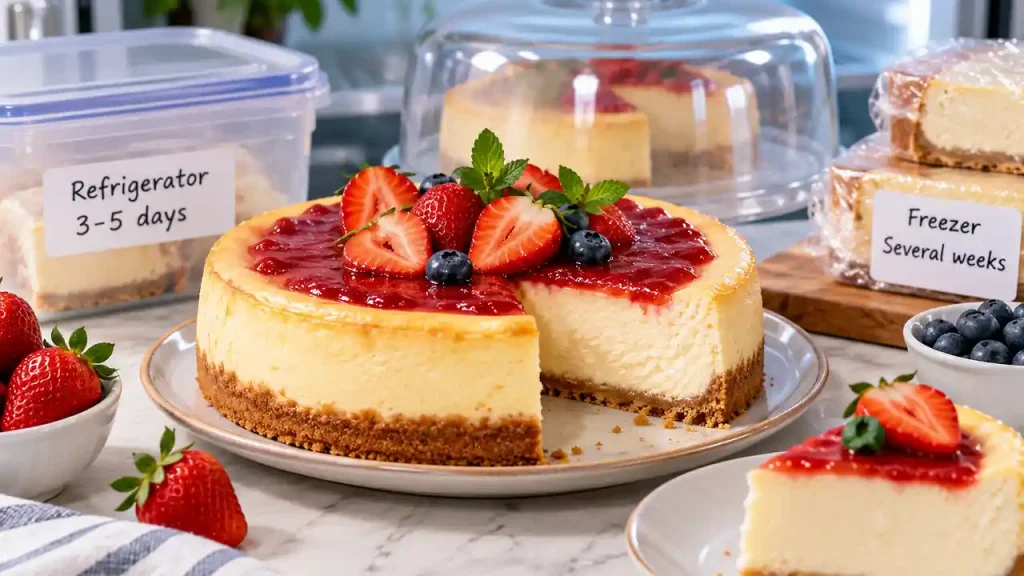
Cheesecake is generally good for 3 to 5 days when stored in a refrigerator maintained at or below 40°F (4°C). The shelf life depends on preparation methods, packaging, ingredient profile, and temperature consistency.
To keep cheesecake at peak freshness, wrap it securely in plastic wrap, store it in its original container, or place it under an airtight cake dome. Unopened commercial cheesecakes may have different storage lives because of their packaging, ingredients, and production methods. Follow the manufacturer’s storage instructions and date label whenever available. For longer storage, placing portions in the freezer preserves the structure and taste for several weeks.
Can Cheesecake Go Bad?
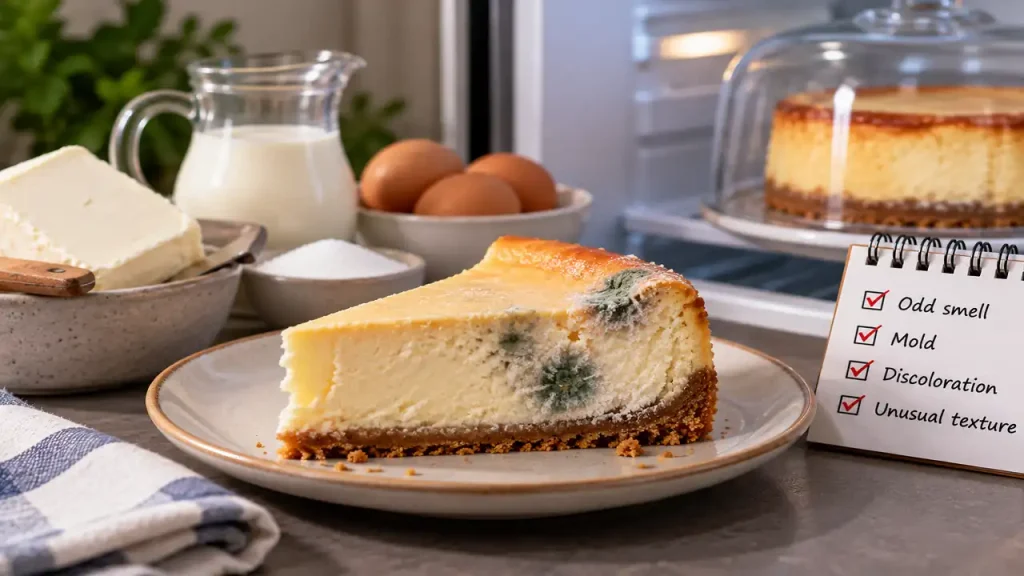
Yes, cheesecake spoils relatively quickly because its foundation consists of dairy products—predominantly cream cheese, heavy cream, and butter—along with eggs and sugar. Because cheesecake contains moist dairy and egg ingredients, improper storage can allow spoilage organisms and harmful bacteria to grow.
Spoilage signs can tell you when cheesecake is clearly no longer good to eat, but appearance and smell alone cannot confirm that it is safe. Harmful bacteria may grow without causing obvious changes in taste, smell, or appearance. Proper storage temperature and adherence to safe time windows are just as vital as checking for visible signs of decay.
How Can I Tell If Cheesecake Has Gone Bad?
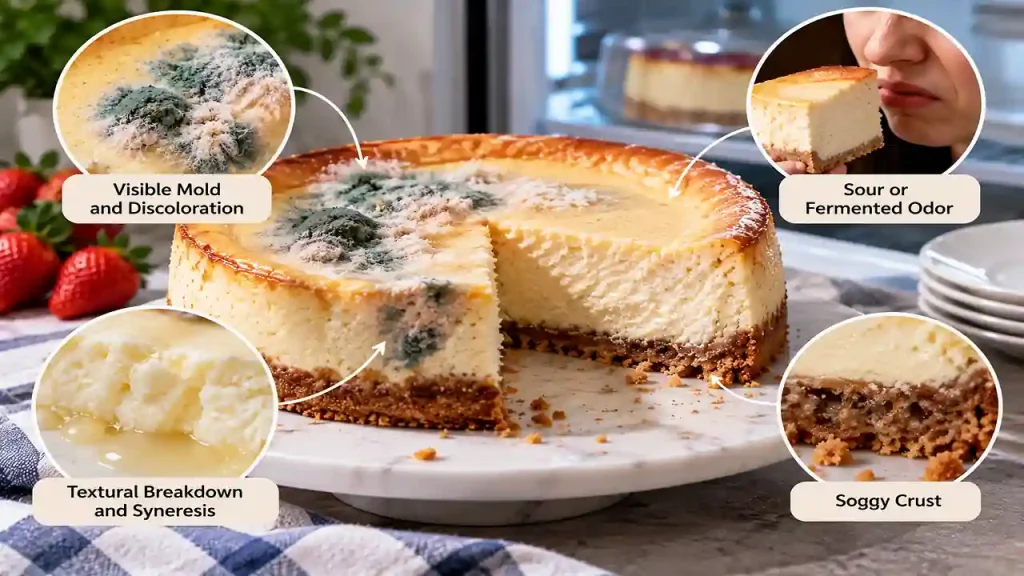
When assessing whether a cheesecake should be discarded, look for distinct physical changes across visual appearance, smell, and texture:
- Visible Mold and Discoloration: Any fuzzy white, green, or dark mold spots mean the entire cake must be thrown away immediately. A dulling color, greyish tint, or browning along the edges also signals deterioration.
- Sour or Fermented Odor: Fresh cheesecake carries a mild, sweet dairy scent. A pungent, tangy, sour, or yeast-like smell indicates active microbial spoilage.
- Textural Breakdown and Syneresis: If the creamy surface becomes slimy or begins separating into pools of liquid, its texture has started to break down.
- Soggy Crust: A crust that has absorbed separated moisture and turned into mush is a strong indicator of an aging, declining cake.
If cheesecake has been refrigerated longer than the recommended storage window, or has exceeded the safe room-temperature limits, the safest choice is to discard it rather than rely on appearance or smell alone.
Why Is It Important to Avoid Eating Spoiled Cheesecake?
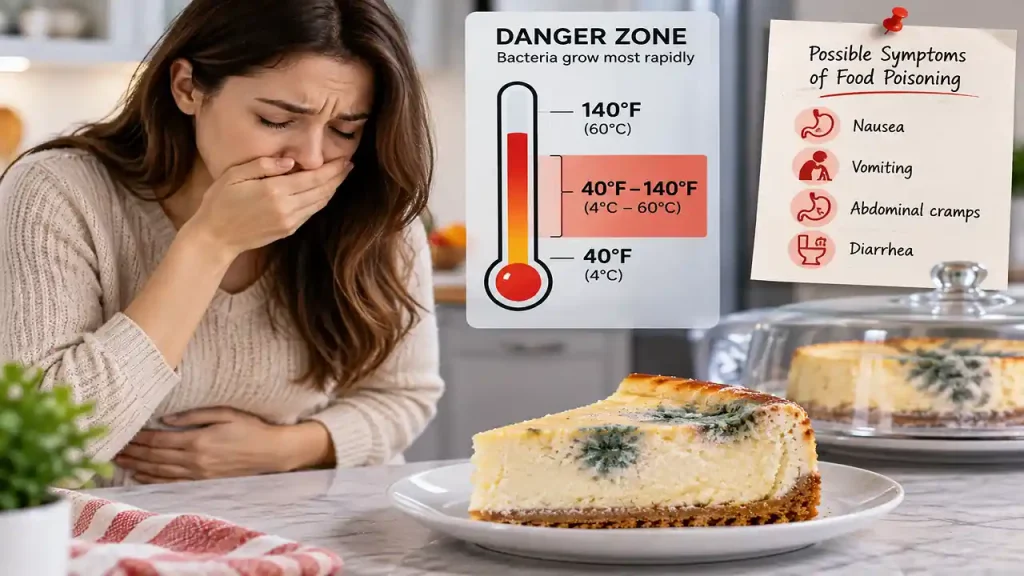
Avoiding spoiled or improperly stored cheesecake is essential to prevent foodborne illness. Consuming dairy products contaminated with pathogens can cause unpleasant and severe digestive symptoms, including nausea, vomiting, abdominal cramps, and diarrhea.
Keeping perishable foods out of the “Danger Zone” helps limit rapid bacterial growth—the temperature range between 40°F and 140°F (4°C to 60°C) where bacteria multiply most rapidly. When in doubt about whether a cheesecake has been safely handled, discarding it is the safest choice.
How Long Does Cheesecake Last?
The exact lifespan of your dessert depends almost entirely on the storage temperature and environment you provide.
1. At Room Temperature
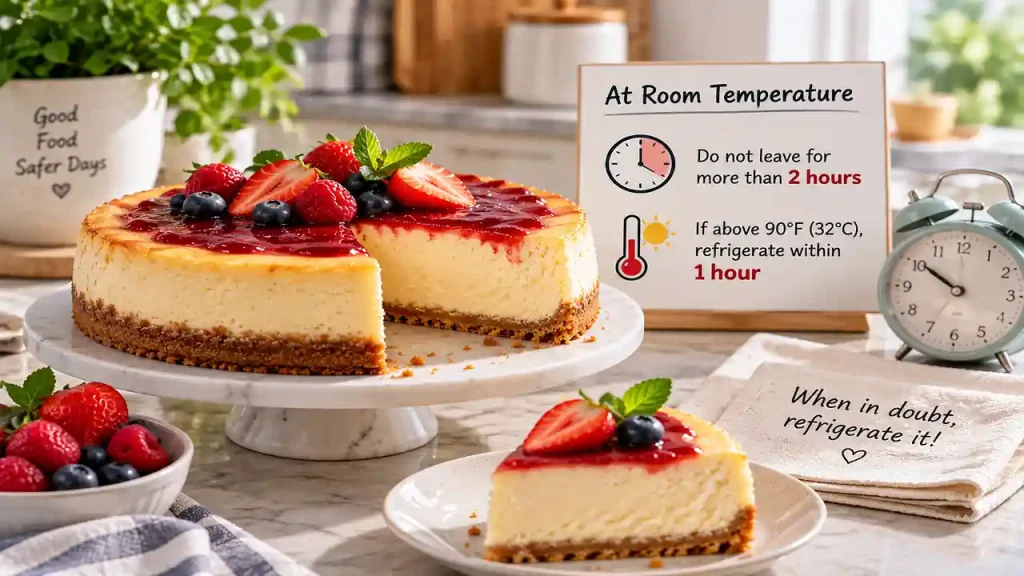
Cheesecake is a perishable food and should not sit at room temperature for more than 2 hours. If ambient temperatures exceed 90°F (32°C), refrigerate it within 1 hour. Beyond these limits, harmful bacteria can multiply even when the cheesecake still looks and smells normal, according to FDA safe food handling guidance.
2. In the Refrigerator
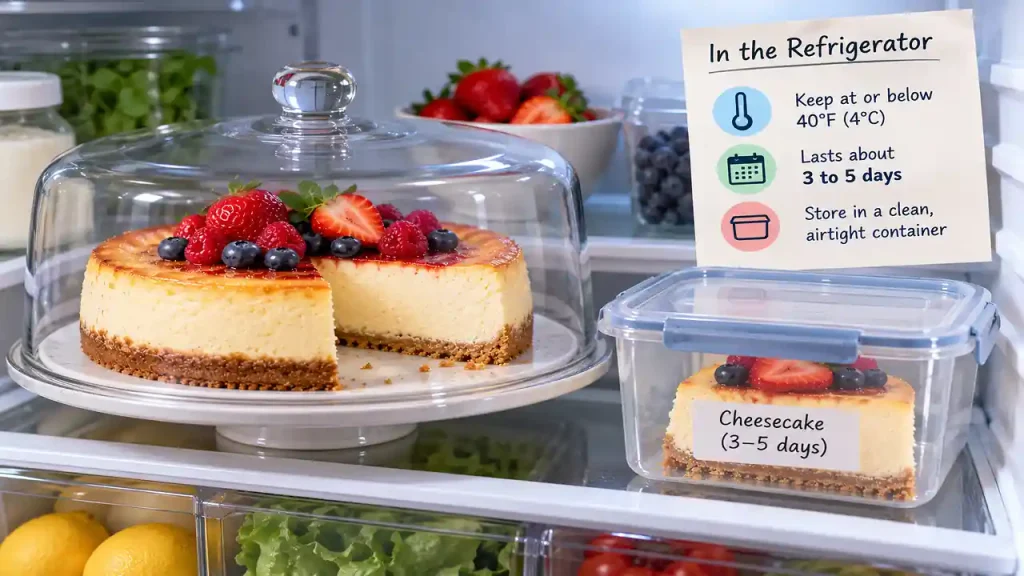
Stored in a clean, airtight container inside a refrigerator held at 40°F (4°C) or colder, homemade cheesecake generally lasts about 3 to 5 days. Keep it tightly covered in its original container or wrapped securely in plastic wrap to prevent it from absorbing refrigerator odors and drying out.
3. In the Freezer
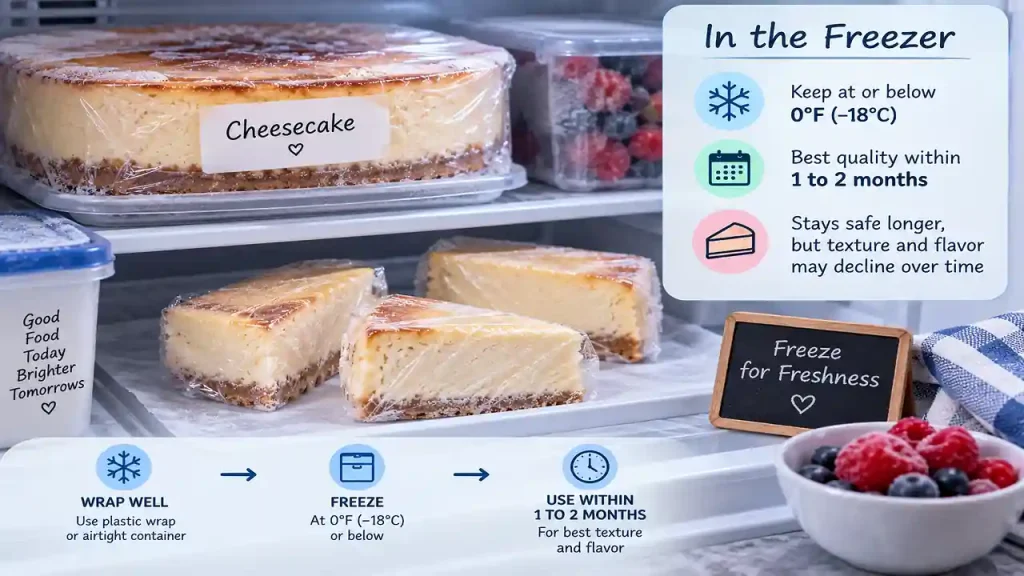
When evaluating how long is cheesecake good for over extended periods, freezing extends storage substantially. According to FoodSafety.gov, foods kept continuously frozen at 0°F (−18°C) or below can remain safe indefinitely, although quality declines over time. For cheesecake, using frozen portions within about 1 to 2 months generally helps preserve their creamy texture and flavor. After this window, moisture evaporation and ice crystallization gradually degrade the custard’s velvety texture.
Types of Cheesecakes and Their Shelf Life
Shelf life depends more on ingredients, preparation, moisture level, and packaging than on broad style categories alone:
1. Homemade Baked Cheesecake
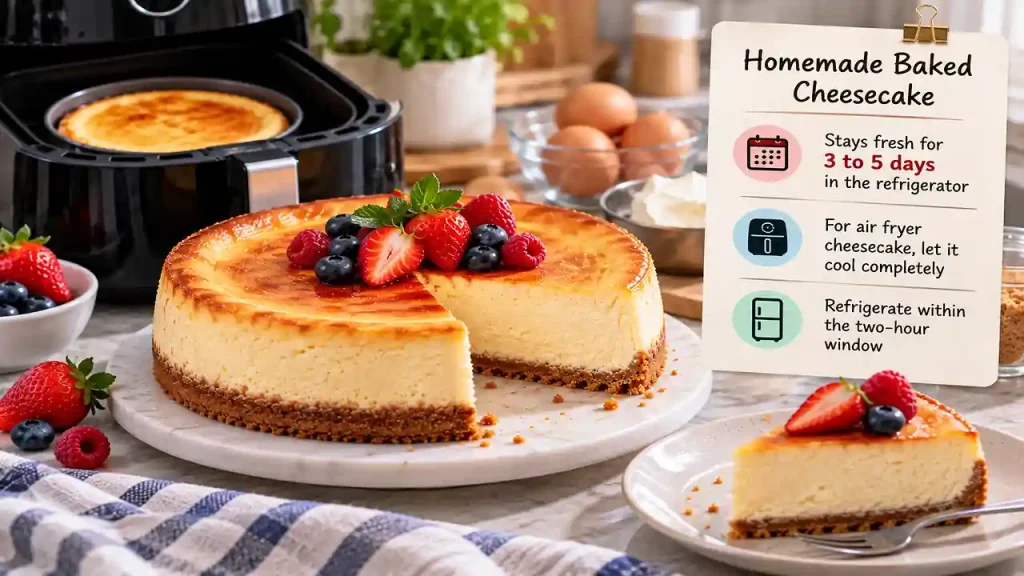
Traditional baked recipes incorporate eggs and cream cheese that coagulate into a firm structure. In a domestic refrigerator, they stay fresh and safe for 3 to 5 days. If you prepare an air fryer cheesecake, allow it to cool completely before transferring it straight to the refrigerator within the two-hour window.
2. Homemade No-Bake Cheesecake
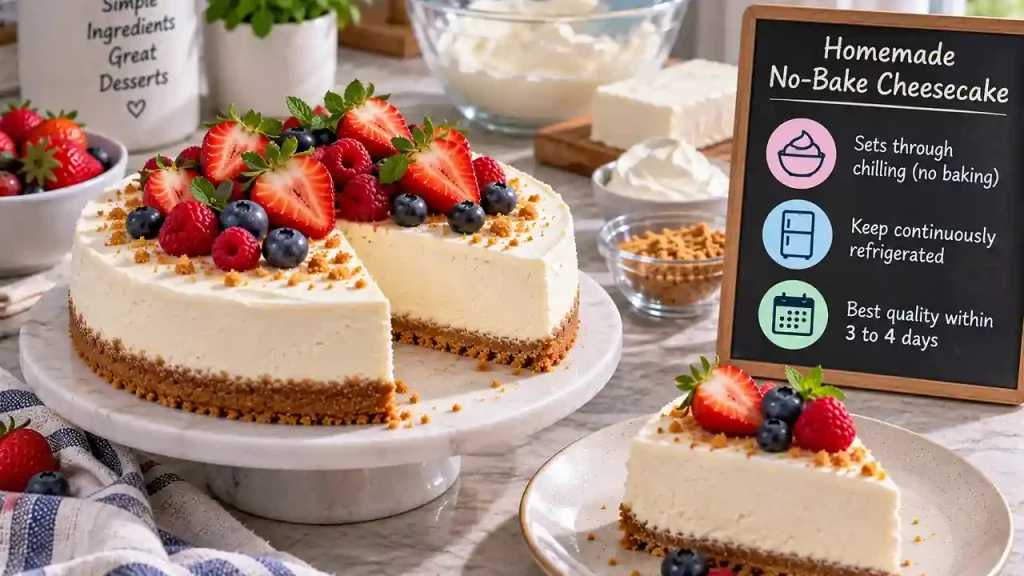
Prepared by chilling cream cheese, gelatin, or heavy cream mixtures rather than baking. No-bake cheesecake sets through chilling rather than baking and often contains cream cheese, whipped cream, gelatin, or similar ingredients. Because recipes vary, follow any recipe-specific storage guidance and keep the cheesecake continuously refrigerated. For best quality, aim to enjoy homemade no-bake cheesecake within about 3 to 4 days.
3. Store-Bought Commercial Cheesecake
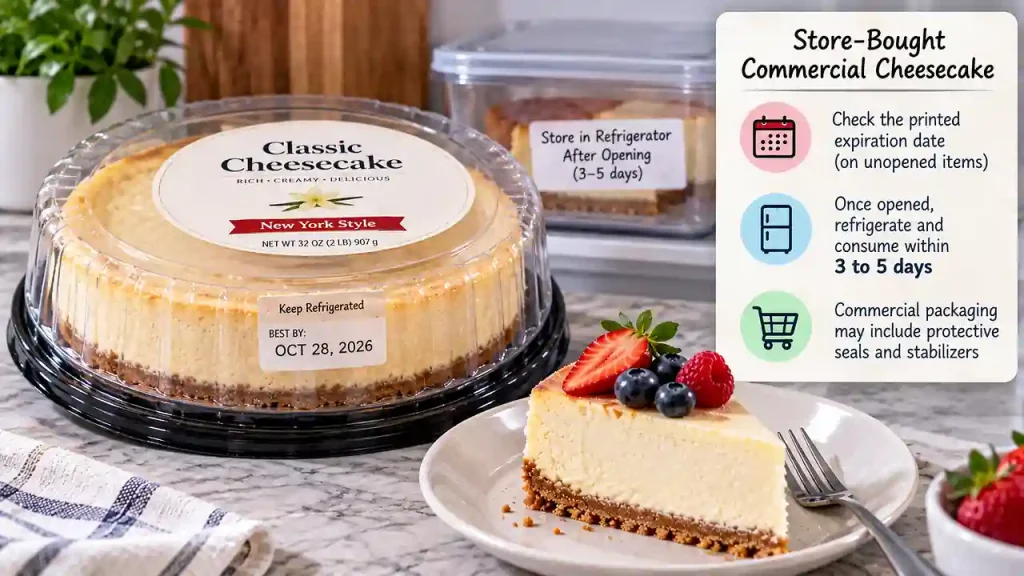
Commercial bakeries often package cakes with protective seals and food-grade stabilizers. Refer to the printed expiration date on unopened items or consult the USDA FoodKeeper resource for specific commercial packaging. Once sliced or opened, store in the refrigerator and consume within 3 to 5 days.
4. Specialty and Holiday Cheesecakes
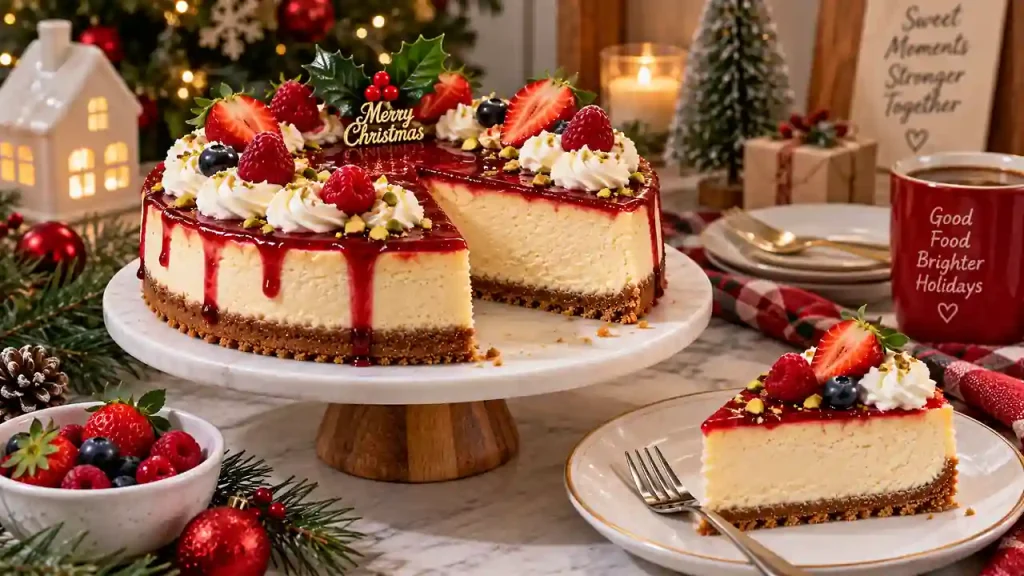
Rich festive variations, like a decorated Christmas cheesecake, should follow the same 3 to 5 day refrigeration window, provided fresh garnishes are handled cleanly.
How to Properly Store Cheesecake
To maximize freshness and prevent texture loss:
- Chill Promptly: As soon as a warm homemade cheesecake reaches room temperature on the counter (within 1 to 2 hours of baking), move it into the refrigerator.
- Prevent Odor Transfer: Dairy fats readily absorb ambient kitchen smells. Cover your cheesecake with an airtight glass cake keeper, or invert a large bowl over the serving plate.
- Wrap Tightly After Slicing: Once cut, place plastic wrap directly against the exposed cut surfaces to prevent the edges from drying out and turning rubbery.
Tips for Freezing Cheesecakes
Cheesecakes freeze exceptionally well when stored unadorned:
- Flash-Freeze Slices First: Place unwrapped individual slices on a parchment-lined baking sheet in the freezer for about 1 hour until the outer custard is firm to the touch. This makes wrapping clean and easy without smearing the dessert.
- Double Layer Protection: Wrap each slice (or the whole cake) tightly in two layers of plastic wrap, followed by an exterior layer of heavy-duty aluminum foil to seal out oxygen and eliminate freezer burn.
- Freeze Bare: Always freeze cakes without fruit compotes or whipped toppings. Delicate toppings break down, lose water, and turn watery during the thawing process.
How to Defrost Frozen Cheesecake Safely
Avoid leaving frozen dairy desserts on the kitchen counter to thaw. Countertop thawing pushes the outer surface into the food-safety danger zone while the interior remains icy, creating water condensation that destroys the crust.
- Slow Refrigerator Thawing (Recommended): Transfer the wrapped cake from the freezer into the refrigerator for 8 to 12 hours (or overnight). Slow, cold thawing prevents thermal shock, protects the delicate crust, and keeps the dairy filling safely below 40°F (4°C).
- Thawing Individual Slices: Place individually wrapped slices in the refrigerator for 1 to 2 hours before serving.
- Garnish Fresh: Once thawed, garnish your dessert with fresh whipped cream or a glossy strawberry glaze topping right before serving.
Final Thoughts
Understanding how long is cheesecake good for ensures you get the most out of every homemade or bakery dessert while keeping your household safe. Keep it chilled at or below 40°F (4°C), limit room-temperature serving time to 2 hours, and turn to the freezer when you want to preserve leftover slices for future cravings.



Leave a Reply