

What is loose powder used for? Primarily, it helps set foundation and concealer, absorb excess surface oil, and adjust the finish of makeup. Some formulas also temporarily soften the appearance of texture. It does not shrink pores, stop oil production, or guarantee that makeup will remain unchanged all day.
The best results usually come from a small amount placed where you need it. Your skin, foundation, chosen formula, weather, and application all influence the outcome. This guide explains the differences between powder types and a simple routine you can adapt.
What Is Loose Setting Powder?
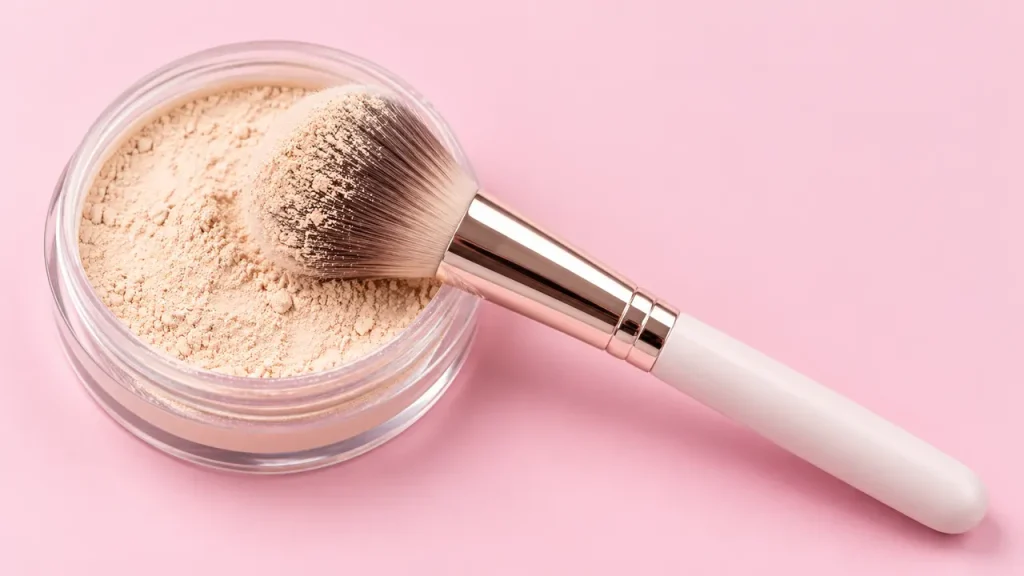
Loose powder consists of unpressed particles, usually packaged in a jar with a sifter. “Loose” describes its physical format, not its shade, coverage, or suitability for a particular skin type. A setting formula helps stabilize makeup and reduce unwanted tackiness or shine. Finishing powder emphasizes the final visual effect, such as softness or luminosity. Products may combine these functions, so read the description rather than assuming the names identify completely separate categories.
Powder foundation is another product type, generally intended to provide complexion coverage. Understanding powder versus liquid foundation helps separate choosing a base from choosing a setting product.
What Is Loose Powder Used For in a Makeup Routine?
You can use it selectively rather than covering every part of your face.
- Setting base makeup: A light application can reduce the wet or sticky feel of some foundations and concealers.
- Managing visible shine: Absorbent ingredients help reduce surface oiliness, especially around the forehead, nose, or chin.
- Adjusting the finish: Depending on the formula, the result may look matte, softly radiant, or somewhere in between.
- Softening visible texture: Some powders create a temporary blurring effect, although excess product can emphasize lines or dryness.
- Supporting touch-ups: Small additions can refresh areas where shine has returned.
These are cosmetic effects. Powder does not treat acne, permanently change pores, or replace skin care. Movement, friction, perspiration, and the products underneath can still affect wear.
Loose Powder vs. Pressed Powder
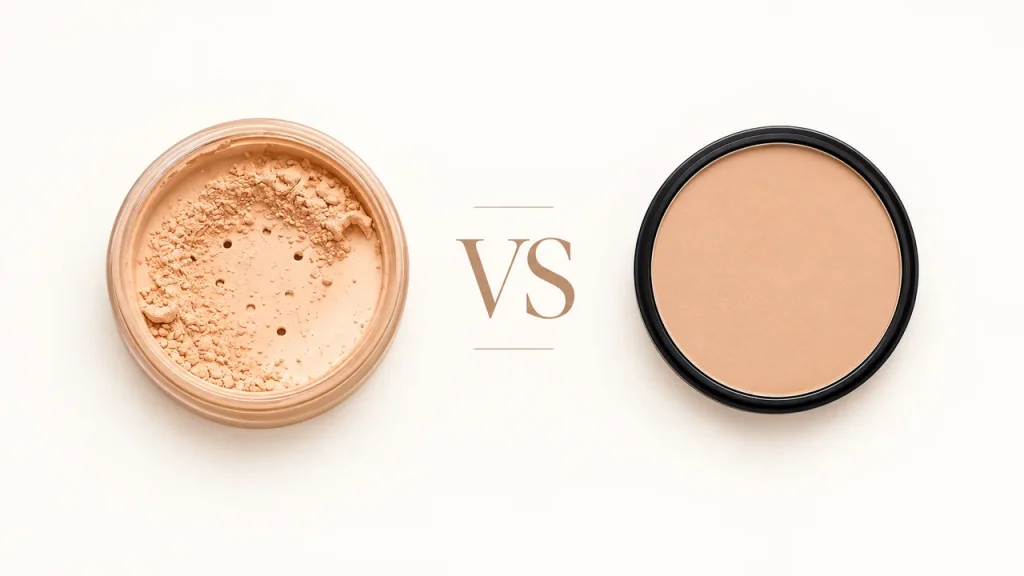
Both formats can be translucent or tinted. Neither format automatically determines whether a product is moisturizing, drying, sheer, or full coverage.
| Feature | Loose powder | Pressed powder |
| Packaging | Unpressed particles in a jar. | Powder compressed into a pan. |
| Handling | Can be messier; dispense carefully. | Usually easier to carry. |
| Application | Brush or puff, depending on the formula. | Brush, puff, or sponge, as directed. |
| Color | Translucent or tinted options | Translucent or tinted options. |
| Coverage | Depends on the product. | Depends on the product. |
| Skin suitability | Depends on the formula and application. | Depends on the formula and application. |
| Common convenience | Controlled application at home. | Portable touch-ups. |
Pressed products use ingredients that help hold the powder together, but it is inaccurate to describe every compact as compressed oil. Choose by the finish and behavior on your skin.
Before buying, decide whether your main goal is setting a creamy base, reducing shine, or changing the final finish. If possible, try a small amount over your usual makeup and check it later in the day. A powder that looks smooth immediately may behave differently once combined with your skin care and foundation.
What Is Loose Powder Used For on Different Skin Types?
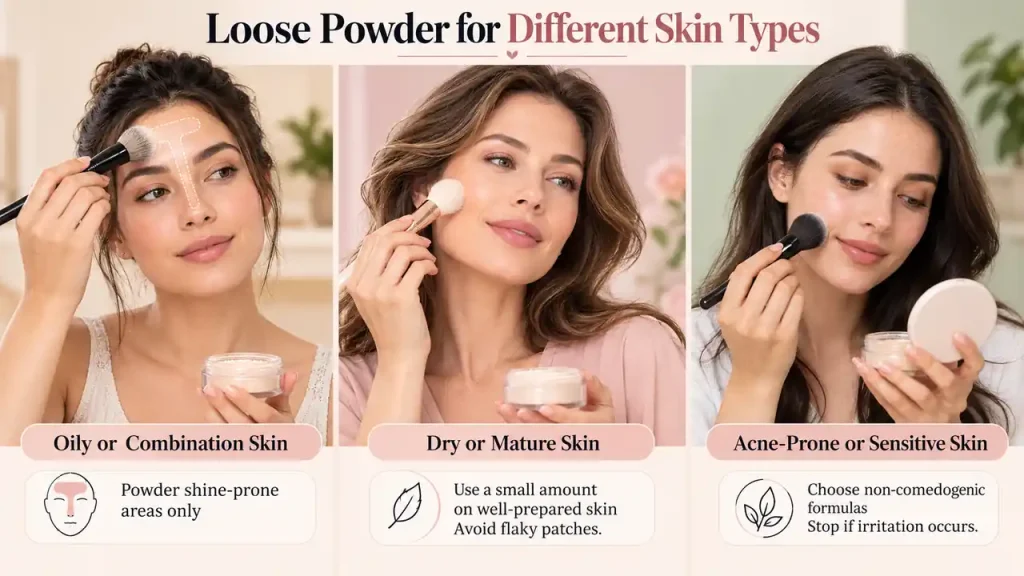
Placement often matters as much as the format. You can also skip powder on areas where you prefer the existing finish.
Oily or Combination Skin
Start on areas that become shiny rather than applying a thick layer everywhere. On combination skin, your nose may need powder while your cheeks do not. Blot surface oil before adding more later. Repeated layers over oil and existing makeup can create a heavy appearance.
Dry or Mature Skin
Loose powder is not automatically unsuitable. Use a small amount over comfortable, well-prepared skin and avoid emphasizing flaky patches. For example, Laura Mercier describes its Ultra-Blur loose formula as suitable even for dry skin. This illustrates formula variation; it is a manufacturer’s claim, not a guarantee that the product will suit everyone.
Acne-Prone or Sensitive Skin
Do not assume that loose texture makes a product acne-safe. The American Academy of Dermatology recommends choosing makeup labeled non-comedogenic or unlikely to clog pores. Individual reactions remain possible. Stop using a product that irritates your skin, and seek appropriate advice for persistent symptoms rather than covering them with additional makeup.
How to Apply It Without a Heavy Finish
Follow your product’s instructions and start lightly. You can add more after assessing the result.
1. Prepare the Base
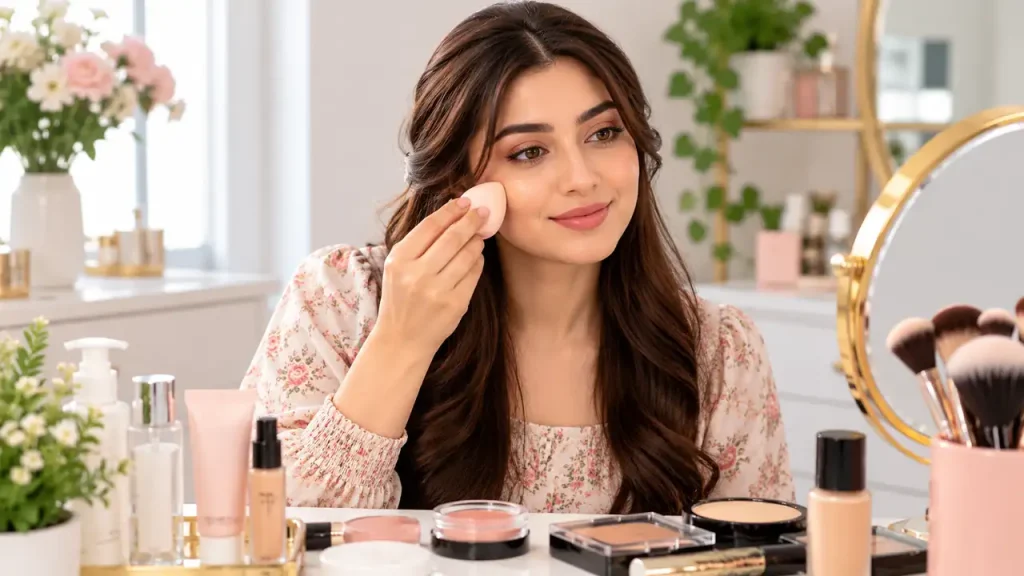
Apply your usual skin care and let the surface settle before makeup. If products remain noticeably wet or slippery, adding powder immediately can produce uneven patches. Apply foundation and concealer in manageable layers. Apply cream blush or contour before powder as a straightforward starting order, then blend thoroughly. Product-specific layering instructions may differ. When using cream foundation, blend it first and decide which areas actually need setting.
2. Dispense a Small Amount
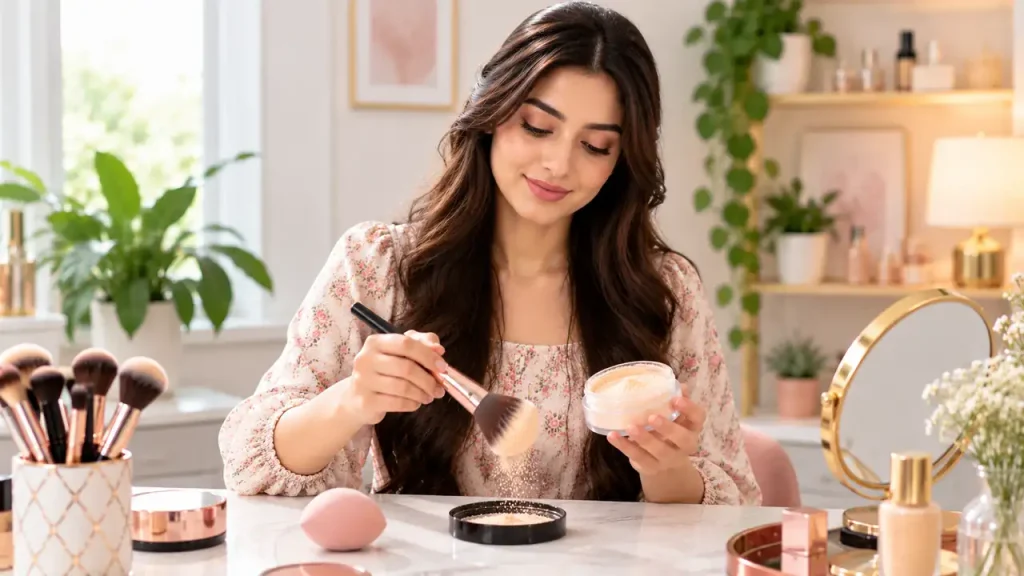
Tap a little powder into a clean lid or suitable palette. Keep the jar upright and avoid shaking out a cloud of product. Use a clean applicator. A soft brush often gives a lighter application; a puff can place powder more precisely. The amount picked up matters more than choosing one tool as universally best.
3. Remove Excess From the Applicator
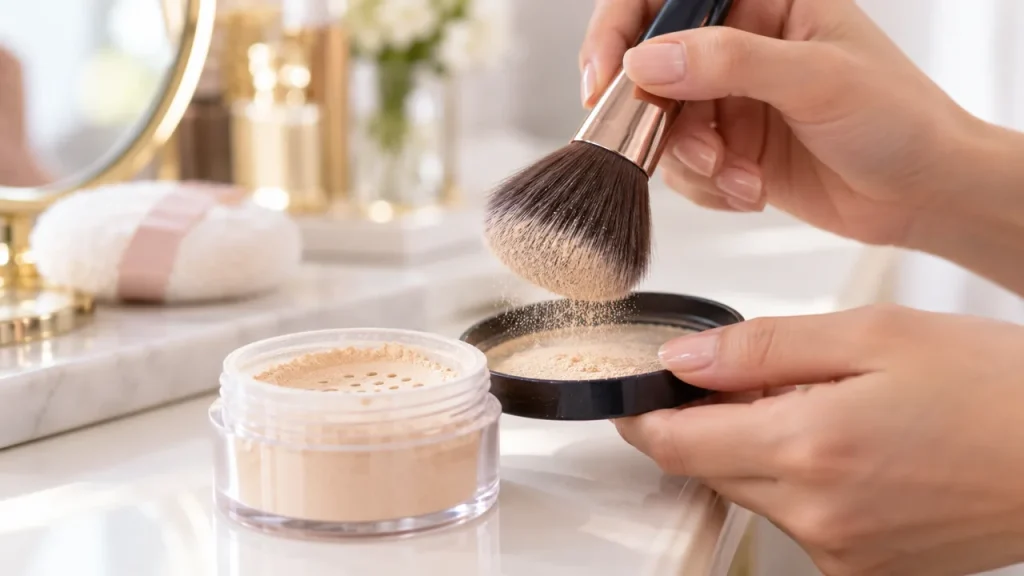
Tap excess from a brush before approaching your face. With a puff, distribute the powder across its surface instead of pressing one concentrated patch onto your skin. Begin with less than you think you need. A visibly overloaded tool makes it harder to control the first layer.
4. Press Lightly Where Needed
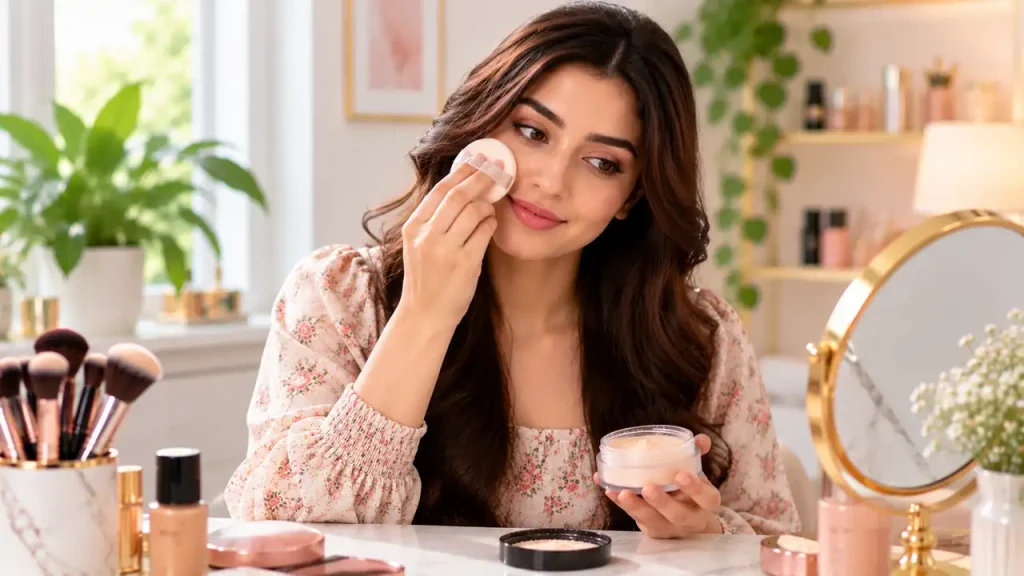
Use gentle pressing or tapping motions on areas you want to set. Avoid vigorous rubbing that may disturb foundation underneath. Around the nose and forehead, work in small sections. Under the eyes, keep concealer application light and smooth any existing crease before setting. Powder will not erase products that have already been collected in a line.
5. Assess Before Adding More
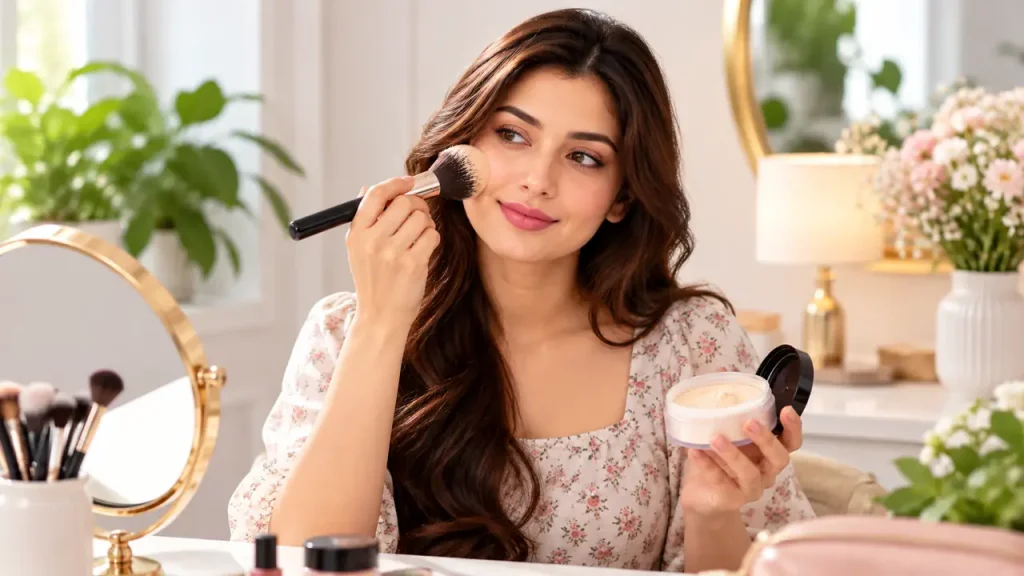
Look at the whole face in ordinary light. If the finish already feels comfortable, stop. There is no requirement to leave a layer sitting for two minutes. If excess is visible, use a clean soft brush to remove it gently. For a professional makeup look, restrained placement can preserve dimension instead of making every area equally matte.
6. Finish According to the Look
Setting spray is optional, and formulas have different functions. Follow its directions if using one; it cannot reliably rescue every heavy or uneven powder application. For longer-lasting foundation, assess preparation, base quantity, application, and touch-up habits together. No single powder step guarantees a fixed number of wear hours.
What Is Loose Powder Used For During Touch-Ups?
Use it to address a specific change, such as shine around the nose. First, blot gently with clean blotting paper or tissue, taking care not to rub away makeup. Inspect the area before adding the product. If the base has separated or collected in a crease, smooth or remove the affected buildup rather than covering it repeatedly. Apply a very small amount only where needed. A pressed compact may be easier to carry, but convenience does not make one format universally better.
Common Problems and Practical Fixes
Make one adjustment at a time so you can identify what improves the result.
| Problem | What to change |
| Makeup looks cakey. | Use less powder and thinner base layers. |
| Dry patches stand out. | Skip those areas and reassess skin preparation. |
| Concealer creases. | Smooth the concealer first; reduce excess underneath. |
| Skin looks pale or grey. | Check shade, undertone, quantity, and lighting. |
| Product lifts foundation. | Press gently and avoid dragging the applicator. |
| Shine returns. | Blot before adding another thin layer. |
“Translucent” does not guarantee invisibility on every complexion. Test shade and finish in daylight, and take a flash photograph before an important photographed event. Results depend on the complete makeup combination and lighting.
Keep Brushes and Puffs Clean
Clean tools help avoid transferring old product, oil, and debris back onto your face. Keep a routine for cleaning makeup brushes rather than waiting until residue becomes visible. The AAD’s brush-cleaning guidance recommends washing brushes every seven to ten days. Follow the manufacturer’s instructions for puffs and sponges, allow tools to dry properly, and avoid sharing applicators.
Frequently Asked Questions
1. What Is Loose Powder Used For Without Foundation?
It can reduce visible shine or adjust the appearance of bare skin. Use lightly and choose an appropriate shade. It will not necessarily provide coverage of the foundation.
2. Do You Have to Bake Your Makeup?
No. Baking involves leaving a more generous powder layer in selected areas before removing excess. It is optional and may emphasize dryness or texture. A thin setting layer is a simpler starting point.
3. Can You Use It Under the Eyes?
Yes, if the formula suits that area and you like the result. Use very little, keep particles out of your eyes, and skip it if it makes the area uncomfortable or visibly dry.
Final Thoughts
What is loose powder used for? It helps set makeup, reduce visible shine, and refine the finish when applied appropriately. Choose a formula and shade that suits your skin, start with a small amount, and add only where needed. Comfortable preparation, clean tools, and realistic touch-ups matter more than a thick layer or an all-day promise.



Leave a Reply