


Face masks can boost your skincare routine with extra hydration, oil control, exfoliation, or soothing care, depending on their ingredients. But how often should you use a face mask? No single schedule works for everyone.
Understanding how often to use a face mask depends on the specific formula, your skin type, its active ingredients, and the other products in your daily regimen. A hydrating sheet mask, for instance, does not require the same schedule as an exfoliating acid treatment or a clay mask. Using the right formula at an appropriate frequency matters because overusing certain active products can cause dryness, redness, or irritation.
How Often Should You Use a Face Mask? Quick Answer

For many face masks, once or twice a week is a sensible baseline, but there is no one-size-fits-all rule. Determining how often to use a face mask depends primarily on product ingredients, your skin tolerance, and the manufacturer’s directions. According to the American Academy of Dermatology’s guidance on facial masks, it is essential to follow product instructions closely and rinse off any mask immediately if you experience stinging, burning, or redness. Hydrating and soothing masks generally tolerate more regular use, whereas exfoliating formulas and clay masks require a conservative approach. Always prioritize the instructions on the product label over generic schedules.
Finding the Balance: Mask Frequency by Skin Type
Personalizing your routine prevents barrier compromise while targeting specific concerns. When considering how often should you use a face mask, use these practical skin-type guidelines as a starting point:
1. A Practical Starting Point: Once or Twice a Week

Starting once or twice weekly allows you to gauge how your skin reacts to concentrated ingredients. Formulations vary widely, meaning that frequency should align with how your skin feels and behaves rather than a rigid calendar quota.
2. The Ideal Routine for Dry Skin

For dry or dehydrated skin, look for masks enriched with humectants and barrier-supporting ingredients such as hyaluronic acid, glycerin, ceramides, or colloidal oatmeal. Hydrating sheet masks and collagen face masks may also fit into a moisture-focused skincare routine, depending on their formulation. If your skin is dry or sensitive, consider fragrance-free formulas and avoid ingredients that you already know irritate your skin. Hydrating cream masks or serum-infused sheet masks can often be applied several times a week if tolerated, provided you follow the manufacturer’s application window.
3. For Oily or Blemish-Prone Skin
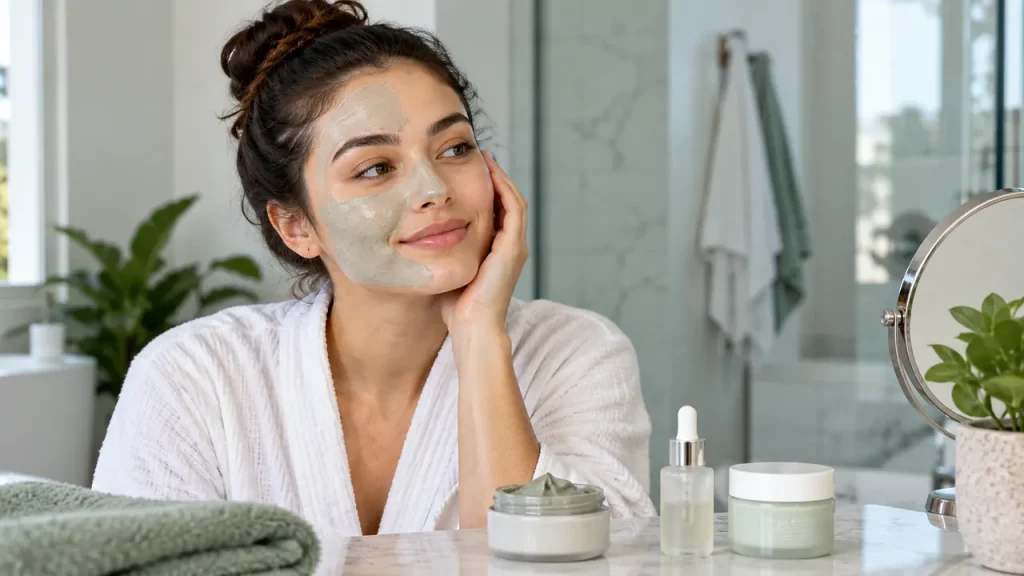
Oily skin does not require aggressive stripping or constant scrubbing. Instead, look for formulas containing targeted ingredients such as kaolin or bentonite clay, niacinamide, or gentle beta-hydroxy acids (salicylic acid) to manage surface sebum and clarify pores. Using clarifying or clay-based treatments conservatively can help reduce the risk of excessive dryness and irritation. Even oily skin still needs appropriate hydration, so choosing a suitable moisturizer for oily skin can help support the rest of your routine.
4. Is Three Times Per Week Too Much?

Using a mask three times a week can work well with gentle hydrating formulas or soothing sheet masks, provided the product directions allow it and your skin remains comfortable. However, using exfoliating treatments, strong active acids, or deep-cleansing clays that frequently may increase dryness or irritation.
5. What About Sensitive or Acne-Prone Skin?
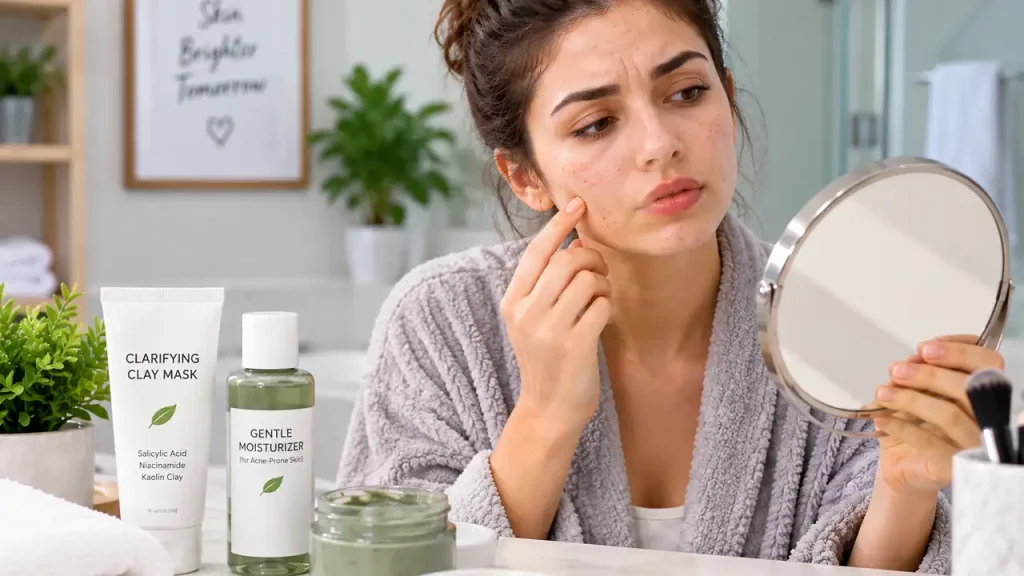
Sensitive skin requires a cautious approach. Choose fragrance-free formulas, introduce new masks gradually, follow the product directions, and reduce use if you notice stinging, burning, redness, or dryness. For acne-prone skin, clarifying masks containing salicylic acid or sulfur can complement your regimen, but they should never be viewed as a substitute for prescribed dermatological acne treatments. Because acne can appear in different forms, understanding the different types of acne can also help you avoid treating every breakout with the same skincare products.
How Often Should You Use Different Types of Face Masks?

Because each formula targets distinct skin concerns, how often you apply a mask depends primarily on its formulation and active ingredients:
- Hydrating and Sheet Masks: Packed with humectants like hyaluronic acid and glycerin to boost surface moisture. Gentle sheet masks and other hydrating masks generally focus on delivering moisture and supporting skin comfort.
- Clay and Charcoal Masks: Formulated with mineral clays (such as kaolin or bentonite) that bind to excess sebum and clear surface congestion.
- Exfoliating Masks: Contain chemical exfoliants (like glycolic, lactic, or salicylic acid) or fruit enzymes to dissolve dead skin cells and smooth uneven texture.
- Cream and Soothing Masks: Enriched with barrier-repairing lipids, ceramides, or colloidal oatmeal designed to calm redness and relieve dry tightness.
- Overnight Sleeping Masks: Leave-on formulas designed to provide prolonged hydration while you sleep.
- Peel-Off Masks: Gel-based formulas that dry into a film to physically lift away loose surface debris for temporary smoothing.
If you are unsure how often to use a face mask, use this quick summary as a practical baseline alongside the product label:
| Mask Category | General Frequency Approach | Application Guideline |
| Hydrating / Sheet | May tolerate more frequent use; follow label | Remove at the recommended time |
| Clay / Oil-Absorbing | Use conservatively and reduce if drying | Follow label; stop if irritation develops |
| Exfoliating (AHA/BHA) | Usually requires less frequent use | Avoid unnecessarily combining with other exfoliating actives |
| Cream / Soothing | Follow label and adjust to skin response | Choose ingredients suited to your skin concern |
| Overnight Mask | Follow the specific product directions | Check whether it duplicates other active ingredients |
| Peel-Off | Use cautiously; discontinue if irritating | Remove gently and follow product instructions |
Always prioritize the manufacturer’s packaging directions over generic frequency charts.
Can You Use a Face Mask With Retinol, AHAs, or BHAs?
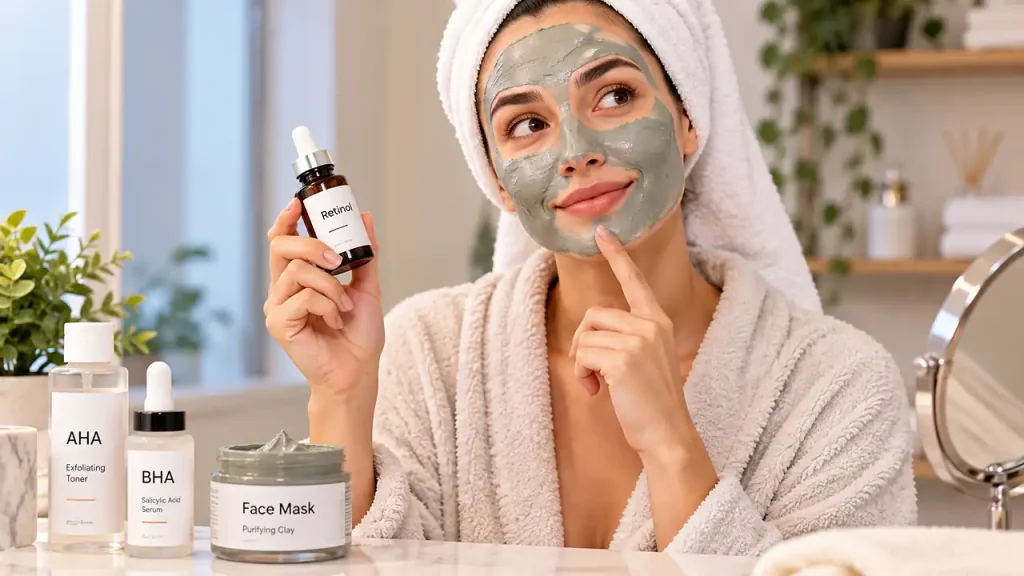
Check the active ingredients in your mask against the rest of your skincare routine. Using an exfoliating mask alongside retinol, AHAs, BHAs, or other potentially irritating products may increase dryness, redness, or sensitivity.
If your mask already contains exfoliating acids, avoid automatically layering another exfoliant in the same routine. Follow dermatologists’ recommendations on how to safely exfoliate at home by choosing the right method for your skin type, and always reduce frequency if your skin becomes irritated or sensitive.
What to Do If a Face Mask Irritates Your Skin

If these symptoms develop after masking, stop using the suspected product and simplify your routine while the irritation settles. Wash off any offending product immediately with lukewarm water if acute stinging occurs.
Stick to a gentle cleanser, fragrance-free moisturizer, and daily broad-spectrum sunscreen. If symptoms are severe, blistering, or persistent, consult a board-certified dermatologist.
Test New Products First
Before using a new mask across your entire face, test it on a small area first. The American Academy of Dermatology recommends applying a skincare product to a test spot twice daily for seven to 10 days to check for a reaction. When testing a wash-off product, follow its normal application time before rinsing it away.
Signs You May Be Using Face Masks Too Often
Even beneficial ingredients become counterproductive when applied excessively. Even beneficial ingredients can become irritating when used excessively. Watch for these signs that your masking routine may be irritating your skin:
- Persistent redness or flushing that lingers long after removing the mask
- Unusual stinging or burning when applying previously comfortable moisturizers
- Sudden dryness, flaking, or persistent tightness
- Increased sensitivity or sudden flare-ups of breakouts
If you notice any of these signs, stop using the suspected mask and give irritated skin time to recover. Strip your routine down to a gentle cleanser, a gentle, fragrance-free moisturizer, and daily broad-spectrum sunscreen until your barrier recovers.
How to Apply Different Types of Face Masks
Knowing how often should you use a face mask must be paired with safe application techniques to protect your skin barrier.
1. Prep Your Skin: Start With Gentle Cleansing

Wash your face with a mild, non-stripping cleanser to lift away makeup, excess sebum, and daily pollutants. Do not routinely exfoliate right before applying a treatment mask. Using a mechanical scrub or exfoliating acid immediately before another active mask may increase irritation or sensitivity.
2. Follow Directions for Each Mask Category

- Sheet Masks: Sheet masks, including popular Korean sheet masks, are typically saturated with a serum or essence. Smooth the sheet over your face, leave it on for the time recommended on the product label, and remove it as directed.
- Clay and Clarifying Masks: Apply a thin, even layer to clean skin and leave it on for the time recommended on the product label. Rinse as directed, and discontinue use if it causes excessive dryness or irritation.
- Exfoliating Scrub Masks: If using a wash-off mechanical scrub, massage it over wet skin with light, gentle pressure for about 30 seconds. Never scrub aggressively or leave abrasive physical granules sitting on the face.
- Peel-Off Masks: These masks offer cosmetic surface smoothing. Apply an even layer away from eyebrows and hairlines, allow it to set, and peel off gently. Note that peel-off products do not replace medical dermatological treatments for acne.
3. Post-Mask Aftercare: Support the Skin Barrier
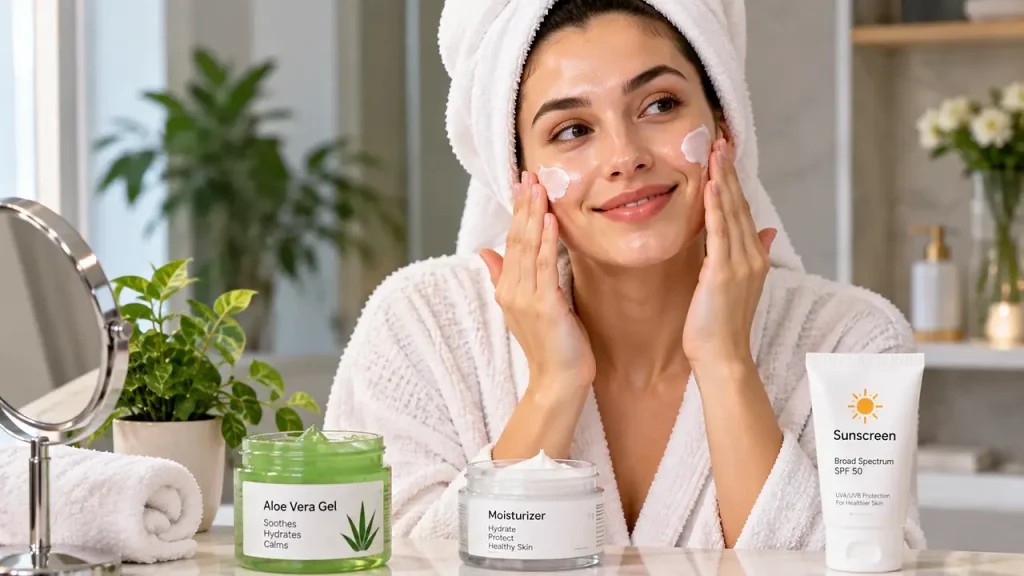
Once you remove or rinse away your mask according to instructions, proceed directly to your regular supportive regimen. There is no need for balancing toners; simply apply a moisturizer suitable for your skin type while your skin is slightly damp to seal in hydration. Some people also use aloe vera in a skincare routine for its soothing properties, but it isn’t a required post-mask step. If masking during the morning, finish with broad-spectrum sunscreen.
Final Thoughts
Knowing how often to use a face mask depends on the formula, your skin’s tolerance, and the manufacturer’s directions. Rather than following a rigid schedule, consider whether your mask is hydrating, exfoliating, clarifying, or soothing.
So, how often should you use a face mask? Start conservatively, follow the product label, and adjust according to how your skin responds. Avoid unnecessarily combining potentially irritating active ingredients, and stop using any mask that causes persistent burning, redness, or irritation.



Leave a Reply