

Is pasta vegan? Often, yes: wide, plain, dried varieties use wheat semolina and water. However, dried egg pasta exists, fresh pasta recipes vary, and fillings or sauces can introduce animal ingredients. The useful approach is to consider the whole dish: dough, filling, sauce, toppings, and preparation. You can enjoy plenty of pasta on a vegan diet once you know which details matter.
Start with the packet in your hand or the dish you want to order. A familiar shape, green packaging, or a vegetable-based sauce cannot tell you everything about the recipe.
Is Pasta Vegan When It Is Dried or Fresh?
The format offers clues, but the ingredients decide. Use this comparison to narrow your search before buying or ordering.
| Type of pasta | Vegan suitability | What to confirm |
| Plain dried wheat pasta | Often vegan | The complete ingredient list |
| Dried egg pasta | Not vegan when an egg is included | An egg-free alternative |
| Fresh pasta | The recipe varies | Whether the dough contains eggs or dairy |
| Ravioli or tortellini | The recipe varies | Both the dough and filling |
| Whole-wheat or legume pasta | Can be vegan | Added ingredients and seasonings |
| Gluten-free pasta | The recipe varies | Eggs, dairy, and the full formulation |
| Colored or flavored pasta | The recipe varies | Flavorings, cheese, or squid ink |
Dried Pasta: Simple Ingredients, With Exceptions
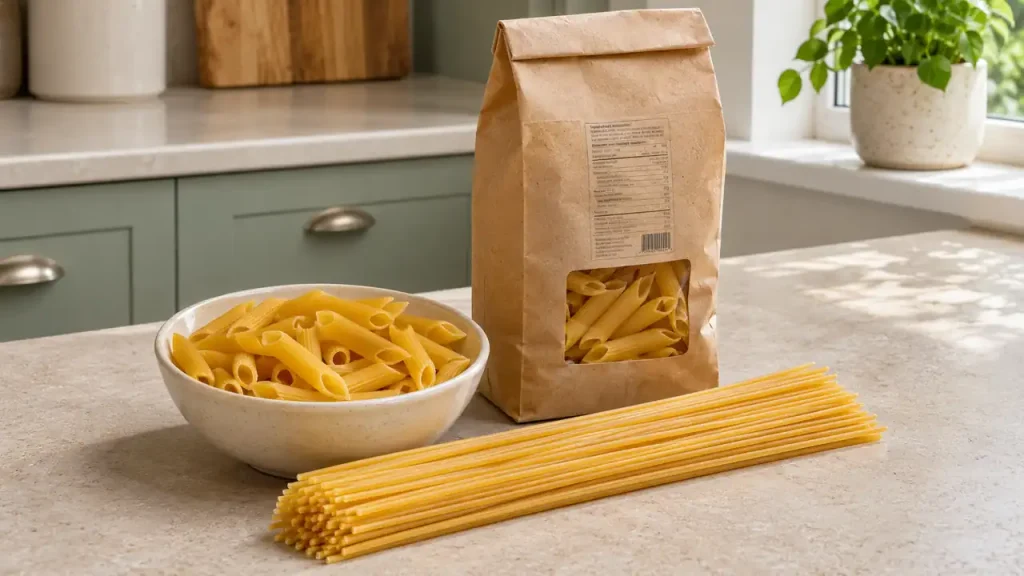
Spaghetti, penne, and fusilli made with semolina and water are common starting points. Semolina is milled wheat, so its name does not indicate an animal ingredient.
Still, drying does not make a recipe vegan. On the Australian Barilla egg pappardelle ingredient list, eggs appear alongside durum wheat semolina. This is an example of why the label matters more than a blanket rule about dried pasta. Products can differ between countries and change over time. Use the current packaging for the exact product you are buying.
Fresh and Filled Pasta: Consider Two Recipes
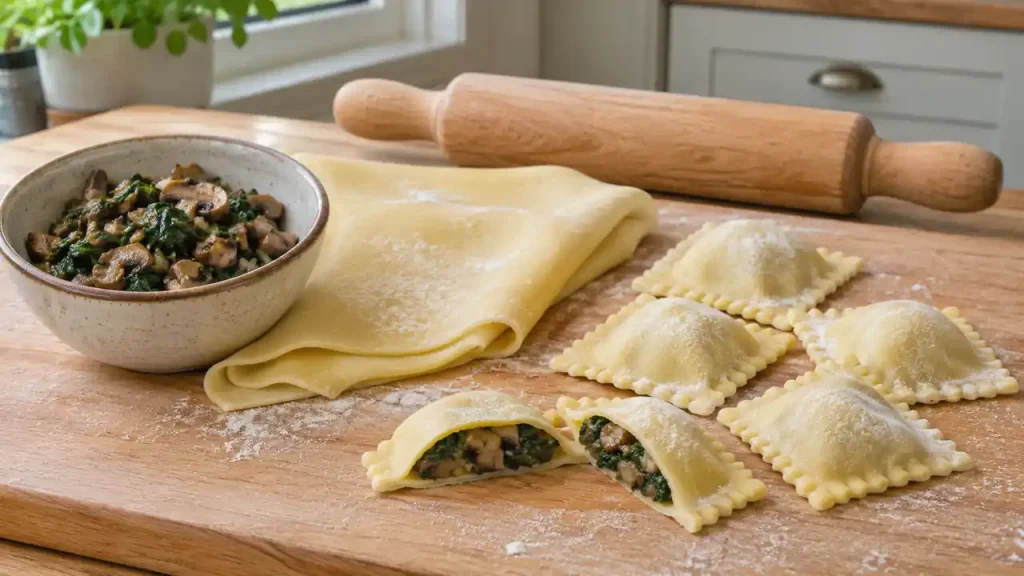
Fresh pasta can use eggs, but egg-free versions also exist. For homemade dough, follow a recipe developed with flour and water rather than simply deleting eggs from an egg-based recipe.
Filled pasta adds another question. A spinach filling might include ricotta, while a mushroom filling could contain butter or cheese. Vegan dough does not automatically make the filling suitable, and a vegetable filling does not prove that the dough is egg-free.
Which Ingredients Make Pasta Non-Vegan?
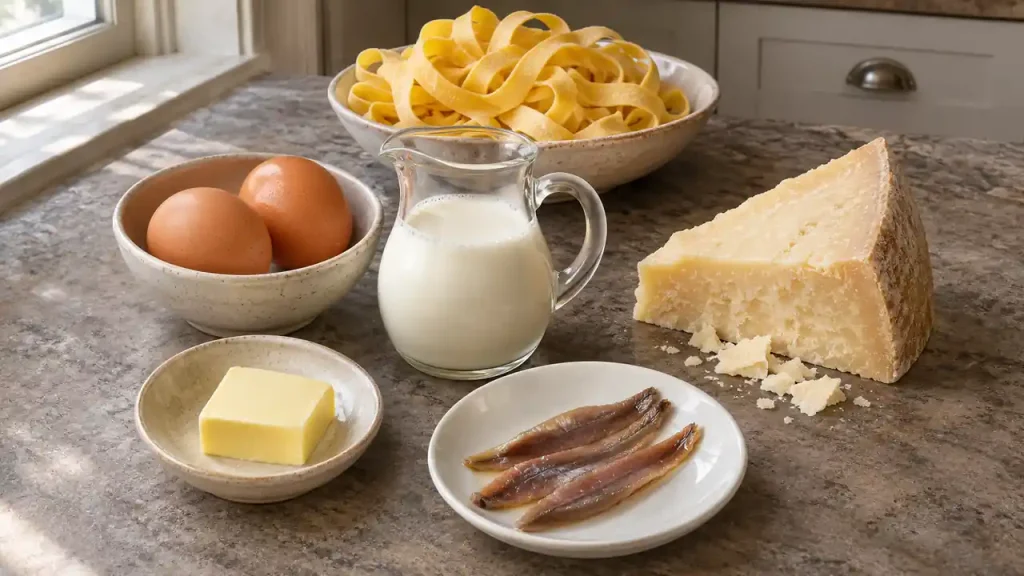
Vegan food excludes animal-derived ingredients. Vegetarian food may contain eggs and dairy, so the two descriptions are not interchangeable. These are useful names to recognize on pasta, sauce, and topping labels.
| Ingredient | Where it may appear | Why it matters |
| Egg, egg yolk, or egg white | Dough, carbonara-style sauces, mayonnaise | Animal-derived ingredient |
| Milk, cream, butter, or ghee | White sauces, fillings, finishing fats | Dairy ingredients |
| Parmesan, pecorino, ricotta, or other dairy cheese | Pesto, fillings, toppings | Remains dairy even with vegetarian rennet |
| Whey or casein | Seasoning mixes and prepared sauces | Milk-derived ingredients |
| Meat, fish, or animal stock | Ragù, sauces, cooking liquid | Can be present without visible pieces |
| Anchovies or squid ink | Certain sauces or black pasta | Fish or other animal ingredients |
Lactose-free cow’s milk is still dairy. Similarly, an egg-free product could contain cheese. If an ingredient’s origin remains unclear, the manufacturer can help you establish its source.
Is Pasta Vegan With Sauce or Toppings?
An egg-free noodle is only the beginning. A sauce can contain animal ingredients even when the dish looks mostly like vegetables and pasta.
Tomato Sauces and Pesto
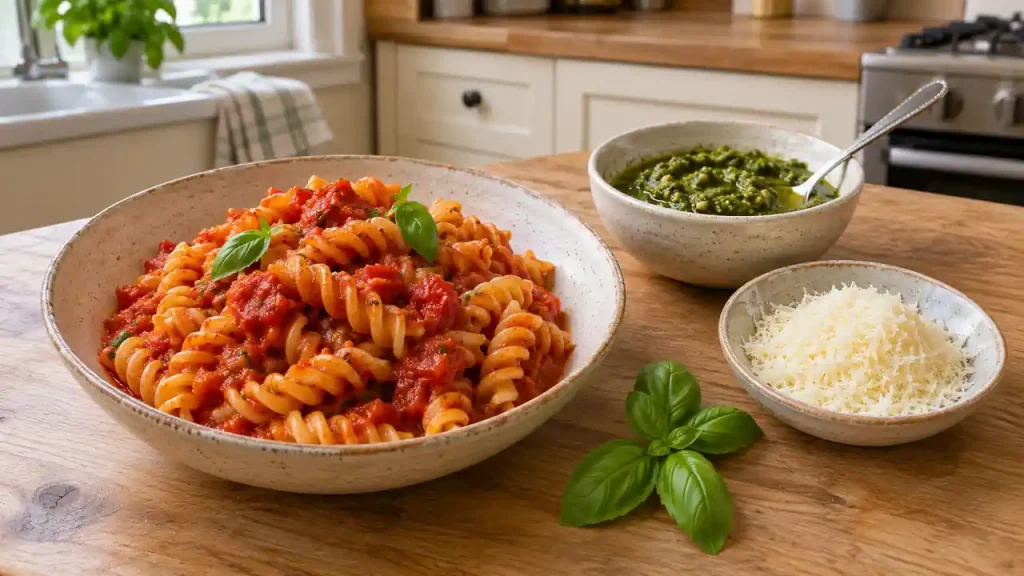
A tomato sauce made with tomatoes, vegetables, herbs, and olive oil can be vegan. Prepared versions may add cheese, butter, meat, or stock, so the recipe still matters. Removing grated cheese at the table does not remove dairy already blended into the sauce.
Traditional basil pesto commonly contains dairy cheese. For a homemade alternative, combine basil, olive oil, garlic, and suitable nuts or seeds, adding nutritional yeast if you enjoy it. Keeping fresh basil in good condition helps when you buy a bunch for several meals.
White Sauce and Mayonnaise Are Different
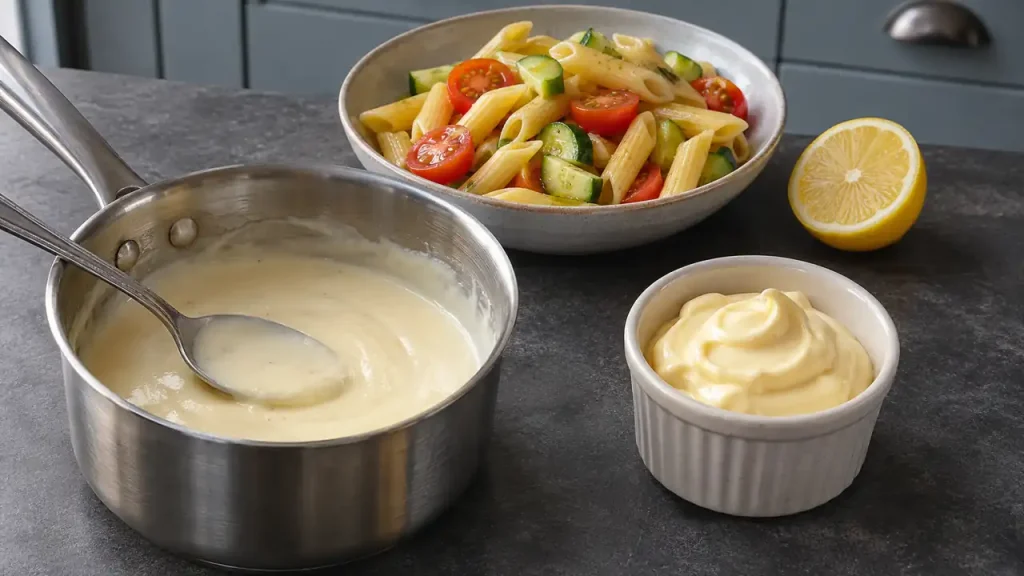
A béchamel-style white sauce typically uses milk, butter, and flour. Mayonnaise is a different preparation and commonly contains egg. Either can be made with vegan ingredients; the name or pale color alone does not settle the question.
For white sauce, use a recipe designed around unsweetened plant milk and olive oil or suitable vegan butter. For pasta salad, a lemon-and-olive-oil salad dressing offers another option alongside clearly labeled vegan mayonnaise. Plant substitutes may introduce allergens such as soy or nuts.
Finishing Ingredients Count Too
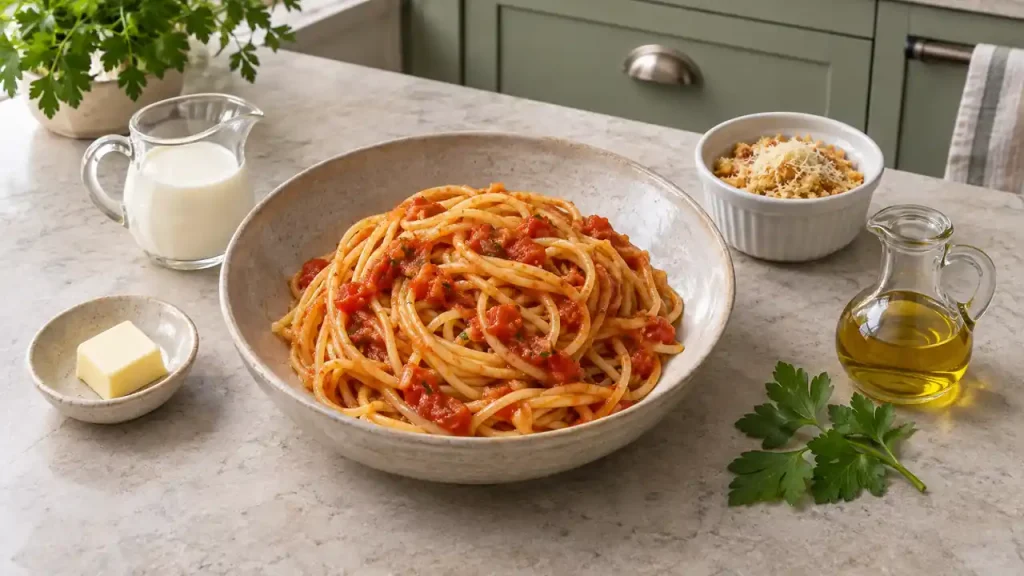
Butter stirred in before serving, or a spoonful of cream, or breadcrumbs mixed with cheese, can change the finished dish. Ask about these details along with the main sauce. Plain olive oil, herbs, or a verified vegan topping can provide alternatives.
How to Read a Pasta Label
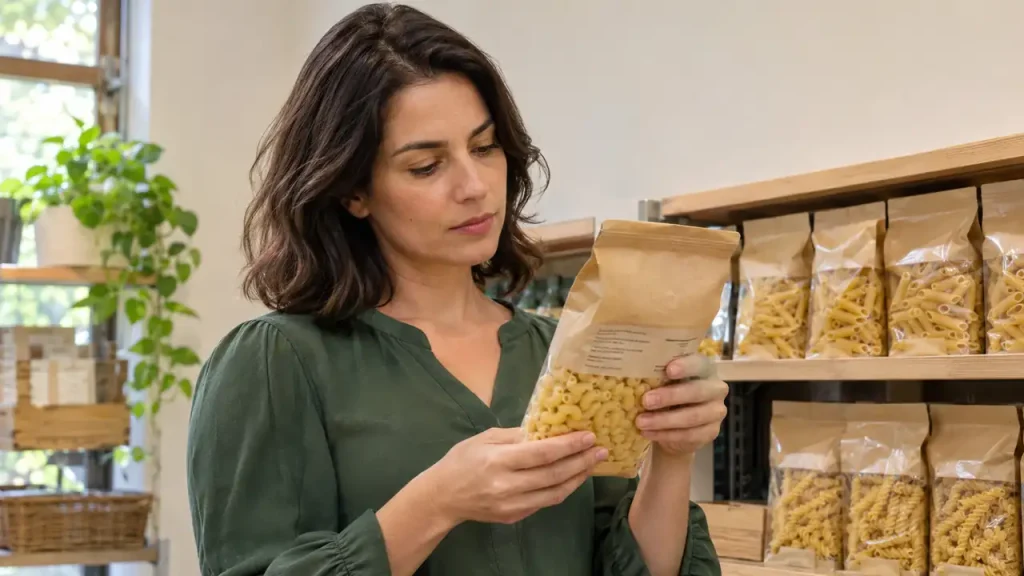
Begin with the ingredients rather than the picture on the front. Review the pasta and any separate sachet, filling, or sauce. A box containing several components needs more than one ingredient check.
For example, dry macaroni in a meal kit may be suitable on its own, while the cheese sachet is not. Replacing the sachet with a vegan sauce changes the meal, but only after you confirm the macaroni itself contains no animal-derived ingredients. Apply the same approach to separately packaged toppings.
A registered certification mark can simplify verification. For example, the Vegan Society’s trademark standards address animal ingredients, manufacturing, and steps to minimize cross-contamination. A decorative leaf does not necessarily represent independent certification. Conversely, the absence of a logo does not establish that animal ingredients are present.
Keep these distinctions in mind:
- Vegan: Concerns animal-derived ingredients and, under certification schemes, additional standards.
- Vegetarian: May allow eggs and dairy.
- Gluten-free: Addresses gluten; it does not establish vegan suitability.
- Dairy-free: Does not by itself rule out eggs, meat, or fish.
When shopping online, match the product name and country listing to what arrives. A photograph of an older packet may not reflect a new formulation. If the website and package disagree, ask the manufacturer about the exact product. Familiar branding is not a substitute for reviewing the current recipe.
What Does “May Contain Milk or Egg” Mean?
This warning concerns possible unintended presence, not an ingredient deliberately used in the recipe. It can appear on food labeled vegan.
In the UK, government allergen-labeling guidance distinguishes vegan claims from allergen-free claims. If you have a food allergy, use the full allergen information and your allergy-management advice. Don’t assume vegan pasta is safe for a milk, egg, wheat, soy, or nut allergy.
Is Pasta Vegan at a Restaurant?

A clear question gets you further than asking whether a dish is “just vegetables”. You could say, “I eat vegan food. Could you confirm the pasta dough, filling, sauce, and finishing ingredients contain no animal products?”
Follow up with the details relevant to your order:
- Does the dough contain egg, and is an egg-free pasta available?
- Are cheese, butter, cream, anchovies, or animal stock used in the sauce?
- Can the meal be prepared with suitable utensils and without animal ingredients added at the end?
If staff cannot confirm the ingredients, choose another dish with information they can verify.
Egg cannot be removed from an already-made dough. Ask for a different pasta rather than requesting that eggs be left off. If you also have an allergy, explain it separately so staff understands that the request includes safety requirements.
Build a Vegan Pasta Meal You Will Enjoy
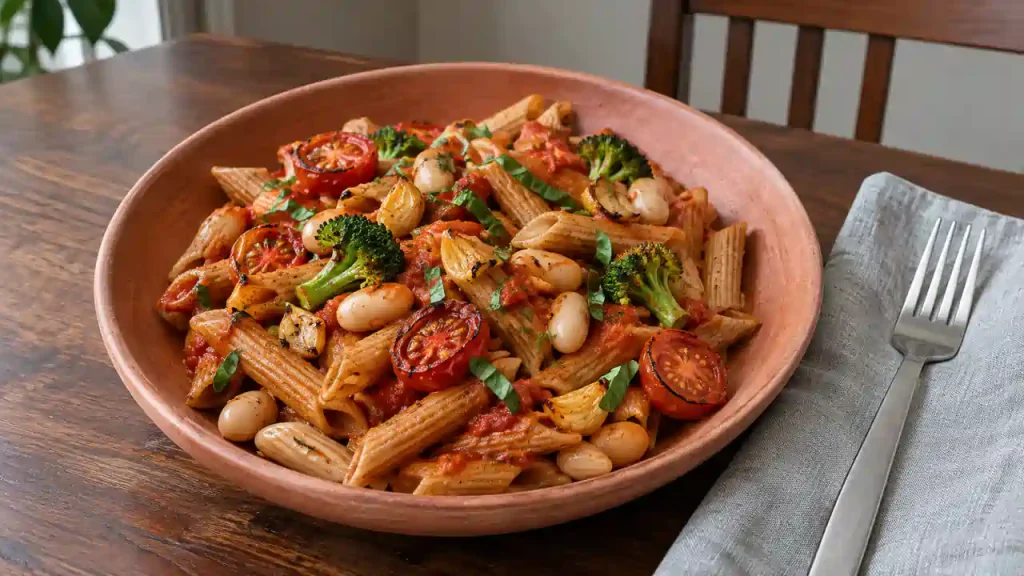
Once the ingredients are confirmed, choose a combination you want to eat. You can vary sauces and additions without replacing your whole pantry. For a tomato-based bowl, pair pasta with roasted tomatoes and garlic, leaving out any dairy garnish, then add white beans or lentils. These plant-based protein options can make the same sauce useful across several meals.
For more texture, combine mushrooms, peas, or broccoli with a sauce you have verified. Whole-wheat pasta and vegetables can contribute to your range of fiber-rich foods, depending on your preferences and dietary needs.
For a familiar routine, rotate pasta with other meals in a balanced eating plan, rather than expecting one vegan dish to meet every nutritional need. Your plan for storing homemade pasta sauce should account for its ingredients and the time since cooking.
Frequently Asked Questions
These answers cover two descriptions that can cause confusion when shopping.
1. Is Pasta Vegan if It Contains Wheat?
It can be. Wheat is a plant, and ordinary wheat pasta can be vegan while still containing gluten. People avoiding wheat or gluten need a product suitable for that requirement as well.
2. Does Green Pasta Automatically Contain Only Plants?
No. Spinach or other vegetables may supply the color while eggs remain in the dough. Black pasta might contain squid ink, but other coloring ingredients also exist. Appearance cannot replace ingredient information.
Final Thoughts
Is pasta vegan? Many varieties are, but the reliable answer comes from the actual ingredients and preparation. Start with the dough, then include fillings, sauces, toppings, and finishing fats in your decision. Keep vegan suitability separate from allergy safety, and ask specific questions when eating out. With a few familiar checks, you can choose pasta that fits your preferences and enjoy the meal.



Leave a Reply