


If you’re wondering, “Do stretch marks go away when you lose weight?” the answer is that weight loss does not remove established stretch marks. These marks are scars that usually become less noticeable over time. Their color may fade, but some texture can remain. You can choose treatment if they bother you, although having them does not mean your skin is unhealthy or your body needs fixing.
What Causes Stretch Marks?

Stretch marks, medically called striae, form when skin stretches or shrinks rapidly, and its supporting collagen and elastin are disrupted. They often develop during puberty, pregnancy, rapid weight changes, or rapid muscle growth. They can affect women and men, including people whose weight has stayed relatively stable. Genetics and hormonal factors also influence who develops them. Having a close relative with stretch marks can increase your likelihood of getting them. This helps explain why two people can experience similar body changes but develop different skin markings.
Certain medicines and conditions can contribute. Prolonged use of potent corticosteroid creams can cause skin thinning and stretch marks. Cushing’s syndrome, which involves excessive cortisol exposure, is another possible cause, although ordinary stretch marks alone do not establish that diagnosis. They commonly appear on the abdomen, thighs, breasts, hips, buttocks, and upper arms. Their location does not reveal one particular cause.
Do stretch marks go away when you lose weight, or do they just fade?
Fading and disappearing are different outcomes. Losing body fat does not reverse an existing scar. A mark becoming lighter during weight loss may reflect its natural maturation rather than the weight loss itself. The American Academy of Dermatology’s guidance on stretch marks explains that these are permanent scars, although treatment can make them less noticeable. Newer marks and older marks often look different:
| Stage | Common appearance | Practical implication |
| Newer marks | Pink, red, purple, reddish-brown, or dark brown; sometimes raised or itchy | Some topical treatments work better at this stage |
| Older marks | Paler or silvery lines, often slightly indented | Creams generally have less effect on established scars |
Appearance varies with skin tone. Color alone cannot tell you exactly how old a mark is or which treatment will work. Fading does not follow a fixed schedule, so promises of clear skin by a specific date are unreliable.
Why Might You Notice Them More After Weight Loss?
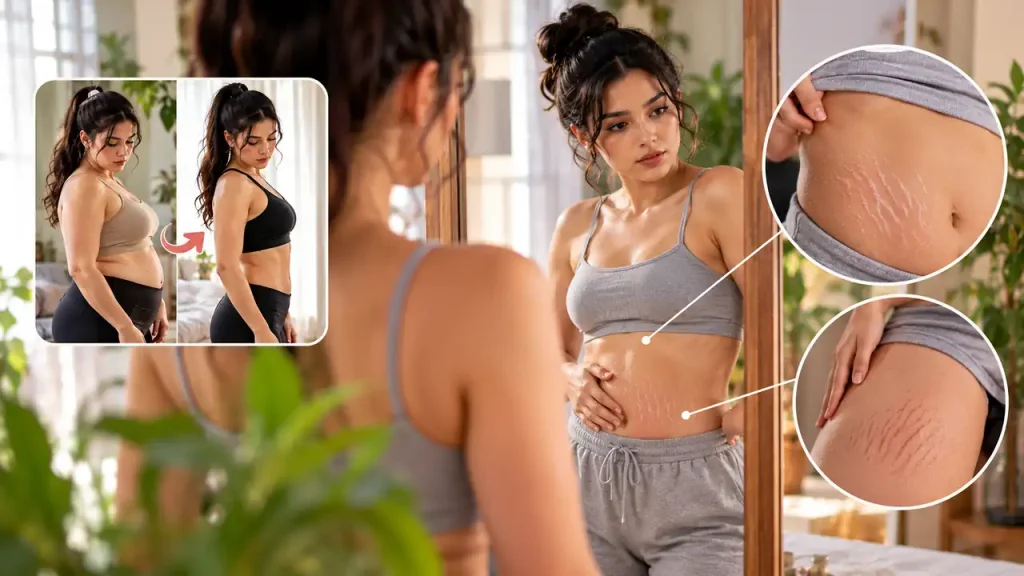
Noticing marks after losing weight does not prove they formed during that period. Existing marks may simply attract more attention as you examine changes in your body. Rapid changes in body size can also be associated with stretch marks.
Loose skin is a separate concern: it describes laxity or folds, while stretch marks are streaks of scarred skin. Both can exist together. Before buying a product, identify whether you want help with scar color, indented texture, dryness, or loose skin. Those concerns need different expectations. Avoid assuming that weight gain automatically means excess cortisol caused your marks. If new marks appear without an obvious explanation, a clinician can review your history and medicines.
Which Treatments May Help?
The realistic goal is improvement in appearance or comfort. No option reliably erases every stretch mark, and the same treatment can produce different results for different people.
1. Time and Simple Moisturizing
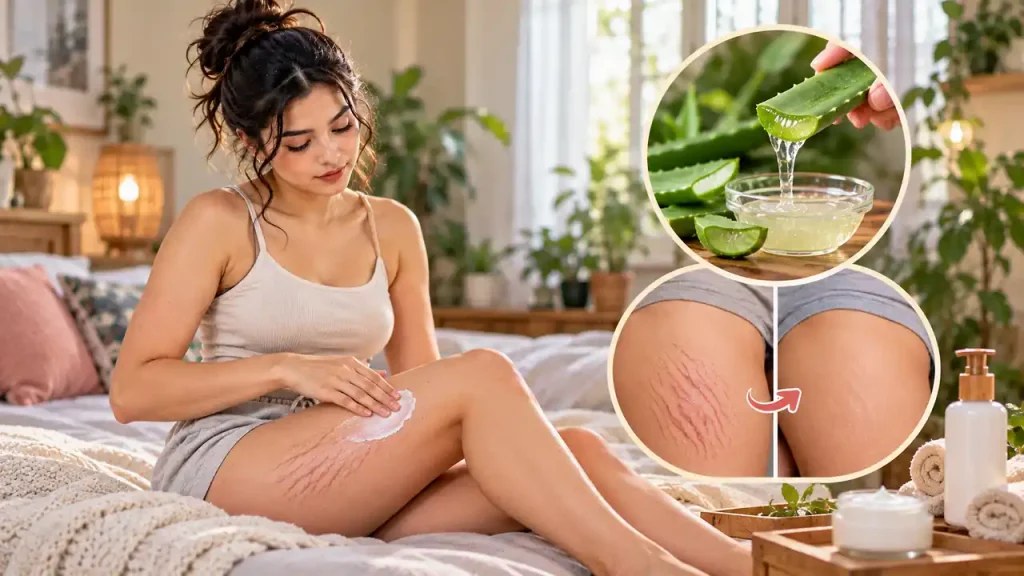
Leaving harmless marks alone is a reasonable choice. Many fade naturally, and you do not need to buy a product to allow that process to happen. A fragrance-free moisturizer can help dry skin feel more comfortable. It should not be sold as scar removal. If you prefer aloe vera for stretch marks, distinguish its possible soothing benefits from the much stronger claim that it can erase established scars. Stop any product that irritates.
2. Hyaluronic Acid Products
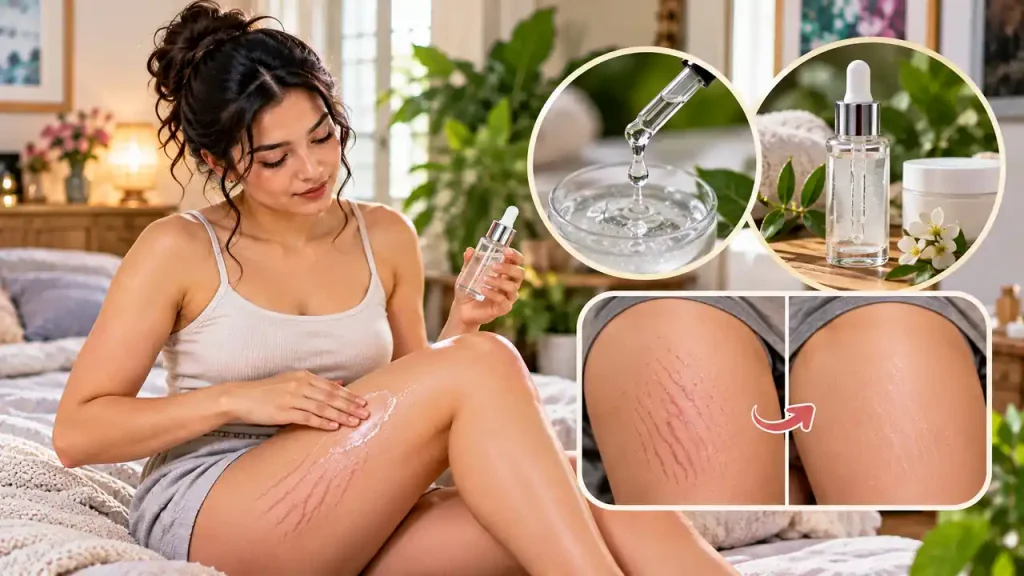
Some evidence suggests that topical hyaluronic acid may make early stretch marks less noticeable. That does not mean every serum containing it has been shown to work, or that it will improve older, pale marks. Ask what evidence supports the actual product and what change you should reasonably expect. A label saying “collagen boosting” does not establish that a product has been tested on stretch marks or can improve their appearance.
3. Prescription Tretinoin

Tretinoin may improve relatively recent stretch marks, but it can irritate skin and is unsuitable during pregnancy. It requires a discussion about your circumstances rather than an automatic recommendation. If you are trying to conceive or breastfeeding, ask your healthcare professional about treatment safety before starting a retinoid. Do not substitute an over-the-counter retinol product without checking whether it is appropriate.
4. Dermatologist-Led Procedures
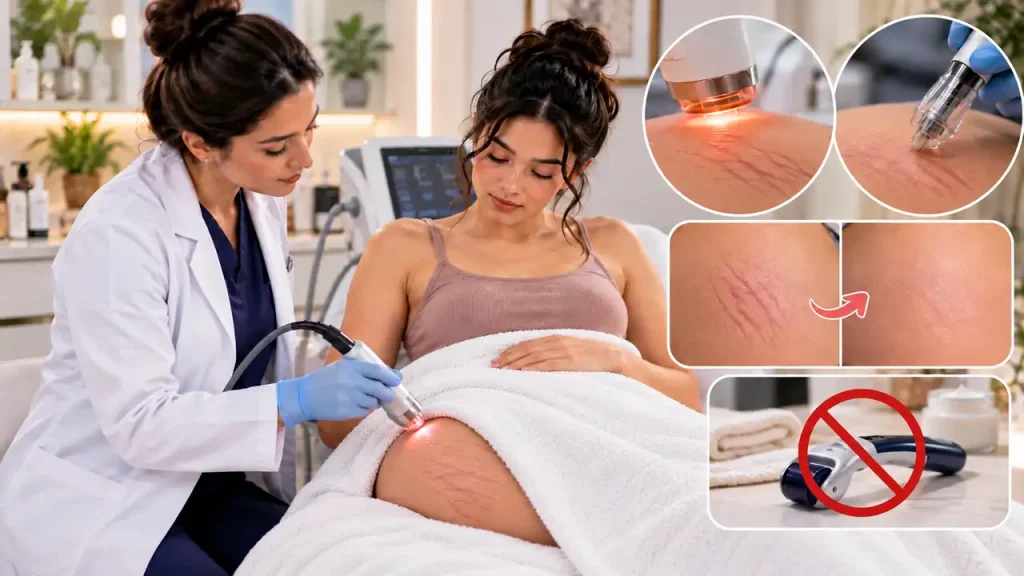
Laser or light treatments and microneedling may improve appearance or texture. Mayo Clinic’s treatment guidance notes that no treatment has been proved consistently more successful than the others. Microneedling can carry less risk of skin-color changes than some laser treatments, making it an option to discuss for darker skin tones. Individual assessment still matters. Ask about likely improvement, pigment changes, recovery, and the number of sessions before committing. Home needling can cause infection, scarring, or lasting discoloration. A device advertised for home use is not a substitute for assessment and treatment by a qualified medical professional.
Can You Prevent Stretch Marks During Weight Changes?

There is no guaranteed prevention routine. Gradual, sustainable weight management may reduce abrupt changes in skin stretching, but it cannot control genetics, puberty, or every change associated with pregnancy. Do not restrict necessary pregnancy weight gain to avoid marks; follow your maternity team’s advice. For anyone asking, “Do stretch marks go away when you lose weight?” prevention claims deserve the same scrutiny as removal claims. Drinking extra water, avoiding coffee, or buying an expensive belly oil is not a proven way to guarantee mark-free skin.
A Cochrane review of topical preparations during pregnancy included six trials involving 800 women and found no clear preventive benefit. Its search covered research through October 2011, so it should not be presented as a review of every current product. Some research on ingredients such as centella and hyaluronic acid suggests potential benefit, but that is insufficient to promise prevention. Different formulations, small studies, and mixed findings make sweeping claims unreliable.
What About Food, Supplements, and Sunbathing?

A balanced healthy eating plan supports overall nutrition. Vitamin C is needed for normal collagen production, but eating more citrus fruit does not automatically repair stretch-mark scars. Likewise, collagen supplements should not be presented as an established treatment for removing these marks. There is no special water target proven to prevent stretch marks. Meet your fluid needs rather than forcing extra water because a beauty tip promises smoother skin.
Sunbathing is not a stretch-mark treatment. Ultraviolet exposure can damage skin, and tanning may make contrast marks and surrounding skin more noticeable. Use sun protection on exposed skin. Understanding vitamin D skin care can help separate normal nutrient needs from cosmetic promises. Discuss a suspected deficiency with a clinician; deliberate tanning is not the solution.
Pregnancy and Medication Precautions

Check with your maternity clinician before using products intended to treat or prevent stretch marks. “Natural” does not establish safety, and botanical ingredients can still irritate skin. Do not use corticosteroid creams to fade stretch marks. They treat certain inflammatory skin conditions; prolonged use of strong preparations can contribute to marks instead. If a steroid is prescribed for another condition, use it as directed and discuss concerns with the prescriber. Do not stop prescribed treatment on your own. Bring the product names or photographs of ingredient labels to your appointment. Include prescription medicines, cosmetic retinol, supplements, and herbal products so your clinician can assess the whole routine.
When Should You Seek Medical Advice?

Arrange an assessment if marks appear suddenly, become unusually widespread, or develop without an obvious trigger. Mention easy bruising, muscle weakness, a newly rounded face, or increased fat around the neck and upper back. These accompanying symptoms can warrant investigation for a condition such as Cushing’s syndrome.
Also seek advice for persistent pain, severe itching, or uncertainty about whether a skin change is actually a stretch mark. A new symptom should not automatically be dismissed as cosmetic. If appearance worries begin affecting your eating, relationships, or daily activities, support for body shame can help. Choosing treatment and treating yourself with respect can coexist.
Questions to Ask Before Paying for Treatment
Ask your dermatologist which feature they expect to improve: color, texture, or both. Request realistic examples involving similar marks and skin tones. Clarify the total cost, recovery time, number of visits, and possible side effects. If you track progress, use similar lighting, distance, and positioning in photographs. A change in lighting can make an unchanged mark look dramatically better. Be cautious about promises of complete removal or a guaranteed percentage improvement. Agree on a review point before starting treatment, so you know when to reassess results instead of buying product after product.
Do Stretch Marks Go Away When You Lose Weight Slowly?
Slower weight loss does not remove existing scars. It may help avoid abrupt body-size changes, but it cannot guarantee that new marks will never develop. Understanding how long it takes to lose 20 pounds can help set realistic expectations if weight loss is appropriate for you. Choose your approach for overall health, with professional guidance when needed.
Final Thoughts
When considering “Do stretch marks go away when you lose weight?”, keep expectations realistic: they usually fade, while established scars remain. Treatment is optional and may improve their appearance. You can care for your skin, ask about safe options, and leave the marks alone if that feels right for you.



Leave a Reply