


If you want to learn how to make rasmalai, start with the texture: tender dumplings that absorb fragrant, sweetened milk without falling apart. This South Asian dessert is enjoyed in India, Pakistan, and Bangladesh, with variations in size, sweetness, and preparation.
Below are two approaches: fresh chenna cooked in sugar syrup and a milk-powder dough cooked directly in flavored milk. Both need careful handling and chilling. The shortcut saves the curdling and draining steps, but its texture differs from the traditional version.
How to Make Rasmalai: Choose Your Method
Each method makes one batch. Prepare the saffron milk below once for whichever method you choose; double it only if making both.
| Detail | Fresh-chenna method | Milk-powder method |
| Dumpling base | Freshly curdled milk | Unsweetened whole-milk powder |
| Contains egg? | No | Yes |
| Estimated time before chilling | 60–90 minutes | 45–60 minutes |
| Estimated yield | 12–14 discs | 10–12 small dumplings |
| Chilling | At least 4 hours | At least 4 hours |
Timings and yields are estimates. Milk composition, powder brand, pan size, and dumpling size affect the result.
Have clean muslin, a sieve, wide pans, measuring spoons, and a thin-tip food thermometer ready. Start the milk base first and prepare the remaining ingredients while it heats.
Saffron Milk for Either Method
Use a wide, heavy-bottomed pan and stir regularly to prevent scorching.
Ingredients
- 1 liter pasteurized whole milk
- 6 tablespoons sugar, approximately 75 g
- ¼ teaspoon ground green cardamom
- A small pinch of saffron, optional
- 1 tablespoon sliced pistachios, optional
- 1 tablespoon sliced almonds, optional
Prepare the Milk
Bring the milk to a gentle boil, stirring along the bottom. Reduce the heat and simmer until lightly thickened but still freely pourable, approximately 20–30 minutes depending on your pan. Stir in the sugar, cardamom, saffron, and nuts. Cook until the sugar dissolves. Keep warm while preparing the dumplings. Avoid reducing it to a thick pudding: the dumplings need liquid to absorb. For the powder method, keep the pan wide enough for the dumplings to expand without crowding.
How to Make Rasmalai With Fresh Chenna
Chenna is freshly curdled, drained milk. For this dessert, keep it moist and pliable.
Ingredients
For the discs:
- 1½ liters pasteurized whole milk
- 3–4 tablespoons lemon juice, added gradually as needed
- ¼ cup water to dilute the lemon juice
- 1 teaspoon cornflour/cornstarch, optional, for binding
Here, cornstarch means the fine white thickening powder often called cornflour in South Asia, rather than yellow maize flour.
For the cooking syrup:
- 1 liter water
- 1 cup sugar, approximately 200 g
1. Curdle the Milk Gently
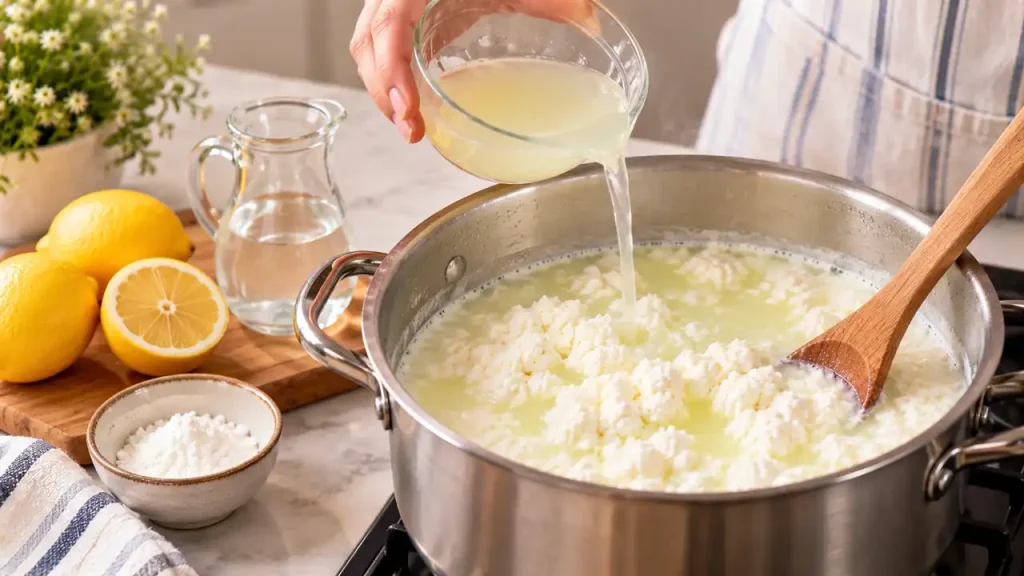
Bring the milk just to a boil, then remove it from the heat. Let the bubbling settle briefly. Dilute the lemon juice with the water. Add it gradually, stirring gently, until white curds separate from pale yellow-green whey. Stop adding acid once separation is complete. If the milk remains milky, return it briefly to low heat and add a little more diluted lemon juice. Avoid prolonged hard boiling after curds form.
2. Drain Without Drying Out the Curds
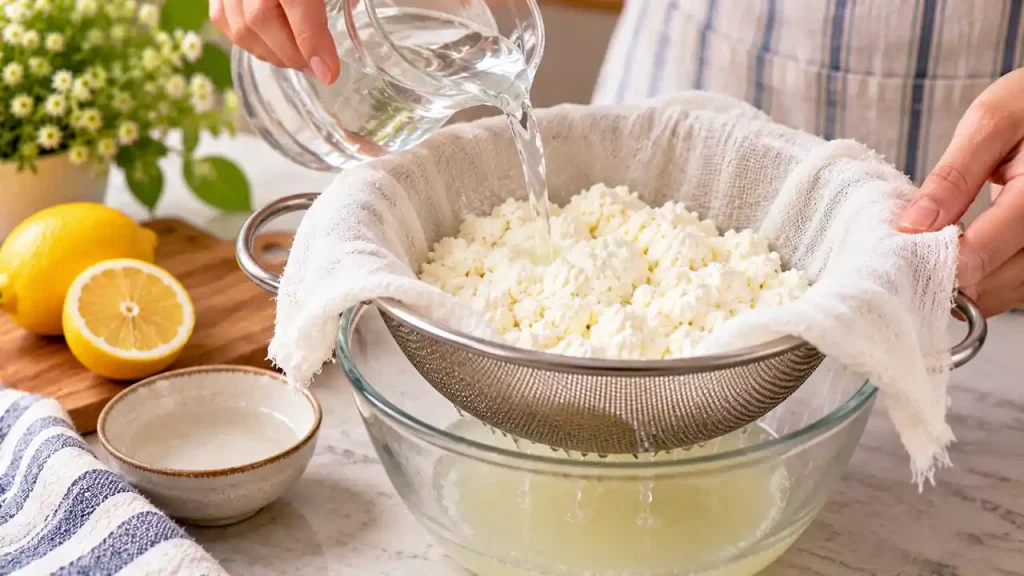
Line a sieve with clean muslin and strain the mixture. Rinse the curds with cool drinking water to remove residual lemon flavor. Gather the cloth, press gently, and hang or drain for approximately 20–30 minutes. The chenna should hold together when pressed, without dripping water or feeling dry and crumbly. Use that moisture check rather than relying entirely on the clock.
3. Knead and Shape
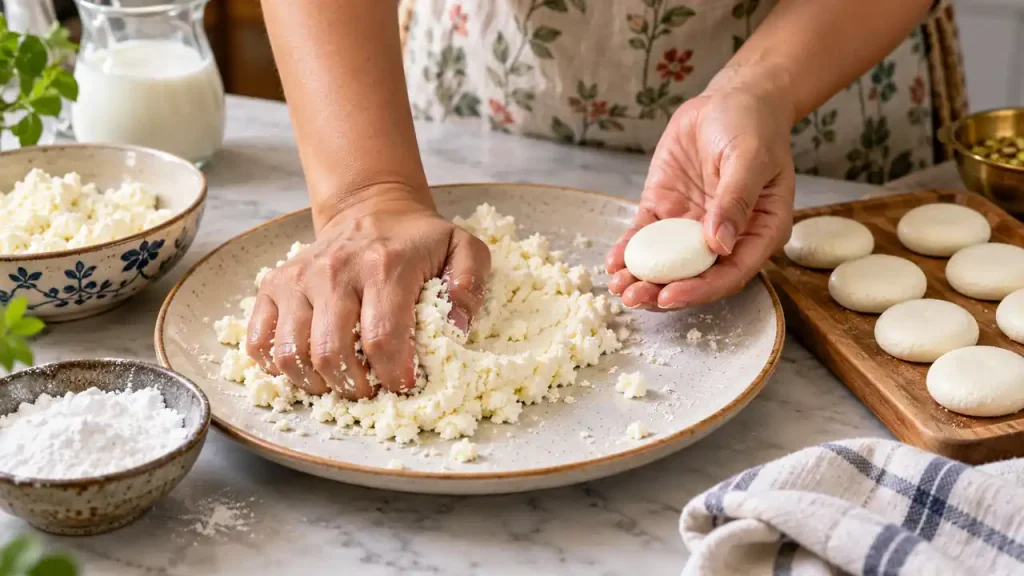
Transfer the chenna to a clean plate. Press and smear it with the heel of your hand until the grains become a smooth, cohesive mixture. Add the optional teaspoon of cornstarch if needed for binding. Do not keep adding starch to compensate for very wet curds. Divide into 12–14 small portions and shape into smooth discs about 1 cm thick. Gently close visible cracks. Stop kneading once the mixture is smooth; prolonged kneading is unnecessary.
4. Cook in Thin Sugar Syrup
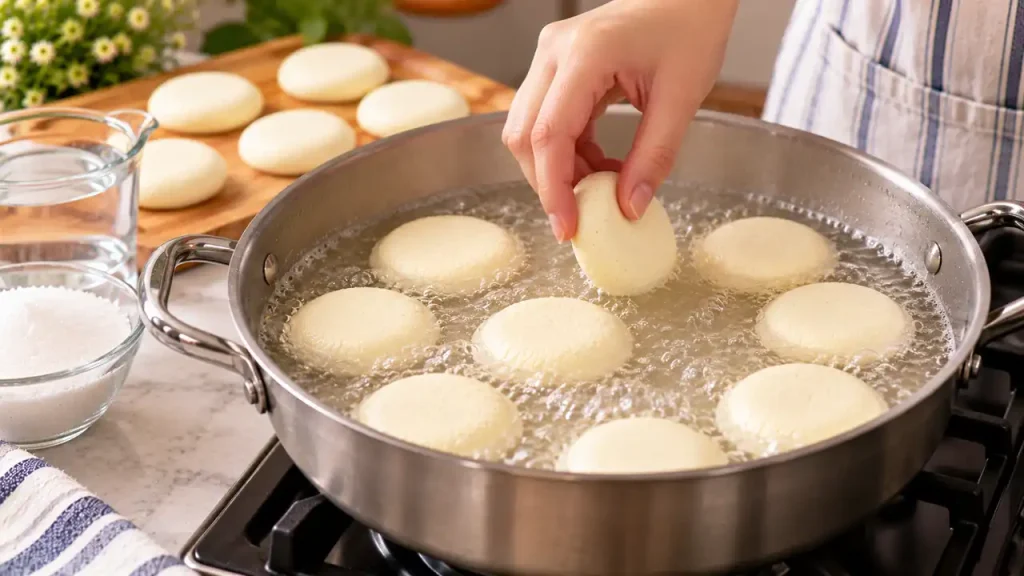
Dissolve the sugar in the water in a wide pan and bring to a steady boil. Slide in the discs carefully, leaving expansion space. Cover and cook at a controlled boil for approximately 12–15 minutes. Adjust the heat if the syrup threatens to overflow. The discs should expand and feel light and spongy. Cool it briefly and cut it open to check for an evenly cooked center. Continue cooking if it remains firm inside.
5. Transfer to the Flavored Milk
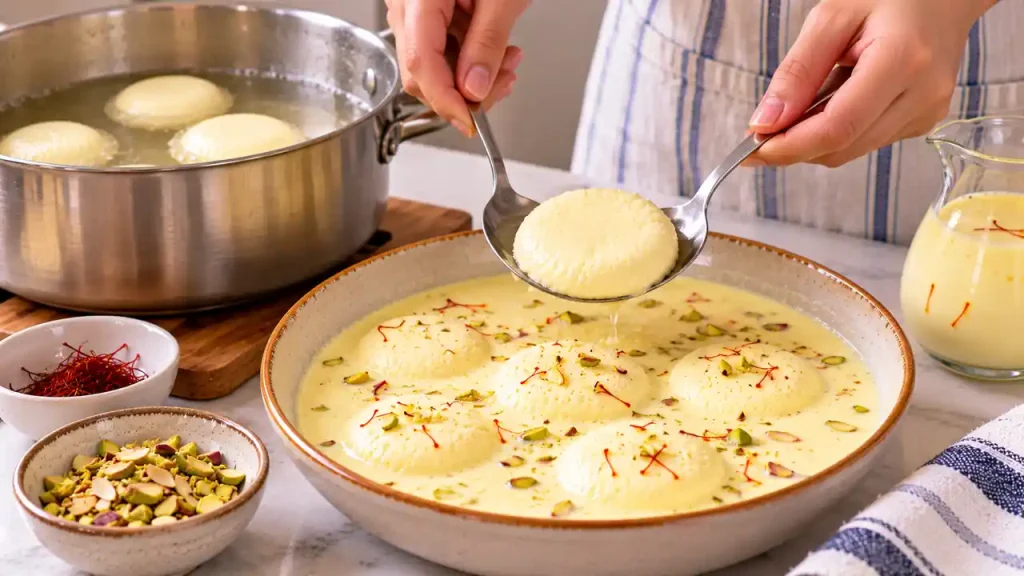
Turn off the heat and let the discs rest in the syrup for about 10 minutes. Once comfortable to handle, support each disc between two broad spoons and press gently to remove some syrup. Avoid wringing or crushing it. Place the discs in the warm saffron milk. Spoon milk over them and proceed to the chilling instructions below.
How to Make Rasmalai With Milk Powder
Use unsweetened whole-milk powder. Dairy whitener, sweetened drink mixes, and infant formula are not equivalent ingredients.
Ingredients
- 1 level cup of whole-milk powder, measured with a 240 ml cup
- 1 tablespoon all-purpose flour
- ¾ teaspoon baking powder
- 1 tablespoon neutral cooking oil
- 1 large egg, beaten; add gradually and use only as much as needed
- One batch of the saffron milk above
This version contains milk, egg, and wheat. Nuts are optional in both methods.
Spoon the milk powder into the measuring cup and level it without packing. Different powders have different densities, so volume doesn’t translate to a universal gram weight.
1. Prepare a Soft Dough
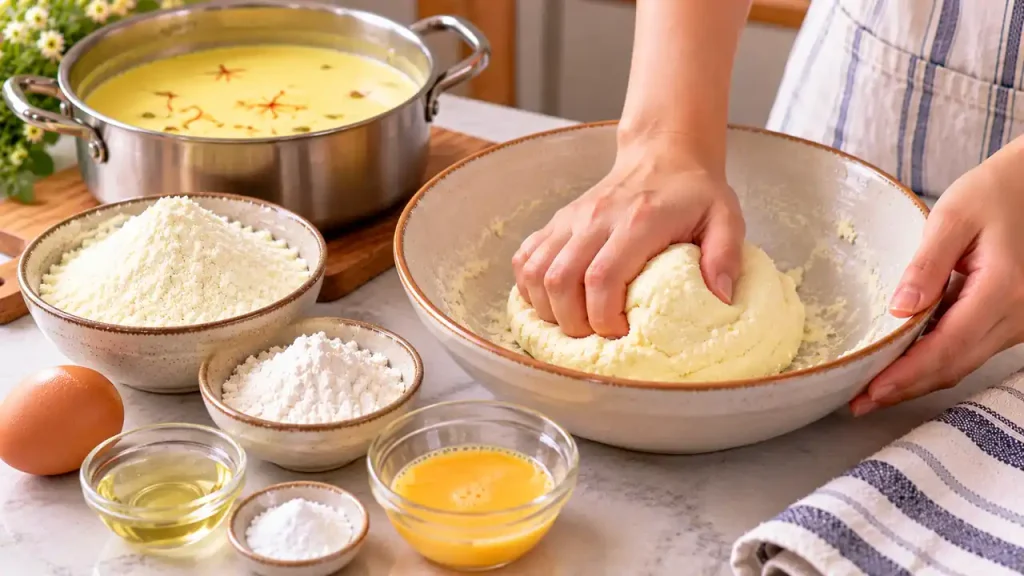
Have the flavored milk ready at a gentle simmer before mixing the dough. Combine the milk powder, flour, and baking powder. Add the oil, then start with 2 tablespoons of beaten egg.
Mix gently, adding more egg a teaspoon at a time until a soft, smooth dough forms. Some egg may remain. The dough should hold its shape without being runny or cracking badly. Avoid prolonged kneading. Wash hands and utensils after handling raw egg, and do not taste uncooked dough.
2. Shape and Cook Promptly
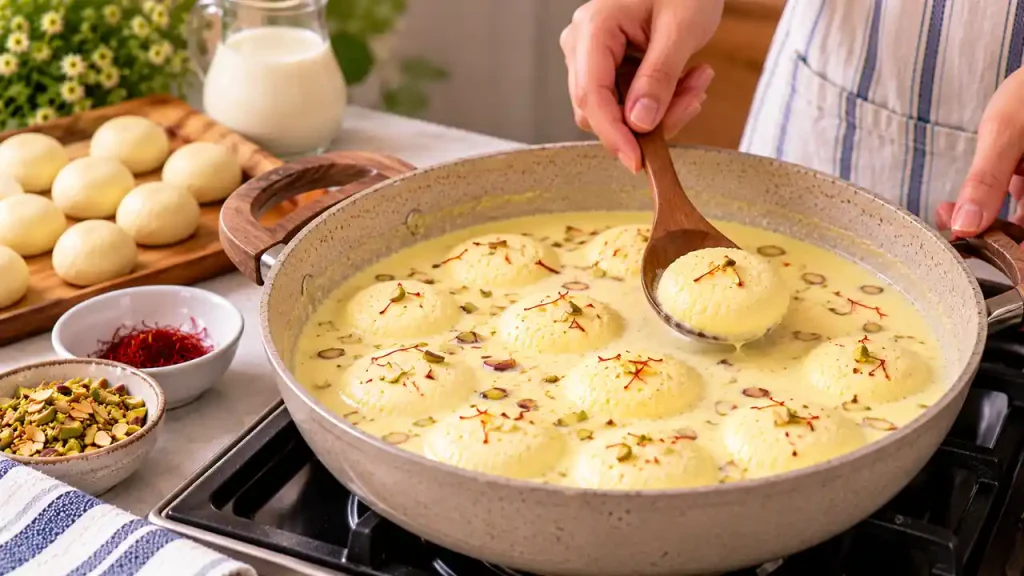
Divide into 10–12 small portions and shape into smooth balls or slightly flattened discs. Add them to the gently simmering milk, leaving room to expand. Cover and cook for approximately 5 minutes without disturbing them. Turn carefully with a spoon, then continue cooking for another 5–7 minutes as a starting estimate.
Maintain a gentle simmer. Vigorous boiling can damage the dumplings or scorch the milk. If the liquid becomes too thick during cooking, add a little hot milk to restore a freely pourable consistency.
3. Check Doneness

Expansion alone does not confirm that an egg-containing dumpling is fully cooked. Check the center of the largest dumpling with a suitable thin-tip food thermometer. Follow the safe cooking temperature for egg dishes: at least 160°F (71°C). Continue cooking gently if necessary. The center should also be set rather than wet or doughy. Turn off the heat once cooked, and handle the dumplings gently.
Why Are the Dumplings Hard or Breaking?
When learning how to make rasmalai, start with a small batch and adjust one variable at a time.
| Problem | What to check |
| Fresh discs crumble before cooking. | Chenna may be too dry or insufficiently smoothed. |
| Discs break in syrup. | Excess moisture, cracks, crowding, or rough handling. |
| Traditional discs feel dense. | Too much starch, dry curds, or insufficient cooking. |
| Powdered dough becomes sticky. | Too much egg; add gradually next time. |
| Dumplings brown on the bottom. | Milk is scorching; reduce heat and use a heavier pan. |
| Little milk remains after chilling. | The base was reduced too far, or the pan allowed excessive evaporation. |
Adjust one variable at a time. A small first batch makes troubleshooting easier than doubling an unfamiliar recipe.
Chilling, Serving, and Storage
Transfer the dessert into shallow containers so it cools efficiently. Refrigerate promptly rather than leaving a large pot on the counter until completely cold. Follow safe leftover storage guidance: keep refrigerated at 40°F (4°C) or below, refrigerate within two hours or one hour above 90°F (32°C), and use within 3–4 days.
Chill for at least four hours before serving. Spoon the milk over each portion, and add reserved nuts only if suitable for everyone eating. For a varied dessert table, serve small portions alongside strawberry mousse or bite-sized pieces of homemade fudge. Keep the remaining dairy dessert refrigerated between servings.
Common Questions
1. Can I Make This Without Eggs?
If you want to learn how to make rasmalai without eggs, choose the fresh-chenna method. Avoid simply omitting the egg from the powder dough, because that changes its structure and moisture.
2. Can I Use Packaged Paneer?
Firm paneer intended for slicing or frying is not a reliable direct substitute. This method calls for freshly prepared, moist chenna that can be smoothed and shaped.
3. Can I Use Skimmed Milk?
These methods are written for whole milk and full-fat milk powder. Changing the fat content can affect richness, curd yield, and dough behavior. Keep the specified ingredients for your first batch.
4. How to Make Rasmalai Less Sweet?
You can adjust the sweetness of the milk, but changing the cooking syrup also changes the preparation. Do not assume a sugar substitute will behave identically.
Final Thoughts
Knowing how to make rasmalai means paying attention to moisture, smooth shaping, controlled cooking, and thorough chilling. Choose fresh chenna for the traditional approach or milk powder for a different, convenient version. Measure carefully, check texture and doneness, and keep the finished dessert cold until serving.



It,s a good and easy to make recipie