


Potato cheese bread pakoras combine a savory potato filling, small pieces of paneer, and a slice of melting cheese inside bread coated with besan batter. The contrast is the attraction: a crisp outer layer, soft filling, and warm cheese in the middle. Serve them freshly fried, with chutney or ketchup on the side.
This recipe makes three sandwiches, cut into six triangles before coating. Keeping the filling measured and the batter thick enough to cling makes assembly easier. Prepare the stuffing first, let it stop steaming, and organize the frying area before dipping the bread.
What Makes This Version Different?
The filling uses paneer for texture and one cheese slice per sandwich for a melting center. Extra grated processed cheese is unnecessary. Paneer is a firm fresh cheese; loose, watery cottage cheese is not a direct substitute. The potatoes should also be well-drained rather than mashed with milk or butter. Serve them as a tea-time snack or a small appetizer. A little chutney provides contrast without covering the crisp coating.
Recipe at a Glance
Begin with cooked, peeled potatoes. The estimates below exclude the time needed to boil them.
| Detail | Guide |
| Yield | 3 sandwiches or 6 triangular pakoras |
| Servings | Approximately 3 as a snack |
| Preparation | About 25 minutes |
| Frying | About 15–20 minutes in batches |
| Main allergens | Wheat and milk; check cheese and bread labels |
| Equipment | Frying pan, mixing bowls, whisk, slotted spoon, oil thermometer |
| Best texture | Served shortly after frying |
Bread size, coating thickness, and pan capacity affect yield and timing. Standard sandwich bread is a useful starting point.
Ingredients
Keep the oil for cooking the filling separate from the oil used for deep-frying. Measure seasonings before starting. Use level measuring spoons for the spices, and weigh the potatoes after boiling and peeling rather than before cooking.
Filling and Sandwich Ingredients
- 6 slices of medium-thickness sandwich bread.
- 200 g boiled, peeled potatoes, well drained and mashed.
- 60 g firm paneer, finely crumbled or grated.
- 3 cheese slices, approximately 45–60 g total.
- 1 teaspoon neutral oil.
- ¼ cup finely chopped onion, approximately 30–40 g.
- 1 small green chilli, finely chopped, optional.
- ¼ teaspoon ground black pepper.
- ¼ teaspoon garam masala.
- ¼ teaspoon ground coriander.
- ¼ teaspoon ground cumin.
- ¼ teaspoon chaat masala, optional.
- Up to ⅛ teaspoon fine salt, only if needed.
Besan Batter Ingredients
- 120 g besan, approximately 1 cup.
- ¼ teaspoon turmeric.
- ¼ teaspoon red chilli powder, optional.
- ¼ teaspoon ajwain, lightly crushed.
- ¼ teaspoon fine salt.
- Approximately 120–160 ml water, added gradually.
Frying Oil and Serving Accompaniments
- Neutral oil suitable for deep-frying, enough for your pan.
- Coriander chutney, tamarind chutney, or ketchup.
- A small pinch of chaat masala, optional.
Besan is gram flour made from chickpeas. Baking powder is omitted here; the batter should create a coating rather than a thick, puffed shell.
How to Make Potato Cheese Bread Pakoras
Make the filling and batter before assembling the sandwiches. Once the bread is dipped, move it into the oil promptly.
1. Cook the Onion
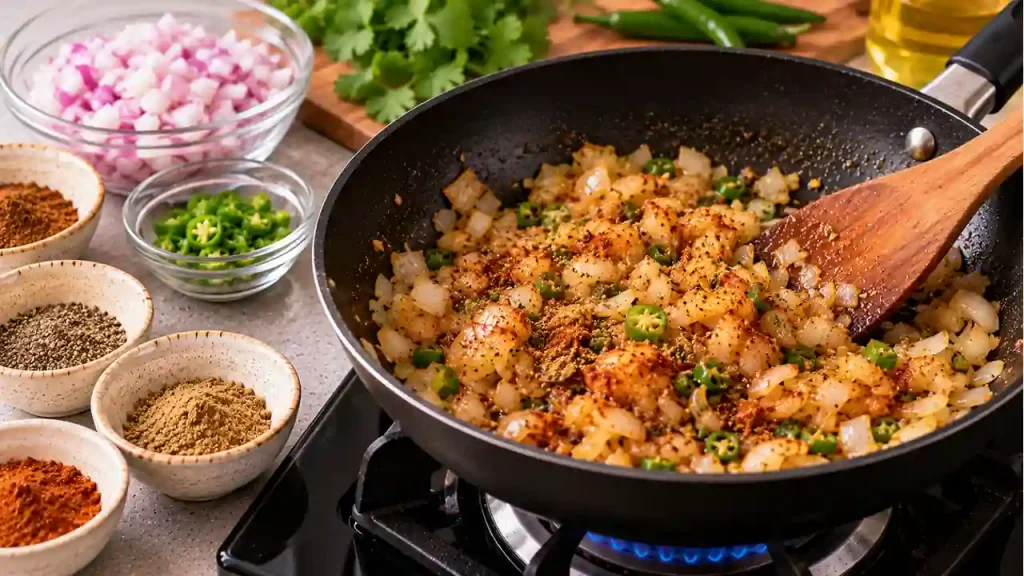
Heat the teaspoon of oil in a small pan over medium heat. Add the onion and cook for approximately 3–4 minutes, stirring, until softened. Add the optional green chilli and the pepper, garam masala, coriander, and cumin. Stir briefly without letting the spices scorch. If the pan seems dry, reduce the heat rather than adding a splash of water that would loosen the filling.
2. Combine and Cool the Filling
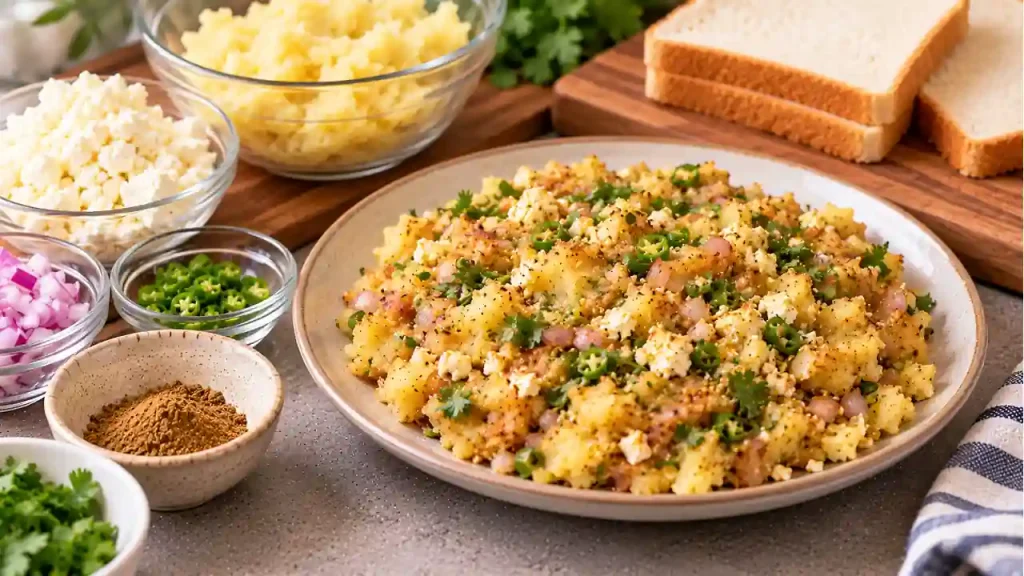
Add the mashed potato and stir for about 1–2 minutes until evenly seasoned. Switch off the heat, then mix in the paneer and optional chaat masala. Taste before adding extra salt because the cheese and chaat masala contribute seasoning. Spread the filling on a clean plate so steam can escape. Let it cool until no longer steaming before assembly. It should hold together when pressed, without releasing liquid.
3. Mix a Batter That Clings
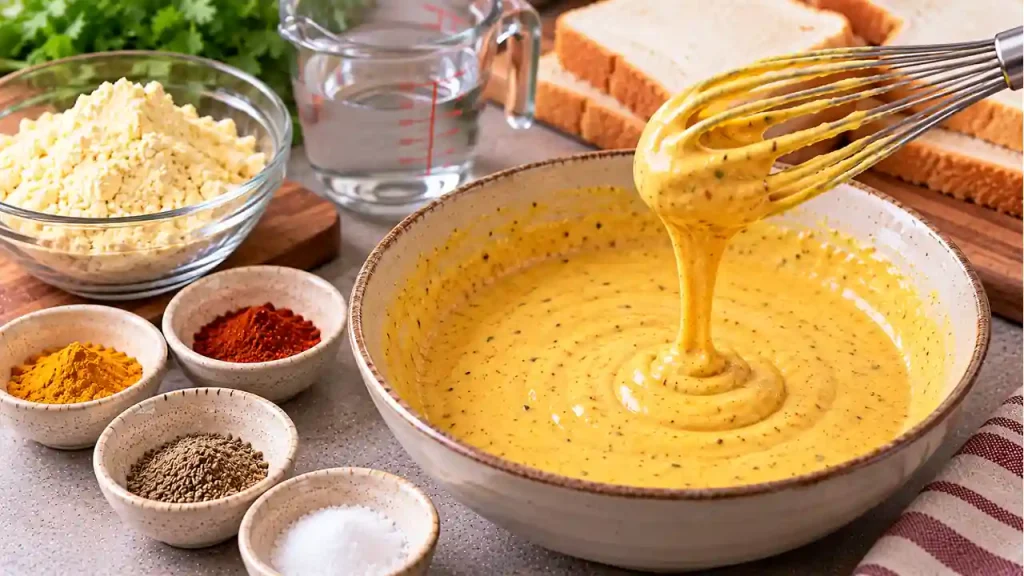
Put the besan, turmeric, optional chilli powder, ajwain, and salt in a bowl. Gradually whisk in 120 ml water until smooth. Add more water only as needed. The batter should coat the back of a spoon and fall in a thick ribbon. Let it stand briefly while you prepare the bread, then check again. Besan can thicken as it hydrates. Adjust with teaspoons of water rather than pouring in the full allowance automatically.
4. Assemble Three Sandwiches
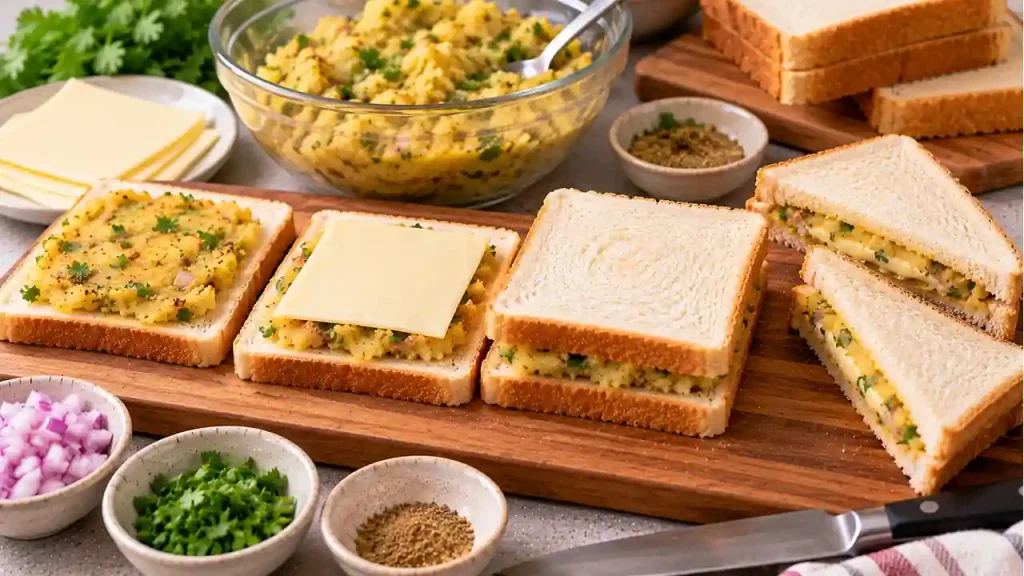
For potato cheese bread pakoras, keep the filling even rather than piling it into the center. Divide the potato mixture into three portions. Spread one portion onto each of the three bread slices, leaving a narrow clear border. Place one cheese slice over each portion, trimming or folding it to keep it inside the bread edges. Cover with the remaining bread slices and press gently. Cut each sandwich diagonally into two triangles using a sharp knife.
5. Heat the Frying Oil
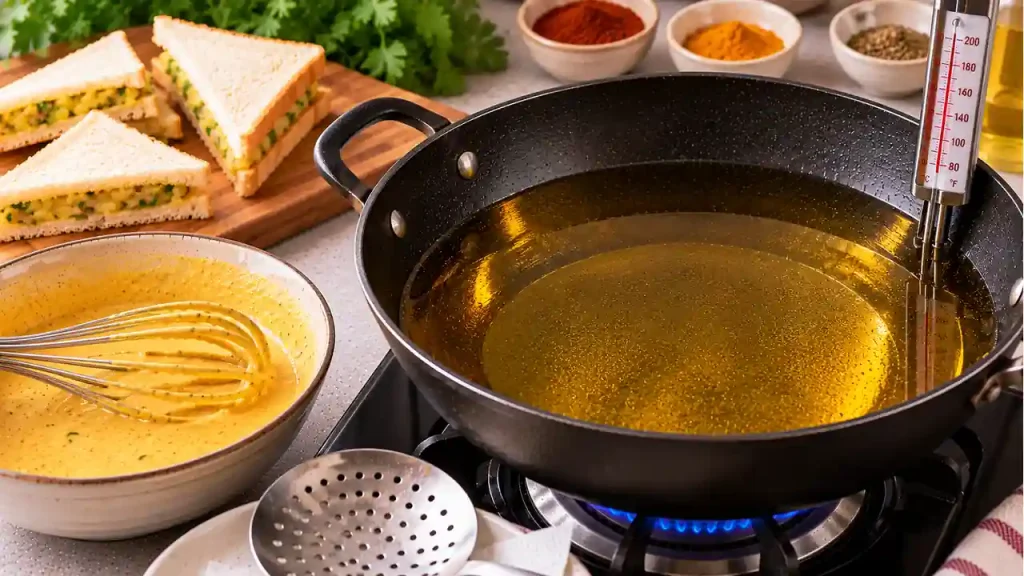
Use a stable, heavy pan with enough headroom above the oil. Heat to approximately 170–175°C/340–350°F, checking with an oil-safe thermometer. Keep the pan attended to, and keep utensils dry. USDA’s deep-frying safety guidance warns against allowing water into hot frying fat. Have a slotted spoon and draining rack or kitchen paper ready before coating the first triangle.
6. Coat and Fry a Test Piece
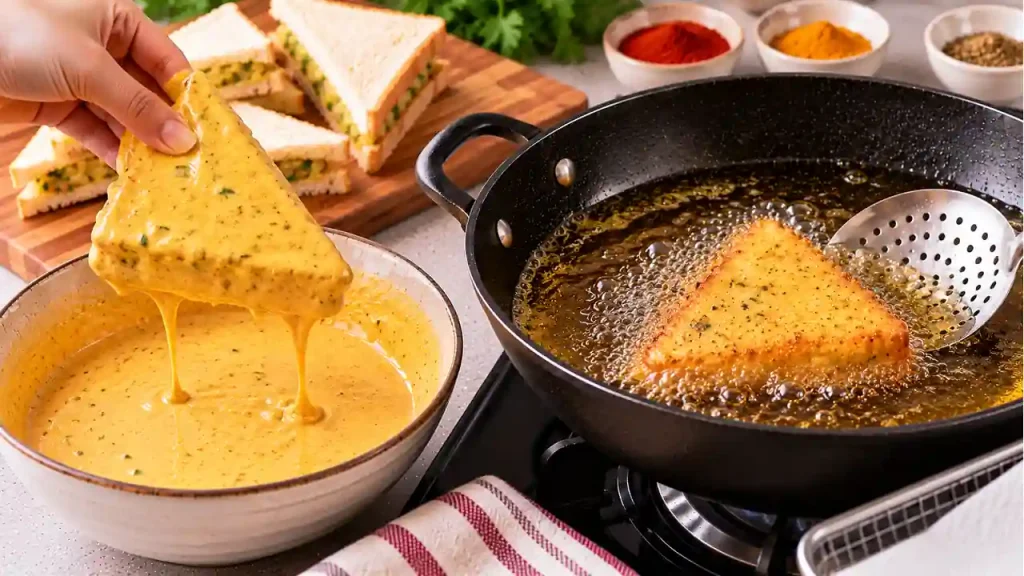
Support one triangle in your hand or with suitable utensils and dip it into the batter. Cover the surfaces and edges without leaving it soaking. Let excess batter drip away, then lower the triangle carefully into the oil, away from you. Fry until golden and the coating is cooked, approximately 3–5 minutes depending on thickness and temperature. Turn gently as needed. Remove and let it cool briefly before checking the center.
7. Finish in Small Batches
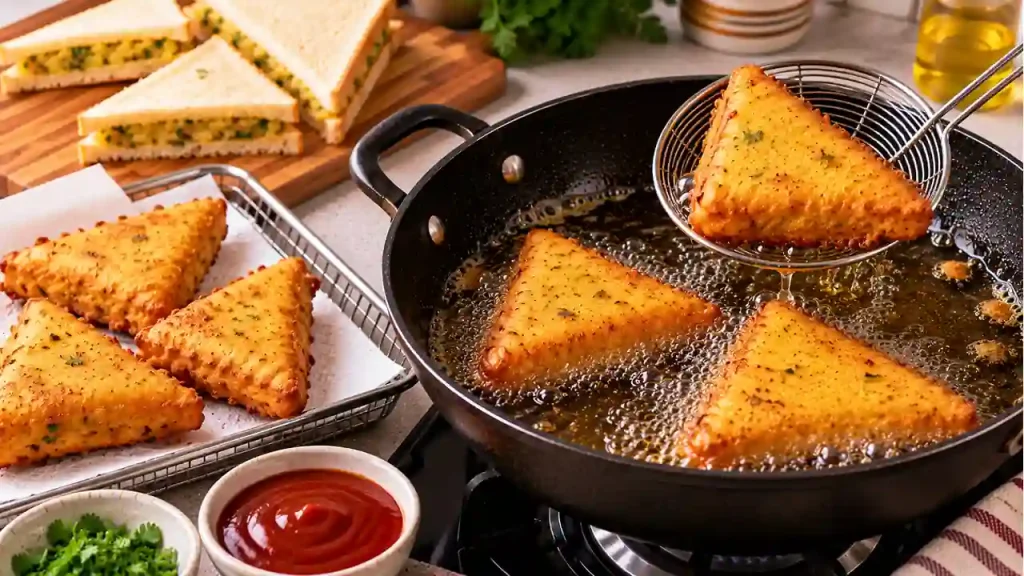
Continue frying potato cheese bread pakoras with space between them. Overcrowding makes the oil temperature harder to control. Allow the temperature to recover between batches. If the surface browns almost immediately, reduce the heat before continuing. Drain in a single layer rather than stacking. Serve once the cheese is comfortable to eat; the filling can remain very hot after the outside has cooled.
How to Prevent Leaking Cheese
Keep the cheese inside the bread edges and avoid oversized filling portions. Pressing too firmly can split the bread, while thick filling can make the sandwich difficult to coat. Cover the cut edges with batter as well as the broad surfaces. Lower each triangle carefully so the sandwich stays together. Some cheese may escape during frying. Remove loose pieces when practical rather than letting them burn and darken the oil.
Troubleshooting the Coating
A useful test piece tells you more than guessing from the first few bubbles. Adjust one factor at a time.
| Problem | What to check |
| Batter slides off. | Batter may be thin or filling too moist. |
| Coating is excessively thick. | Add water a teaspoon at a time. |
| Bread feels greasy. | Check oil temperature and batch size |
| Outside darkens too quickly. | Lower heat and reassess sandwich thickness. |
| Filling falls out. | Reduce filling and coat edges thoroughly. |
| Pakoras soften after frying. | Drain separately and avoid covering while hot. |
Do not expect the bread inside the batter to become toast-like. It will usually remain softer than the outer coating.
Serving and Other Potato Snacks
Serve potato cheese bread pakoras with chutney in a separate bowl so the crust stays dry until eating. Add only a little finishing chaat masala after tasting. For another potato-based snack on a different occasion, sabudana vada combines potato with tapioca pearls and peanuts. Its ingredients and preparation differ, so it is not a direct substitute for this filling.
For a bread-free format, cheese-stuffed potato balls place cheese inside a potato mixture with a different outer coating. Use that recipe’s proportions rather than reshaping this filling without adjustment. If you have unused paneer, paneer fried rice offers another preparation. Keep that paneer refrigerated according to its packaging rather than leaving it beside the stove.
Can You Change the Ingredients?
Omit the green chilli or red chilli powder for less heat. Cheese brands vary in salt and melting behavior, so avoid adding extra layers without a test piece. Wholemeal bread can be tried, but dense or fragile slices may handle differently. Gluten-free bread requires its own handling checks, and all packaged ingredients need checking. Baking, air-frying, and shallow-frying produce different results. They need separately tested settings rather than the deep-frying time copied across.
Storage and Reheating
Refrigerate cooked leftovers and spare filling promptly in shallow containers. Leftover guidance recommends refrigeration within two hours, or one hour above 32°C/90°F, and reheating to 74°C/165°F. Use refrigerated leftovers within 3–4 days. The crust will be best freshly fried; reheating does not reliably restore the original texture. If preparing ahead, refrigerate the filling and assemble near frying time. Do not leave cooked potatoes or dairy ingredients sitting out for prolonged cooling.
Final Thoughts
Potato cheese bread pakoras work best with a cooled, compact filling, a moderate cheese layer, and batter that clings without soaking the bread. Fry one test triangle, adjust the coating or heat if needed, and serve the remaining batch promptly. Clear portions and careful handling make this familiar tea-time snack easier to prepare.



Leave a Reply