

Blind dating can be exciting, but meeting someone for the first time brings plenty of uncertainty. You don’t know how the conversation will flow, whether you’ll feel comfortable, or whether there will be any real chemistry. The good news? A little preparation can make a first blind date feel safer, easier, and more natural. From choosing a public meeting place and setting realistic expectations to keeping the conversation natural and knowing when to leave, these practical blind date tips will help you approach your meeting with confidence, curiosity, and healthy boundaries.
Blind Date Tips at a Glance
Before meeting someone you’ve never met before, keep these essential blind date tips in mind:
- Meet in a busy public place where you feel comfortable and can leave easily.
- Arrange your own transportation instead of relying on your date for a ride.
- Tell someone you trust where you are going and when you expect to be back.
- Keep your expectations realistic and focus on getting to know the person rather than predicting the future.
- Ask open-ended questions and listen to the answers instead of treating the date like an interview.
- Pay attention to how your boundaries are treated, including your choices about time, conversation, physical contact, and location.
- Give yourself permission to leave if you feel uncomfortable, pressured, or unsafe.
- Assess how you actually felt around the person after the date rather than focusing only on whether they seemed impressive.
What Exactly Is a Blind Date?
A blind date is a date arranged between two people who have not met before and usually know little about one another in advance. Unlike dating-app interactions, where people can review profiles, exchange messages, and develop an initial impression before meeting, a traditional blind date relies more heavily on a third party’s introduction and the chemistry that develops in person.
6 Essential Blind Date Do’s and Don’ts
A blind date should balance excitement with sensible preparation. These essential do’s and don’ts can help you stay safe, comfortable, and open to getting to know someone new.
| Do | Don’t |
|---|---|
| Ask why the matchmaker thought you might be compatible. | Agree to a date without knowing basic information about the person. |
| Meet in a busy public place and arrange your own transportation. | Share your home address or depend on your date for a ride. |
| Tell someone you trust where you’re going. | Keep your plans completely private. |
| Keep your expectations realistic and stay open-minded. | Build a fantasy about the person before meeting them. |
| Ask open-ended questions and stay curious. | Turn the date into an interview or interrogation. |
| Balance talking with genuine listening. | Dominate the conversation or ignore what your date is saying. |
1. Know Why the Matchmaker Chose You

Even if a trusted friend, relative, or colleague arranged the date, ask what made them think you and this person might be a good match. Understanding their reasoning can give you useful context about shared interests, values, personality, or lifestyle.
You don’t need to expect compatibility simply because someone else sees potential. Think of the introduction as an opportunity to meet someone new, not a guarantee that you’ll connect.
2. Meet in Public and Arrange Your Own Transportation
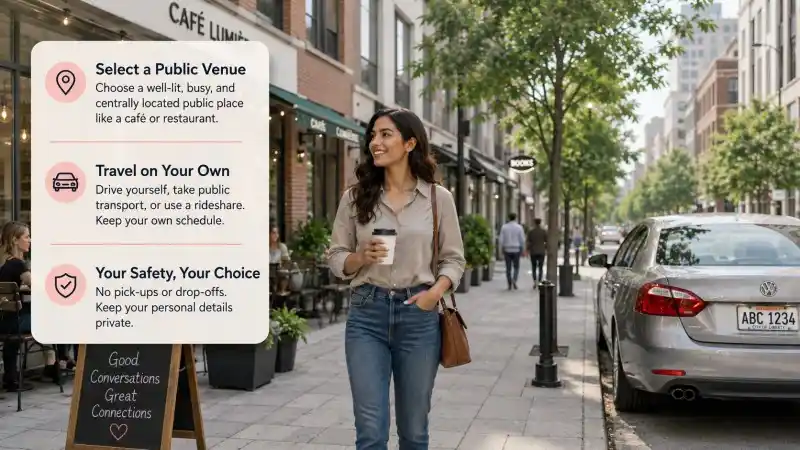
Choose a well-lit, populated location such as a busy café, restaurant, or other public venue. Avoid sharing your home or office address before you’ve established trust, and don’t feel obligated to accept a ride from someone you’ve never met.
Having your own transportation gives you greater control over when you arrive and leave and makes it easier to end the date if you become uncomfortable.
3. Tell Someone You Trust Where You’re Going
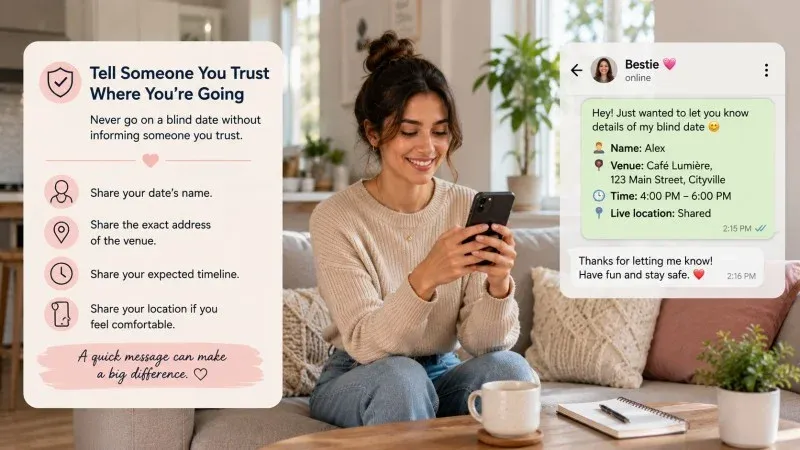
Before leaving, tell a friend or family member who you’re meeting, where you’ll be, and approximately how long you expect to stay. If you feel comfortable, you can also share your location during the date.
A simple check-in message can provide an additional layer of reassurance.
4. Keep Your Expectations Realistic
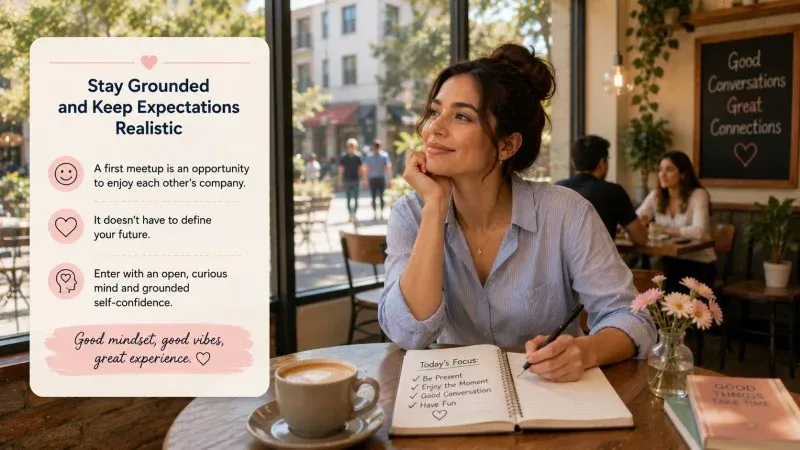
A first meeting doesn’t need to answer whether this person could become your long-term partner. Its purpose is to discover how you feel around each other.
Stay curious rather than trying to match the person against a detailed checklist. Someone may not fit your imagined ideal yet still surprise you with qualities you genuinely appreciate.
5. Keep the Conversation Light and Natural
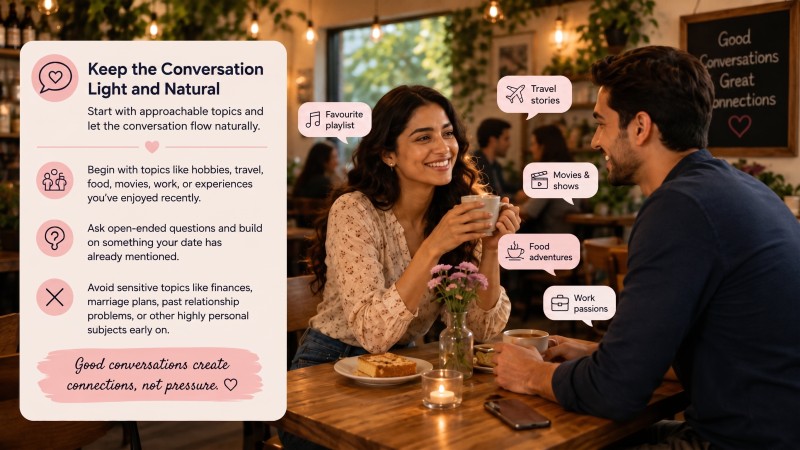
Start with approachable topics such as hobbies, travel, food, movies, work, or experiences you’ve enjoyed recently. Having a few first-date conversation starters in mind can also make those opening minutes feel more natural. Open-ended questions can help the conversation develop naturally, especially when you build on something your date has already mentioned.
Avoid turning the first meeting into an interrogation about finances, marriage plans, past relationship problems, or other highly personal subjects before trust has developed.
6. Balance Talking and Listening
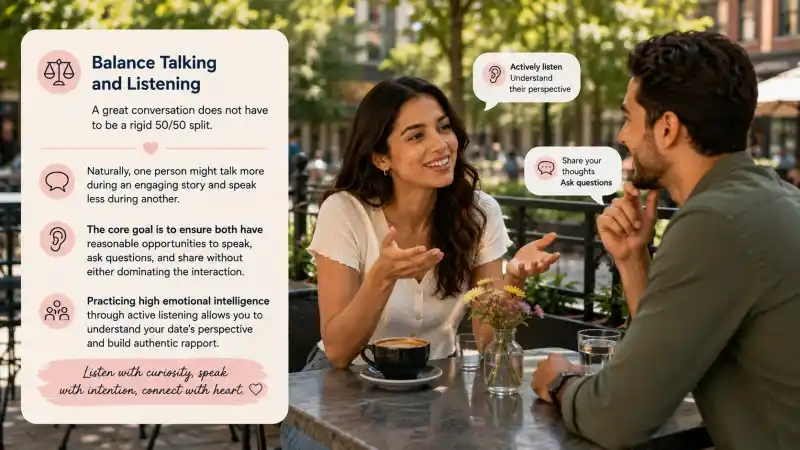
What matters is reciprocity. Give your date space to speak, listen to their answers, ask thoughtful follow-up questions, and share your own experiences too. Being a good listener helps you understand not only what someone says, but also how they communicate and respond.
Blind Date Safety Checklist
A blind date should feel exciting and open-minded, never unsafe. Because you are meeting someone without prior firsthand knowledge, a few structured precautions can give you greater control over your time, environment, and personal boundaries.
Before Leaving Home:
- Choose a high-traffic public venue: Pick a well-lit, familiar cafe, restaurant, or cultural space with active staff.
- Arrange independent transit: Secure your own ride to and from the location using your own vehicle, a rideshare app, or public transit.
- Choose a check-in contact: Share your date’s name, phone number, meeting address, and an agreed-upon check-in time, such as 45 minutes into the date, with a trusted friend or family member.
- Keep personal logistics private: Do not disclose your home address, specific workplace details, or daily commuting routes before trust is established.
- Prepare a reliable exit plan: Keep your phone charged, have access to emergency transportation funds, and make sure your transportation does not depend on your date.
During the Date:
- Monitor your personal items: Keep your drink, bag, wallet, and phone within sight at all times.
- Observe boundary reactions: Pay attention to how your date responds when you say “no,” decline an offer, or express a preference.
- Stay in the public environment: Decline suggestions to transition to a secondary private venue, isolated area, or inside a private vehicle.
- Trust your intuition: If something feels uncomfortable, erratic, or disrespectful, treat that reaction as valid information without needing to prove external danger.
If You Feel Unsafe:
You can end the date immediately. You do not owe anyone additional time, a second location, personal explanations, or polite excuses. Move toward venue staff, managers, or security to request assistance if needed. For broader education on personal boundaries and safety protocols, organizations like RAINN provide credible principles on establishing healthy safety standards.
Your safety matters more than being polite.
Best Places for a Blind Date
Choosing the right setting is one of the most practical blind date tips because the venue affects the tone, conversational flow, and safety of the entire experience. Choose a low-pressure, populated environment where you can talk easily and leave at your own convenience.
1. Coffee Shop or Tea House
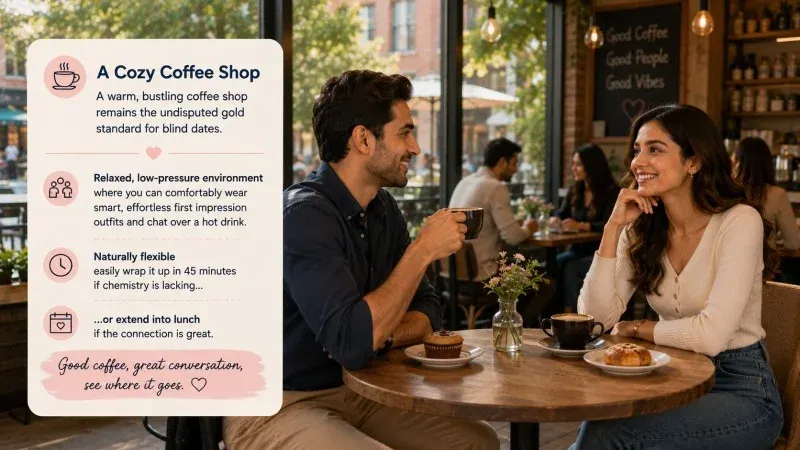
A vibrant daytime cafe or tea house is one of the simplest choices for a first blind date. It is budget-friendly, relaxed, and naturally built around a manageable 45-to-60-minute window. If the chemistry feels effortless, you can order a second drink; if conversation stalls, finishing your cup offers a polite, organic exit point.
2. Dessert Spot or Gelato Bar
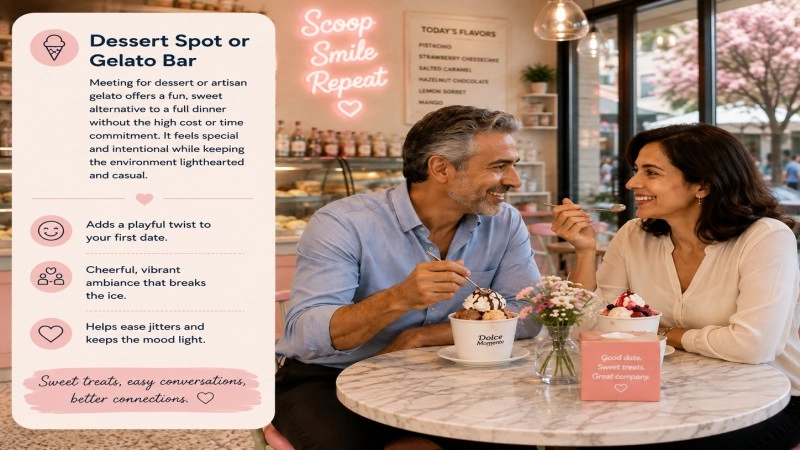
Meeting for dessert or artisan gelato offers a fun, sweet alternative to a full dinner without the high cost or time commitment. It feels special and intentional while keeping the environment light-hearted and casual.
3. Busy Public Park or Popular Daytime Walking Area
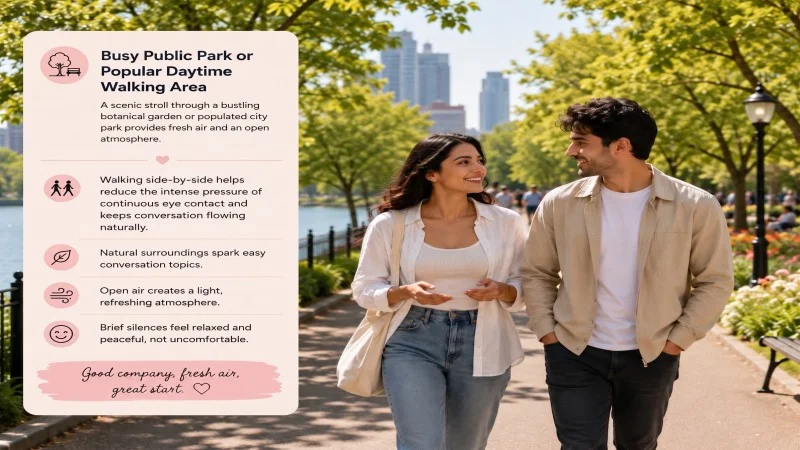
A scenic stroll through a bustling botanical garden or populated city park provides fresh air and an open atmosphere. Walking side-by-side helps reduce the intense pressure of continuous eye contact and keeps conversation flowing naturally. Always choose a familiar, high-traffic park during active daylight hours rather than secluded trails or quiet waterfronts.
4. Casual Activity (Mini Golf, Bowling, or Board Game Cafe)

Low-stakes interactive activities give both of you a shared focus, which naturally breaks the ice and eliminates awkward lulls. Playful competition reveals a person’s sense of humour, sportsmanship, and how they handle minor setbacks—all valuable indicators of character early on.
5. Bookstore or Cultural Venue (Museums & Art Galleries)
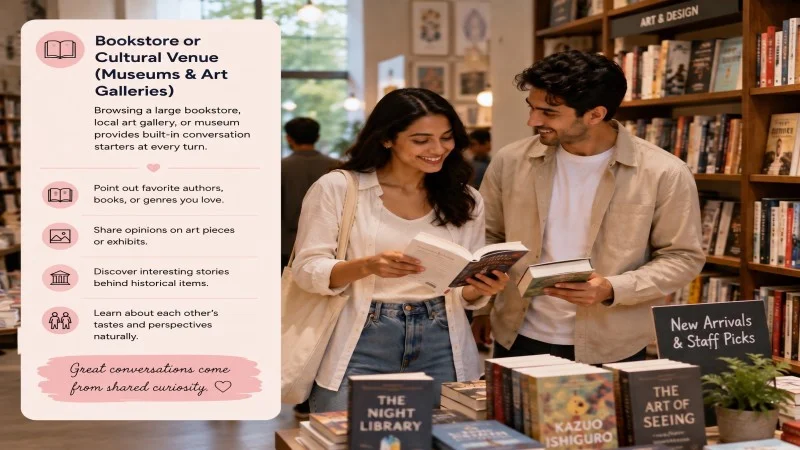
Browsing a large bookstore, local art gallery, or museum provides built-in conversation starters at every turn. Pointing out favourite authors, art pieces, or historical exhibits allows you to learn about each other’s tastes and perspectives without feeling like you are running through an interview script.
6. Movie Followed by Coffee
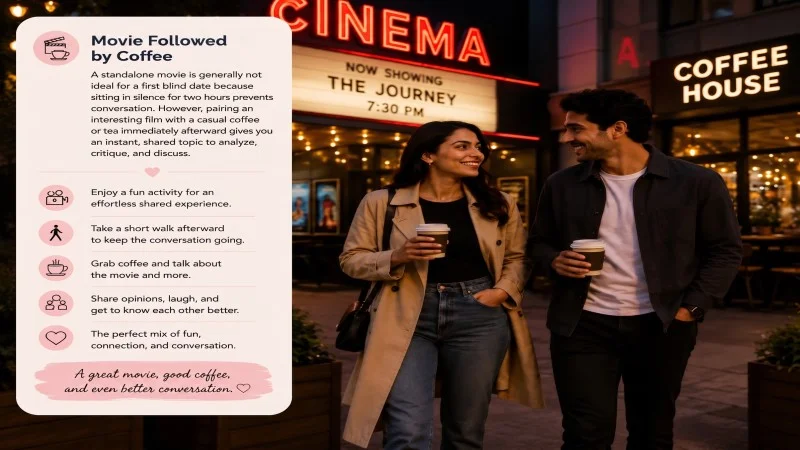
A standalone movie is generally not ideal for a first blind date because sitting in silence for two hours prevents conversation. However, pairing an interesting film with a casual coffee or tea immediately afterward gives you an instant, shared topic to analyze, critique, and discuss, making post-movie conversation effortless.
What Should You Talk About on a Blind Date?
Conversation on a blind date should help you learn about each other’s personality, daily life, and interests without feeling like an interrogation.
- Focus on open curiosity: Ask about favourite travel memories, weekend projects, favourite books, or local spots they enjoy.
- Practice active listening: Build follow-up questions off what they share rather than jumping to an unrelated topic on your mental list.
- Bridge topics naturally: Discussing recent films—such as Before Sunrise, Man Up, or Rye Lane—can be an easy way to explore shared humour, relationship perspectives, and storytelling preferences without heavy pressure.
For more ideas, explore our guide to first-date conversation starters and our guide on how to keep a conversation going.
Movies Can Be Easy Conversation Starters
Movies can be an easy way to break the ice because they invite opinions, memories, and personal preferences rather than simple yes-or-no answers. You might ask, “What’s a movie you could watch more than once?” or “What kind of movies do you usually enjoy?”
If you’re both interested in romantic films, movies such as Before Sunrise, Man Up, or Rye Lane can also open conversations about first impressions, relationships, travel, and unexpected connections.
Blind Date Red Flags to Watch For
Staying open-minded is important, especially when meeting someone for the first time. But being open-minded doesn’t mean ignoring behaviour that makes you uncomfortable. One awkward moment doesn’t automatically mean someone is a bad person; what matters is a repeated pattern of disrespect, pressure, or disregard for your boundaries.
| Red Flag | What It May Look Like |
|---|---|
| Ignoring your boundaries | Pressuring you to stay longer, move somewhere private, share personal information, or accept unwanted physical contact. |
| Disrespecting other people | Being rude or aggressive toward waitstaff, drivers, or other people around you. |
| Dominating the conversation | Talking almost entirely about themselves without showing genuine interest in you or listening to your responses. |
| Constantly blaming an ex | Speaking about previous relationships with intense bitterness, hostility, or refusing to acknowledge any personal responsibility. |
| Rushing intimacy | Acting overly familiar, making intense declarations, or pushing the relationship forward before you’ve established trust. |
| Reacting badly to disagreement | Becoming angry, mocking you, dismissing your opinion, or trying to pressure you when you express a different perspective. |
Repeated pressure, control, or disregard for your perspective can become more concerning when it develops into patterns of emotional manipulation in relationships.
Look at the Pattern, Not One Awkward Moment
First dates can be awkward. Someone may talk too much because they’re nervous, struggle with eye contact, or give an unusually short answer because they’re uncomfortable.
A single awkward moment isn’t necessarily a red flag. Instead, pay attention to how the person responds when you communicate a preference or boundary. A respectful person may be nervous, but they should still be capable of listening, adjusting, and treating you with consideration.
The goal isn’t to judge someone based on a perfect first impression. It’s to recognize behavior that consistently makes you feel pressured, disrespected, or unsafe.
When to Leave the Date
Your safety, comfort, and peace of mind come first. You never owe someone a longer date simply because a friend, relative, or colleague introduced you.
Consider ending the date if:
1. You Feel Unsafe or Seriously Uncomfortable
Trust your instincts if someone’s behavior feels aggressive, intrusive, threatening, or deeply unsettling. You don’t need to wait for the situation to become worse before leaving.
2. Your Boundaries Are Ignored
If you’ve said no, asked for space, or expressed a preference and the person keeps pressuring you, that’s enough reason to leave.
3. The Interaction Becomes Disrespectful
You don’t have to remain in a situation where you’re being insulted, mocked, belittled, or treated aggressively.
4. You Simply Don’t Want to Continue
You don’t need a dramatic reason to end a first date. Sometimes you don’t feel comfortable or interested, and that’s enough. If similar patterns of disrespect or ignored boundaries emerge later in an established relationship, know when to leave a relationship.
If you decide to leave, keep your explanation simple. You can say:
“Thank you for meeting me, but I think I’m going to head home.”
You don’t need to debate your decision or convince the other person that your reason is valid.
The 3C Check: Comfort, Curiosity, and Compatibility
One of the most useful blind date tips is to stop treating the first meeting like a final decision about your future. You don’t have to decide during a blind date whether someone could become your partner. A better approach is to check how the interaction actually feels.
1. Comfort: Do I Feel Safe and Respected?
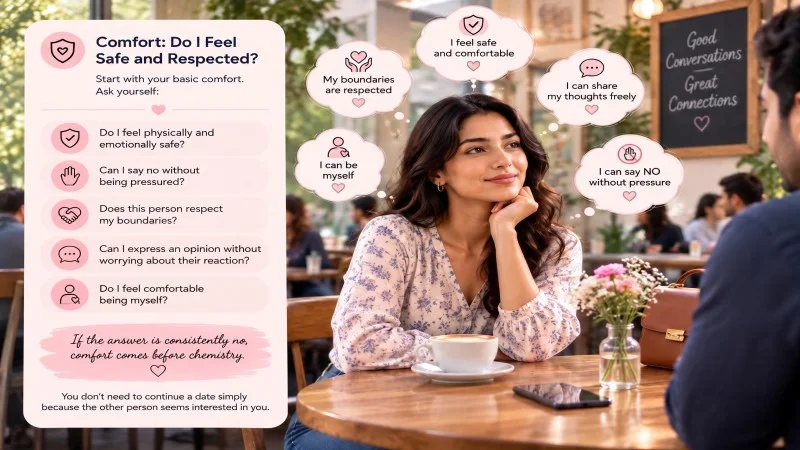
Start with your basic comfort.
Ask yourself:
- Do I feel physically and emotionally safe?
- Can I say no without being pressured?
- Does this person respect my boundaries?
- Can I express an opinion without worrying about their reaction?
- Do I feel comfortable being myself?
If the answer is consistently no, comfort comes before chemistry. You don’t need to continue a date simply because the other person seems interested in you.
2. Curiosity: Do I Want to Know More?
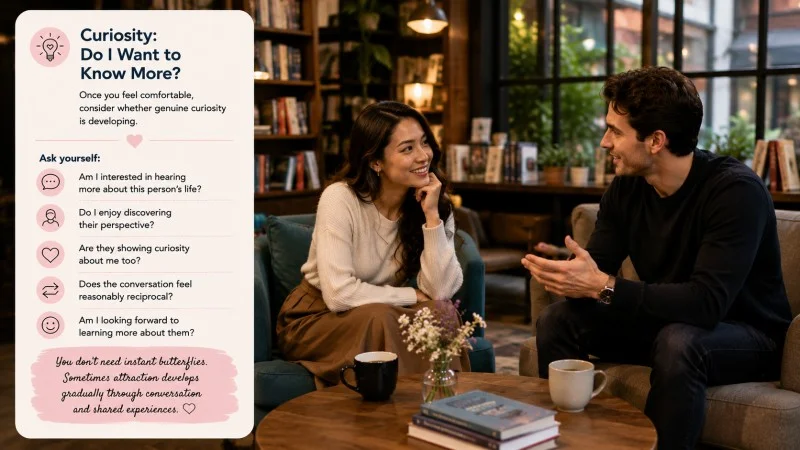
Once you feel comfortable, consider whether genuine curiosity is developing.
Ask yourself:
- Am I interested in hearing more about this person’s life?
- Do I enjoy discovering their perspective?
- Are they showing curiosity about me too?
- Does the conversation feel reasonably reciprocal?
- Am I looking forward to learning more about them?
You don’t need instant butterflies. Sometimes attraction develops gradually through conversation and shared experiences.
3. Compatibility: Could We Fit in Each Other’s Lives?
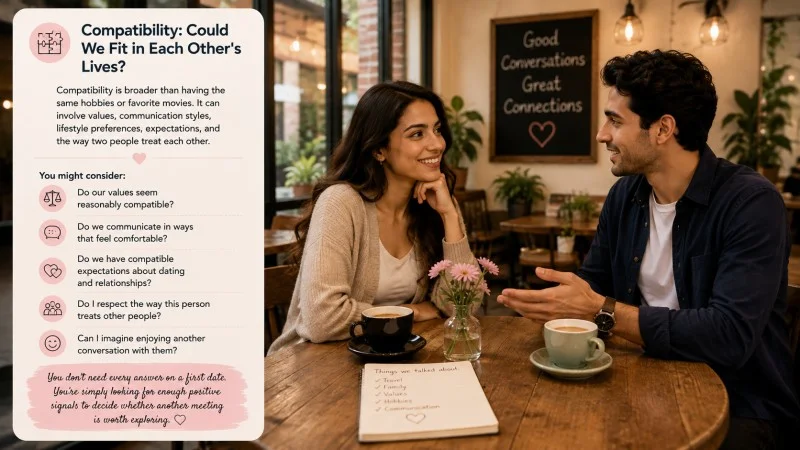
Compatibility is broader than having the same hobbies or favourite movies. It can involve values, communication styles, lifestyle preferences, expectations, and the way two people treat each other. These qualities can also become important foundations of a healthy, loving relationship if the connection develops beyond the first few dates.
You might consider:
- Do our values seem reasonably compatible?
- Do we communicate in ways that feel comfortable?
- Do we have compatible expectations about dating and relationships?
- Do I respect the way this person treats other people?
- Can I imagine enjoying another conversation with them?
You don’t need every answer on a first date. You’re simply looking for enough positive signals to decide whether another meeting is worth exploring.
The Simple Decision
After the date, think of the three Cs together:
Comfort + Curiosity + Compatibility = A reason to consider another date
If you felt comfortable but didn’t feel curious, you may simply not have felt a connection.
If you felt curious but your boundaries weren’t respected, safety and comfort take priority.
If you enjoyed the conversation but noticed major differences in values or relationship expectations, the chemistry may not translate into long-term compatibility.
The goal isn’t to find a perfect score. It’s to leave the date with a clearer understanding of how you felt around the person.
What to Do After a Blind Date
You don’t have to decide immediately whether you want to see someone again. Give yourself time to think about how you actually felt during the date rather than focusing only on instant chemistry.
1. If You’d Like to See Them Again
If you felt comfortable, enjoyed the conversation, and are genuinely curious about the person, there’s nothing wrong with expressing interest.
You can keep it simple:
“I enjoyed meeting you. I’d be happy to do this again sometime.”
You don’t need to make the second date a major commitment. It’s simply another opportunity to see whether the connection develops.
2. If You’re Unsure
Not every good first date produces an obvious answer. You may have enjoyed the conversation but still be unsure about romantic chemistry.
If you felt comfortable and respected, you could permit yourself to take some time before deciding. Ask yourself whether you are genuinely curious about seeing the person again or simply feel pressured to give the date another chance.
3. If You Don’t Want a Second Date
You don’t need to continue dating someone simply because they were introduced through a friend or because they were perfectly polite.
If there is no romantic connection, a brief and respectful response is enough.
“It was nice meeting you, but I didn’t feel the romantic connection I’m looking for. I wish you all the best.”
You don’t need to provide a detailed list of their shortcomings.
4. If Something Felt Wrong
If the person ignored your boundaries, behaved aggressively, pressured you, or made you feel unsafe, prioritize your safety rather than worrying about appearing polite.
You can end communication, block the person if necessary, and tell someone you trust what happened. If you believe you are in immediate danger, seek appropriate local assistance.
Frequently Asked Questions
1. How long should a first blind date last?
The ideal duration for a first blind date is a 45-to-60-minute window. This timeframe allows enough room to gauge rapport and communication flow without conversation fatigue or awkwardness.
2. Who should pay on a blind date?
There is no universal rule. Arrive prepared to split the bill or pay for your own portion. If one person genuinely offers to cover it, you can accept graciously or offer to contribute. The important thing is that payment should not be treated as an obligation or expectation.
3. Is it safe to go on a blind date at night?
A nighttime blind date can be reasonably safe when you meet at a busy, well-lit public venue and arrange your own transportation. Avoid private gatherings, secluded areas, and accepting a ride from someone you’ve never met. If you feel more comfortable meeting during the day, choose a daytime setting instead.
4. What should you do if there is no chemistry?
You don’t need to force a connection. If you feel comfortable staying, remain polite and end the date naturally when you’re ready. If you don’t want a second date, you can decline courteously afterward.
Final Thoughts
A blind date does not have to feel overwhelming or high-stakes. By relying on these practical blind date tips—choosing an accessible public venue, keeping communication light and curious, honouring your personal boundaries, and staying grounded in your comfort level—you can approach the experience with greater clarity and confidence. Treat the outing simply as an opportunity to meet someone new, trust your instincts throughout the process, and focus on enjoying the experience on your own terms.


Navigating the world of blind dates can be both exciting and nerve-wracking! These tips are truly valuable for anyone stepping into the realm of blind dating. Communication, respect, and being oneself are key takeaways.