


If you are starting a fitness or weight-loss journey, protein shakes can seem more complicated than they need to be. Marketing often makes them sound like fat-burning products, while gym advice can make the timing feel almost as important as the shake itself. If you are wondering when to drink protein shakes for weight loss, the answer is simpler: timing matters far less than your overall calorie intake, total daily protein, food quality, and consistency.
Protein shakes are not magic fat burners, and they do not independently cause weight loss. Used strategically, however, they can be a convenient way to meet protein needs, manage hunger, and help preserve lean mass while you are eating fewer calories.
Quick Answer: If you are asking when to drink protein shakes for weight loss, there is no single best hour. A shake may be useful at breakfast, between meals, or around a workout if it helps you meet your protein needs without pushing total calories above your goal. If you train, you also do not need to race against a narrow 30-minute “anabolic window.” Total daily protein intake matters more than whether the shake comes immediately before or after exercise.
What Are the Different Types of Protein Powders?
Protein shakes are usually made by mixing protein powder with water, dairy milk, or a plant-based beverage. You do not need protein powder if you already get enough protein from food; its main advantage is convenience.
- Whey Protein: A dairy-derived complete protein that is digested relatively quickly and is rich in leucine.
- Casein Protein: Also dairy-derived, but digests more slowly over several hours.
- Soy Protein: A complete, plant-based protein providing all nine essential amino acids.
- Pea Protein: A popular dairy-free option that is easily tolerated and frequently blended with other plant proteins.
- Hemp Protein: Provides dietary fiber and unsaturated fats but is usually less protein-dense than an isolate.
- Rice Protein: Contains all essential amino acids but is relatively low in lysine and is often paired with pea protein.
How Much Protein Do You Actually Need?
Before adding shakes to your routine, it helps to understand your actual nutritional requirements. The baseline Recommended Dietary Allowance (RDA) for healthy, sedentary adults is 0.8 grams of protein per kilogram of body weight per day.
That figure is a baseline, not a universal target. Some people who exercise regularly, are older, or are losing weight may need more depending on their circumstances, body size, health, and training.
Protein shakes work best as part of an overall eating pattern rather than as a substitute for diet quality. Our guide to diet plans for women explains how to compare sustainable eating approaches without relying on crash diets. A protein shake is simply a convenient tool for closing a nutritional gap—it is not evidence that everyone needs a supplement.
How Protein Shakes May Support Weight Loss
Protein shakes do not directly burn body fat. Their value comes from making a calorie-controlled eating pattern easier to maintain for some people.
1. They May Help You Feel Fuller

Protein-rich foods and drinks can be satisfying, which may help some people manage hunger between meals. A shake is most useful when it replaces a less filling, higher-calorie snack. The word ‘replaces’ matters: adding a shake on top of everything you already eat does not automatically help with weight loss.
2. They Can Help Preserve Lean Mass During Weight Loss

Weight loss can involve loss of both fat and lean tissue. Adequate protein becomes particularly useful when you are reducing calories and want to preserve muscle. A 2024 meta-analysis of 47 studies involving 3,218 adults with overweight or obesity, it was found that increased protein intake helped reduce muscle-mass loss during weight reduction. Resistance training adds another important stimulus for maintaining muscle.
Preserving lean tissue supports strength and body composition, but protein does not “turn fat into muscle.” The two are completely different tissues. Our guide to evidence-based ways to boost metabolism naturally explains why muscle, activity, sleep, and overall energy balance matter more than metabolism “hacks.”
3. They Can Support Overall Fat Loss—But Not Target Belly Fat

No protein shake can choose where your body loses fat. If using a shake helps you maintain an appropriate calorie deficit while meeting your protein needs, it may support overall fat loss over time. That is fundamentally different from claiming that a shake “burns belly fat”. Fat-loss patterns vary among individuals and are influenced by factors such as genetics, sex, hormones, and overall changes in body fat.
4. They Can Make Weight Maintenance More Practical

Long-term weight maintenance depends on repeatable habits. A shake can be useful on busy days when it prevents skipped meals or replaces a less satisfying convenience snack.
Our guide to how long it takes to lose 30 pounds safely explains why realistic timelines matter more than aggressive restriction.
When to Drink Protein Shakes for Weight Loss
There is no universal “magic hour”. The best time depends on when a shake solves a real problem in your day.
| Your Situation | When a Shake May Be Useful | Why |
| Breakfast is usually very low in protein | With breakfast or mid-morning | Adds a convenient protein source |
| Afternoon hunger leads to frequent snacking | Between lunch and dinner | May provide a more filling planned snack |
| You train regularly | Before or after exercise, whichever fits your schedule | Helps meet total daily protein needs |
| Solid food is unappealing after training | After exercise, when convenient | Offers an easy-to-consume protein source |
| You already meet your protein target from food | You may not need a shake | Avoids unnecessary liquid calories |
What About the “Anabolic Window”?
The old idea that you must drink protein within 30 to 45 minutes after training is far more rigid than the evidence supports. In a 2025 meta-analysis that included studies directly comparing protein before versus after exercise, there was no meaningful difference in lean-body-mass gains between the two timings.
The review included only five eligible studies, so it does not prove that timing never matters. What it does show is that there is little reason for most people to treat a narrow post-workout window as mandatory.
For practical purposes, spread protein across your day and place a shake where it is convenient and helps you reach your overall target.
5 Balanced Protein Shake Recipes to Make at Home
These recipes use a clearly defined protein source rather than assuming every fruit smoothie is automatically high in protein.
1. Peanut Butter & Greek Yogurt Shake
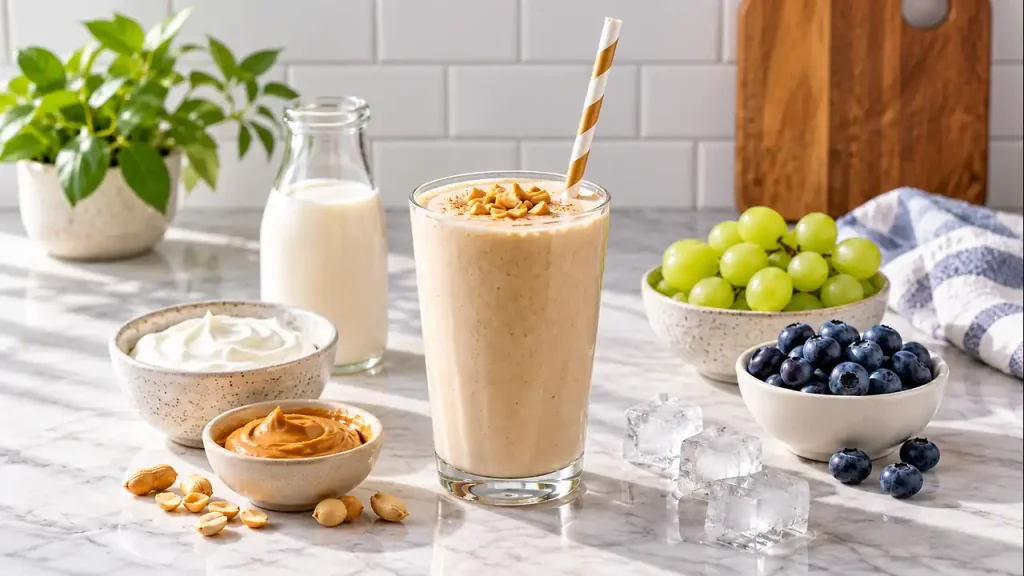
- Ingredients: 3/4 cup plain Greek yogurt or skyr, 1 tablespoon natural peanut butter, 1/2 cup unsweetened almond milk, 1/2 cup green grapes or blueberries, and ice.
- Why it works: Greek yogurt provides the protein base, while peanut butter contributes flavor and unsaturated fats.
2. Berry Protein Boost
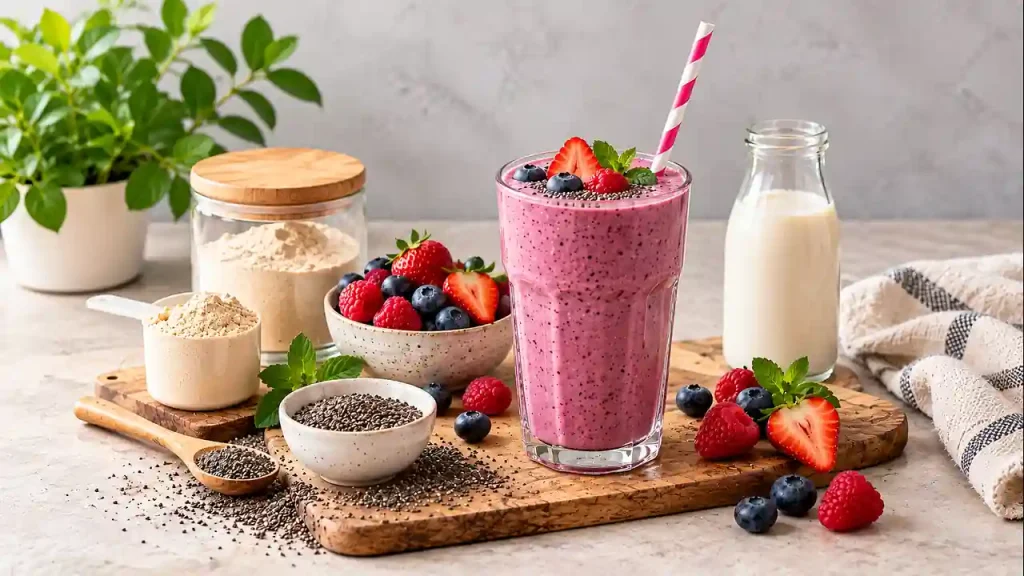
- Ingredients: 1 level scoop of unsweetened whey, pea, or soy protein powder, 1/2 cup mixed berries, 1 tablespoon chia seeds, and 3/4 cup unsweetened soy milk or water.
- Why it works: The protein powder provides the main protein source, while berries and chia add fiber, texture, and flavor.
3. Cocoa Banana & Quinoa Shake
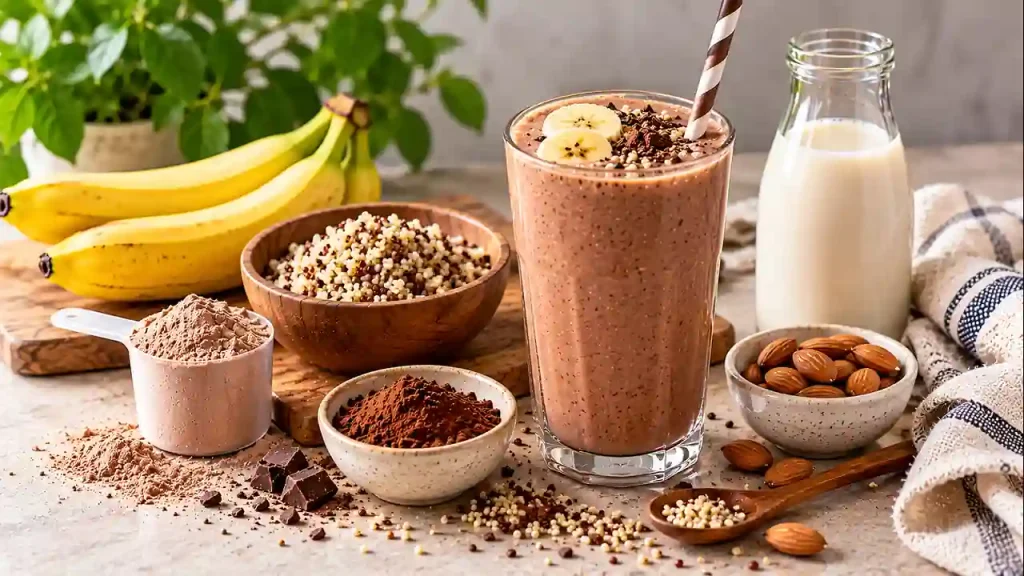
- Ingredients: 1 level scoop chocolate protein powder, 1/2 small banana, 1/4 cup cooked quinoa, 1 tablespoon unsweetened cocoa powder, and 1 cup unsweetened almond milk.
- Why it works: Protein powder supplies most of the protein, while cooked quinoa and banana add texture and carbohydrate for a more substantial shake.
4. Vegan Silken Tofu & Oat Smoothie
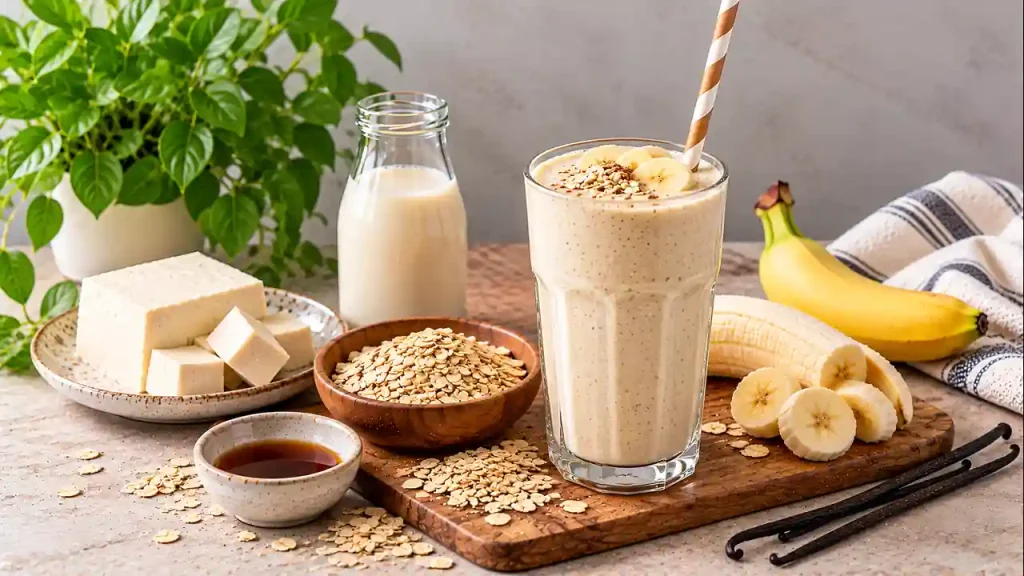
- Ingredients: About 150 g silken tofu, 1/4 cup rolled oats, 1 cup unsweetened soy milk, 1/2 ripe banana, and a dash of vanilla extract.
- Why it works: Tofu and soy milk create a creamy, completely plant-based shake with a meaningful amount of protein.
5. Green Pea-Protein Cooler
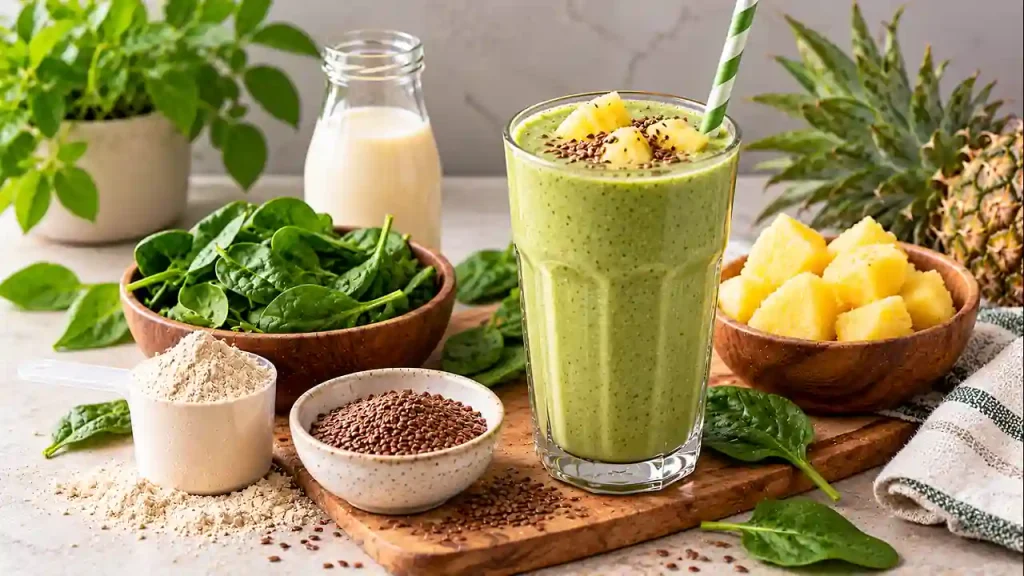
- Ingredients: 1 level scoop unflavored or vanilla pea protein powder, 1 cup spinach, 1 tablespoon ground flaxseed, 1/2 cup frozen pineapple, and 1 cup cold water or unsweetened almond milk.
- Why it works: Pea protein provides the protein base, while spinach, flaxseed, and pineapple add fiber, micronutrients, and flavor.
Calorie Check: The calories in a homemade shake can climb quickly when large amounts of nut butter, sweeteners, oats, full-fat dairy, or several fruits are added. “Healthy ingredients” still contribute energy, so build the shake around your actual goal.
How to Choose a Quality Protein Powder
Protein powders are dietary supplements. The U.S. Food and Drug Administration (FDA) regulates supplements differently from drugs: manufacturers are responsible for evaluating safety and labeling before marketing, and the FDA can act against adulterated or misbranded products after they reach the market.
- Check the Label: Choose a powder with a meaningful amount of protein per serving and limited added sugar while considering allergies and digestive tolerance.
- Verify Independent Certifications: If you value independent certification, look for a reputable third-party program (such as NSF Certified for Sport or Informed-Choice) and check what that specific program actually verifies rather than assuming every certification seal means the same thing.
- Not an Automatic Meal Replacement: A scoop of protein powder mixed with water is not automatically a nutritionally complete meal. If you routinely use shakes in place of meals, the rest of the ingredients and your overall diet still need to provide enough fiber, essential fats, vitamins, minerals, and energy.
- Special Considerations: People with kidney disease, prescribed protein restrictions, significant food allergies, pregnancy or breastfeeding concerns, or other relevant medical conditions should get individualized guidance before substantially increasing protein intake or relying heavily on supplements.
Final Thoughts
Protein shakes are neither a shortcut to fat loss nor something you must avoid. They are simply a convenient source of protein. If you are deciding when to drink protein shakes for weight loss, choose the time when the shake helps you solve a real problem: a low-protein breakfast, an unplanned snack habit, difficulty meeting protein needs, or a need for convenient nutrition around training.
The bigger picture matters more than the clock. Keep your overall calorie intake appropriate for your goal, prioritize a balanced diet, include resistance training when suitable, and use supplements only where they add genuine convenience. That is a much more reliable strategy than chasing the perfect post-workout minute.



Leave a Reply