


Real beauty is personal, and the work and words of Maria Oz, Winnie Harlow, Nyma Tang, Yulianna Yussef, and Frida Kahlo offer different ways to explore it. These five women bring different perspectives through animation, modeling, makeup, personal storytelling, and painting. Their experiences invite us to look beyond a familiar face or photograph and notice the person making choices behind it.
These women are artists, models, and creators with different experiences. Looking at what they make and say is more revealing than describing them as collections of unusual features. Their stories also leave room for an important truth: you deserve respect on days when confidence feels difficult.
What Does Real Beauty Mean?
The phrase challenges the idea that one complexion, body shape, or set of features should determine who belongs. It leaves space for different appearances and for people to decide how they present themselves.
It also asks us to question unrealistic beauty standards without replacing them with another test. You do not need a striking birthmark, a successful career, or an inspirational story to count. Ordinary faces and changing bodies belong in the picture, too.
Five Women, Five Different Perspectives
Each profile offers a different starting point. Some concern opportunities in fashion or cosmetics; others explore the right to shape your own image.
| Woman | Known for | A perspective to consider |
| Maria Oz | Illustration, animation, and creative photography | Notice who creates an image and the ideas behind it. |
| Winnie Harlow | Modeling and speaking about beauty | Representation should leave room for individual identity. |
| Nyma Tang | The Darkest Shade makeup series | Products should serve a wider range of skin tones. |
| Yulianna Yussef | Sharing her experience of CMN | Acceptance can coexist with discomfort and practical concerns. |
| Frida Kahlo | Painting and self-portraiture | A portrait can express much more than conventional attractiveness. |
1. Maria Oz: Creativity Shapes the Image
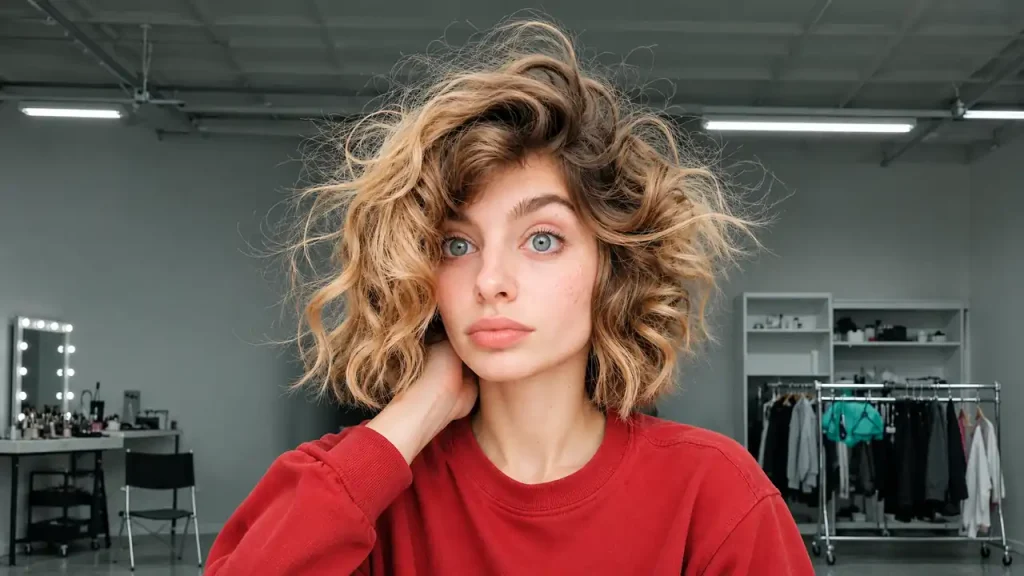
Ukrainian artist Maria Oz works across illustration, animation, and photography. In her first-person interview with Arts Help, she describes studying art and interior design before developing creative animations and sharing them online. The interview also features her posters exhibited at Coachella in 2022 and an IKEA Ukraine advertisement she directed. Those examples give us more to explore than her appearance: visual ideas, animation, and the choices behind a finished piece. She describes planning photo shoots with photographers, including concepts, makeup, hair, and clothes.
Oz also talks about working with both feminine and masculine presentation. Her approach offers an example of experimenting with identity through images, rather than treating one style as a permanent obligation. You can borrow that curiosity without copying a photograph. If you enjoy exploring feminine style.
Try a detail because it interests you: a different neckline, a tailored jacket, or an unexpected color. See whether you enjoy wearing it. You can change your mind afterwards. Her work invites us to notice imagination and creative decisions alongside the finished image.
2. Winnie Harlow: Representation Without a Single Label
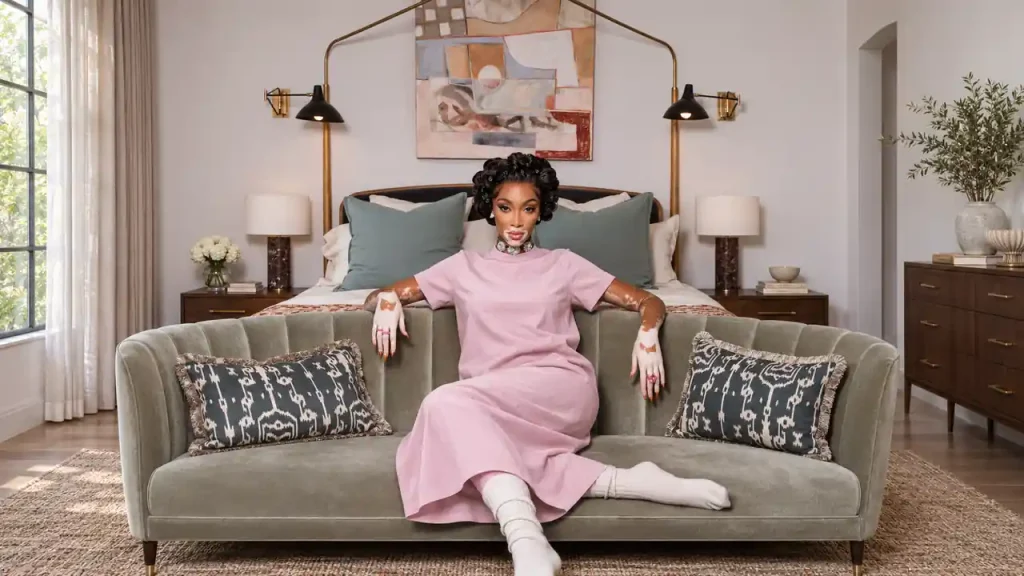
Winnie Harlow is a Canadian model with vitiligo. Her career includes runway work and international fashion campaigns. In her October 2014 TEDxTeen talk, How I Define Beauty, she discusses looking beyond societal standards and defining beauty in her own way. Her visibility gives this article a concrete example of real beauty embracing individuality. A person can appear in fashion imagery without their skin matching the narrow expectations a viewer may have learned.
At the same time, a model’s career should not become a demand placed on everyone with the same condition. Someone with vitiligo may enjoy public visibility, prefer privacy, or feel differently from day to day. None of those choices requires explanation.
When discussing Harlow, notice her work rather than reducing every photograph to her skin. That is also a useful habit in everyday conversation. Compliment a friend’s styling choice or ask about their project instead of treating their appearance as the most interesting thing about them. If repeated comments have contributed to body shame, the responsibility for those comments belongs to the people making them. Confidence is not a prerequisite for respectful treatment.
3. Nyma Tang: Inclusion Means Having Products That Fit
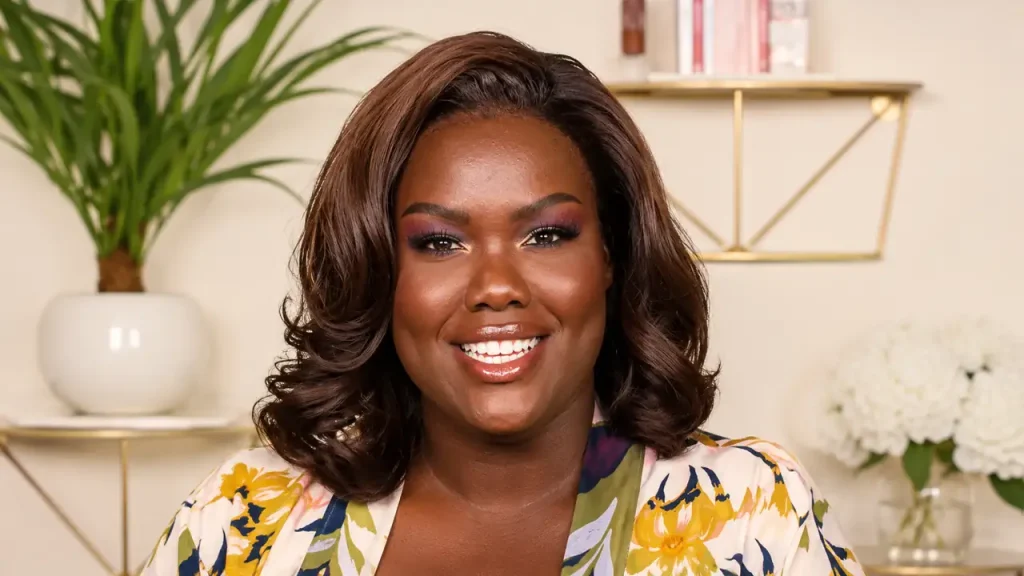
Beauty creator Nyma Tang is known for The Darkest Shade, a YouTube series testing the deepest shades offered by makeup brands. Her work makes inclusion practical: does a product range actually offer something that works for the person trying it?
In her May 2023 interview with Makeup.com, Tang explains that frustration with finding a suitable foundation helped motivate the series. She also discusses affordability and availability, showing why a broad product range matters beyond an advertising campaign. That shifts the question away from whether someone is suitable for makeup. The more useful question is whether the makeup is suitable for them.
For readers who enjoy cosmetics, her approach encourages comparison and curiosity. Look for demonstrations on skin tones similar to yours and examine how a product appears after application. A disappointing shade match is information about the product, rather than a judgment about your complexion. Tang’s work also leaves room for enjoying makeup as experimentation. Deep skin tones do not require an apology, a lighter foundation, or permission to wear color. Choosing a bare face is equally personal; access to makeup and an obligation to wear it are different things.
4. Yulianna Yussef: Listen to the Person Behind the Photograph
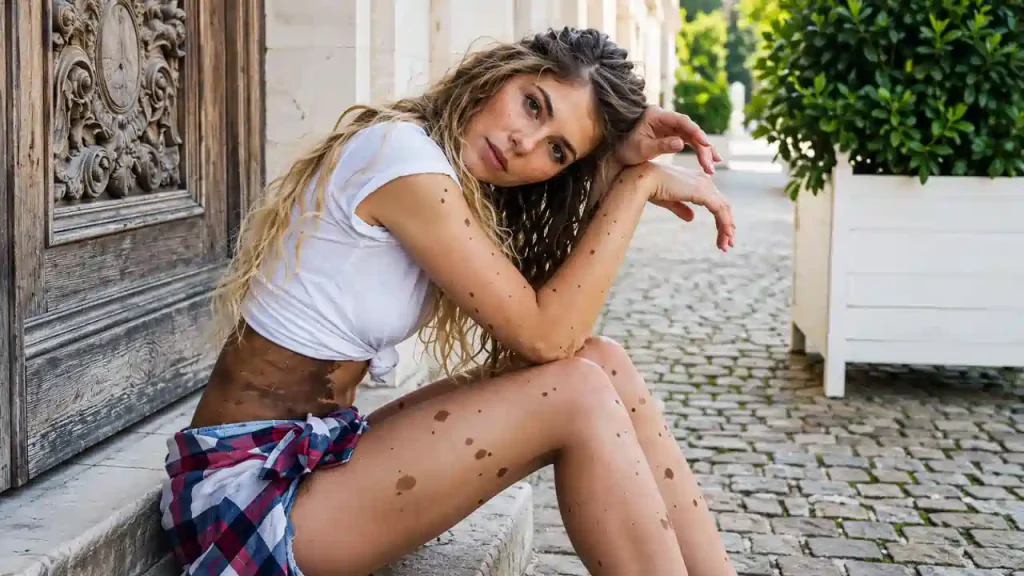
Yulianna Yussef, whose name also appears as Yulianna Youssef, shares her experience of congenital melanocytic naevi, often shortened to CMN. These are pigmented birthmarks, usually present at birth.
In her personal account published by Naevus Global, she describes both accepting her appearance and dealing with physical discomfort. That combination matters. A confident photograph cannot tell us everything about someone’s daily experience. Her account gives readers a reason to listen before turning a person into an inspirational message. Acceptance does not require someone to enjoy every aspect of a condition or make every experience public.
For someone working on feeling more confident in their body, that distinction can make the goal more manageable. You might wear something comfortable, join a photograph, or ask others to stop commenting without first loving every feature. Openness leaves room for privacy. Follow the person’s lead about what they want to discuss, including whether they welcome questions about their skin.
5. Frida Kahlo: A Self-Portrait Can Tell Its Own Story
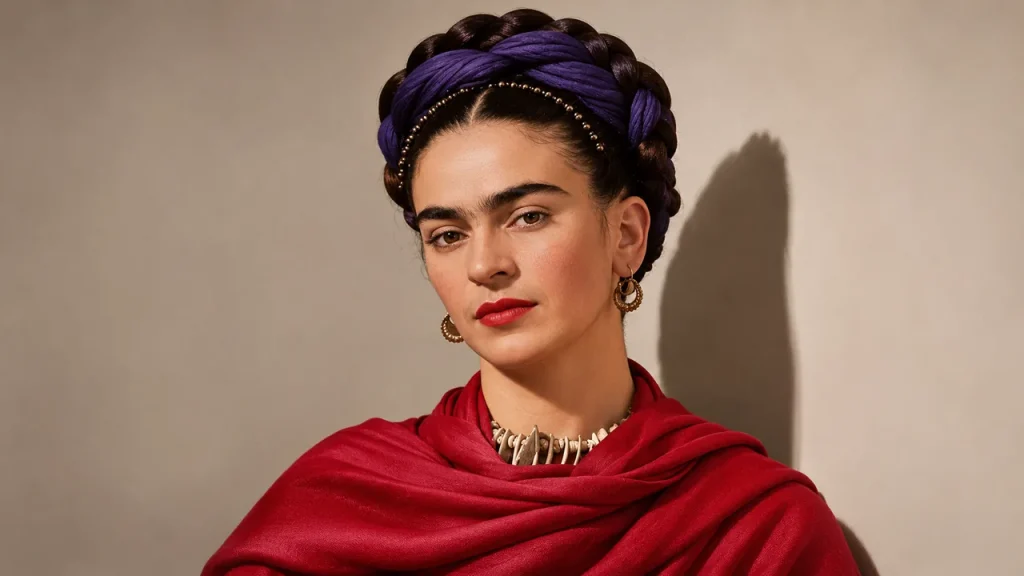
Frida Kahlo was a Mexican artist who lived from 1907 to 1954 and began painting during recovery from a serious bus accident in 1925. In Self-Portrait with Cropped Hair (1940), she depicts herself seated in a suit, holding scissors, with cut hair scattered around her.
That painting offers a specific example of appearance becoming part of a larger story. Clothing, hair, pose, and objects all contribute. Across her self-portraits, recognizable features sit alongside changing settings and ways of presenting herself. Reading these choices as an expression of real beauty is one interpretation of her work. Kahlo’s art also explores identity and lived experience.
Try looking at a self-portrait slowly. What catches your attention besides the face? What do the pose, clothes, colors, and setting contribute? Different viewers may find different meanings. That approach can change how you take your own photographs, too. A picture can record an afternoon, a relationship, or a place you care about. It does not have to settle whether you look attractive enough.
Put the Message Into Everyday Practice
Make real beauty about how you live and relate to others. Start with one choice you can make without turning self-acceptance into another project to complete. Notice what you admire beyond appearance. Write down a quality and a recent example: curiosity when learning something, humor during a difficult day, or consideration toward a friend. This gives self-esteem a broader foundation than your reflection.
Choose how you want to present yourself. Wear makeup, change your hairstyle, or keep your usual routine according to your preferences. Ask whether a choice feels enjoyable or useful, rather than whether it will finally make you acceptable. Prepare a boundary for unwanted comments. Try, “I’m not looking for feedback on my appearance.” Simple assertive communication can state your preference without inviting a debate.
Make room for conversations beyond looks. Ask what someone is reading, making, learning, or looking forward to. In a healthy friendship, there should be space to be known for more than an outfit or a photograph. When someone raises an appearance worry, practice listening before offering advice. Ask whether they want reassurance, practical help, or simply someone to hear them.
Do You Have to Feel Beautiful Every Day?
No. You can respect yourself while feeling uncertain about your appearance. A difficult morning does not erase your right to company, care, or an enjoyable plan.
If you want to work on feeling beautiful, begin with something believable and manageable. Getting dressed comfortably or spending less time comparing photographs may feel more useful than forcing yourself to praise every feature.
Final Thoughts
Real beauty leaves room for individuality and self-expression. These five women offer perspectives through art, modeling, makeup, and personal storytelling, but their experiences are not instructions everyone must follow. Notice the work behind the images, listen to what people choose to share, and allow yourself the same freedom. You can enjoy your appearance without making it the measure of your worth.



Good. Keep it up.
Very well articulted…. kudos to the young writer.
Truly well written article, Ananya. It's not society which promotes fairness, coloured hair, smooth skin etc. It's the cosmetic industry. If we don't care about being the "perfect beauty " then the cosmetic industry will just collapse. So just be yourself! 👍
Superb article Ananya. All the very best. Look forward to reading more such from you.👍
Mind blowing…..it is true one must b clear hearted n soul……this is only a real beauty.
I remember a song….
HUM KAALE HEH TOH KYA HUA DIL WALE HEH.
WAITING 4UR NEXT ARTICLE…. LOTS OF BEST WISHES
A good young writer to watch out for!! This article obviously seems to require some level of research and coming from a teenager, it's very encouraging to see that all kids aren't lost. 🙂