


Have you ever wondered how to keep a conversation going when an awkward silence takes over or the other person gives one-word answers? Whether you’re meeting someone new, catching up with a friend, talking to a coworker, or getting to know someone you’re interested in, keeping a conversation flowing naturally can feel challenging.
The good news is that conversation is a skill anyone can improve. Great conversations aren’t about having the perfect words or being the most interesting person in the room—they’re about listening, showing genuine curiosity, and making the other person feel heard and respected.
Confident communicators don’t try to dominate conversations. They listen, ask thoughtful questions, respond naturally, and use assertive communication to express themselves while respecting others. These skills can strengthen professional relationships, friendships, and everyday connections.
In this guide, you’ll discover 12 practical strategies for keeping conversations flowing, avoiding awkward silences, asking better questions, and building meaningful connections. You’ll also find conversation starters, texting tips, and advice for situations ranging from first dates and workplace conversations to family gatherings and learning how to make friends in a new city.
How do you keep a conversation going?
The best way to keep a conversation going is to ask open-ended questions, actively listen to the other person’s responses, show genuine curiosity, and build naturally on what they share. Instead of worrying about saying the perfect thing next, focus on understanding the conversation. Meaningful conversations happen when both people feel heard, respected, and comfortable contributing.
Why Conversations Matter More Than You Think
Conversation is more than exchanging words—it helps us build trust, strengthen relationships, solve problems, and understand the people around us. Friendships, romantic relationships, family bonds, and professional connections all depend on meaningful communication.
Strong communication can also support emotional well-being. Feeling heard and understood can strengthen our sense of connection, while expressing ourselves clearly can build confidence and improve relationships.
When conversations flow naturally, they can help you:
- Build trust with new people
- Develop deeper friendships
- Strengthen romantic relationships
- Resolve misunderstandings
- Make positive first impressions
- Expand professional and social connections
- Learn from different perspectives
Being a good conversationalist isn’t about talking the most. The people we enjoy talking to often make us feel valued because they listen without interrupting, ask thoughtful questions, and show genuine interest in what we have to say.
The good news is that these aren’t personality traits reserved for naturally outgoing people. Effective conversation is a skill that can be learned and improved with practice.
Why Conversations Naturally Fade

If you’ve ever thought, “I wish I knew what to say next,” you’re not alone. Conversations usually don’t fade because someone isn’t interesting enough. More often, small communication habits interrupt the natural flow.
Understanding these habits can help you become a more confident conversationalist.
1. Asking Questions That End the Conversation
Questions such as “Did you have a good weekend?” or “Did you enjoy the movie?” can invite one-word answers.
Instead, ask questions that encourage people to share more, such as:
- “What was the highlight of your weekend?”
- “What did you enjoy most about the movie?”
A small change in wording can create more opportunities for conversation.
2. Planning Your Next Response
When you’re busy thinking about what to say next, you may miss important details in what the other person is saying. Listen first, then let their response guide yours.
3. Turning Conversation Into an Interview
Asking question after question without sharing anything yourself can make the interaction feel one-sided.
A healthier rhythm is:
Ask → Listen → Respond → Share → Ask Again
4. Fearing Silence
Not every pause is awkward. A few seconds of silence can give both people time to think and respond naturally. You don’t need to fill every quiet moment.
5. Losing Curiosity
Conversations often lose momentum when we stop exploring what the other person has shared. Instead of searching for the perfect next question, stay curious and look for something in their response you genuinely want to know more about.
12 Proven Ways to Keep a Conversation Going Naturally
Now that you understand why conversations sometimes lose momentum, it’s time to learn how to keep a conversation going in a way that feels genuine rather than forced. The following strategies aren’t tricks or conversation hacks—they’re communication habits that help people feel comfortable, respected, and interested in continuing the conversation.
Whether you’re chatting with a friend, meeting someone for the first time, speaking to a colleague, or getting to know someone you’re interested in, This is particularly useful when you’re meeting someone new, including on a blind date, where genuine curiosity can make the conversation feel much more natural, these practical tips can help you build meaningful conversations with confidence.
1. Ask Open-Ended Questions

One of the easiest ways to keep a conversation alive is by asking open-ended questions. Unlike questions that can be answered with a simple “yes” or “no,” open-ended questions encourage the other person to share stories, opinions, and experiences. This naturally creates opportunities for follow-up questions and keeps the conversation flowing. This can be especially useful on a first date, where asking thoughtful questions can help both people get to know each other without making the conversation feel like an interview.
For example, instead of asking:
❌ “Did you enjoy your vacation?”
Try asking:
✅ “What was your favorite part of the trip?”
The second question invites a detailed response and gives you several directions to continue the conversation.
Closed vs. Open Questions
| Closed Question | Better Open-Ended Question |
| Did you have a good weekend? | What was the highlight of your weekend? |
| Do you like your job? | What do you enjoy most about your work? |
| Did you watch the game? | What did you think about the match? |
| Do you like traveling? | What’s the most memorable place you’ve visited? |
The goal isn’t to interrogate someone with endless questions. Instead, ask one thoughtful question, listen carefully to the answer, and let their response guide the next part of the conversation.
Quick Tip: Questions beginning with what, how, or why often lead to richer conversations than questions that only require a yes or no answer.
2. Practice Active Listening Instead of Waiting for Your Turn

Many people believe that being a good conversationalist means always having something interesting to say. In reality, one of the most effective ways to keep a conversation going is to become a better listener.
Active listening means giving the other person your full attention instead of mentally preparing your next response while they’re still talking. People can usually tell when they’re truly being listened to, and that feeling encourages them to open up even more.
Here are a few simple ways to practice active listening:
- Maintain comfortable eye contact.
- Avoid interrupting before they’ve finished speaking.
- Nod or use short verbal responses like “I see,” or “That makes sense.”
- Ask follow-up questions based on what they just shared.
- Reflect back part of what they said to show you understand.
Example
Them: “I recently started learning photography.”
Instead of immediately changing the subject, try:
“That’s interesting! What made you decide to start photography?”
Or:
“What kind of photos do you enjoy taking the most?”
These follow-up questions show genuine curiosity rather than simply waiting for your turn to speak.
Remember: People don’t always remember every word you say, but they often remember how you made them feel. Feeling heard is one of the strongest foundations of a meaningful conversation.
3. Share About Yourself—Without Taking Over the Conversation

Great conversations are a balance between listening and sharing. If you only ask questions, the interaction can start to feel like an interview. On the other hand, if you only talk about yourself, the other person may feel unheard.
A simple way to maintain that balance is to follow this pattern:
Ask → Listen → Share → Ask Again
For example:
Them: “I love hiking on weekends.”
You: “I’ve recently started exploring local hiking trails too. My favorite so far has been the one near the lake. Have you discovered any hidden spots you’d recommend?”
Notice how you briefly share your own experience before inviting the other person back into the conversation.
Avoid Oversharing Too Soon
Being open helps build trust, but sharing deeply personal information too early can make the conversation uncomfortable. Let the level of personal disclosure grow naturally as the relationship develops.
Think of conversation like a game of catch. Both people should have an opportunity to throw and catch the ball. If only one person keeps throwing—or keeps holding onto it—the conversation quickly loses its rhythm.
4. Find Common Interests to Create Natural Connections

One of the easiest ways to keep a conversation going is to discover something you both enjoy talking about. Shared interests create an instant sense of familiarity and make conversations feel more natural because both people have something they genuinely want to discuss.
Common interests don’t have to be life-changing. People usually appreciate authenticity more than forced agreement. They can be as simple as enjoying the same TV series, reading similar books, loving coffee, traveling, cooking, fitness, pets, or even supporting the same sports team. This same balance of curiosity, honesty, and respect can help create healthier platonic friendships.
As the conversation develops, pay attention to clues about the other person’s hobbies, experiences, or passions. Instead of immediately changing the topic, explore it a little further.
For example:
Them: “I started gardening during the pandemic.”
Instead of replying:
“That’s nice.”
Try saying:
“What do you enjoy growing the most?”
or
“I’ve always wanted to try gardening but never knew where to start. Do you have any beginner tips?”
These responses show genuine interest while naturally opening the door for the conversation to continue.
Don’t Pretend to Like Something
You don’t need to fake common interests just to keep someone engaged. If you’ve never tried their hobby, be honest and curious.
For example:
“I’ve never been hiking before, but it sounds interesting. What do you enjoy most about it?”
People usually appreciate authenticity more than forced agreement.
Conversation Tip: People become more engaged when they get the opportunity to talk about something they genuinely enjoy. Your curiosity is often more valuable than your expertise.
5. Use Positive Body Language to Show You’re Engaged

Communication isn’t just about the words you say. Your body language often communicates interest, confidence, and respect before you even speak.
Even the best conversation can feel awkward if you’re constantly checking your phone, avoiding eye contact, or appearing distracted. On the other hand, small non-verbal cues can encourage the other person to keep talking.
Positive body language includes:
- Maintaining natural eye contact without staring.
- Smiling when appropriate.
- Facing the person instead of turning away.
- Keeping an open posture instead of crossing your arms.
- Nodding occasionally to show you’re following the conversation.
- Putting your phone away whenever possible.
These simple habits make people feel that they have your attention.
Match Their Energy Naturally
If someone is excited about a story, respond with enthusiasm. If they’re sharing something serious, slow down and respond with empathy.
Matching another person’s emotional tone—without copying them—helps conversations feel comfortable and genuine.
Body Language Mistakes to Avoid
| Instead of… | Try… |
| Looking around the room constantly | Maintain comfortable eye contact. |
| Checking your phone while they’re talking | Keep your attention on the speaker. |
| Standing with crossed arms | Use an open, relaxed posture. |
| Interrupting with gestures | Let the speaker finish before responding. |
Remember, good body language isn’t about appearing perfect. It’s about making the other person feel respected and heard.
6. Practice Empathy, Not Just Sympathy
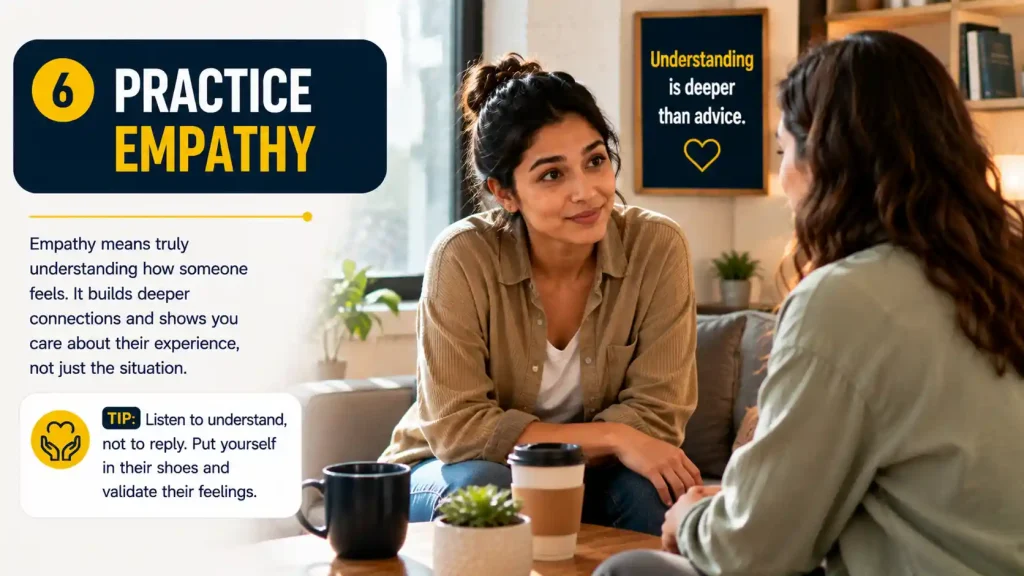
If you truly want to keep a conversation going, learn to understand the emotions behind someone’s words—not just the words themselves.
Empathy means trying to see a situation from another person’s perspective. Instead of immediately offering advice or trying to solve every problem, acknowledge what they’re feeling first.
Imagine a friend says:
“I’ve been feeling overwhelmed at work lately.”
A common response might be:
“You should probably take a vacation.”
While well-intentioned, it shifts straight to solving the problem.
An empathetic response could be:
“That sounds really exhausting. What’s been the biggest challenge for you?”
This response invites the person to continue sharing instead of ending the conversation.
Helpful Empathetic Phrases
- “That sounds really exciting.”
- “I can understand why you feel that way.”
- “That must have been difficult.”
- “Tell me more about what happened.”
- “How did that make you feel?”
Simple phrases like these show that you’re paying attention and genuinely care about the other person’s experience.
Resist the Urge to Make It About You
It’s natural to relate someone else’s story to your own experiences. However, avoid immediately turning the conversation back to yourself.
For example:
Them: “I finally completed my first marathon.”
Instead of quickly saying:
“That reminds me of when I…”
Pause for a moment and celebrate their achievement first.
“That’s amazing! Congratulations. What was the most rewarding part of finishing the race?”
Giving someone space to fully share their story makes conversations feel more balanced and meaningful.
Remember: Empathy isn’t about having the perfect response. It’s about making the other person feel understood.
7. Use Humor Naturally to Make Conversations More Enjoyable

Laughter has a unique way of bringing people together. A lighthearted comment or a shared laugh can make conversations feel relaxed, memorable, and enjoyable. You don’t need to be a comedian to use humor effectively—often, a genuine smile or a playful observation is enough.
The purpose of humor isn’t to impress people or become the center of attention. Instead, it helps reduce tension, makes others feel comfortable, and creates a positive atmosphere where conversations flow more naturally.
Keep Humor Appropriate
Not every joke fits every situation. Humor should always consider the setting, the people you’re talking to, and how well you know them.
For example, a playful joke between close friends may not be suitable during a first meeting or in a professional environment.
If you’re unsure whether a joke is appropriate, it’s usually better to keep things simple and friendly.
Everyday Humor Works Best
You don’t need prepared jokes. Sometimes the funniest moments come from everyday observations. For example, if you’re both waiting in a long coffee shop line, you might say:
“At this rate, we’ll know everyone in the queue before we get our coffee.”
Simple, relatable humor often feels more natural than trying too hard to be funny.
Avoid Humor That Makes Others Uncomfortable
Some types of humor can quickly end a conversation instead of improving it.
Try to avoid:
- Making fun of someone’s appearance.
- Offensive stereotypes.
- Sarcasm with people who don’t know you well.
- Constant self-criticism disguised as humor.
- Jokes about sensitive personal experiences.
The best conversations leave people feeling respected—not embarrassed.
Conversation Tip: If your humor helps everyone smile together instead of making someone the target, you’re probably on the right track.
8. Stay Curious and Keep Exploring the Conversation

Curiosity is one of the most valuable qualities of a great conversationalist. When you’re genuinely interested in learning about another person, you’ll naturally ask better questions and discover new topics to discuss. Many conversations end because people treat answers as the finish line instead of the starting point.
Imagine someone says:
“I recently started learning Italian.”
A conversation can end quickly if you simply reply:
“That’s nice.”
Instead, curiosity helps you explore the topic further.
You could ask:
- “What inspired you to learn Italian?”
- “How long have you been studying?”
- “Have you visited Italy before?”
- “What’s been the most difficult part?”
Each answer creates another opportunity for meaningful conversation.
Follow the Conversation, Don’t Control It
Many people worry about preparing the perfect list of questions before meeting someone.
In reality, good conversations rarely follow a script.
Instead, listen carefully and allow the other person’s answers to guide the next question.
Think of every answer as opening several new doors. Your job isn’t to choose all of them—it’s simply to open one that feels most interesting.
Curiosity Shows Respect
When you ask thoughtful follow-up questions, you’re sending an important message:
“I’m interested in understanding your experiences.”
That feeling of being valued often encourages people to continue sharing.
Remember: Curiosity is about understanding, not interrogating. Ask because you genuinely want to know more—not because you feel obligated to keep asking questions.
9. Be Yourself Instead of Trying to Impress Everyone

One of the biggest misconceptions about how to keep a conversation going is believing that you need to sound clever, funny, or interesting all the time. The truth is, authenticity creates stronger connections than perfection. Trying too hard to impress someone often leads to unnecessary pressure. You may overthink every sentence, exaggerate stories, or pretend to enjoy things you don’t actually like. Instead, focus on being honest and genuine.
If you’ve never traveled abroad, it’s perfectly fine to say:
“I’ve never had the chance to travel internationally yet, but it’s something I’d love to do someday.”
Honest responses make conversations feel more relaxed because you aren’t trying to maintain an image that doesn’t reflect who you are.
Don’t Be Afraid to Admit You Don’t Know Something
You don’t have to be an expert on every topic. If someone mentions a hobby you’ve never heard of, say:
“I’ve never tried that before. What’s it like?”
Often creates a much more engaging conversation than pretending to understand. People generally appreciate curiosity and honesty far more than false confidence.
Confidence Comes from Comfort, Not Perfection
Confident conversationalists don’t always have the most interesting stories. They simply feel comfortable being themselves. They ask questions when they’re curious. They admit when they don’t know something. They listen without pretending. They laugh naturally. And they allow conversations to develop without forcing them. Ironically, the less you focus on impressing people, the easier it becomes to build genuine connections.
Quick Reminder: Authenticity isn’t about saying everything that comes to mind. It’s about expressing yourself honestly while remaining respectful and considerate of others.
10. Practice Patience and Don’t Be Afraid of Silence

Many people think that every second of silence in a conversation is awkward. In reality, brief pauses are completely normal and often make conversations feel more thoughtful and natural.
If you’ve ever felt pressured to fill every moment with words, you’re not alone. However, rushing to speak can lead to interrupting others, changing topics too quickly, or saying something simply because you’re uncomfortable with the silence.
Instead, give yourself—and the other person—a few moments to think.
Imagine you’re talking with a colleague about their recent vacation. After they finish sharing a story, there’s a short pause. Rather than immediately switching topics, you might simply smile and ask:
“What was the highlight of the entire trip?”
That brief pause gave you time to think of a better question and allowed the conversation to continue naturally.
Why Comfortable Pauses Matter
A few seconds of silence can:
- Give both people time to think.
- Encourage more thoughtful responses.
- Prevent interrupting the speaker.
- Make conversations feel more relaxed instead of rushed.
Don’t Mistake Silence for Failure
Not every pause means the conversation is ending. Sometimes people pause because they’re remembering a story, choosing the right words, or reflecting on what was just said. Learning to become comfortable with these moments is an important part of becoming a confident conversationalist.
Quick Tip: Instead of worrying about silence, use it as an opportunity to listen, observe, and think about what the other person has just shared.
11. Use Shared Experiences to Keep the Conversation Flowing

One of the easiest ways to continue a conversation is to talk about something both of you are experiencing at that moment. Unlike discussing random topics, shared experiences feel natural because both people already have something in common.
For example, if you’re attending a conference, you could ask:
“Which session have you enjoyed the most so far?”
If you’re at a family gathering, you might say:
“It’s been a while since we’ve all been together like this. What’s everyone been up to lately?”
If you’re waiting in line at a café, you could comment:
“I’ve heard their seasonal drinks are really good. Have you tried any of them?”
These simple observations often feel more genuine than trying to force an unrelated topic into the conversation.
Shared Experiences Create Instant Connections
You can build conversations around:
- Travel experiences.
- Movies or TV shows you’ve both watched.
- Books you’ve read.
- Local events.
- Food.
- Sports.
- Work projects.
- Classes or workshops.
- Mutual friends.
- Community activities.
The key is to notice what’s already happening around you rather than searching for the “perfect” conversation topic.
Build on Their Response
Suppose someone tells you they recently attended a concert.
Instead of simply replying:
“That sounds fun.”
Try asking:
- “Who was performing?”
- “What was your favorite part of the concert?”
- “Would you go see them again?”
One shared experience often leads naturally to several related conversations.
Remember: The best conversations don’t jump randomly between unrelated topics. They grow naturally from shared experiences and genuine curiosity.
12. End Conversations Positively and Leave the Door Open

Many people focus on starting conversations but forget that ending them well is just as important.
A positive ending leaves a lasting impression and makes future conversations feel much easier.
Whether you’re finishing a conversation with a coworker, a new acquaintance, or someone you’ve enjoyed getting to know, try to end on a warm and genuine note.
Show Appreciation
Simple phrases like these can leave a positive impression:
- “It was really nice talking with you.”
- “I enjoyed hearing about your experiences.”
- “Thanks for sharing that with me.”
These small expressions of appreciation help people feel valued.
Leave the Conversation Open
If appropriate, you can create an opportunity for another conversation.
For example:
“I’d love to hear how that project turns out.”
or
“Let me know how your trip goes—I hope you have a great time.”
These comments show genuine interest and make reconnecting feel natural.
Know When It’s Time to End
A conversation doesn’t have to continue indefinitely to be successful. If the discussion naturally comes to an end, it’s perfectly acceptable to conclude it politely instead of forcing another topic. Ending at the right time often leaves both people looking forward to talking again.
Conversation Tip: People rarely remember every detail of a conversation, but they often remember how the conversation made them feel. Ending with kindness, appreciation, and respect leaves a lasting positive impression.
Conversation Starters That Actually Work

Even if you understand how to keep a conversation going, getting the conversation started can sometimes feel like the hardest part. Many people worry about saying the wrong thing or running out of topics after the first few minutes.
The good news is that you don’t need a perfect opening line. The best conversation starters are simple, genuine, and relevant to the situation. Instead of trying to sound clever, focus on asking questions that invite the other person to share their thoughts or experiences.
Below are some conversation starters for different situations.
1. Conversation Starters for Someone You Just Met
When meeting someone for the first time, choose light and open-ended questions that help both of you get comfortable.
Examples:
- What inspired you to come here today?
- How do you usually spend your weekends?
- Have you always lived in this city?
- What’s something you’ve been enjoying lately?
- If you could travel anywhere right now, where would you go?
These questions encourage storytelling instead of one-word answers.
2. Conversation Starters for Friends
Sometimes conversations with friends become repetitive because you keep discussing the same topics.
Try asking:
- What’s been the best part of your week so far?
- Have you learned anything interesting recently?
- Is there something you’ve always wanted to try?
- What’s one goal you’re working toward this year?
- If you had an unexpected free day tomorrow, how would you spend it?
These questions often lead to meaningful discussions.
3. Conversation Starters for Work or Networking
Professional conversations don’t have to feel formal or awkward. Instead of asking only about someone’s job title, try questions like:
- What do you enjoy most about your work?
- How did you get started in your career?
- What’s the most exciting project you’re working on?
- What’s one skill you’ve learned recently that has helped you professionally?
These questions help you learn about the person rather than just their profession.
4. Conversation Starters for Family Gatherings
Family conversations can become much more enjoyable when you move beyond routine questions.
Consider asking:
- What’s something good that’s happened recently?
- Have you picked up any new hobbies?
- What’s one family tradition you hope never changes?
- What’s your favorite childhood memory?
These questions encourage storytelling and strengthen family bonds.
5. Conversation Starters for Someone You Like
If you’re talking to someone you’re interested in, don’t focus on impressing them. Focus on getting to know them.
Try asking:
- What’s something you’re really passionate about?
- What’s your idea of a perfect weekend?
- What’s the best advice you’ve ever received?
- If you could instantly master one skill, what would it be?
- What’s something that always makes you smile?
Genuine curiosity is far more attractive than trying to deliver the perfect line.
Remember: Great conversation starters don’t create meaningful conversations by themselves. What matters most is how you listen and build on the answers that follow.
How to Keep a Text Conversation Going Without It Feeling Forced

Texting has become one of the most common ways people communicate, but it also comes with unique challenges. Without facial expressions, tone of voice, or body language, messages can easily be misunderstood or lose momentum.
If you’ve ever wondered how to keep a conversation going over text, the same principles still apply—you just need to adapt them to a digital conversation.
1. Ask Questions That Invite More Than One-Word Replies
Instead of:
“How was your day?”
Try:
“What was the most interesting thing that happened today?”
This gives the other person something meaningful to respond to.
2. Avoid Interview-Style Texting
If every message is another question, the conversation can quickly feel like an interview.
Instead, follow a natural rhythm:
Ask → Listen → Respond → Share → Ask Again
For example:
You: “What’s your favorite place you’ve ever traveled to?”
Them: “Japan.”
Instead of immediately asking another unrelated question, you could respond:
“I’ve always wanted to visit Japan because of the food and culture. What was your favorite part of the trip?”
3. Don’t Panic If Someone Replies Late
People have work, family responsibilities, studies, and personal commitments. A delayed response doesn’t automatically mean someone has lost interest. Avoid sending multiple follow-up messages simply because they haven’t replied immediately. Patience helps conversations feel relaxed instead of pressured.
4. Match Their Energy
If someone sends thoughtful messages, take the time to reply thoughtfully. If they usually keep messages short, avoid overwhelming them with several long paragraphs. Healthy conversations often develop when both people contribute at a similar pace.
5. Know When to End the Conversation
Not every text conversation needs to continue all day.
Sometimes ending naturally with:
“It was really nice chatting with you. Hope you have a great evening!”
Creates a better impression than trying to keep the conversation alive unnecessarily.
How to Handle Awkward Silence with Confidence
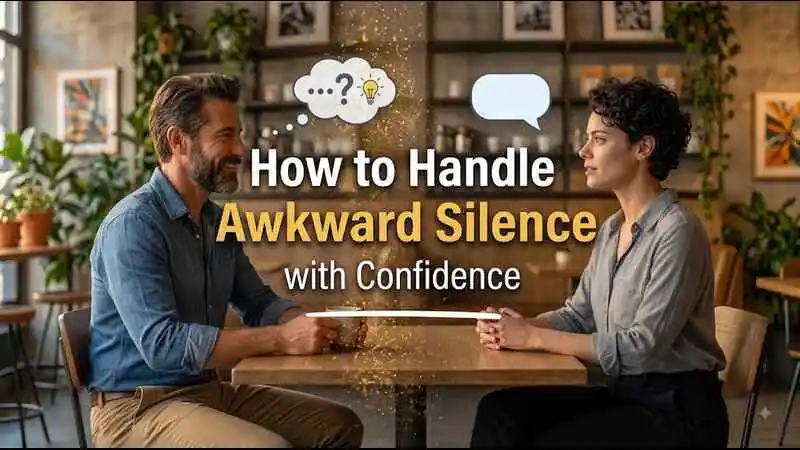
Almost everyone experiences awkward silence at some point. The important thing to remember is that silence itself isn’t the problem—it’s how we react to it. Many conversations become uncomfortable because people panic and feel they must fill every quiet moment immediately. Instead of viewing silence as failure, think of it as a natural pause.
Here are a few ways to move the conversation forward:
1. Return to Something They Mentioned Earlier
If they previously talked about a hobby, a trip, or a recent experience, revisit it.
“Earlier you mentioned you recently started painting. How’s that going?”
This shows that you were genuinely listening.
2. Comment on Your Surroundings
Shared observations often create natural transitions.
For example:
“This café has such a relaxing atmosphere.”
or
“That speaker made an interesting point about teamwork.”
Simple observations can lead to surprisingly engaging discussions.
3. Ask a Follow-Up Question
Instead of introducing a completely new topic, explore the current one a little more deeply. People usually appreciate thoughtful follow-up questions because they show genuine interest.
4. Accept That Silence Is Normal
Meaningful conversations often include short pauses. The more comfortable you become with them, the more confident you’ll appear.
Remember: Silence doesn’t end conversations—panic usually does.
Common Conversation Mistakes to Avoid
Even people with excellent communication skills occasionally make mistakes. The key is recognizing them and making small adjustments.
| Common Mistake | Better Approach |
| Asking only yes-or-no questions | Ask open-ended questions that encourage conversation. |
| Interrupting frequently | Allow the other person to finish before responding. |
| Talking only about yourself | Create a balanced exchange by listening and sharing. |
| Looking at your phone | Give the speaker your full attention. |
| Jumping between unrelated topics | Build naturally on what has already been discussed. |
| Trying too hard to impress | Focus on creating a genuine connection instead. |
| Being afraid of short pauses | Allow conversations to breathe naturally. |
Nobody communicates all the time perfectly. Every conversation is an opportunity to improve your communication skills.
Conversation Tips for Different Situations

The principles you’ve learned throughout this guide apply almost everywhere, but different situations sometimes require a slightly different approach.
1. First Dates
Focus on curiosity rather than trying to impress.
Ask open-ended questions, listen carefully, and allow the conversation to develop naturally.
2. Workplace Conversations
Maintain professionalism while showing genuine interest in your colleagues.
Avoid dominating discussions and encourage others to share their ideas.
3. Networking Events
Instead of collecting as many contacts as possible, aim to build a few meaningful conversations.
People are far more likely to remember genuine interest than a rehearsed introduction.
4. Family Gatherings
Use conversations as an opportunity to strengthen relationships.
Ask about experiences, memories, and future plans instead of repeating the same routine questions every time you meet.
5. Making New Friends
Friendships grow through consistency rather than perfection.
Be patient, stay curious, and allow trust to develop naturally over time.
Frequently Asked Questions
How do you keep a conversation going naturally?
The best way to keep a conversation going naturally is to ask open-ended questions, actively listen to the other person’s responses, and show genuine curiosity about what they have to say. Instead of worrying about saying the perfect thing, focus on understanding the other person’s experiences and building on their answers.
What should I do if the conversation becomes awkward?
Awkward moments happen to everyone and don’t necessarily mean the conversation is going badly. Take a deep breath, allow a brief pause, and ask a follow-up question based on something the other person mentioned earlier. You can also comment on your surroundings or introduce a related topic naturally instead of forcing the conversation.
How can I stop running out of things to say?
Rather than thinking about your next sentence, pay close attention to what the other person is saying. Their answers often contain several opportunities for follow-up questions or new topics. Staying curious is one of the easiest ways to keep conversations flowing.
How do I keep a text conversation going?
Keep text conversations balanced by asking thoughtful questions, sharing your own experiences, and responding to what the other person has said instead of sending unrelated messages. Avoid overwhelming someone with multiple texts if they haven’t replied yet, and remember that not every conversation needs to last all day.
What are some good conversation starters?
Some effective conversation starters include:
- What’s been the highlight of your week?
- What hobby have you been enjoying recently?
- What’s something you’ve always wanted to learn?
- If you could travel anywhere tomorrow, where would you go?
- What’s one thing you’re looking forward to this month?
Open-ended questions like these invite detailed responses and naturally lead to more meaningful conversations.
Is silence during a conversation always awkward?
Not at all. Short pauses are a normal part of healthy conversations. They give both people time to think, reflect, and respond thoughtfully. Learning to feel comfortable with brief moments of silence can actually make you appear more confident and relaxed.
Can introverts become good conversationalists?
Absolutely. Being a great conversationalist isn’t about talking the most—it’s about listening well, asking thoughtful questions, and showing genuine interest in others. Many introverts excel at these skills because they naturally focus on meaningful conversations rather than constant small talk.
How do I know if someone enjoys talking to me?
While everyone communicates differently, some positive signs include:
- They ask you questions in return.
- They maintain eye contact.
- They contribute to the conversation instead of giving one-word replies.
- They smile or laugh naturally.
- They introduce new topics to keep the conversation going.
- They seem interested in learning more about you.
These signs suggest that the conversation feels comfortable and engaging for both of you.
Final Thoughts
Learning how to keep a conversation going isn’t about memorizing clever questions or trying to become the most interesting person in the room. It’s about creating a space where people feel comfortable sharing their thoughts, experiences, and emotions without fear of being judged.
The strongest conversations aren’t built on perfect words—they’re built on genuine curiosity, active listening, empathy, and mutual respect. Research and psychological guidance also emphasize the importance of engagement, listening, and responsiveness in creating meaningful interactions. Every meaningful relationship, whether it’s a friendship, a romantic partnership, a family bond, or a professional connection, begins with someone choosing to listen, understand, and respond with authenticity.
Don’t worry if every conversation doesn’t go perfectly. Like any other skill, communication improves with practice. Every interaction allows you to become a better listener, ask more thoughtful questions, and build stronger connections with the people around you.
The next time you find yourself wondering how to keep a conversation going, remember that the goal isn’t to avoid every moment of silence or impress everyone you meet. Instead, focus on making the other person feel heard, valued, and appreciated. When you approach conversations with genuine interest and kindness, meaningful connections often develop naturally.



Leave a Reply