


Aging is a natural part of life, but getting older does not mean giving up your health, confidence, strength, or independence. The most useful aging tips for women are not about trying to look 25 forever. They are about supporting your physical health, caring for changing skin, protecting bone and muscle strength, adapting to hormonal changes, and maintaining emotional well-being as the years pass. Research on healthy aging consistently points toward everyday habits such as physical activity, nutritious food, adequate sleep, preventive healthcare, and meaningful social engagement. The National Institute on Aging’s healthy aging guidance offers a useful overview of these factors.
Quick Answer: Healthy aging is less about trying to stop the biological aging process and more about protecting the areas of health you can influence. Staying active, eating well, sleeping adequately, avoiding smoking, keeping up with appropriate health screenings, managing stress, protecting your skin from excessive UV exposure, and staying socially and mentally engaged can all support healthier aging.
How Can Women Age Gracefully?
Aging gracefully does not require hiding every wrinkle or fighting every physical change. It means adjusting your habits as your body changes while continuing to invest in your health, relationships, interests, and sense of self. These nine practical aging tips for women focus on long-term health and quality of life rather than unrealistic anti-aging promises.
1. Accept Aging Without Letting Appearance Define Your Worth
Changes in skin, hair, body composition, and physical ability are normal parts of getting older. Constantly comparing yourself with a younger version of yourself—or with heavily edited images online—can make ordinary changes feel like personal failures.
Healthy aging begins with developing a more realistic relationship with your body. You can care about your appearance while also recognizing that wrinkles, gray hair, weight changes, or changes in body shape do not determine your worth. If appearance concerns are becoming a major source of self-criticism, our guide to body shame and how to overcome it explores how beauty standards, comparison, and appearance-based judgments can affect self-worth.
Self-acceptance does not mean ignoring your health. It means making health-supportive choices because they help you feel and function better—not because aging itself is something to be ashamed of.
2. Understand Perimenopause and Menopause

Midlife brings hormonal changes that can affect women very differently. Perimenopause, the transition leading up to menopause, commonly begins in the mid-to-late 40s. Menopause is reached after 12 consecutive months without a menstrual period, and the average age in the United States is about 52, according to the Office on Women’s Health menopause guidance. Possible symptoms during this transition include irregular periods, hot flashes, sleep difficulties, vaginal dryness, and mood changes. Not every woman experiences the same symptoms or the same level of severity.
Menopause should not be treated as a disease or as evidence that a woman has suddenly become old. However, changing hormone levels can affect areas such as bone and cardiovascular health, so this is a useful stage of life to discuss symptoms, individual risk factors, and preventive care with a healthcare professional. Seek medical advice when symptoms significantly affect daily life or when you notice unusual changes. Vaginal bleeding after menopause, for example, should be evaluated by a healthcare professional.
3. Keep Up With Recommended Health Screenings

Preventive healthcare becomes increasingly important as we get older, but there is no single list of tests that every woman needs at exactly the same age. Screening recommendations can depend on age, personal and family medical history, previous test results, medications, lifestyle, and other risk factors. Depending on the individual, preventive care may include monitoring blood pressure and cholesterol and recommended screening for conditions affecting the breasts, cervix, colon, or bones.
Avoid assuming that frequent scans, ultrasounds, or so-called complete-body checkups automatically improve health. When evaluating practical aging tips for women, scheduling targeted screenings with a qualified healthcare professional provides far more value than unneeded full-body scans. It is also important to discuss new or persistent physical and mental-health changes rather than dismissing every symptom as “just aging.”
4. Stop Smoking and Be Mindful of Alcohol

Stopping smoking can benefit health at any age. Smoking affects the heart, lungs, blood vessels, and many other parts of the body, and it can also contribute to premature skin aging. Alcohol deserves a more balanced approach than simply labeling it a bad habit. Drinking alcohol carries health risks, and drinking less generally means less risk. If you do not currently drink alcohol, there is no health reason to start. These changes cannot stop normal aging, but reducing avoidable health risks can support healthier years ahead.
5. Protect Your Skin and Focus on Reducing Wrinkles Realistically

Skin naturally becomes thinner, drier, and less elastic with age, and some wrinkles are an unavoidable part of intrinsic aging. However, environmental factors—particularly cumulative ultraviolet exposure—can accelerate visible skin aging.
One of the most useful strategies for reducing wrinkles associated with premature skin aging is consistent sun protection. The American Academy of Dermatology’s guidance on premature skin aging recommends broad-spectrum, water-resistant sunscreen with SPF 30 or higher, along with shade, protective clothing, hats, and sunglasses when appropriate.
Keep Skin Care Simple and Consistent
A good skincare routine does not require dozens of products. Gentle cleansing, moisturizing, and daily sun protection provide a sensible foundation for most people. Moisturizer can help relieve dryness and temporarily make some fine lines less noticeable by improving skin hydration. If fine lines, pigmentation, persistent dryness, or other age-related skin concerns bother you, a dermatologist can help determine whether evidence-based treatments are appropriate for your skin. Women entering midlife may also find our guide to skincare routines for women in their 40s useful as a practical companion.
Do Normal Facial Expressions Cause Wrinkles?
Repeated facial muscle movements over many years can contribute to expression lines, but this is not a reason to stop smiling, laughing, or expressing emotion. A more practical measure is wearing sunglasses in bright conditions. This can reduce repeated squinting while also helping protect the delicate eye area from UV exposure. When it comes to reducing wrinkles, consistent sun protection and appropriate skincare deserve far more attention than trying to control normal facial expressions.
6. Prioritize Nutritious Food and Consistent Sleep

Nutrition needs can change with age, activity level, menopause, health conditions, and body composition. Among the core aging tips for women, shifting focus away from hyped “anti-aging foods” toward a balanced pattern of vegetables, fruits, whole grains, protein-rich foods, and healthy fats delivers real, lasting benefits.
Protein deserves particular attention as women get older because maintaining muscle supports strength, mobility, and physical function. Calcium, vitamin D, fiber, and other nutrients may also require greater attention depending on life stage and individual needs. Our evidence-based healthy eating plan for women explains how to build balanced meals without relying on restrictive diets or universal calorie prescriptions.
Sleep matters too. Try to maintain a reasonably consistent sleep schedule and a comfortable sleep environment. Persistent insomnia, loud snoring, breathing difficulties during sleep, or ongoing daytime exhaustion are worth discussing with a healthcare professional rather than automatically accepting poor sleep as part of aging.
7. Make Physical Activity Part of Everyday Life
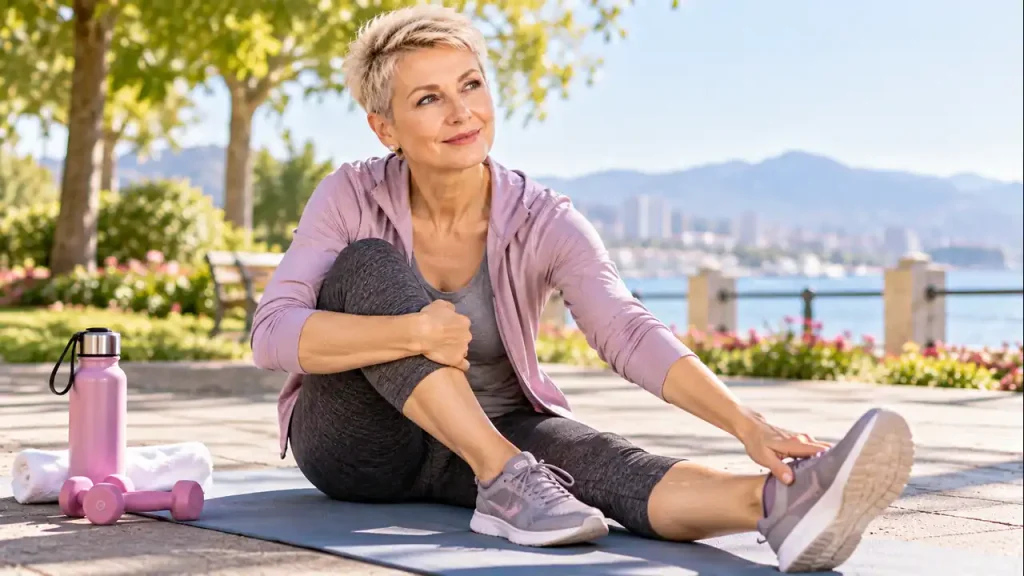
Regular movement is one of the most practical aging tips for women because staying active supports cardiovascular health, muscle strength, mobility, balance, and independence as we age. Exercise does not need to revolve around appearance. Walking, cycling, swimming, dancing, yoga, resistance training, gardening, and other forms of movement can all contribute to an active lifestyle. Strength training becomes particularly valuable during midlife and later adulthood because muscle mass and strength tend to decline with age. Balance and mobility exercises can also become increasingly useful for maintaining everyday function.
Choose activities appropriate for your current fitness level and health. If you have been inactive for a long time or have a medical condition that affects exercise, seek appropriate professional advice before making major changes. The goal should be maintaining what your body can do, not punishing it into looking younger.
8. Manage Stress and Protect Your Emotional Well-Being

Stress does not disappear with age. Work, finances, caregiving, changing relationships, health concerns, retirement, bereavement, and shifting family roles can all affect emotional health. Healthy coping strategies may include physical activity, meditation, spending time outdoors, hobbies, social connection, relaxation techniques, or simply creating more periods of rest in a busy schedule.
Our guide to emotional well-being discusses the importance of paying attention to emotional health alongside physical well-being. Stress-management practices can be useful, but meditation and positive thinking are not substitutes for professional care when it is needed. Persistent anxiety, depression, severe mood changes, or significant emotional distress deserve support from an appropriately qualified mental-health or healthcare professional.
9. Stay Curious, Connected, and Engaged With Life

Healthy aging is not simply a checklist of food, exercise, skincare, and medical appointments. Continuing to participate in activities that matter to you can support quality of life and give everyday routines a greater sense of meaning.
Learn something new. Spend time with people who matter to you. Volunteer, travel when circumstances allow, read, garden, cook, create art, join a group, take a class, or return to an interest you abandoned years ago. Productivity does not have to mean constantly working or accomplishing something measurable. Rest, relationships, creativity, curiosity, and enjoyment have value too. Getting older can change how you spend your time, but it does not eliminate your ability to learn, contribute, build relationships, or discover new interests.
Can You Actually Slow Down Aging?
No lifestyle habit can stop normal biological aging. Genetics and the passage of time influence many physical changes that cannot be prevented. What you can influence are some of the factors that affect health, function, and premature aging. Regular physical activity, nutritious food, sufficient sleep, appropriate preventive healthcare, avoiding smoking, protecting the skin from excessive UV exposure, managing stress, and remaining socially and mentally engaged can support health and quality of life as you get older. Skin aging provides a useful example of the difference. Natural skin aging will continue, but limiting avoidable UV damage can help reduce some premature wrinkling and pigmentation. That is a more realistic goal than relying on products or habits that promise to stop or reverse aging.
Final Thoughts
The best aging tips for women do not ask women to fear wrinkles, menopause, gray hair, or a changing body. Aging well is about protecting your health, maintaining strength and independence, caring for your skin realistically, supporting emotional well-being, and continuing to build a life that feels meaningful. You cannot stop the passage of time, but you can make informed choices that support how you feel and function through every stage of life.



Leave a Reply