


Sabudana vada combines softened tapioca pearls, mashed potatoes, roasted peanuts, and herbs in crisp, golden patties. The contrast between the crunchy outside and tender center makes it a popular snack, whether you prepare it for a festive fast or an ordinary afternoon.
Good results begin before the oil heats up. The pearls need to soften completely, the potatoes should be free of excess moisture, and the mixture must hold its shape. Start with one test patty so you can adjust the texture or heat before frying the remaining batch.
What Is Sabudana?

Sabudana commonly sold in India is made from cassava starch and shaped into pearls. Although shops and recipes sometimes call it “sago”, true sago has a different botanical source. Cambridge’s account of sago describes starch extracted from palm pith. For this recipe, choose ordinary sabudana intended for Indian cooking, rather than assuming every product labelled ‘sago’ or ‘tapioca’ behaves identically.
Avoid large boba pearls and instant products unless their instructions specifically suit this preparation. Pearl size and processing affect hydration, so package directions and the softness check matter more than one universal soaking time.
Sabudana Vada Recipe at a Glance
Plan the soaking. The preparation and cooking estimates below exclude the time needed to hydrate the pearls and cook and cool the potatoes.
| Detail | Guide |
| Yield | Approximately 16 medium patties |
| Servings | About 4–6 as a snack |
| Preparation | Approximately 25 minutes after preliminary preparation |
| Frying | Approximately 25–35 minutes in small batches |
| Main equipment | Bowl, sieve, potato masher, deep heavy pan, slotted spoon, oil thermometer |
| Main allergens | Peanuts; sesame if included |
| Fasting suitability | Depends on your observance and ingredient choices |
These timings and quantities are starting estimates. Your ingredients, patty size, and pan capacity will affect the result.
Ingredients
Measure the pearls while dry. The potato weight below refers to peeled, cooked potatoes, not the weight before boiling.
Main Mixture
- 180 g dry sabudana, approximately 1 cup; use the weight for consistency
- Water for rinsing and soaking, following package instructions
- 300 g boiled, peeled potatoes, cooled and mashed
- ½ cup roasted, unsalted peanuts, approximately 70–75 g, coarsely crushed
- 2 tablespoons finely chopped coriander leaves
- 1 tablespoon finely chopped mint leaves, optional
- 1 green chili, finely chopped, optional
- ½ teaspoon grated ginger, optional
- 1 teaspoon cumin seeds
- 1 teaspoon lemon juice
- ½ teaspoon fine salt, then adjust to taste; use sendha namak if appropriate
Optional Additions and Frying
- 1 teaspoon sesame seeds
- ¼ teaspoon red chili powder
- 1 tablespoon rajgira flour, only if needed for binding and permitted
- Neutral oil or ghee suitable for frying, in sufficient quantity for your pan
For fasting, check every addition against your household practice. Herbs, chilies, seeds, flour, fats, and seasonings are not universally accepted across all observances. Optional ingredients can simply be omitted.
How to Make the Patties
Prepare the components before mixing. Keeping extra water out of the dough makes shaping and frying easier.
1. Rinse and Hydrate the Pearls
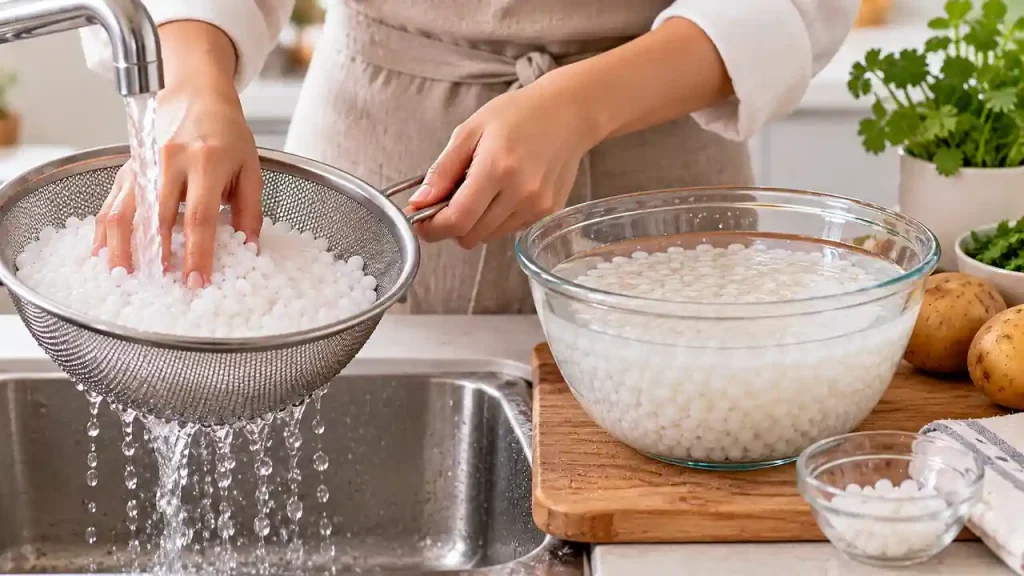
Rinse the sabudana in a sieve under cool drinking water, gently moving the pearls until the runoff becomes less cloudy. Follow the package’s soaking directions. If no ratio is given, start with approximately 240 ml water for 180 g pearls, enough to cover them, and add small splashes if needed as they hydrate.
Many regular varieties need several hours; two hours will not suit every product. For extended soaking, keep the covered bowl refrigerated and allow additional time if necessary. Press a few pearls between your fingers. They should crush easily without a firm, chalky center. If they remain hard, continue hydrating rather than moving ahead with frying.
2. Drain Thoroughly
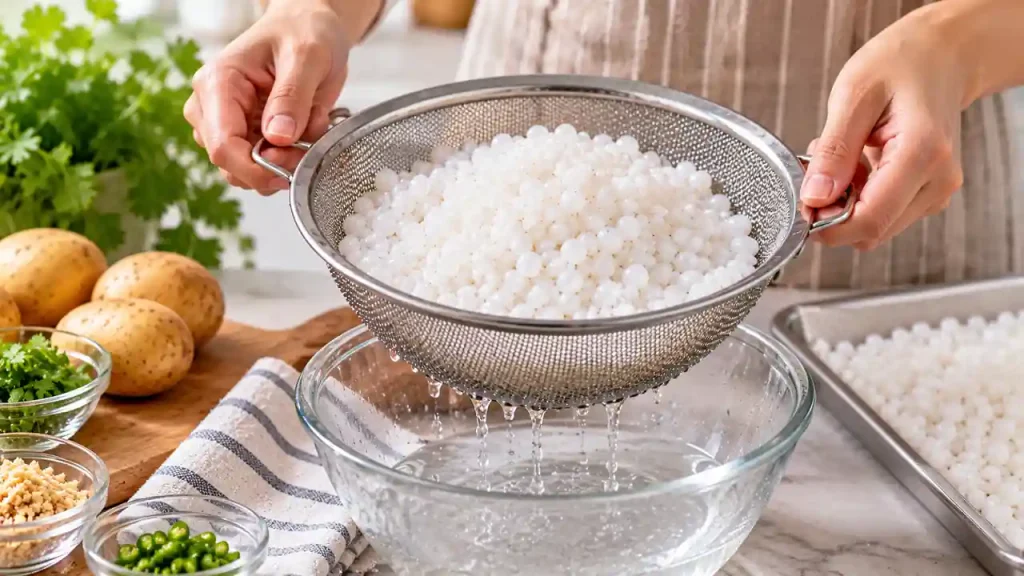
Transfer hydrated pearls to a sieve and let any free water drain away. They should be plump and soft, without sitting in liquid. If the surface seems very wet, spread them briefly on a clean tray while you prepare the remaining ingredients. Do not try to compensate for waterlogged pearls by immediately adding large quantities of flour. The goal is a moist ingredient that can combine with potato, rather than a dripping mixture that needs extensive correction.
3. Prepare Potatoes and Peanuts
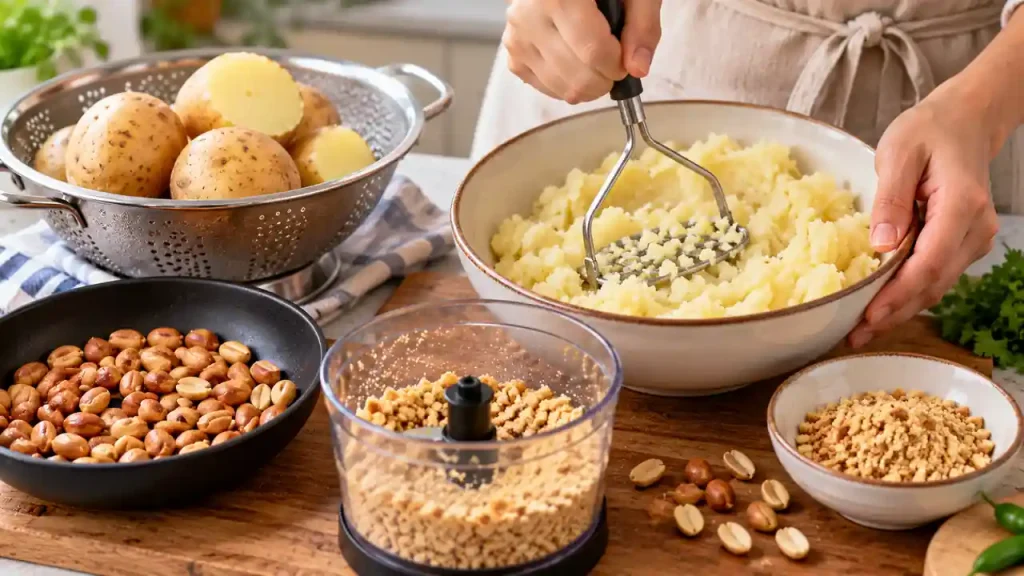
Cook potatoes until tender, drain well, then peel and mash once cool enough to handle. Let steam escape before mixing. Avoid adding milk, butter, or water as you would for creamy mashed potatoes. Crush the roasted peanuts into small pieces with some finer crumbs. A very coarse chop gives less even distribution, while a completely smooth paste changes the texture. Check for peanut and sesame allergies before preparing a shared batch. Omitting peanuts changes the mixture, so do not assume an untested replacement will behave identically.
4. Combine and Check the Mixture
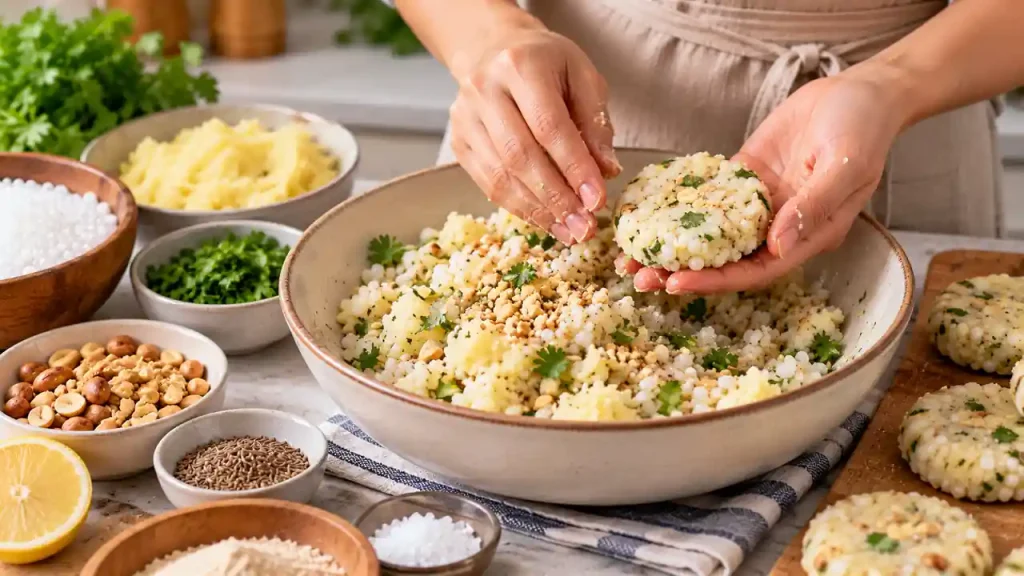
For sabudana vada, mix the drained pearls, potatoes, peanuts, herbs, cumin, lemon juice, salt, and any permitted optional seasonings. Use clean hands or a spoon to combine thoroughly. Press a small portion together: it should hold its shape without crumbling or releasing liquid. If slightly loose, rest the mixture briefly and reassess. Add a little more mashed potato or the optional rajgira flour only as needed. Extra flour can make the center dense; it is not an automatic requirement.
5. Shape Even Patties
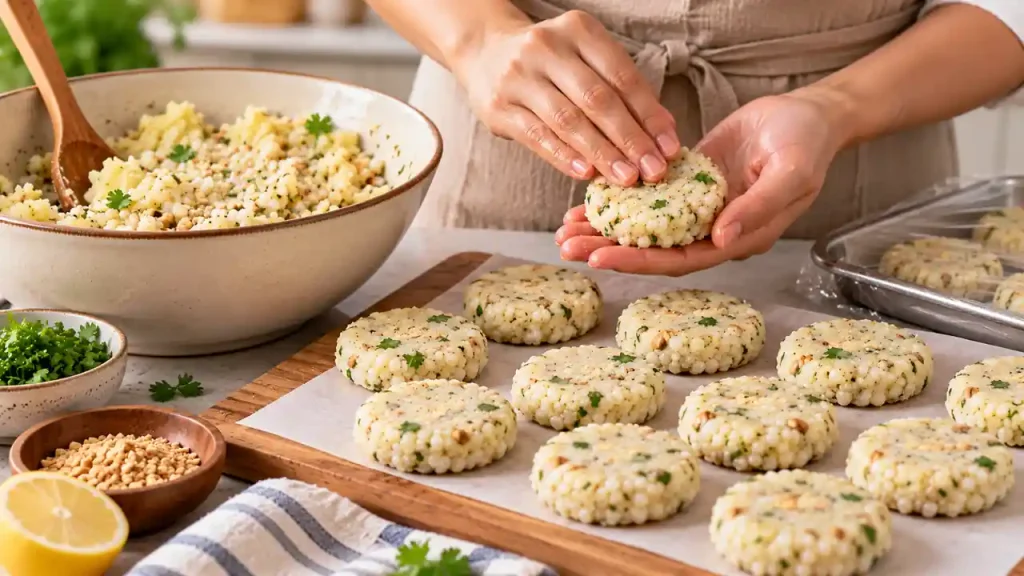
Divide into approximately 16 portions. Lightly grease your palms if necessary and press each portion into a compact disk about 1 cm thick. Smooth visible cracks around the edges without squeezing the mixture excessively. Keep the patties similar in size so they cook at a comparable pace. Avoid very thick centers, which may remain dense while the outside browns. Keep formed patties covered and refrigerated if there will be a delay before frying.
6. Heat the Oil and Fry One Test Patty
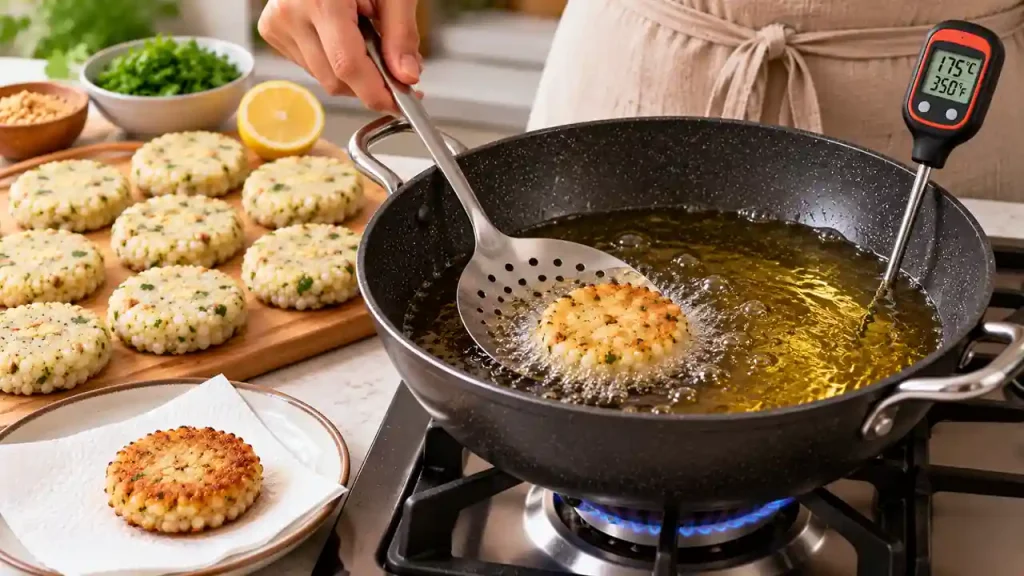
Use a stable, heavy pan with plenty of space above the oil level. Heat the oil to approximately 175°C (350°F), checking with an oil-safe thermometer. Lower one patty gently into the oil, away from you. Let its surface set before trying to turn it. Fry until golden on both sides, approximately 4–6 minutes depending on size and heat. Remove, let it cool briefly, and check the center. If the patty breaks apart or browns too quickly, adjust the mixture or temperature before continuing.
7. Fry in Small Batches
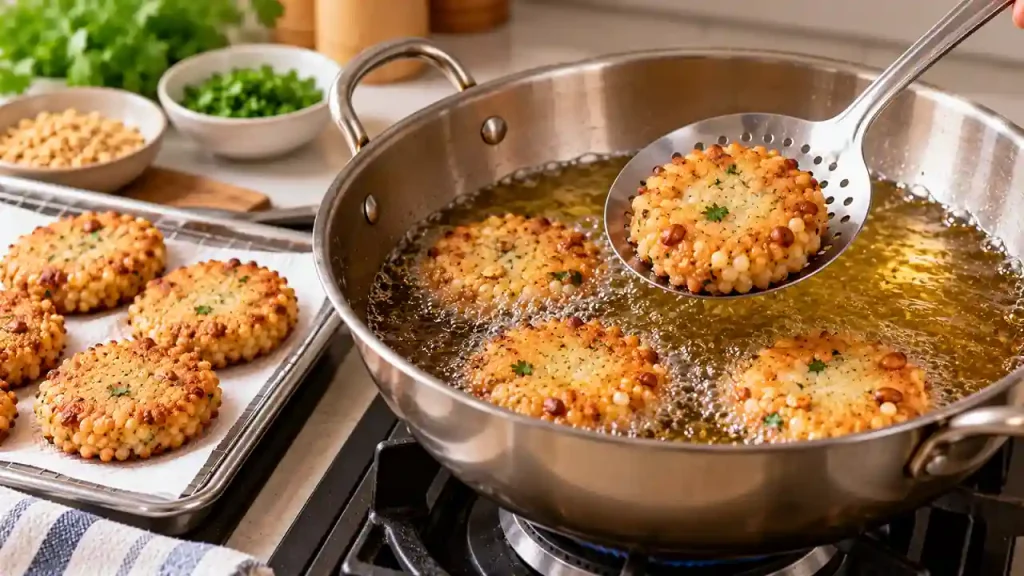
For crisp sabudana vada, maintain steady heat and leave space between patties. Adding too many at once makes temperature control harder. Turn gently once the surfaces are firm. Remove with a slotted spoon and drain in a single layer on a rack or kitchen paper. Do not stack immediately, because trapped steam softens the crust. Keep hands and utensils dry near the oil. The USDA’s deep-frying safety guidance also emphasizes appropriate equipment and avoiding overcrowding.
Troubleshooting the Texture
Several factors can cause similar problems. Make one small adjustment, then test again rather than adding ingredients indiscriminately.
| Problem | What to check |
| Patties crumble before frying. | Mash potatoes smoothly and compact the mixture. |
| The mixture feels wet and sticky. | Drain pearls thoroughly and cool potatoes before mixing. |
| Patty’s break-in oil. | Check hydration, binding, cracks, and oil temperature. |
| Outside darkens too quickly. | Reduce heat and make patties thinner. |
| Center feels hard or chalky. | Stop; check pearl preparation before making another batch. |
| Finished patties become soft. | Drain separately and avoid covering while hot. |
| Texture becomes dense. | Reduce unnecessary flour and avoid oversized patties. |
Do not rely on a dough fragment floating immediately as the only temperature check. A thermometer provides a clearer starting point, followed by the test patty.
Serving and Fasting Adjustments
Serve sabudana vada freshly fried with plain yogurt or a chutney whose ingredients suit your fast. Check packaged sauces for ingredients you avoid during the observance. For ordinary snack occasions, mint-coriander or tamarind chutney can provide contrast. At a family get-together, fry close to serving rather than keeping a covered pile warm for hours.
For a non-fasting potato-snack menu, cheese-stuffed potato balls or potato-cheese bread pakoras offer different preparations. Their ingredients should not automatically be treated as fasting-compatible.
Can You Shape Them Ahead?
Yes. Arrange the uncooked patties in a covered container and refrigerate until needed, preferably the same day. Keep them separate so they retain their shape, and check the oil temperature again between batches.
Can You Shallow-Fry Instead?
You can try shallow-frying similarly sized patties in a stable pan, turning carefully once the underside sets. Use enough oil for even contact and expect a different crust. Air-fryer and oven versions need their own tested settings and handling instructions. They are not guaranteed equivalents to deep-frying, so avoid transferring the same time estimate to another appliance.
Storage, Reheating, and Nutrition
Refrigerate leftovers promptly in shallow containers within two hours, or one hour above 90°F (32°C). Use within 3–4 days. FoodSafety.gov’s leftover guidance recommends reheating leftovers to 165°F (74°C). An oven or air fryer may restore more surface crispness than a microwave; check the center temperature and expect some texture change.
These patties provide carbohydrates from pearls and potatoes, with fat and some protein from peanuts. Oil absorption varies, so precise calories require reliable ingredient and yield calculations. Within a balanced eating plan, treat them as a snack rather than a remedy for fasting fatigue.
Final Thoughts
Sabudana vada depends on preparation as much as frying: soften the pearls fully, drain excess moisture, mash the potatoes smoothly, and test one patty first. Adjust seasonings to your household’s fasting practice and serve the finished batch promptly. Measured ingredients and steady heat give you a clearer route to a crisp exterior and tender center.



Leave a Reply