

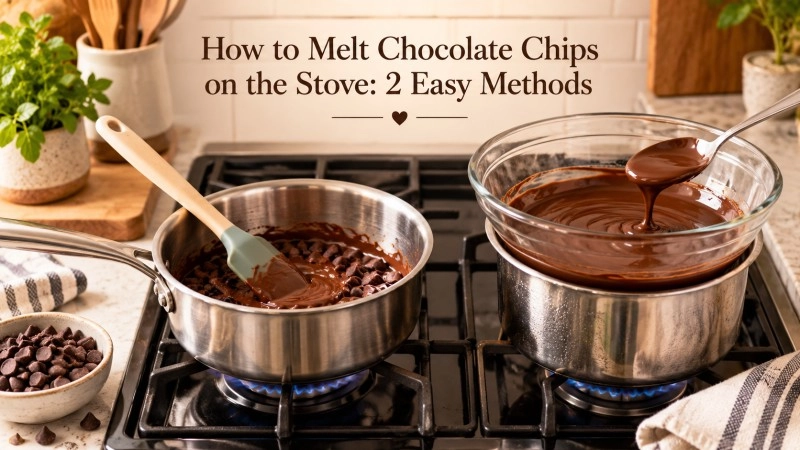
Learning how to melt chocolate chips on the stove is simple, but getting a smooth, glossy result depends on using gentle heat and keeping moisture away from the chocolate. A pool of warm, glossy melted chocolate is the foundation for countless home desserts—from glossy fruit drizzles and cake frostings to homemade fudge and brownie batters. While a microwave is popular for convenience, melting chocolate on the stovetop gives you close control over heat, texture, and consistency.
Chocolate is notoriously heat-sensitive. Because many chocolate chips are formulated with less cocoa butter and/or ingredients that help them retain their shape during baking, they may melt more thickly than chopped baking chocolate. Too much heat or even a small amount of accidental moisture can turn smooth chocolate thick, grainy, or seized.
Quick Answer: The Best Way to Melt Chocolate Chips on the Stove
The safest, most reliable way to melt chocolate chips on the stovetop is the double boiler (bain-marie) method. Set a completely dry, heatproof glass or metal bowl over a saucepan containing 1 to 2 inches of gently simmering water, ensuring the bottom of the bowl does not touch the water. Stir frequently with a dry silicone spatula over low heat until the chips are mostly melted, then remove the bowl from the heat and let residual warmth finish melting the rest.
Chocolate Chips vs. Baking Bars: What’s the Difference?
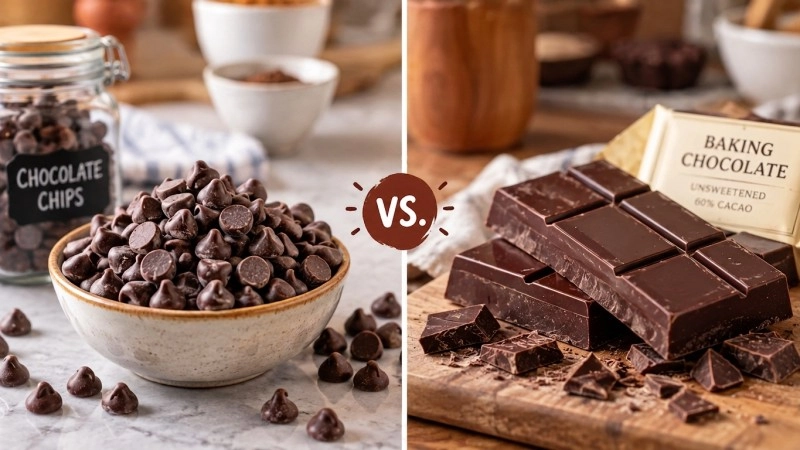
Before turning on the burner, it helps to understand why chocolate chips behave differently than solid chocolate bars:
- Standard chocolate chips: Many chocolate chips contain less cocoa butter than baking bars, which can make them melt thicker and hold their shape better during baking. While formulations vary by brand, chips generally melt into a less fluid consistency than chopped baking chocolate.
- Baking bars and couverture: Baking bars and especially couverture often contain more cocoa butter, allowing them to melt more fluidly and flow smoothly.
You can successfully melt standard chocolate chips on the stove, but they require gentle heat, regular agitation, and patience to melt into a smooth consistency.
Note on Melting vs. Tempering: This guide covers melting chocolate for batters, sauces, fondues, and drizzling. If you need a crisp, snappy shell that sets at room temperature without blooming (such as for molded candies or artisan truffles), the chocolate must undergo tempering—a precise process of heating, cooling, and agitating to stabilize cocoa butter crystals.
Method 1: The Double Boiler (Best Overall)
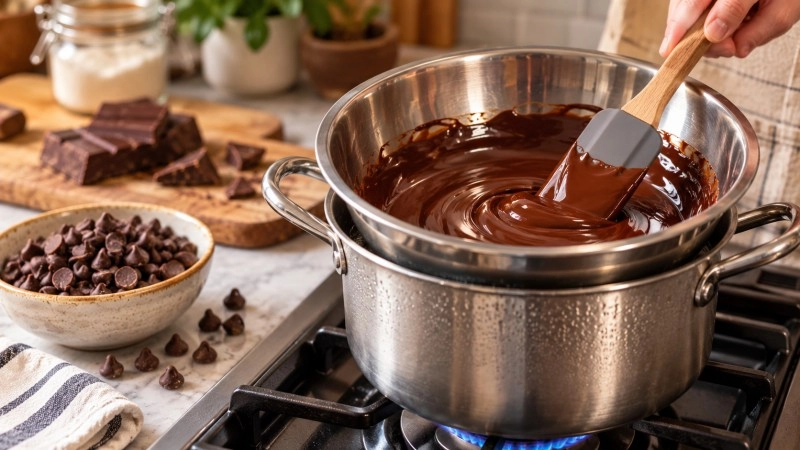
The double boiler (also known as a bain-marie) is the gold standard for melting chocolate. By relying entirely on gentle steam rather than direct burner heat, it greatly reduces the risk of scorching.
Equipment You Need
- Medium saucepan
- Heatproof glass or stainless-steel bowl (wide enough to sit snugly on top of the pan without slipping inside)
- Flexible, heatproof silicone spatula
- Clean kitchen towel
Step-by-Step Instructions
- Set Up the Water: Pour 1 to 2 inches of water into your saucepan. Place your heatproof bowl on top to test the fit. The bottom of the bowl should not touch the water directly.
- Bring to a Bare Simmer: Remove the bowl and place the saucepan on the stove. Bring the water to a gentle simmer over medium-low heat. Once bubbles begin to break the surface, reduce the heat to the lowest setting to keep the water warm and gently steaming.
- Add the Chips: Ensure the bowl and spatula are bone-dry. Place the chocolate chips in the bowl and set the bowl securely over the steaming pot.
- Stir Frequently: Allow the steam beneath the bowl to warm the chocolate. Once the bottom layer begins to soften, begin stirring gently with your silicone spatula. As King Arthur Baking recommends, keep the water at a gentle simmer and prevent water or steam from getting into the chocolate.
- Rely on Residual Heat: When roughly 75% to 80% of the chips are melted, carefully lift the bowl off the saucepan and set it on a folded kitchen towel.
- Finish Off the Heat: Continue stirring the chocolate away from the burner. The residual heat stored in the bowl will finish melting the remaining chips without exposing them to prolonged heat. Immediately wipe any condensed steam off the bottom of the bowl with your towel.
Method 2: The Direct Saucepan Method (Fastest, but Less Forgiving)
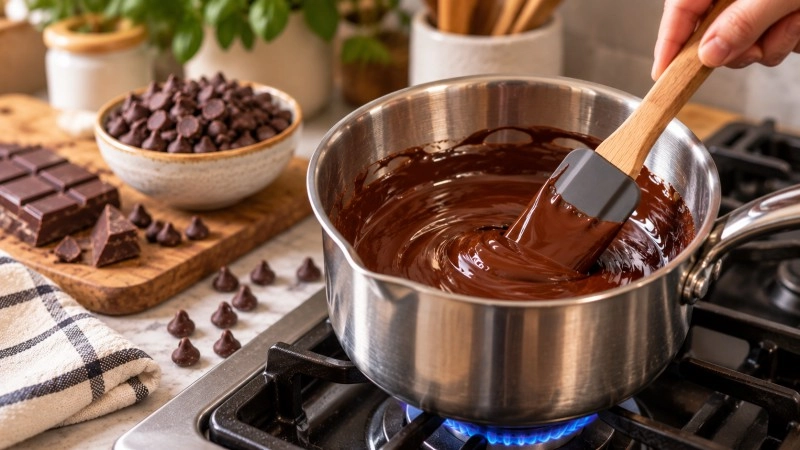
Melting chocolate chips directly in a pot over a burner is possible when you are pressed for time and do not have a bowl that fits your saucepan. However, direct stovetop melting requires close attention, the lowest possible burner heat, and constant stirring, as chocolate can scorch quickly without the protective buffer of a double boiler.
Equipment You Need
- Heavy-bottomed saucepan (cast-iron, enamelled, or heavy multi-ply stainless steel distributes heat best)
- Heatproof silicone spatula or wooden spoon
Step-by-Step Instructions
- Use the Lowest Burner Setting: Place the dry chocolate chips into your dry, heavy saucepan. Turn the burner to the lowest possible flame or temperature setting.
- Stir Without Stopping: As soon as the pan hits the burner, begin stirring. Scrape the bottom and corners of the pan constantly to prevent the chips from sticking and scorching.
- Use On-and-Off Heat: The moment you see half of the chips softening and liquefying, remove the saucepan completely off the burner.
- Stir to Complete: Keep stirring off the heat for 30 to 45 seconds. If stubborn lumps remain, return the pan to the low burner for 10 to 15 seconds at a time, then remove again until smooth.
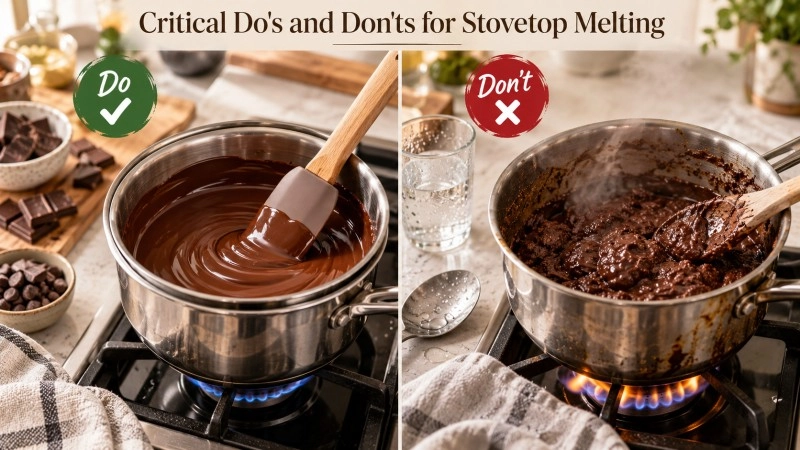
Critical Do’s and Don’ts for Stovetop Melting
| Do | Don’t |
| Keep all utensils completely dry. Even a small amount of accidental water or steam can cause melted chocolate to seize. | Don’t cover the pot or bowl. A lid traps rising steam, which condenses into water droplets and drips straight into the melting chocolate. |
| Use low, indirect heat. Gentle warming helps produce smooth, glossy melted chocolate. | Don’t crank the heat to save time. High heat can scorch the chocolate, leaving a bitter taste and gritty texture. |
| Remove from heat early. Let the ambient warmth of the bowl or pan finish melting the remaining lumps. | Don’t walk away. Chocolate can transition from perfectly melted to scorched in seconds when exposed to direct or lingering heat. |
| Use a dry silicone spatula. Silicone scrapes surfaces cleanly without absorbing moisture or lingering odors. |
Troubleshooting: Why Does Melted Chocolate Seize?
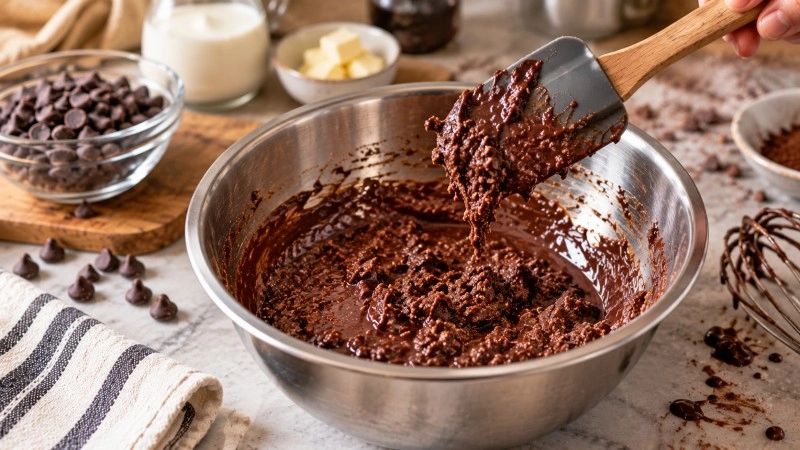
If your smooth chocolate suddenly turns into a stiff, matte, grainy paste, the chocolate has seized.
Two common causes of thick, grainy, or unusable melted chocolate are:
- Moisture Contamination: Chocolate contains cocoa butter surrounding finely dispersed dry particles such as sugar and cocoa solids. Even a small amount of accidental water or steam can dissolve the sugar on the surface of the particles, causing them to clump together and turn the chocolate thick and grainy.
- Overheating: Excessive heat can scorch chocolate, damaging its texture and flavor and causing it to become thick, grainy, or clumped permanently.
Can You Fix Seized Chocolate?
- If seized by moisture: You cannot turn it back into crisp dipping chocolate, but you can rescue it for use as a dessert topping or batter ingredient. In their guide to chocolate chemistry, King Arthur Baking explains that while a small amount of moisture causes seizing, adding a sufficient, measured amount of warm liquid fully dissolves the clumped sugar crystals. Whisking in warm heavy cream, warm milk, or boiling water—gradually adding enough liquid to loosen and emulsify the mixture—can restore it into a smooth dessert sauce or chocolate glaze.
- If scorched by heat: Scorched chocolate cannot be recovered. The cocoa solids have burned, leaving a bitter flavor and permanent graininess that will transfer into your final dessert. Discard and start fresh over lower heat.
How to Melt White Chocolate Chips on the Stove
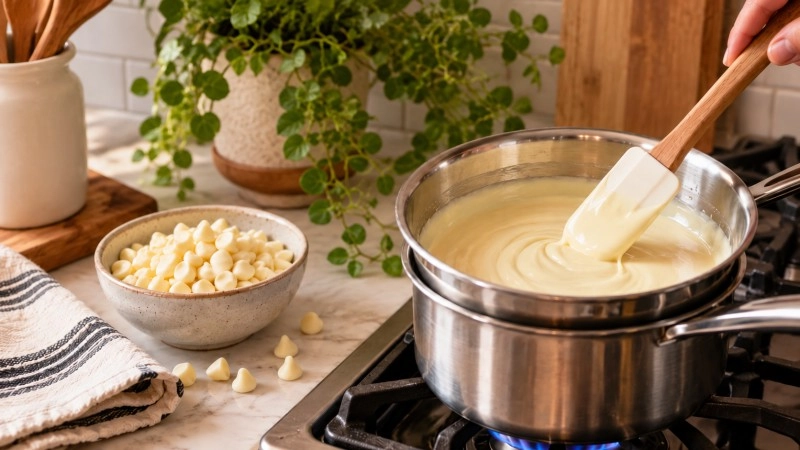
White chocolate requires extra care. Because it is rich in milk solids and cocoa butter without cocoa mass, white chocolate is especially sensitive to overheating and can scorch or separate more readily than dark chocolate.
- Lower the Temperature: When using a double boiler for white chocolate chips, bring the water to a simmer, then turn the burner off entirely before setting the bowl of white chocolate over the pot.
- Patience Over Heat: Allow the residual steam from the turned-off burner to slowly warm the bowl.
- Stir Gently and Constantly: White chocolate can scorch quickly, so stir steadily until mostly liquid, then remove from the steam immediately to prevent separation.
Frequently Asked Questions
Can you melt chocolate chips directly in a saucepan?
Yes, but only over the lowest possible heat setting using a heavy-bottomed saucepan. You must stir continuously and pull the pan off the burner the moment the chips begin to melt to avoid scorching. The double-boiler method remains significantly safer.
Why aren’t my chocolate chips melting smoothly?
Many chocolate chips are formulated to hold their shape during baking, so they may melt into a thicker, less fluid consistency than chopped baking chocolate. If you need a looser consistency for drizzling or dipping, you can stir in a very small amount of neutral oil or coconut oil, provided your intended recipe allows for added fat. Avoid adding small amounts of cold or unmeasured liquids to plain melted chocolate, as that can cause it to seize.
Can you add milk or water to melting chocolate?
You should never add small, random drops of cold liquid to plain melting chocolate, as this can cause it to seize. However, you can add warm liquids (such as warm heavy cream) if your recipe explicitly calls for it to make a ganache or sauce, provided the liquid is measured and introduced smoothly.
Can leftover melted chocolate be reheated?
Yes. If you have leftover melted chocolate that has solidified, you can gently reheat it using the double-boiler method over low heat. Alternatively, you can let it firm up, chop it, and fold it into a batch of homemade cookies or brownies. Reheat gently and only as needed, because repeated overheating can negatively affect texture and dull the flavor.
Final Thoughts
Melting chocolate chips on the stove does not require specialized kitchen gear—only dry equipment, low heat, and patience. By using the double-boiler method, keeping steam safely away from your bowl, and taking advantage of residual heat, you can reliably produce smooth, glossy melted chocolate for any home recipe.



Leave a Reply