

If you’re wondering how to respond to street harassment, move toward a staffed place or other people if you can. Tell someone what’s happening, and ask for one thing they can do, such as staying with you. If you’re in immediate danger, call local emergency services or ask someone nearby to call. You don’t owe the person harassing you an answer.
A comment shouted from a passing car and someone following you off a bus call for different decisions. You can leave without speaking or recording anything. Whatever you’re able to do in the moment, the harassment isn’t your fault.
How to Respond to Street Harassment in the Moment and Afterward
Start with the option you can use safely. These steps are choices; you can skip straight to asking for help.
| What’s happening | What you can do |
| Someone shouts a comment and moves on | Keep moving if you want to. You don’t have to reply. |
| Someone keeps approaching you at a station | Move toward staff or other passengers and ask one person to stay with you. |
| Someone follows you or blocks your way | Get to a staffed place if you can. Contact local emergency services if you’re in immediate danger. |
| The incident is over | Check what you need now. Write down details or report it later if you choose. |
1. Move Toward Somewhere You Can Get Help

If you can move away safely, head toward an open shop, a reception desk, or another place where staff or other people are nearby.
Tell someone what’s happening and ask for something specific: “Someone is following me. Can I wait here with you?” People nearby may not have noticed.
If you’re on a bus or train, move closer to the driver, transit staff, or other passengers when it’s safe. At a station, use a marked help point if one is available and you can reach it safely.
2. Ask One Person for One Specific Thing

Choose someone nearby and say what you need:
“Someone is following me. Can I wait here with you?”
or
“Could you get the station attendant?
I don’t feel safe.” If it’s safe, describe where the person is or what they’re wearing. If you can’t speak or don’t want to be overheard, show someone a written message if you can do that safely: “I need help. Please stay with me.”
Ask for help that puts distance between you and the person harassing you. Someone can stay nearby, walk with you to a staffed place, or call for help. They don’t need to argue on your behalf.
3. Treat Following, Threats, or Blocked Movement as Urgent

If someone follows you, head toward an open, staffed place rather than leading them to your home. If they block your route, threaten to hurt you, or you otherwise believe you’re in immediate danger, call local emergency services if you can. Tell the dispatcher where you are and what the person is doing. A stop name, shop sign, or nearby intersection can help you describe your location.
If someone keeps following you on transit, alert staff or another passenger. If you choose to get off, look for a staffed or busy stop where you can ask for help. Don’t go back for a photo, a name, or a better look at the person.
4. Use a Short Boundary Only if You Want To

If it feels safe to speak and you want to, one line is enough:
“Stop. Don’t follow me.”
or
“Don’t touch me.”
A short phrase is one form of assertive communication. You can say it while moving away, with no need to wait for an answer. If the person is threatening you or speaking might put you at more risk; skip this step. Leaving without a word is a valid response. So ask someone else for help before you say anything.
5. Make a Note After You’re Somewhere Safer

If you want a record, note the time, location, what happened, and any details you already remember. On transit, the route, direction, or vehicle number can be useful. If someone offers to be a witness, ask whether they’re willing to share their contact details. A short note in your own words is enough to start.
For example: “Tuesday, about 6 p.m., outside the main station entrance. A person followed me from the bus stop to the shop and kept asking for my number.”
You don’t need to stop or go back to record. If you already have photos, messages, or footage, save them privately if you want to keep a record. You can decide later whether to share them. If repeated unwanted contact moves online, learn what cyberstalking can look like and consider getting support.
6. Decide Whether You Want to Report It

How to respond to street harassment after it ends depends on what you want and where it happened. For an incident on transit or inside a business, you can ask staff about their reporting process. If you’re concerned about threats, repeated following, or an assault, local police or a victim support service may be able to explain your options. If you do make a report, ask for a reference number and how to follow up.
You can ask about your options without video or a witness. If you’ve been injured or sexually assaulted, seek medical care as soon as you can. If you’re unsure about reporting, tell the clinic or a sexual assault support service. Ask what care is available and what information they may need to share where you live.
If you’re worried about seeing the person again, ask a support service about a plan for that place or route, whether or not you report. If you’d like company, ask whether a trusted person can come with you.
7. Ask for the Kind of Support You Need

You might want company on the way home, someone to sit with you, or time before you talk.
Tell someone you trust what would help:
“Can you stay on the phone until I get home?”
or
“I want to tell you what happened, but I don’t need advice right now.”
If a friend tells you what happened, listen without rushing to give advice. Let them decide how much to share. If a young person tells you, thank them for coming to you and help them reach someone who can act. Conversations about respecting boundaries and asking for help can reinforce that they don’t have to handle it alone.
If distress keeps affecting your daily life, a qualified counselor or local support service can help you explore your options. You don’t have to post about the incident to ask for support.
What Counts as Street Harassment?
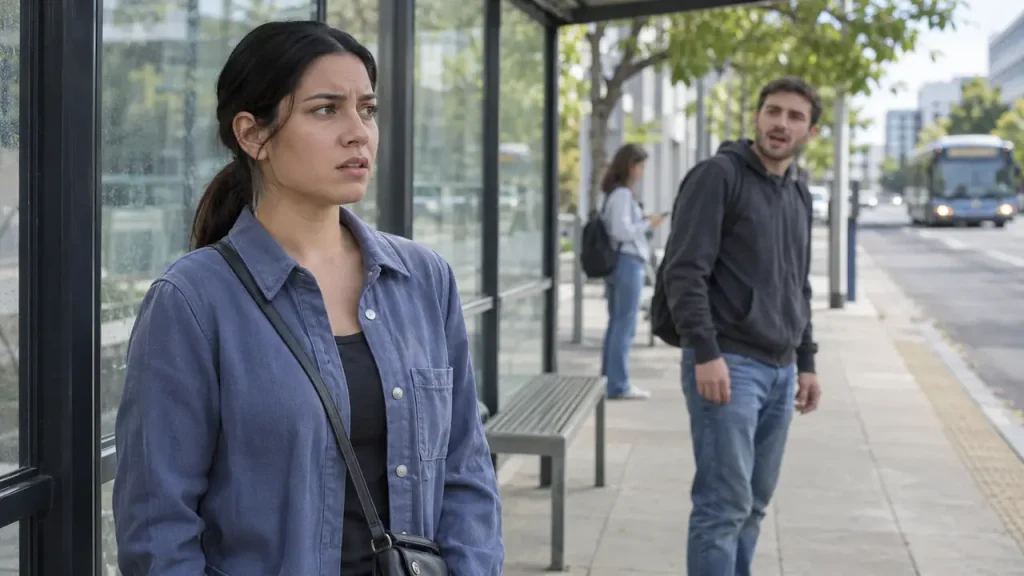
Street harassment is unwanted behavior directed at someone in a public space such as a street, park, shop, or bus. It can include catcalling, sexual remarks, slurs, threats, following, blocking someone’s path, exposure, or unwanted touching. A single incident can be enough to seek help.
Harassment doesn’t have to be sexual: a slur aimed at someone’s race, disability, religion, or gender identity can also be harassment. If you tell staff or make a report, describe what happened in your own words. You don’t need to decide which legal term applies.
In the Newcomb Institute’s 2024 survey of more than 3,300 U.S. adults, 73% of women and 24% of men reported lifetime experiences of sexual harassment or assault in a public space. The survey counted places such as parks, shops, and gyms as well as streets. It measured sexual harassment and assault, so the figures don’t cover every form of harassment described here.
What to Do if You Witness Street Harassment
If you’re wondering how to respond to street harassment when it happens to someone else, start with the person being targeted. Right To Be’s 5Ds of Bystander Intervention offer ways to help without starting an argument.
- Distract: Ask the person a neutral question such as, “Is this the stop for the library?” Give them a chance to shift away.
- Delegate: Ask a driver, staff member, or another witness to help. Explain what you saw and make a specific request.
- Document: Only consider recording or taking notes if someone is already helping and it’s safe. Ask the person what they want done with the material. Don’t post or share it without their permission.
- Delay: If the incident has ended, check in: “I saw what happened. Would you like me to wait with you?”
- Direct: Speak up only if it seems safe and the person appears to want that help. Keep it brief: “Leave them alone.” Then focus on the person who needs support.
Ask what they want before taking further steps on their behalf. If there’s immediate danger, get emergency help. If you work or volunteer at an event, find out who handles safety concerns before the doors open. Making public spaces safer can start with a clear place to ask for help and feedback from the people who use it.
Final Thoughts
When you’re deciding how to respond to street harassment, choose the step that fits what’s happening: move toward help, ask someone to stay with you, or get emergency assistance if you’re in danger. You can decide later whether to write it down, report it, or talk it through. You didn’t cause the harassment, and leaving without a word doesn’t make what happened any less serious.



Leave a Reply