

Mantra meditation gives your attention a simple place to return: a repeated sound, word, or phrase. You might approach it as a devotional practice or try a secular repetition exercise. Either way, beginning can be modest: a comfortable seat, a meaningful phrase, and a few available minutes. Thoughts do not have to disappear, and feeling instantly peaceful is not a requirement. This guide explains the practice, offers a gentle first session, and helps you decide what to adjust afterwards.
What Is Mantra Meditation?
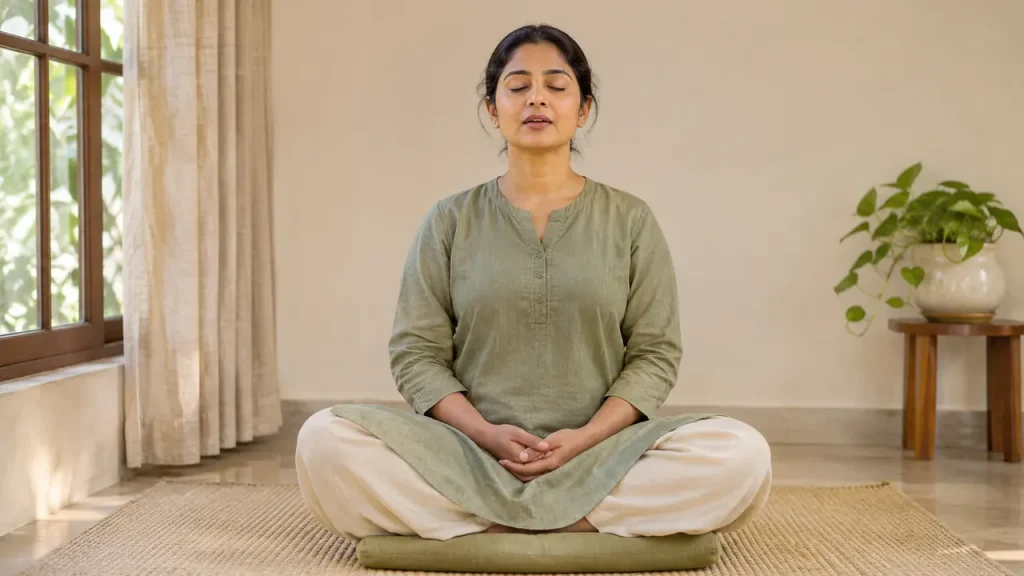
It is a practice of returning attention to a repeated sound, word, or phrase. Repetition may be spoken, whispered, or mental. When attention wanders, you notice and return without criticizing yourself.
In Hindu devotional contexts, these terms have specific meanings. The Divine Life Society’s glossary identifies a mantra as a sacred syllable, word, or group of words; japa as repetition of the Lord’s name; and stotra as a hymn. These terms describe more than whether someone speaks aloud. In a simple comparison, repetition gives attention a chosen phrase to return to, while breath-focused meditation uses breathing as its focus. Practices can overlap, and traditions differ.
What Benefits Does Research Suggest?
A 2022 systematic review and meta-analysis found small-to-moderate improvements in anxiety, depression, and stress symptoms compared with control conditions. However, study bias, limited research involving psychiatric populations, and scarce long-term follow-up weakened confidence in the findings.
The review examined different structured practices. It does not establish that this article’s five-minute exercise treats a mental-health condition or that one sacred syllable works best for everyone. Consider repetition one possible part of caring for your emotional well-being. Notice whether you find it manageable and worthwhile, rather than expecting it to resolve every difficulty.
Choose a Sound or Phrase That Fits Your Purpose
Start by asking what you want the practice to mean.
| Your purpose | A thoughtful starting point |
| Religious or devotional practice | Learn a suitable mantra’s meaning and pronunciation within that tradition. |
| A secular attention exercise | Try an ordinary word such as “peace” or “here”. |
| Uncertainty about a sacred phrase | Ask a knowledgeable teacher before adopting it. |
Om, also written Aum, is sacred in Hindu traditions. It is not a compulsory opening or ending for every practice. An ordinary word used for attention is not automatically equivalent to a traditional sacred formula. Choose something comfortable to repeat. A phrase that feels false, upsetting, or confusing is a reason to reconsider your choice.
How to Start Mantra Meditation in Eight Steps
These suggestions introduce a general exercise. Follow appropriate guidance if you are learning a particular religious practice.
1. Make a Little Room in Your Day
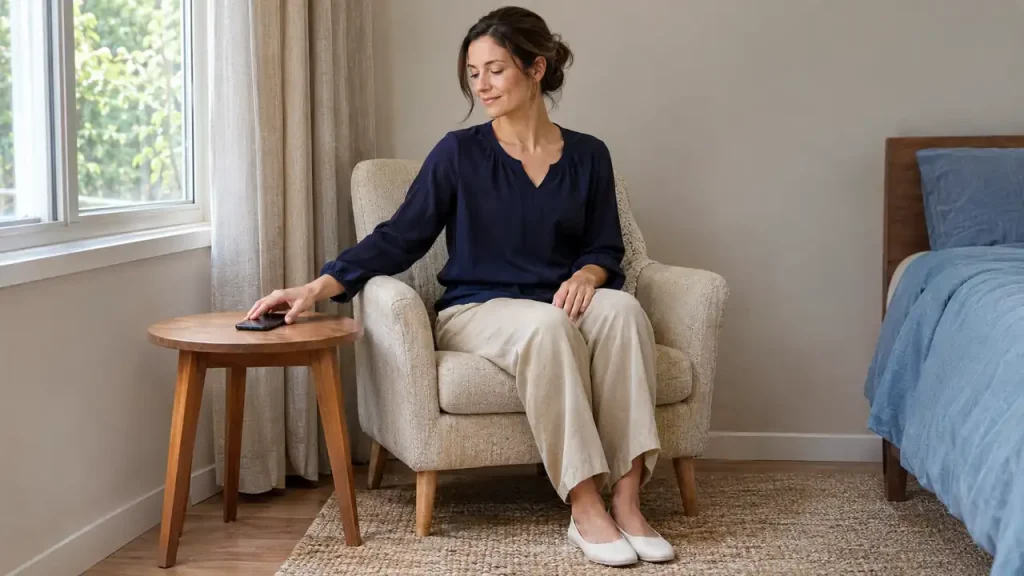
Choose somewhere safe to pause without attending to another task. A bedroom chair or quiet corner is enough. Silence notifications if practical, but ordinary household sounds do not mean you have chosen badly.
If you share your space, try a simple request: “I’d like five quiet minutes, then I’ll be available.” Assertive communication can help you ask clearly without turning a brief pause into an argument.
2. Choose a Supported Position
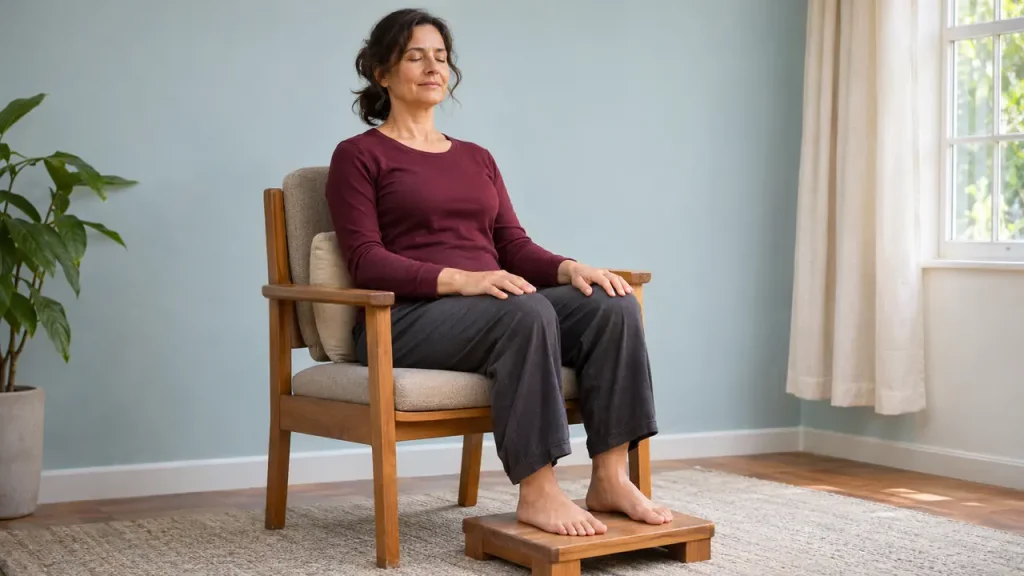
Sit in a stable chair with your feet supported, or use a cushion if the floor feels comfortable. Let your shoulders settle. Your position should allow ordinary breathing without forcing your back into a rigid shape.
Lotus posture is optional. Adjust if you feel pain, tingling, or strain. Close your eyes gently or keep a soft gaze ahead. Physical comfort matters more than copying a photograph.
3. Leave Your Breathing Alone

Take a moment to settle, then let breathing continue naturally. You do not need to hold your breath, breathe unusually deeply, or fit every repetition into a fixed count.
Let the phrase have an easy rhythm without making breathing serve that rhythm. If you feel dizzy or uncomfortable, stop the exercise and return to ordinary breathing. You can end the session there.
4. Try One Comfortable Way to Repeat
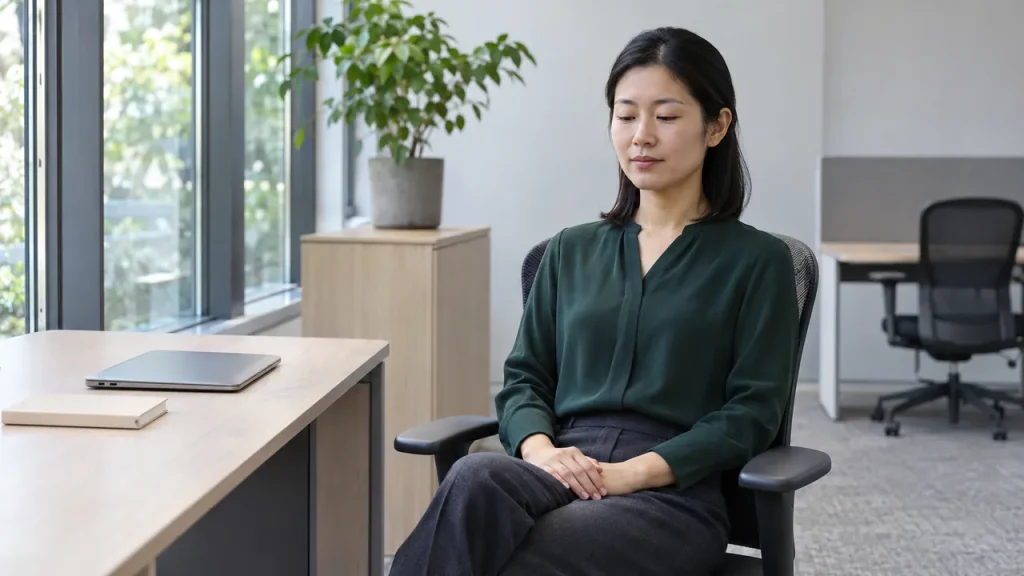
Choose the approach that suits your setting and comfort.
| Approach | What to try |
| Spoken | Use an easy conversational volume without pushing your voice. |
| Whispered | Repeat softly without tightening your throat. |
| Mental | Think the phrase without speaking or moving your lips. |
For example, a shared office might make mental repetition more practical than chanting aloud. If you strain to whisper, change approaches. You do not need music, headphones, or a special recording.
5. Return When Your Mind Wanders
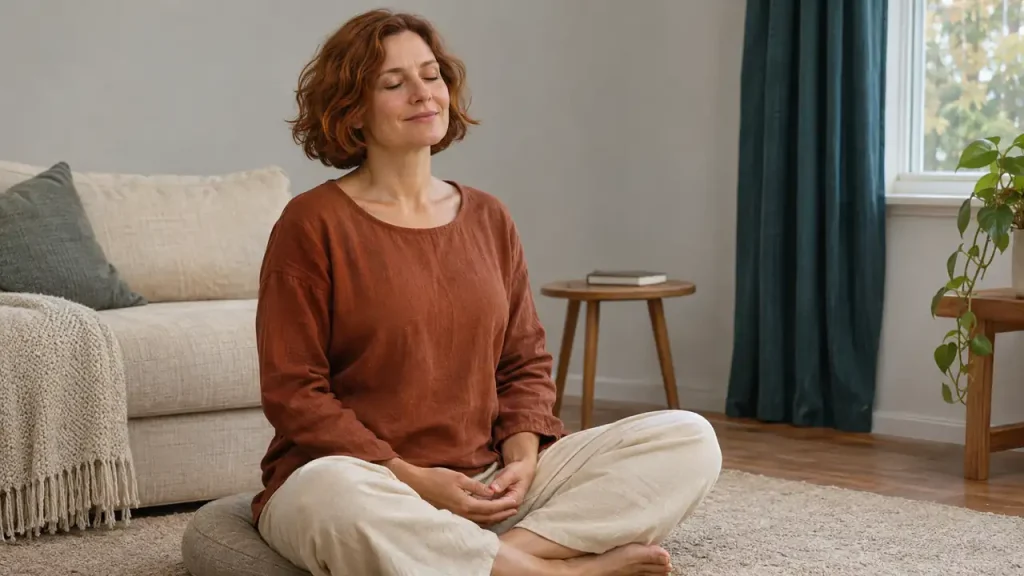
You may remember an email, plan dinner, or wonder whether the timer has stopped. Notice the distraction and return to the next repetition. You do not have to restart the session.
Try saying silently, “Thinking,” then resume your phrase. This is an optional reminder, not another task to perform perfectly. The fairer self-talk used in building self-esteem belongs here too: distraction is not a verdict on your ability.
6. Keep Equipment Optional
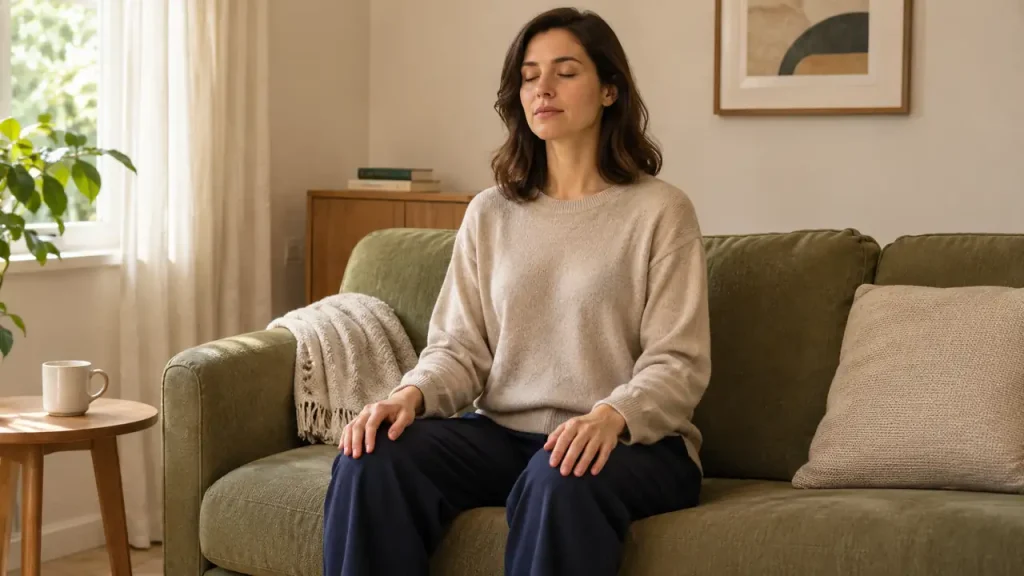
Some practitioners use a mala to count repetitions. You can begin without beads, a special mat, incense, or an app. A simple timer can help if checking the clock repeatedly interrupts you.
If you use prayer beads within a tradition, learn its customs rather than assuming every method is interchangeable. For this introductory exercise, there is no prescribed repetition count to complete.
7. Finish and Notice What Happened

Let the repetition stop, notice the room, and take a moment before standing. Ask practical questions: Was the seat comfortable? Did the phrase feel suitable? Would a shorter session fit better?
Feeling unchanged is useful information too. You do not need to pretend to be happy or give the experience a spiritual interpretation. A brief note can help you remember what to adjust next time.
8. Choose a Realistic Opportunity to Return
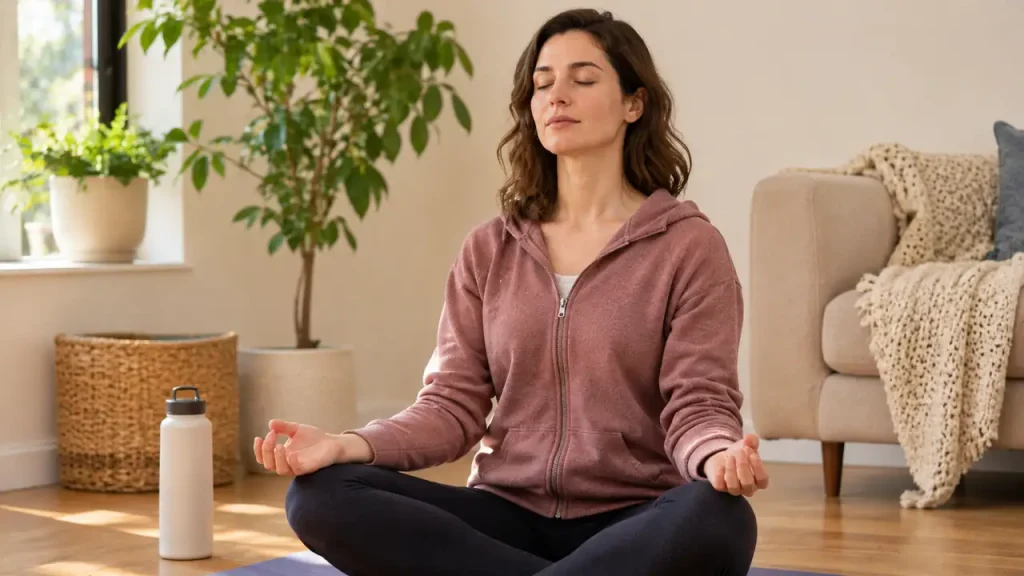
Attach practice to a moment you already recognize: after getting dressed, during an available break, or before an evening activity. Morning is optional, and losing sleep to maintain a streak defeats the purpose of making room for care.
A flexible health and self-care routine can include rest and movement too. If balancing work and home leaves little space, try a shorter session or ask for practical help.
A Five-Minute Session to Try
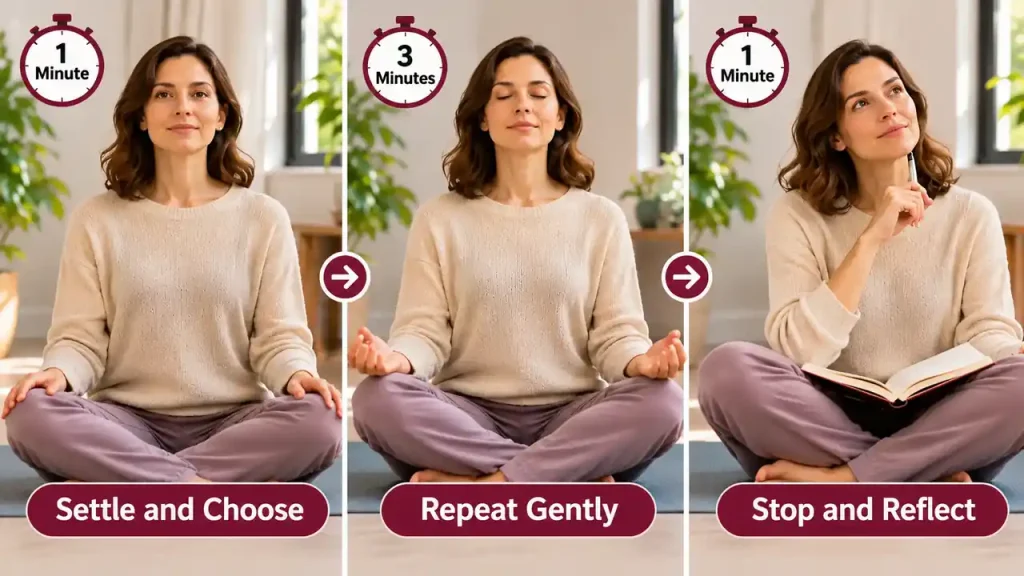
This is an example schedule, not a medically established dose. Shorten it or stop whenever you need to.
| Time | Suggested activity |
| First minute | Settle into your seat and choose your phrase. |
| Next three minutes | Repeat gently, returning when distracted. |
| Final minute | Stop repeating, notice your surroundings, and reflect on comfort. |
For a secular example, think “here”, leave a comfortable pause, then think “here” again. Keep breathing ordinary. There is no need to force the word onto each breath. Afterward, write one sentence about what you noticed and one possible adjustment.
For example: “My chair was comfortable, but watching the clock distracted me; next time I’ll use a timer.”
Common Difficulties and Simple Adjustments
| What happens | What you could try |
| You keep checking the time | Use a gentle timer and a shorter session. |
| The phrase feels like an argument with yourself | Choose a neutral word instead of an ambitious affirmation. |
| Your throat becomes uncomfortable | Stop speaking; consider mental repetition another time. |
| You feel sleepy | Try another time of day and protect your sleep. |
| Fear or distress increases | Stop and seek support if it persists or worsens. |
Change one practical detail at a time so you can notice what makes a difference. Meditation is optional; another activity may suit you better.
When to Pause or Seek Support
The NCCIH guidance on meditation and safety notes that negative experiences, including anxiety and depression, have been reported, while research on possible harms remains limited.
If practice increases fear or distress, stop, look around, and return to a familiar activity. A conversation within a supportive friendship may offer company, while persistent, worsening, or disruptive symptoms deserve professional attention. Meditation should not replace recommended treatment or delay seeking care.
Common Questions
1. How Is Mantra Meditation Different From Affirmations?
In a simple secular exercise, repetition supplies a focus for attention. An affirmation usually expresses something you want to believe or reinforce, such as “I can handle this conversation.” You do not have to persuade yourself that a statement is true while meditating. A neutral word can be easier when positive declarations feel uncomfortable. Devotional mantras have their own meanings and purposes.
2. Must Pronunciation Be Perfect?
Pronunciation can matter within a chanting tradition. Learn respectfully from someone knowledgeable. An accent or learning mistake is not a personal failure. A secular word-repetition exercise does not require Sanskrit pronunciation.
3. How Long Should Beginners Practice?
For mantra meditation, a few comfortable minutes can be a practical experiment. There is no universal duration that guarantees benefits. Increase only if you want to and feel comfortable; longer is not automatically better.
4. Do I Need a Teacher?
A brief secular exercise can be tried independently. For religious instruction, ask about training, meaning, costs, and adaptations. Look for someone who listens to your questions, respects boundaries, and avoids promising cures or pressuring you to continue through distress.
Final Thoughts
Mantra meditation can begin with a phrase you understand, a supported seat, and a little willing attention. Keep expectations realistic, learn respectfully, and make changes based on your experience. You can return tomorrow, shorten the practice, or choose another approach. A useful beginning leaves room for ordinary thoughts, honest questions, and care for yourself.


Leave a Reply