

Home remedies for toothache may ease discomfort while you arrange dental care, but they cannot repair a cavity, mend a cracked tooth, or cure an abscess. If pain interrupts your evening or wakes you at night, the priority is to check for warning signs and contact a dentist.
You do not need to try every remedy before asking for help. Call your dental practice first, then use suitable comfort measures while waiting. Tell the team if pain affects sleep, eating, or drinking so they can advise on appointment urgency.
When Toothache Needs Urgent Help

Seek emergency care if swelling around your mouth or neck makes breathing, swallowing, or speaking difficult. Swelling around the eye, vision changes, or extensive mouth swelling also needs emergency assessment.
Contact an urgent dental service for facial or jaw swelling, fever, difficulty opening your mouth, or suspected infection. A bad taste or discharge alongside pain is another reason to seek advice promptly. A dental abscess needs urgent treatment and will not go away on its own. Do not wait for a rinse or oil to draw out the infection. If pain has lasted more than two days or painkillers are not helping, arrange dental assessment even without swelling.
What Might Be Causing the Pain?
Possible causes include tooth decay, an inflamed or infected tooth pulp, a cracked tooth, a loose filling, gum disease, or sensitivity. Recent dental treatment and orthodontic adjustments can also cause discomfort. Decay develops when acids produced by plaque bacteria damage tooth structure. A cracked tooth may hurt intermittently, especially with biting, rather than causing constant severe pain.
Symptoms alone cannot reliably distinguish these problems. Home remedies for toothache should support comfort while you seek care, rather than become a way to diagnose the problem yourself.
10 Ways to Make Waiting More Comfortable
These are temporary care options, not ten interchangeable cures. Choose what fits your situation, and stop anything that increases pain or irritation.
1. Try a Warm Salt-Water Rinse

Adults can dissolve half a teaspoon of salt in a glass of warm water. Gently rinse, then spit it out. Use comfortably warm water, not hot water. This may help keep the area clean, but it does not sterilize a tooth or treat an abscess. Children should not try this rinse because they may swallow it. These temporary toothache relief measures are intended for use while waiting for dental care, rather than as an alternative to it.
2. Use a Wrapped Cold Compress When Appropriate

For discomfort or swelling following an injury, a cold compress against the outside of the cheek may help temporarily. Wrap the pack in cloth and use it briefly, with breaks. Do not put ice directly onto a tooth or against your skin. Stop if cold makes the pain worse. An injured tooth needs dental assessment. A compress is not a repair, and substantial swelling should prompt urgent care rather than repeated cooling.
3. Keep Cleaning Gentle

Use a soft toothbrush and clean carefully instead of scrubbing the painful area. Continue your usual fluoride toothpaste unless your dentist has given different instructions. Avoid forcing floss into the sore area or digging with a pin, toothpick, or other sharp object. Repeatedly probing a painful tooth can irritate nearby tissues. If cleaning is difficult, describe the problem when booking. Your dentist can advise how to maintain hygiene without aggravating the affected area.
4. Choose Soft, Comfortable Foods

Plain yogurt, mashed vegetables, porridge, and soft eggs may be easier to manage than crunchy snacks. Let food cool to a comfortable temperature before eating. For a simple meal, scrambled eggs can be prepared without crunchy toppings. Choose ingredients you tolerate and avoid adding anything that stings. Soft food helps you eat while uncomfortable; it does not treat decay. Seek advice if pain prevents you from eating or drinking adequately.
5. Avoid Foods That Trigger Pain

Very hot, very cold, or sugary foods may provoke symptoms. Notice what bothers the tooth and avoid repeatedly testing it with another sip or bite. Room-temperature water may be more comfortable than an iced drink. Skip hard sweets, sticky snacks, and anything that catches around damaged dental work. Among home remedies for toothache, reducing obvious triggers is a practical adjustment. It should not become a reason to postpone investigating persistent sensitivity.
6. Reduce Pressure on the Sore Tooth

Try chewing on the other side and taking smaller bites. Avoid biting directly into hard foods with the affected tooth. Do not repeatedly clench your teeth together to check whether the pain is still there. Let your dentist know if biting or releasing pressure causes a sharp sensation. If a tooth or filling appears broken, ask for dental advice promptly. Do not attempt repairs with household glue or push loose material back into place.
7. Consider Suitable Nonprescription Pain Relief

You do not need to exhaust home remedies for toothache before using appropriate pain relief. Paracetamol (acetaminophen) or ibuprofen may be suitable, depending on your circumstances. Follow the label and ask a pharmacist about your age, medical conditions, pregnancy, other medicines, and previous reactions. Check active ingredients to avoid accidental duplication. Evidence-based temporary dental pain management supports nonopioid medicines when appropriate. Do not combine products or increase doses simply because pain continues. Children need age-appropriate advice, and those under 16 should not take aspirin.
8. Ask Before Using a Mouth Pain-Relief Product

Some pharmacy products are intended for temporary mouth pain relief, but products and age restrictions differ. Ask a pharmacist whether one is appropriate for your symptoms. Use it only according to its instructions. A numbing effect does not mean the underlying problem has healed. Do not place aspirin or crushed painkiller tablets directly on a tooth or gum. Oral pain medicine should not be turned into a homemade paste or left against sensitive tissue.
9. Protect Areas Rubbed by Braces
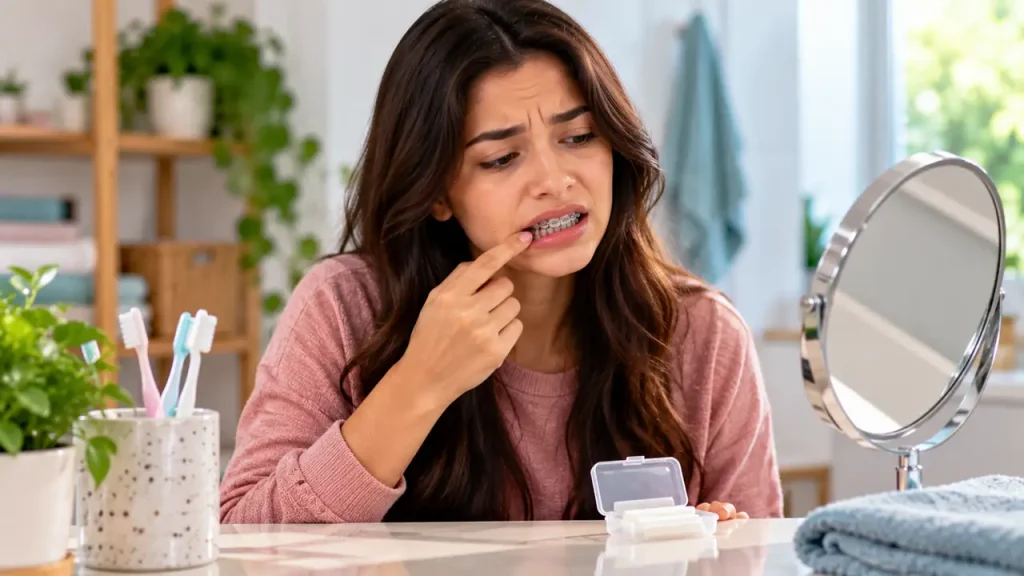
If a bracket or wire is rubbing your cheek or lip, orthodontic wax may provide a temporary cushion. Follow your orthodontist’s instructions and contact the practice about a loose or damaged appliance. Wax addresses rubbing, not pain originating inside a tooth. Do not assume that severe, worsening, or one-sided tooth pain is simply normal adjustment soreness. Avoid cutting wires or dismantling braces without professional guidance. Explain what is catching and whether there is swelling or an injury.
10. Avoid Smoking and Further Irritation

Smoking can worsen dental problems. Avoid smoking while the area is painful, and do not apply alcohol, strongly concentrated rinses, or essential oils as improvised treatments. There is no need to keep adding products because the first one did not work. Continued pain is information to share with a dentist. Keep the plan manageable: reduce irritation, use suitable comfort measures, and arrange care. Escalating a homemade treatment is not a substitute for assessment.
Remedies to Leave Out
Online lists of home remedies for toothache often include garlic paste, vanilla extract, turmeric oil, cloves, and guava leaves. Laboratory findings about an ingredient do not establish that applying it to a painful tooth safely treats the cause.
Avoid homemade hydrogen peroxide rinses based on vague dilution instructions. Do not swallow essential oils, apply heated oils, or assume a natural product is harmless. Clove-containing dental products need their own instructions and suitability checks. A kitchen ingredient and a formulated dental medicine are not interchangeable.
What Should You Tell the Dentist?
Note when the pain started, where you feel it, and whether temperature, biting, or lying down changes it. Mention swelling, fever, discharge, recent injury, and any broken dental work. List medicines already taken, including doses and times, and bring details of allergies and health conditions. This helps the team give appropriate advice and prioritize your appointment.
If the practice is closed, check its recorded message for out-of-hours arrangements. Ask local dental services about urgent appointments rather than waiting indefinitely for your regular dentist. If cost or access is delaying care, tell the dental service when you call. Ask about urgent assessment, payment options, or community clinics available locally. Giving an accurate description of symptoms is more useful than simply requesting a particular medicine.
Common Questions
1. Can a Toothache Disappear Without Treatment?
Some discomfort settles, but improvement does not reliably show that the cause has resolved. Keep a planned appointment for recurring pain, swelling, or suspected damage, even if a remedy temporarily helps.
2. Will Antibiotics Fix the Tooth?
Antibiotics are not needed for every toothache and do not repair decay or a fracture. A dentist decides whether they are indicated alongside appropriate dental treatment. Do not use leftover antibiotics or someone else’s prescription.
3. How Can You Reduce Future Problems?
Brush with fluoride toothpaste, follow dental advice on cleaning between teeth, and attend recommended checkups. Within a balanced eating plan, consider how often sugary snacks and drinks contact your teeth, rather than looking for a food that repairs cavities.
Final Thoughts
Home remedies for toothache are best viewed as temporary ways to stay more comfortable while arranging dental care. Gentle cleaning, suitable foods, and appropriate pain relief may help, but they cannot fix structural damage or clear an abscess. Seek urgent help for swelling or other warning signs, and let a dentist investigate continuing or recurring pain.



Taking a few fresh leaves of guava and adding them to some water. Then boil the mixture and use this water as a mouthwash.