

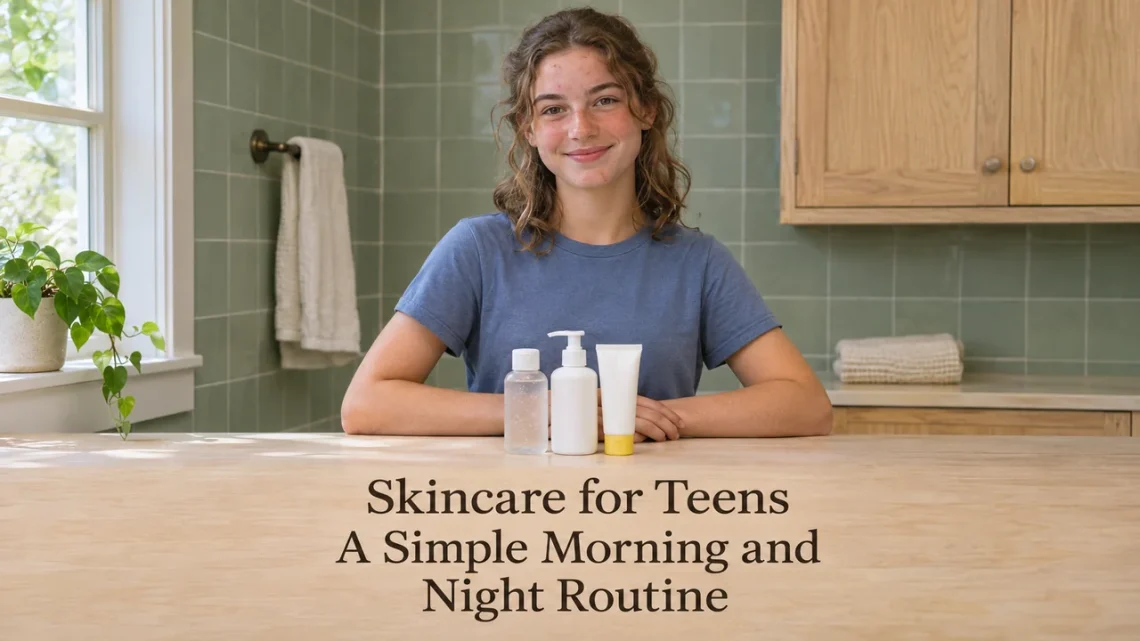
Skincare for teens should make daily life easier, not create pressure to achieve flawless or fairer skin. Puberty can bring oiliness, dryness, blackheads, or painful pimples, often at the same time that school and social media make appearance feel important. A gentle cleanser, moisturizer, and broad-spectrum sunscreen provide a useful foundation. If acne needs treatment, add it carefully rather than copying a complicated influencer routine.
Why Does Teenage Skin Change?
Hormonal changes during puberty stimulate oil glands. Extra sebum, skin cells, and inflammation can clog follicles and cause acne. Genetics also matters. A breakout is not proof of poor hygiene, a bad diet, or a failure to care for yourself.
Teenagers may have dry, oily, combination, or easily irritated skin. A shiny forehead and tight cheeks can occur together. Your skin’s needs can also change with weather, medication, and activity. Skincare supports comfort and protection, not lightening your natural complexion or eliminating every visible pore. Dermatologist guidance on age-appropriate skin care recommends a simple routine rather than products marketed for adult wrinkles.
Six Healthy Skincare Habits for Teens
Good skincare for teens should fit between school, exercise, homework, and sleep. These six habits build a realistic routine without assuming every teenager has acne or wants to wear makeup.
1. Wash Gently, Without Harsh Scrubs
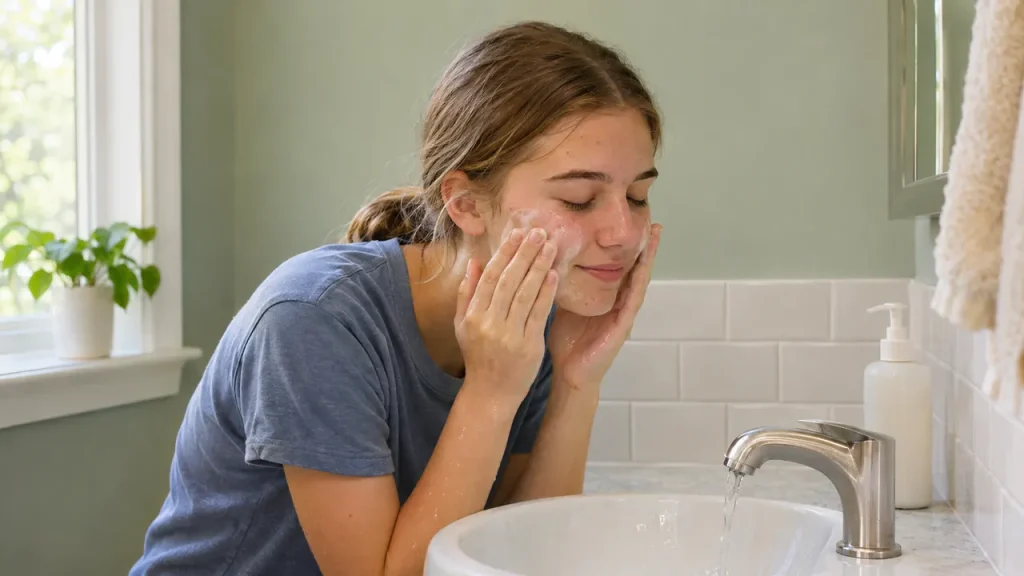
Use lukewarm water and a mild cleanser, preferably fragrance-free if your skin is easily irritated. Washing in the morning and evening works for many people; very dry or sensitive skin may need only a water rinse in the morning. Cleanse after heavy sweating when practical. Apply cleanser with fingertips, not a scratchy brush, and pat your face dry.
A gritty scrub cannot remove acne developing inside follicles. Frequent washing, alcohol-heavy toners, and rough exfoliation may make irritation worse. Exfoliating two or three times daily, as the original article advised, is particularly unsuitable. Stop using a cleanser that repeatedly stings or leaves your face painfully tight.
2. Moisturize, Even When Your Face Looks Shiny
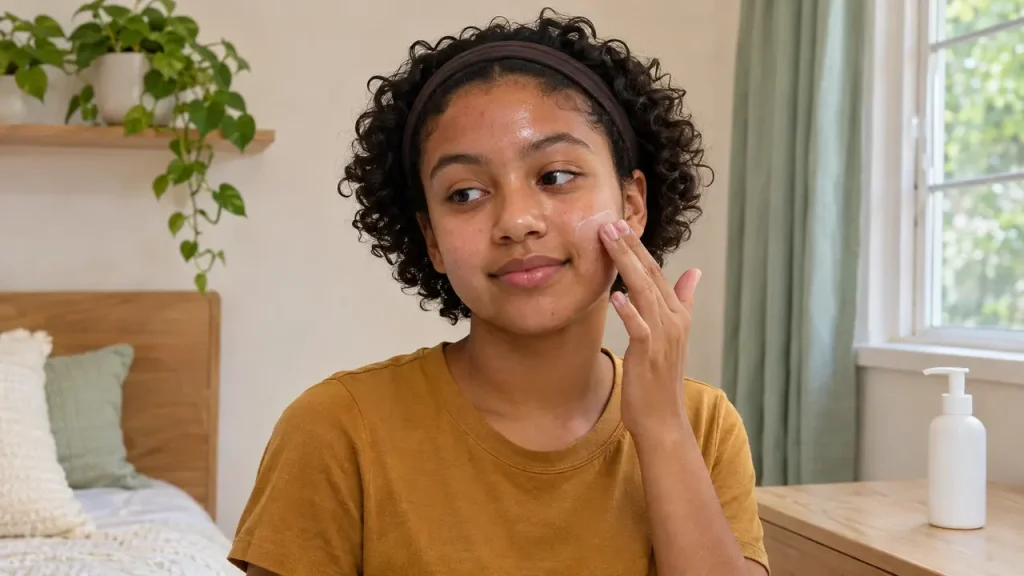
Sebum is oil, not a measurement of how much water your skin contains. Oily skin can still feel dehydrated or irritated. Use a comfortable moisturizer after cleansing, especially when your cheeks feel tight or you are receiving acne treatment. A gel or lotion may suit oily skin; a cream may feel better on dry patches.
Ingredients such as glycerin, ceramides, and hyaluronic acid help support hydration. Look for a non-comedogenic formula when breakouts are a concern, but remember that the label cannot guarantee a perfect match. Moisturizers do not need to promise pore shrinking, instant brightening, or anti-aging effects to be useful.
3. Wear Sunscreen for Protection, Not Fairness
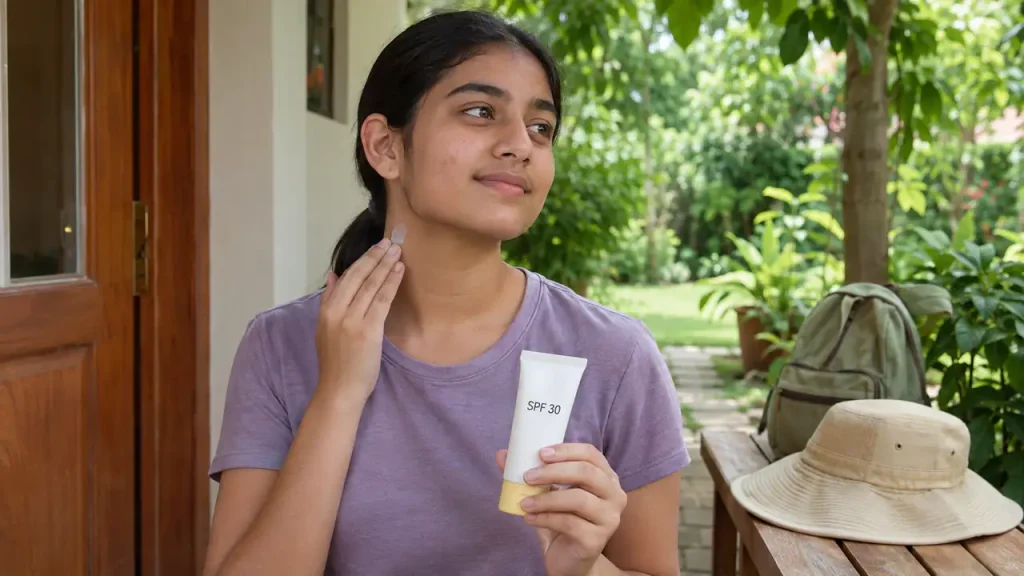
Choose broad-spectrum SPF 30 or higher for exposed skin. Apply enough to cover your face, ears, neck, and other uncovered areas. When outdoors, reapply sunscreen according to the directions, generally about every two hours and after swimming or sweating. Choose water-resistant protection for outdoor sports, and use shade, hats, and suitable clothing as additional measures.
Mineral and other approved sunscreen formulations can both provide UV protection. If a product leaves a visible cast or feels uncomfortable, try a different texture or tint rather than skipping protection. Sun safety does not require deliberately tanning or changing your skin tone. Questions about vitamin D and sun exposure should be considered separately from cosmetic skin-lightening claims.
4. Treat Persistent Acne, but Avoid Product Overload
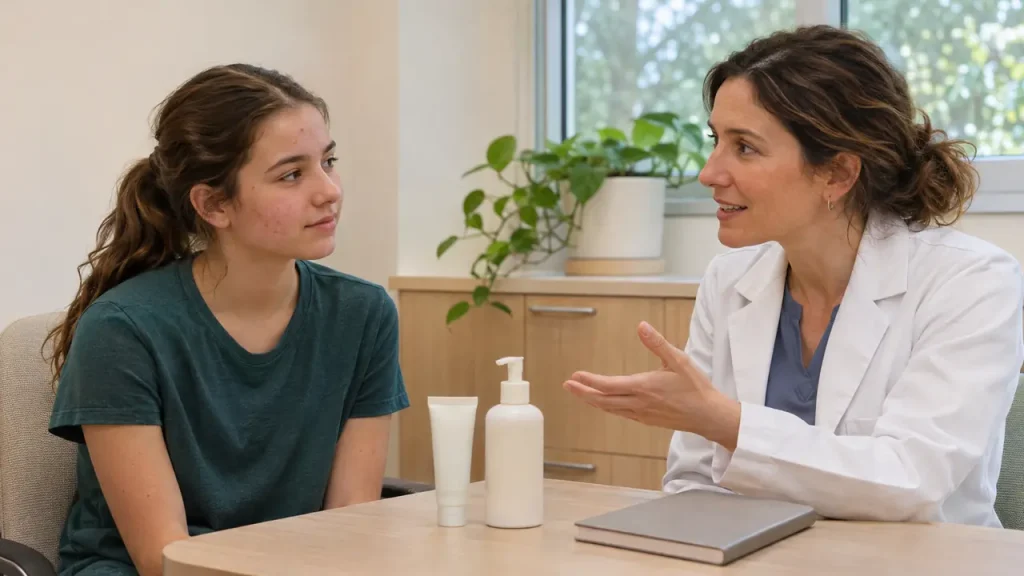
Acne is common during adolescence and is not always preventable with cleansing alone. For persistent breakouts, skincare for teens may need an evidence-based treatment rather than another cosmetic serum. Mild spots may improve with an appropriate treatment such as benzoyl peroxide, used according to age-specific label directions and professional advice. Other medicines, including adapalene, can be suitable for some teenagers, but availability, age guidance, pregnancy considerations, and irritation risk vary.
The medical explanation of teenage acne distinguishes ordinary blackheads from deeper lesions that may scar. Do not combine a medicated cleanser, exfoliating acids, a retinoid, and spot treatment all at once. Cosmetic anti-aging retinol is not a routine teen necessity; medically appropriate acne treatment is a different decision. Many treatments require several weeks to show benefit.
5. Keep Makeup, Masks, and Tools Optional
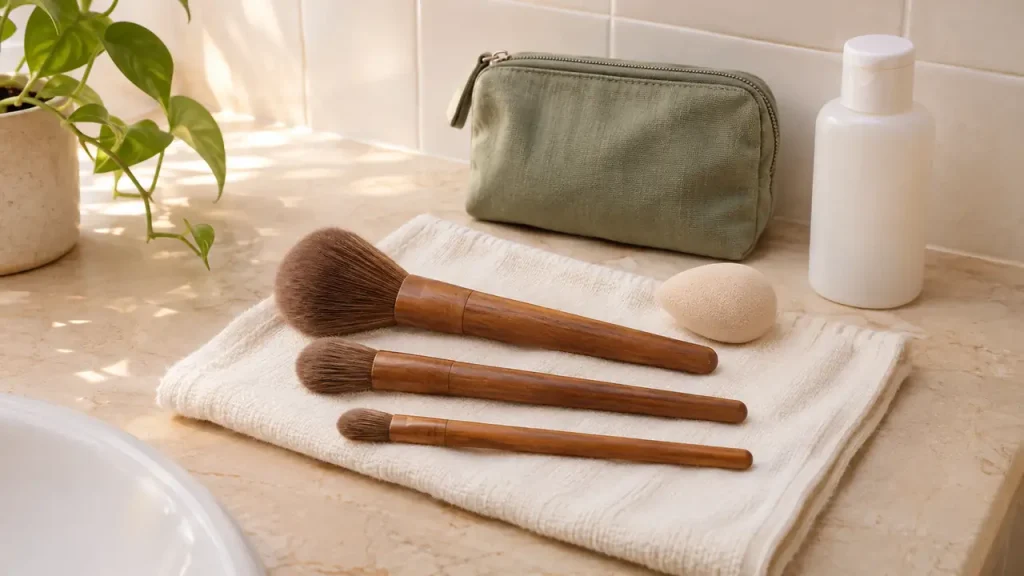
Makeup is a choice, not a requirement for school or photographs. If you wear it, select products that feel comfortable, avoid sharing eye makeup, and remove it gently before bed. Wash reusable applicators and clean makeup brushes according to their use and product instructions; allow them to dry thoroughly.
Face masks are also optional. A hydrating mask and an exfoliating acid mask do different things, so mask frequency depends on ingredients and individual tolerance. There is no need for routine scrubbing, peel-off treatments, or overnight social-media challenges. Avoid undiluted essential oils, toothpaste, lemon juice, and other irritating DIY spot remedies.
6. Care for Your Confidence Alongside Your Skin

Pimples, visible pores, freckles, scars, and pigmentation are normal variations, not reasons to feel ashamed. Filtered videos create unrealistic comparisons, and buying another product cannot solve that pressure. If skincare begins taking over your time or making you anxious, simplify the routine and speak with someone supportive.
A few self-esteem practices can help you challenge harsh self-talk without pretending you love every breakout. Sleep, regular meals, and movement support general health, but they cannot guarantee an acne-free face. Avoid high-dose vitamin A or zinc supplements unless a clinician recommends them for a specific reason.
An Easy Morning and Night Skincare Routine
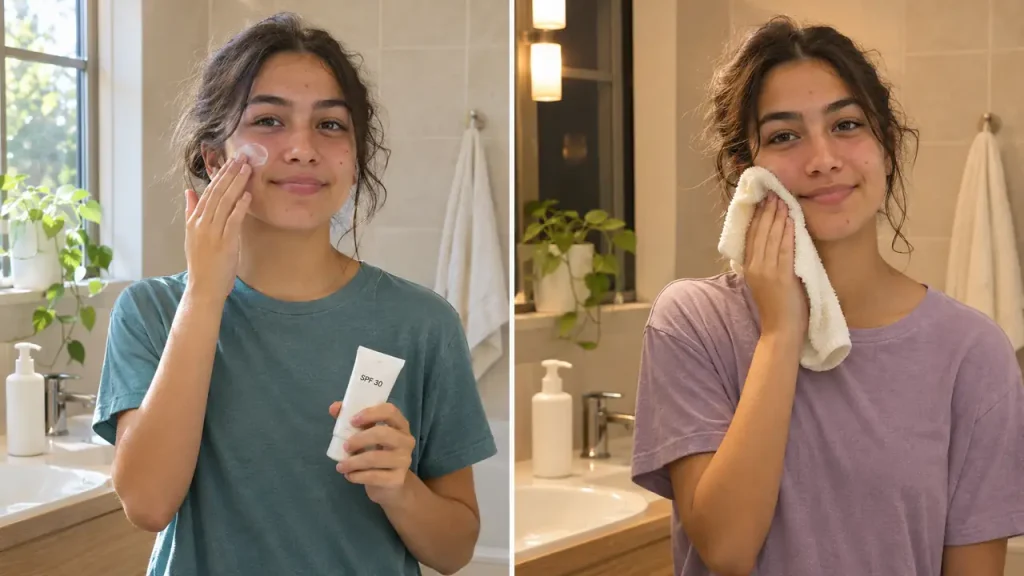
Skincare for teens works best when the steps are predictable and short. This table is a starting point, not a substitute for a clinician’s acne-treatment plan. People with eczema or other skin conditions may need different instructions.
| When | What to do | What to remember |
| Morning | Gentle cleanser or water rinse | Choose according to skin tolerance |
| Morning | Moisturizer if needed | A light texture can be enough |
| Morning | Broad-spectrum SPF 30+ | Reapply during prolonged outdoor activity |
| Evening | Remove makeup and cleanse | No aggressive rubbing |
| Evening | Moisturizer | Support comfort and hydration |
| As advised | Specific acne medicine | Follow age and product directions |
After sport, gently wash away sweat when practical. If your face feels tight after cleansing, reducing unnecessary products may help more than adding another serum. Carrying a small sunscreen for outdoor school activities can make reapplication easier. Remember that the simplest routine is the one you can maintain without discomfort.
How to Choose Products for Your Skin Type
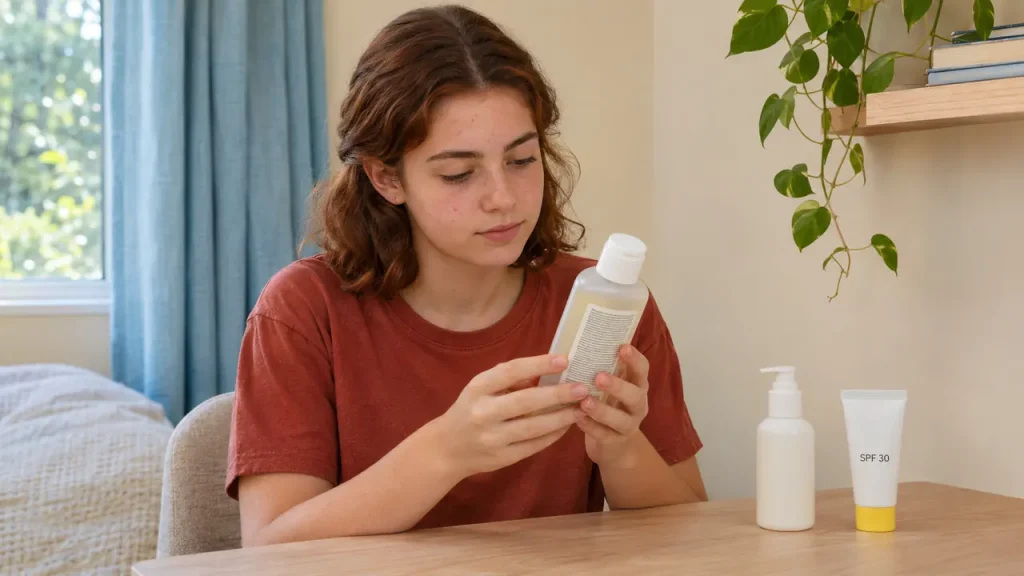
When shopping for skincare for teens, focus on purpose rather than brand names or expensive packaging. Start with one cleanser, one moisturizer, and one sunscreen. Buy additional products only when you know what problem they are meant to address.
For oily skin, consider a gentle cleanser and lightweight non-comedogenic lotion. For dry skin, choose a richer moisturizer and avoid unnecessarily foaming cleansers. With combination skin, a small amount of moisturizer on drier areas may feel sufficient. For easily irritated skin, prioritize fragrance-free products and avoid introducing several formulas together.
A label saying “natural”, “clean”, or “dermatologist-inspired” does not prove safety. Try one new product at a time, follow its directions, and discontinue it if persistent burning, swelling, or rash occurs. Severe reactions warrant medical attention. Product suitability matters more than an elaborate shelf of matching bottles.
When Should You Ask a Dermatologist for Help?
Skincare for teens sometimes needs professional support. Seek advice for deep, painful bumps, developing scars, persistent dark marks, widespread acne, or breakouts that have not improved after a reasonable treatment trial. Recurrent itching, rashes, or sudden clusters of similar-looking bumps might be something other than acne.
An appointment is also appropriate when skin concerns affect confidence, friendships, school attendance, or daily activities. A dermatologist may recommend a specific acne medicine instead of more over-the-counter products. Tell a parent, caregiver, school nurse, or another trusted adult what is bothering you. Supportive conversations with teenagers should involve listening rather than criticizing their appearance. Medical attention is not reserved for the most severe-looking acne.
Frequently Asked Questions
Teenagers and caregivers often need practical answers more than another long product list. These four questions clarify the basics.
1. Do Teens Need Exfoliating Toners or Serums?
Usually not. Gentle cleansing, moisturizer, and sunscreen are the foundation. A clinician may recommend an active ingredient for a specific condition, but routine cosmetic exfoliation is unnecessary for most teenagers.
2. Can Oily Teenage Skin Skip Moisturizer?
Sometimes a moisturizing sunscreen feels sufficient in the morning, but oiliness alone does not mean hydration is unnecessary. Use a tolerable moisturizer whenever skin feels dry or irritated.
3. Is Acne Caused by Eating Chocolate or Being Dirty?
Not simply. Hormones, follicles, inflammation, and genetic susceptibility all matter. Some food associations are being studied, but restrictive diets and harsh cleansing are not reliable acne cures.
4. Is Fairer, Flawless Skin the Goal?
No. Healthy skin comes in every natural color and can still have texture or blemishes. If appearance pressure becomes overwhelming, learning to recognize body shame and unrealistic beauty standards may help alongside support from a trusted person.
Final Thoughts
Skincare for teens should be gentle, affordable, and free from pressure to become lighter-skinned or flawless. Cleanse without scrubbing, moisturize for comfort, protect exposed skin from UV rays, and treat acne thoughtfully when needed. Normal skin has pores, texture, and occasional spots. If acne hurts, scars, or affects everyday life, asking for professional help is a sensible part of taking care of yourself.



Leave a Reply