

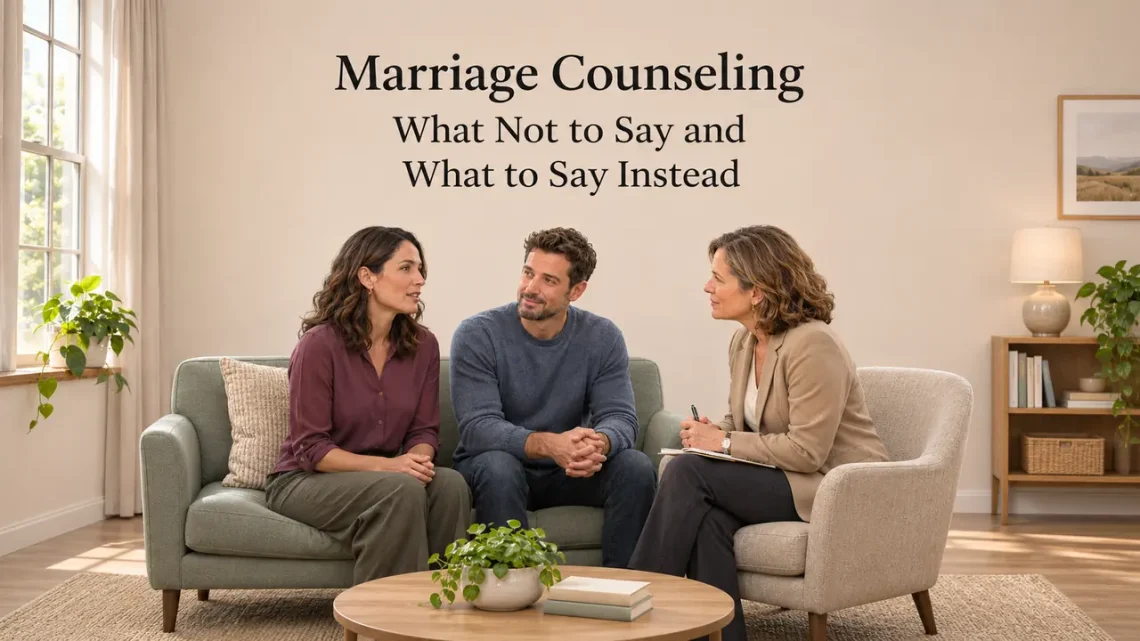
If you searched for “marriage counseling what not to say”, start by rephrasing insults, blanket accusations, and guesses about your partner’s motives. You can still say you’re angry, hurt, or unsure you want to stay married. Try “I felt left out when you invited guests for Saturday without checking with me” instead of “You never care what I think.” Naming the decision gives the counselor and your partner a specific moment to discuss.
The APA Dictionary of Psychology describes couples therapy as treatment that addresses difficulties affecting the relationship, usually with both partners participating together for much of the process. You can arrive with different goals. One person may want to reconnect while the other is still deciding whether they want to stay. Say that plainly so the counselor knows what each of you needs.
When It May Be Safer to Seek Individual Support First
These examples are for situations where both people can speak freely. If your partner threatens you, controls your movements or money, or punishes you for speaking honestly, a joint session can make things less safe. The National Domestic Violence Hotline explains why it advises against couples counseling in abusive relationships. Consider speaking privately with a domestic abuse advocate or a clinician trained in intimate partner violence. If you think your device is monitored, use one your partner cannot access when it’s safe to do so.
Marriage Counseling: What Not to Say in 7 Common Moments
Use these examples as starting points. Name what happened, how it affected you, and what you’d like to discuss.
1. “You Always Do This” or “You Never Listen”
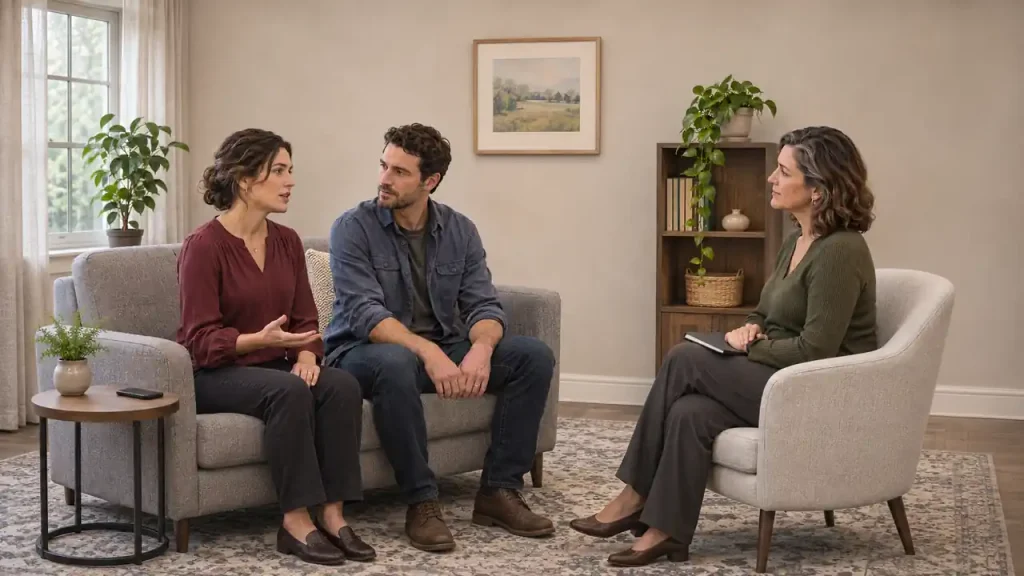
Try: “When you looked at your phone while I was talking last night, I stopped telling you what was bothering me. I’d like to finish that conversation here.”
If something happens repeatedly, say so. Give one or two examples and explain what they have in common. If interruptions or put-downs keep derailing conversations, identifying the pattern of toxic communication can give you a clearer starting point than listing every argument.
2. “You Don’t Care About Me”
Try: “When our plans were canceled, and we didn’t talk about rescheduling, I felt unimportant. What was happening for you?”
You can say you felt ignored even if you don’t know why your partner acted that way. If you need reassurance after plans change, ask for something specific, such as an earlier heads-up next time. A small active listening habit helps here: sum up what you heard and let the other person correct it.
3. “Tell Them I’m Right”

Try: “Can you help us figure out why this argument keeps happening and what each of us could do differently next time?”
A counselor can help you look at the sequence: one person brings up the bills, the other hears blame, both interrupt, and the budget never gets discussed. You can ask for accountability about a specific action. If an issue involves threats or control, though, it shouldn’t be treated as something both people caused.
4. “I Only Did It Because You Made Me”
Try: “I raised my voice. I’m responsible for that. I also want to talk about why the conversation got so heated.”
When thinking about what not to say in marriage counseling, separate what you did from why the conversation was difficult. Name your action first, then explain the context.
If you need a pause, make a clear request: “I need a minute before I respond.” That’s a practical use of assertive communication.
5. “Everything Is Fine”

Try: “I’m not ready to explain the whole thing yet. There’s something about trust I’d like help bringing up.”
It’s okay to start with what you can say. If you’re worried about emotional infidelity, for example, describe the messages or secrecy that concerned you and what you need clarified. If raising the issue could put you at risk after the session, get private support first.
6. “We Have to Decide Today”
Try: “I want us to make a decision soon. Can we talk about what each of us needs to know before we decide?”
Real deadlines matter, especially when they involve housing, finances, or childcare. Name those dates directly. If you’re considering divorce, say so without demanding an answer on the spot. Ask the counselor to help you separate the decision that needs attention now from the questions you can revisit.
7. “Promise You Won’t Tell My Spouse”

Try: “Before I share anything separately, what stays private? What could be shared, and would you need my permission?”
If privacy is your main worry about marriage counseling, what not to say depends partly on who can see what you share. Ask about confidentiality before sharing sensitive details in an individual meeting, email, or client portal. Clarify who the counselor treats as the client, who may access records, and what legal limits apply. Ask how the counselor handles information that could affect joint work. If you’re using an online portal, ask who can see your messages and whether both partners receive notifications.
Under Standard 2.2 of the American Association for Marriage and Family Therapy’s ethics code, therapists covered by the code must get your written permission before sharing what you told them in confidence with another person in treatment, subject to applicable law. Ask what any consent form authorizes and what happens if you don’t consent. Rules can differ by profession and location.
What You Can Say to the Counselor
In marriage counseling, what not to say is only half the question.
You can disagree with the counselor: “That’s not how I experienced it,” or “I don’t understand how that exercise would help.” You can also ask for a slower pace, more time to speak, or a clearer explanation of a suggestion.
Feeling nervous in a first session can be normal. Pay attention to what happens when you raise a concern. If the counselor repeatedly dismisses you, pressures you to disclose something, or won’t explain privacy and its limits, consider consulting another qualified clinician. You can also ask what experience they have with the issue that brought you there and how they’ll review progress with you.
What If You’ve Already Said Something Harsh?
You can correct yourself in the same session. Try “I called you selfish. That was unfair. What I meant was that I was hurt when you agreed to the weekend plans without asking me.” Give your partner time to respond. Taking back the insult still leaves room to discuss the decision. If you want to repair trust after hurting your partner, ask what you can do differently the next time plans come up. If you’re the person on the receiving end, you can ask the counselor to slow things down: “I want to answer, but I’m having trouble doing that while I’m being called names. Can we pause? “You don’t have to keep talking while you’re being insulted.
What to Bring Up Even When It’s Awkward
Money, sex, parenting, and uncertainty about staying together can all be relevant. You can name the subject without starting with the most personal detail: “We avoid talking about debt, and I want help figuring out where to begin,” or “I feel pressure around sex and want help talking about boundaries.” If the subject involves coercion or you fear what might happen afterward, seek private support before raising it together.
If you disagree on the exact wording, say, “I remember it differently.” Ask the counselor to give each of you time to describe what you experienced before discussing a solution.
How to Prepare for the First Session
Each person can bring three short notes: one recent example, what it brought up for them, and one change they’d like to see.
For example: “We argued about who would pick up our child. I felt like the plan was mine to manage. I’d like us to agree on pickups before the week starts.” Your partner may describe the same event differently. Both accounts give the counselor something to ask about.
If you’re hoping to repair a struggling relationship, choose a goal you can recognize in daily life. “We can discuss next week’s plans without either of us walking away” gives you something concrete to review. If you’re unsure whether you want to repair the relationship, say that. The first session can help you clarify what you want to work on and whether joint sessions make sense.
If your partner isn’t ready to go, ask what concerns them and if it’s safe to have that conversation. Cost, scheduling, fear of blame, and uncertainty about the process call for different responses. You can offer to ask about an introductory call. If they decline, you can seek individual counseling to explore your own needs and choices. Before the session ends, ask what to try between appointments. One small agreement, like writing down next week’s pickups together, gives you something specific to report back on.
Final Thoughts
In marriage counseling what not to say is less important than finding a clear, safe way to talk about what matters. Bring one example, explain how it affected you, and ask for the next step you need. You can question the counselor, ask about confidentiality, and take time to decide what to share. If speaking honestly could put you in danger, reach out privately for support first.



Leave a Reply