

The health benefits of tulsi are often described in sweeping terms, from relieving stress to preventing serious diseases. Research offers a more cautious picture: some human studies suggest possible benefits, particularly for stress, but the evidence remains limited. Tulsi leaves, tea, and concentrated extracts are also different preparations, so findings about one cannot automatically be applied to another.
Holy basil has a long history in Ayurveda and an important place in many households. You can respect that tradition while asking what has actually been tested, what remains uncertain, and whether a product is suitable for you.
What Is Tulsi or Holy Basil?
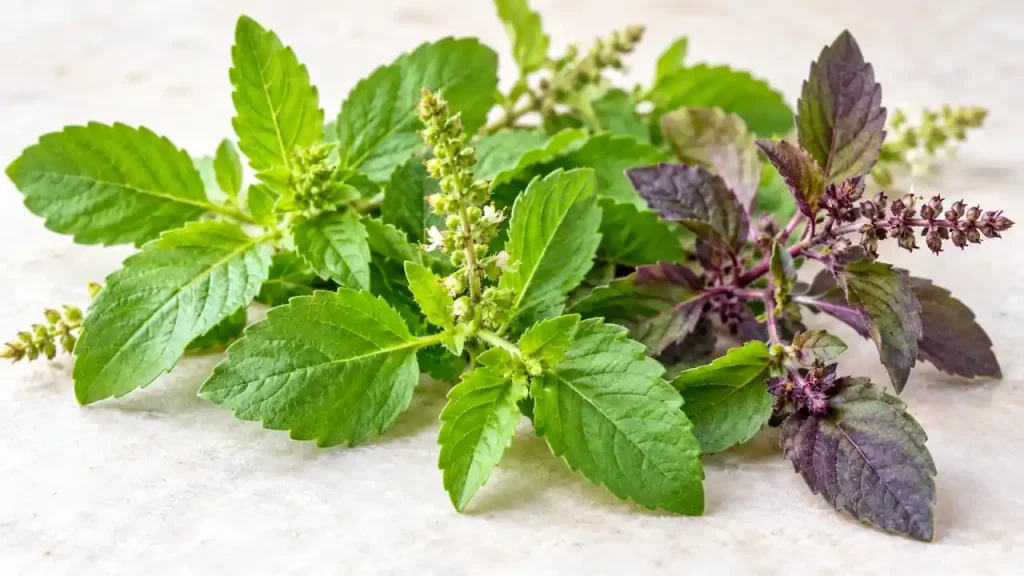
Tulsi usually refers to Ocimum tenuiflorum, also called Ocimum sanctum, an aromatic member of the mint family. It differs from sweet basil, Ocimum basilicum, commonly used in pesto and other dishes. Rama tulsi typically has green leaves, while Krishna tulsi has purplish leaves. Vana tulsi commonly refers to the related species Ocimum gratissimum. These names are not proof that every product has the same composition. Look for the botanical name on packaged herbs. A label saying only “basil” does not clearly identify the plant or establish that it matches a preparation used in research.
Nutritional Value: Serving Size Matters
A few leaves used for flavor are not equivalent to a substantial serving of vegetables. Likewise, strained herbal tea should not be described as rich in protein or fiber simply because the plant contains these nutrients. Nutrient information must match the preparation and amount consumed. Figures for dried leaf powder cannot be transferred directly to a cup of tea. Tulsi should not be relied on to correct a suspected nutrient deficiency. A varied, healthy eating plan provides a more useful foundation than expecting one herb to supply everything.
Health Benefits of Tulsi: What Human Research Suggests
A 2017 systematic review of human studies identified 24 trials investigating tulsi. The studies varied in preparation, duration, and quality, limiting firm conclusions. Promising findings are starting points for research, not confirmation of every traditional claim.
1. Possible Help With Perceived Stress
An eight-week randomized trial published in 2022 compared a standardized holy basil extract with a placebo in stressed adults. Researchers reported improvements in perceived stress and some stress-response measures. The study received industry funding, and independent replication would strengthen confidence. More importantly, it tested a specific extract, not ordinary homemade tea. It does not establish tulsi as a replacement for treatment of an anxiety disorder. If stress affects daily functioning, seek appropriate support rather than escalating an herbal dose.
2. Sleep-Related Findings Need Context

The same trial reported improvements in participants’ assessments of sleep. However, the authors called for stronger objective sleep measurements. This is different from proving that tulsi treats insomnia. Someone feeling more rested does not establish that every aspect of sleep improved, and one preparation’s results cannot determine whether a tea blend works. If you enjoy a warm evening drink, separate that pleasant routine from a medical claim about its ingredients.
3. Preliminary Blood-Sugar Research

Some small trials have investigated changes in blood glucose. The findings are not strong enough to recommend tulsi as a diabetes treatment or to justify reducing prescribed medication. A possible glucose-lowering effect also creates a safety concern, particularly alongside diabetes medicines. A product can have biological activity without having a sufficiently established benefit-risk balance for routine treatment. Discuss herbal products with your diabetes clinician before using them; do not experiment by adjusting medication yourself.
4. Metabolic Markers Are Not Disease Outcomes

Early studies have also examined cholesterol and blood pressure. Changes in these measurements do not prove that tulsi prevents heart attacks, reverses cardiovascular disease, or improves survival. Ask what a study measured. A short-term change in a laboratory result answers a narrower question than whether people stayed healthier over years. There is no reason to replace established cardiovascular care with a product marketed around these preliminary findings.
What Has Tulsi Not Been Proven to Treat?
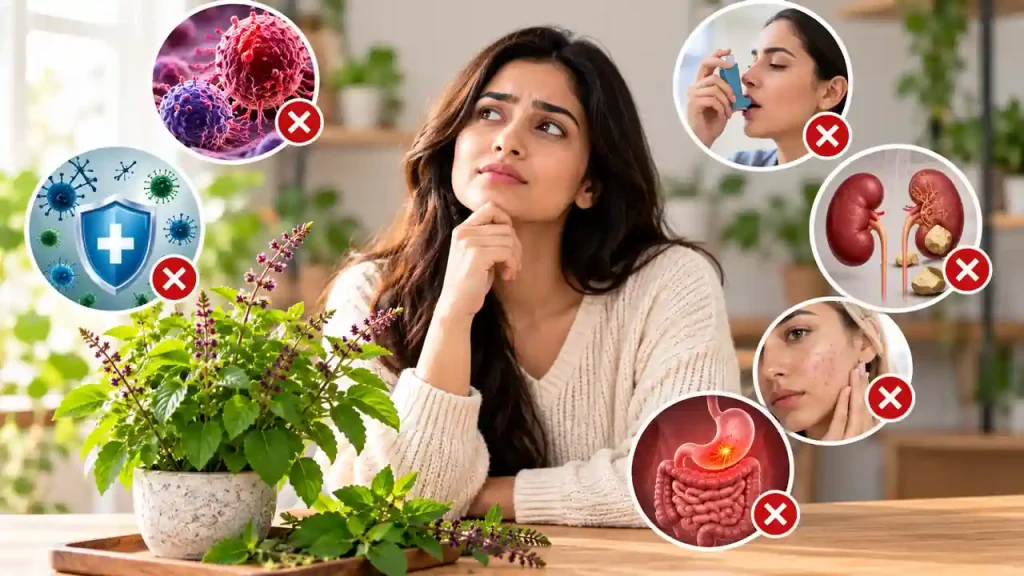
Understanding the health benefits of tulsi also means identifying claims that research has not established.
Cancer: Laboratory or animal findings do not establish cancer prevention or treatment in people. Drinking tulsi tea cannot be recommended as a way to fight lung, liver, skin, or oral cancer.
Immunity and infections: Changes in immune markers do not prove protection against colds or bacterial, fungal, and viral infections. “Antimicrobial” activity in a laboratory is not equivalent to treating an infection inside the body.
Asthma and bronchitis: Tulsi is not an established cure. Herbal drinks must not replace prescribed inhalers or delay assessment of breathing problems.
Kidney stones: A claim about lowering uric acid cannot establish that tulsi prevents or dissolves stones. These are different outcomes requiring specific evidence.
Skin and digestion: Tulsi has not been established as a treatment for acne, uneven complexion, ulcers, or indigestion. Persistent symptoms deserve an appropriate assessment rather than repeated experiments with a homemade remedy.
Tea, Leaves, Powder, and Extracts Are Different
When comparing the health benefits of tulsi, first identify the form being discussed.
| Form | What to understand |
| Fresh leaves | Leaf size, variety, and amount can vary. |
| Dried leaves or tea bags | Follow the product’s preparation instructions. |
| Leaf powder | You consume the plant material, unlike strained tea. |
| Standardized extract | Concentration and extraction method matter; products are not automatically interchangeable. |
| Essential oil | A concentrated product that should not be treated as a tea ingredient. |
A capsule’s milligram amount cannot be converted into a reliable number of fresh leaves. Similarly, a stronger-tasting brew does not necessarily deliver a better effect. There is no universally established therapeutic dose for all conditions. A dose used in one trial describes that experiment. It is not automatically suitable for you, especially if your product has a different formulation.
How to Prepare Tulsi Tea
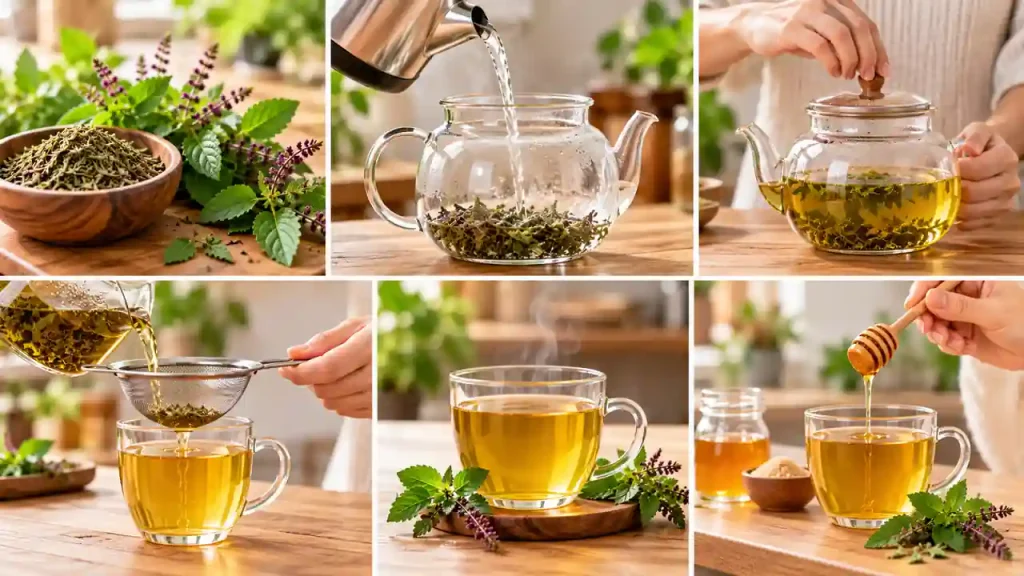
If tulsi is suitable for you, prepare it as a beverage rather than a treatment.
- Use clearly identified, food-grade dried tulsi or a packaged tea.
- Follow the label’s quantity and steeping instructions.
- Pour freshly boiled water over the leaves and cover.
- Steep for the stated time, then strain if needed.
- Let it cool to a comfortable temperature before drinking.
For fresh leaves, confirm the plant’s identity and wash them under running water. Avoid leaves from plants treated with products unsuitable for edible herbs. Appearance alone cannot establish identity or cleanliness.
Taste the drink before sweetening. Honey and sugar are optional additions, not ingredients that make the tea medicinal. Pure tulsi infusions contain no tea leaves, but blends may include black or green tea. Read the complete ingredient list if caffeine matters to you.
Side Effects, Interactions, and Who Should Avoid It
Tulsi may cause side effects such as nausea or diarrhea, and its long-term safety remains uncertain. Stop using it and seek medical advice if you develop concerning symptoms. Avoid tulsi supplements and medicinal use during pregnancy, breastfeeding, or while trying to conceive unless your clinician specifically advises otherwise. Human reproductive safety is not established; animal findings do not prove infertility in women.
Consult a clinician before use if you have diabetes or hypothyroidism, particularly if you take glucose-lowering medicines. Also discuss medicines that affect blood clotting. The NCCIH’s supplement-safety guidance explains why checking medication interactions and informing your surgical team before a procedure are important. Bring the actual package or a photograph of its label to the discussion. Include teas, powders, and multi-ingredient products, not just capsules.
How to Check a Tulsi Product
Treat “organic,” “natural,” and “traditionally used” as descriptions, not proof of effectiveness or freedom from risk. Check the plant name, ingredient list, preparation, manufacturer, and expiry date. Avoid products promising to cure cancer, replace diabetes treatment, or prevent every infection.
If a manufacturer cites research, ask whether the study tested that exact preparation and dose. A paper about an extract cannot validate every tea, powder, or skincare product containing the plant. Avoid starting several herbal products together. Record the product, amount, and start date, and note any new symptoms. This gives your clinician more useful information than a general description such as “herbal tea”.
Frequently Asked Questions
1. Can I Drink Tulsi Tea Every Day?
A daily routine is not automatically safe for everyone. Consider the ingredients, medicines, medical conditions, and duration of use. Seek individual advice before regular use if any precaution above applies.
2. Are the Health Benefits of Tulsi the Same in Every Product?
No. Read the study and product details together. Differences in plant identity, processing, ingredients, and concentration mean that a shared herb name is not enough to establish equivalent effects. Choose products with clear information rather than broad promises.
3. Is Tulsi Proven to Cure Anxiety or Diabetes?
No. Preliminary findings do not establish a cure, and neither condition should be managed by replacing recommended care with an herbal preparation.
4. Is Tulsi the Same as Culinary Basil?
No. Holy basil and sweet basil are different plants. Check the botanical name rather than relying on a shared common name or a similar appearance.
5. Can I Apply Tulsi Paste to Acne?
Evidence is insufficient to recommend homemade tulsi paste as an acne treatment. An oral supplement study cannot establish the safety or effectiveness of a skin application.
Final Thoughts
The health benefits of tulsi deserve careful investigation rather than cure-all promises. Early research offers some encouragement, especially around stress, but tea and extracts are not interchangeable and major treatment claims remain unproven. Respect its cultural importance, check product details, and discuss regular or medicinal use with a clinician when medications, pregnancy, or health conditions make safety uncertain.



Leave a Reply