

Fortified and enriched foods can be useful additions to a family’s diet, especially when parents are trying to meet their children’s nutritional needs. Yet choosing healthy foods is not always simple. Children often gravitate toward convenience foods such as pizza, nuggets, pasta, and packaged snacks while pushing vegetables aside. When encouraging healthier habits, many parents try different ways to feed vegetables to picky kids or look for grocery shortcuts.
While browsing the supermarket aisles, you have likely noticed packages labeled “enriched wheat flour” or “fortified with essential vitamins.” But what do fortified and enriched foods actually mean, how do they differ from each other, and what role do they play in family nutrition? Understanding how these foods fit into a balanced diet helps you make informed choices without being misled by marketing claims.
What Are Fortified and Enriched Foods?
Fortified and enriched foods both contain added nutrients, but the terms are not interchangeable. According to the World Health Organization (WHO) on food fortification, food fortification is the practice of deliberately increasing the content of essential micronutrients in a food to improve the nutritional quality of the food supply and provide a public health benefit.
In food regulation, such as standards maintained by the U.S. FDA on enriched foods and folic acid, enrichment refers specifically to restoring nutrients that were lost during industrial processing.
| Feature | Fortified Foods | Enriched Foods |
| Basic Concept | Nutrients are added or restored to improve micronutrient content and provide a nutritional or public-health benefit. | Nutrients lost or reduced during industrial processing are added back. |
| Common Examples | Vitamin D-fortified milk, iodized salt, calcium-fortified juices, fortified breakfast cereals. | Enriched wheat flour, enriched white bread, enriched pasta, enriched white rice. |
| Primary Purpose | Helps improve population-wide intake and address widespread micronutrient deficiencies. | Restores specified nutrients (such as B vitamins and iron) after refining whole grains. |
What Is Food Fortification?
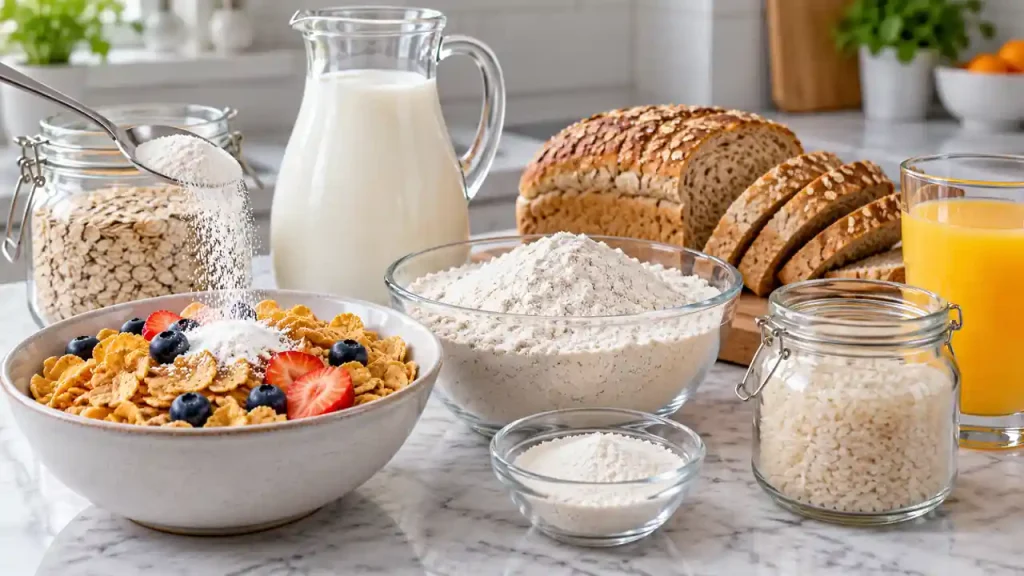
Food fortification involves deliberately increasing the amount of one or more vitamins or minerals in a food to improve its nutritional quality or address a population nutrient need. Depending on the food and program, this may involve adding nutrients that are naturally low or restoring nutrients reduced during processing.
For instance, cow’s milk naturally contains small, trace amounts of vitamin D. However, because vitamin D is naturally sparse in most dietary sources, milk is routinely fortified with vitamin D in many countries. As noted in pediatric dietary guidance from the American Academy of Pediatrics (AAP) on vitamin D, fortified milk, yogurt, and cereals can contribute vitamin D to children’s diets, supporting normal bone development and helping reduce the risk of vitamin D deficiency.
What Is Food Enrichment?
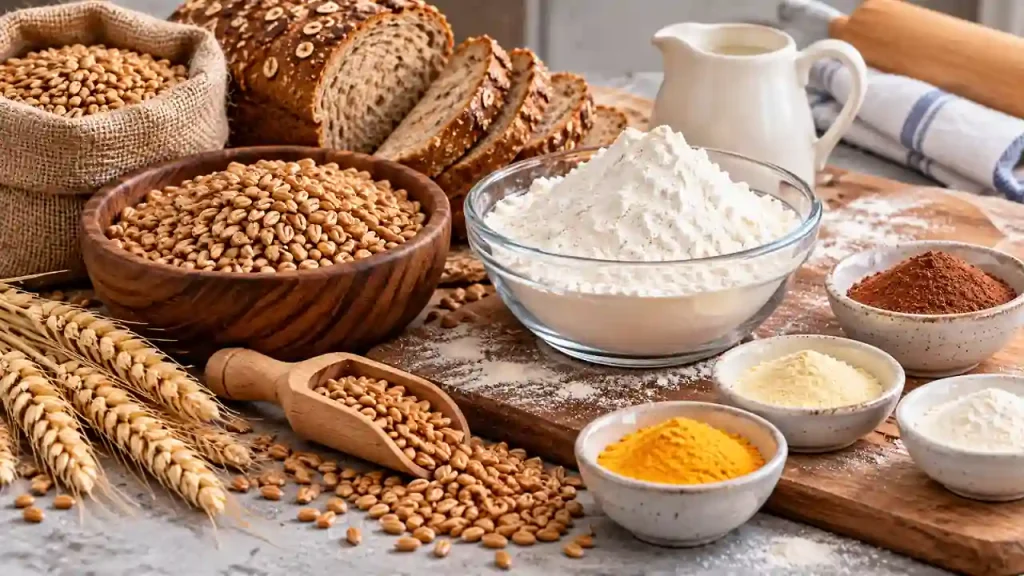
Enrichment focuses on replenishment. When whole wheat grains are milled to produce refined white flour, the fibrous outer bran and nutrient-dense germ are discarded, leaving only the starchy endosperm.
This process reduces dietary fiber and several micronutrients, including iron, thiamin (vitamin B1), riboflavin (vitamin B2), and niacin (vitamin B3). Enriched flour restores these specific B vitamins and iron in precise, standardized amounts, ensuring that refined flour retains basic micronutrient value.
Types of Food Fortification

Fortification can be carried out in several ways, depending on where nutrients are added and which population the intervention is designed to reach. Public health authorities typically classify these programs into three broad approaches:
- Large-Scale or Industrial Fortification: The addition of micronutrients to staple foods during commercial processing (such as adding iodine to table salt, vitamin A to edible oils, or folic acid to milled flour).
- Biofortification: Enhancing the nutritional density of crops while they grow, using conventional plant breeding or biotechnology (such as developing zinc-dense wheat or golden rice enriched with beta-carotene).
- Point-of-Use Fortification: Adding specially formulated micronutrient products, such as micronutrient powders or drops, to food shortly before it is eaten. Point-of-use fortification may be used for specific population groups, including infants and young children at risk of micronutrient deficiencies.
Are Fortified and Enriched Foods Healthy?

Fortified and enriched foods can help people meet nutrient needs and are an established public health strategy for reducing certain micronutrient deficiencies. However, whether an individual fortified food is a healthy choice depends on the food as a whole—not simply on the vitamins or minerals added to it.
A fortified label does not automatically turn an ultra-processed product into a nutritious choice. A breakfast cereal fortified with several vitamins may still contain substantial added sugar. Most people can comfortably include appropriately fortified foods as part of a balanced diet, but supplements and heavily fortified products deserve closer attention when multiple sources of the same nutrient are consumed together.
Benefits and Potential Risks
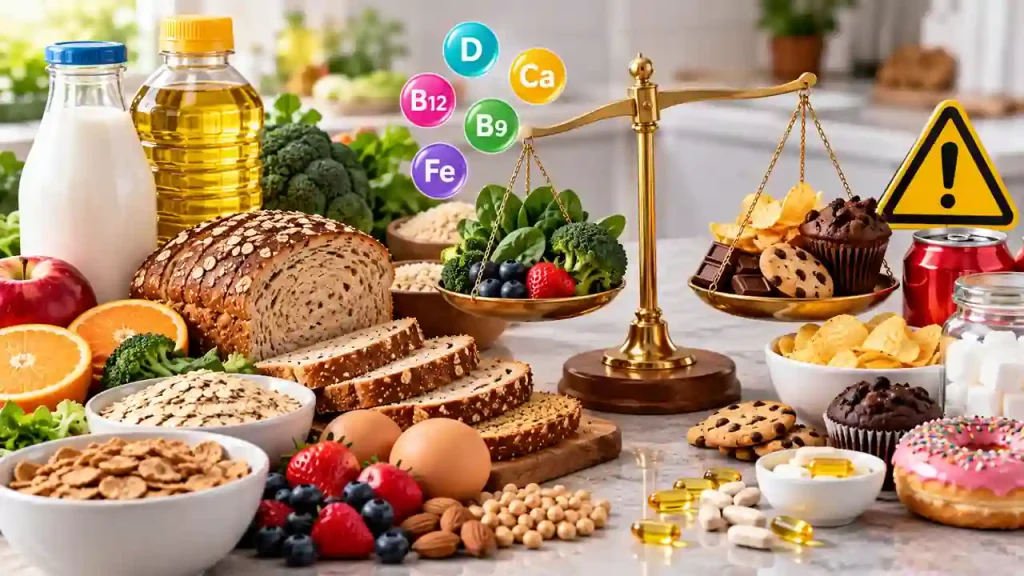
When evaluating fortified and enriched staples, understanding their proven health advantages alongside potential consumption pitfalls helps maintain dietary balance:
Proven Public Health Benefits
- Helps Prevent Micronutrient Deficiencies: Population-wide fortification programs can help prevent or reduce specific deficiencies. Examples include iodized salt for iodine deficiency and vitamin D-fortified foods as part of strategies to prevent nutritional rickets.
- Reduces Birth Defect Risks: Folic acid fortification of grain products helps increase population folate intake. Adequate folic acid intake before conception and during early pregnancy reduces the risk of neural tube defects.
- Fills Specific Nutrient Gaps: Fortified foods can provide useful sources of nutrients such as calcium, vitamin D, and vitamin B12 for people whose diets contain limited natural sources of these nutrients.
Potential Risks and Overconsumption
- The “Health Halo” Effect: Front-of-package vitamin and mineral claims can make a product appear healthier overall even when it is high in added sugars, sodium, or refined carbohydrates.
- Cumulative Nutrient Excess: More is not always better. Consuming several heavily fortified foods alongside high-dose supplements can cause intake of some vitamins or minerals to exceed recommended upper limits.
Fortified and Enriched Foods for Kids
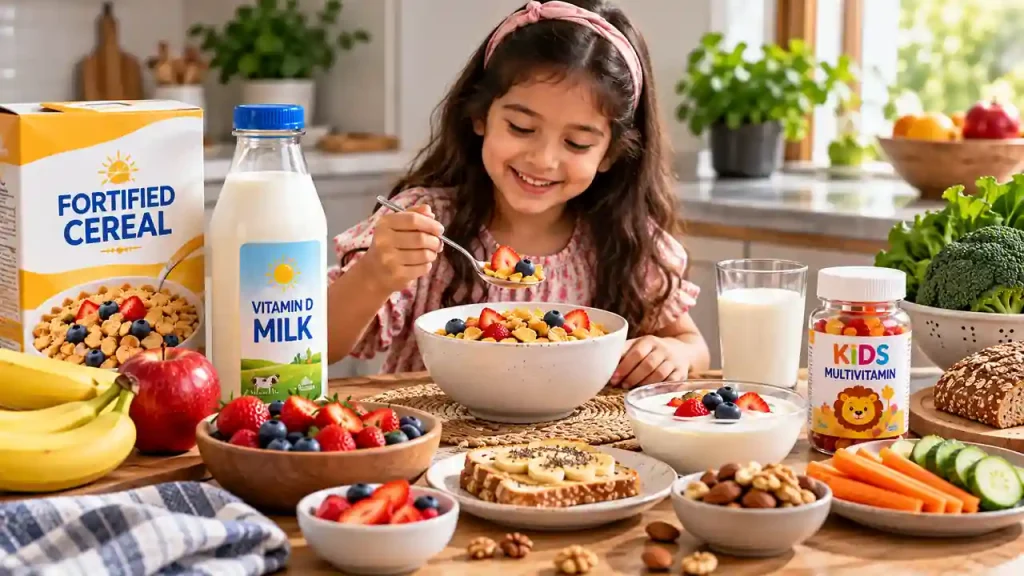
For growing children, fortified foods can help fill specific nutrient gaps when their usual diet does not provide enough of those nutrients. Adequate intake of essential vitamins and minerals supports normal physical growth, cognitive development, and bone health; fortified foods can contribute reliably to that intake.
However, parents should be mindful of stacking fortified items. Children who eat fortified cereal for breakfast, drink fortified plant or cow’s milk, eat fortified snack bars, and take a daily gummy multivitamin may get high amounts of some vitamins or minerals from multiple sources. Parents can compare Nutrition Facts labels and discuss supplements with a pediatrician or registered dietitian if they are concerned about deficiency or excessive intake.
Examples of Fortified and Enriched Foods
The specific micronutrients added to foods vary by manufacturer, country, and regulatory mandate. Here are the most common examples found on supermarket shelves:
| Food Category | Common Added or Restored Nutrients | Primary Purpose |
| Cow’s Milk & Dairy | Vitamin D; Vitamin A in reduced-fat or skim varieties | Supports calcium absorption and bone health |
| Plant-Based Milks | Calcium, Vitamin D, Vitamin B12 | Can provide selected nutrients commonly found in dairy milk, depending on the product. |
| Breakfast Cereals | Iron, Folic Acid, B vitamins, Zinc, Vitamin D | Fills common breakfast micronutrient gaps |
| White Flour & Bread | Thiamin, Riboflavin, Niacin, Iron, Folic Acid | Restores nutrients stripped during milling |
| Iodized Table Salt | Potassium iodate or potassium iodide | Helps prevent iodine deficiency and related disorders |
| Edible Oils & Fats | Vitamins A and D | Public health intervention in selected countries |
| Some fortified juices | Calcium and/or vitamin D, depending on product | Provides an additional source of selected nutrients |
Note: In some countries, edible oils and fats are fortified with vitamins A and/or D as an evidence-based public health strategy, as detailed in the WHO guideline on fortifying edible oils and fats.
Fortified Foods vs. Naturally Nutrient-Rich Foods
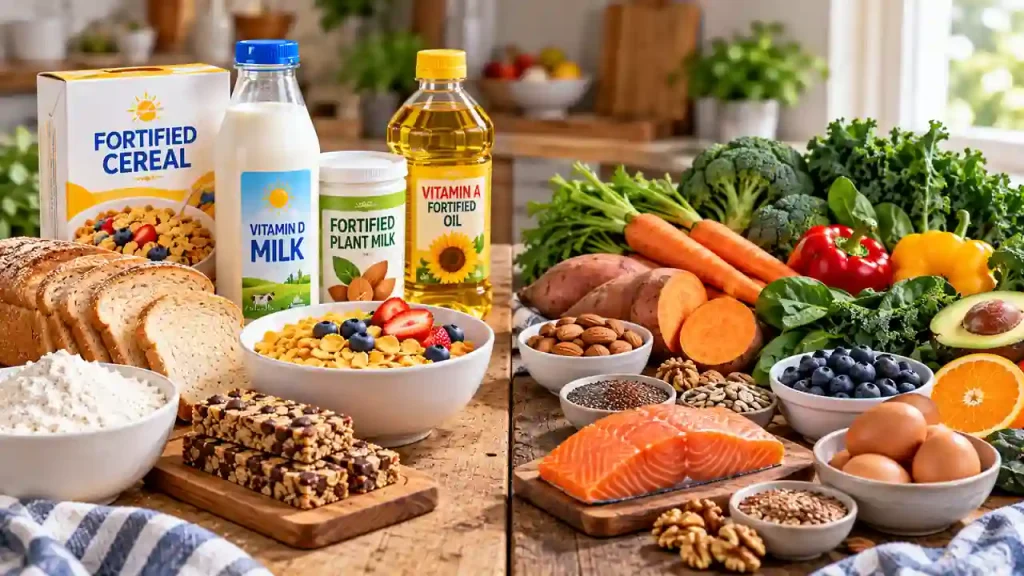
Fortified foods can help provide specific vitamins and minerals, but they do not replace dietary variety. Whole foods can also provide fiber, protein, unsaturated fats, and a range of naturally occurring plant compounds, depending on the food.
For example, getting your nutrients from whole sources—such as exploring foods rich in vitamin D such as fatty fish and eggs, or eating produce rich in vitamin A like carrots and leafy greens—helps support overall nutrition. Fortified foods should complement a diverse diet, not serve as a substitute for it.
How to Choose Fortified and Enriched Foods
When shopping for your household, use these five practical guidelines to evaluate fortified products effectively:
- Check What Was Added: Read the ingredient list to determine whether nutrients were simply restored (enrichment) or added to address broader needs (fortification).
- Review the % Daily Value (%DV): Look at the Nutrition Facts panel to see how much of each nutrient one serving provides, especially when you regularly eat several fortified foods or also take supplements.
- Inspect the Whole Food Matrix: Look beyond the vitamin claims. Check the amounts of added sugars, sodium, and saturated fats. A high-fiber, low-sugar fortified cereal is a far better choice than a sugar-coated variety.
- Account for Other Sources: Factor in whether you or your children already consume a daily multivitamin or multiple fortified foods throughout the day.
- Prioritize Dietary Variety: Use enriched grains, fortified dairy, or plant milks as convenient building blocks within an overall diet rich in vegetables, fruits, legumes, whole grains, nuts, seeds, and varied protein sources.
Final Thoughts
Fortified and enriched foods serve a valuable, evidence-based purpose in modern nutrition, helping prevent and reduce certain micronutrient deficiencies and helping families meet essential vitamin and mineral targets. However, an added nutrient does not automatically make a food healthy, and more is not always better.
Check the full nutrition label, consider your family’s overall dietary pattern, and use fortified staples as a practical complement to a diverse, whole-food diet rather than a replacement for it.



Leave a Reply